
Okerstausee - when will the long-awaited "big" rain come back
- Written by Portal Editor
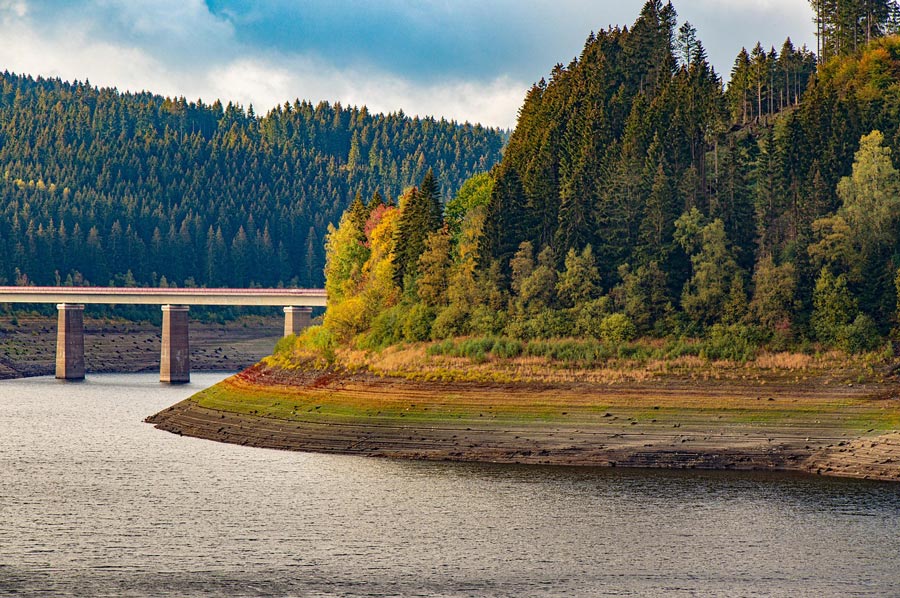
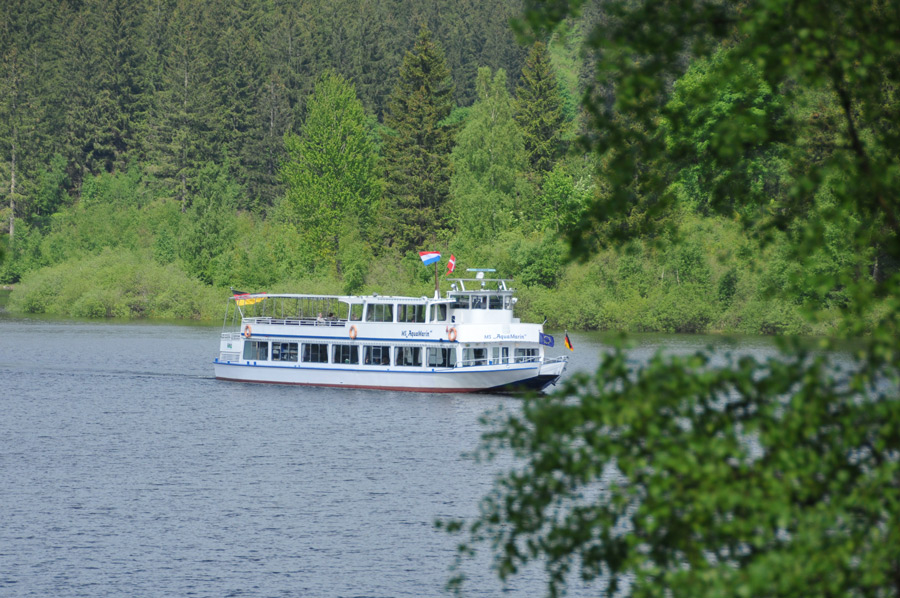
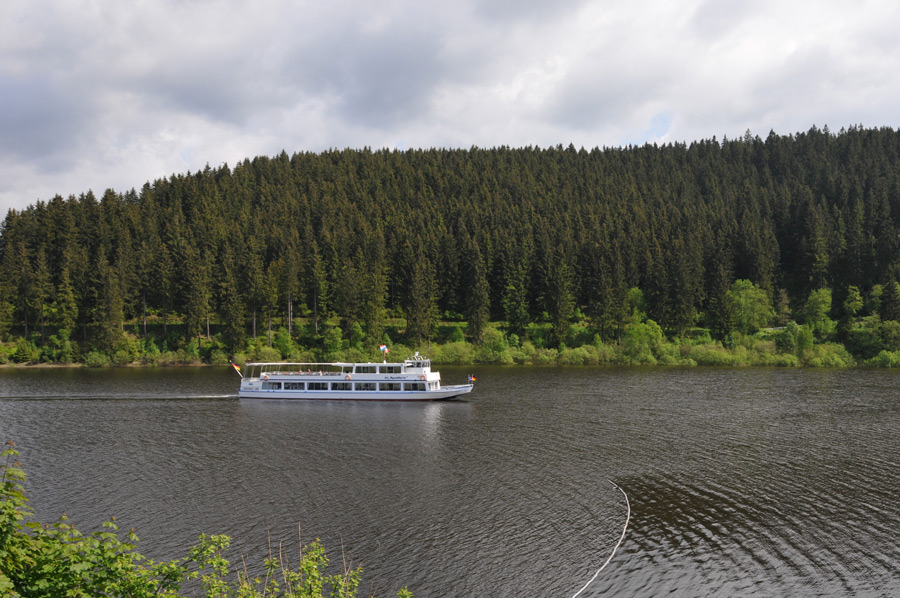
Okerstausee - How well can I remember my childhood, when there was a lot of life and hustle and bustle at and on the Okertalsperre, the water level so high that you could “board” the big round trip on the MS Aquamarin at many points along the lake shore, the at that time it took almost 1.5 hours and could be started from any landing stage.
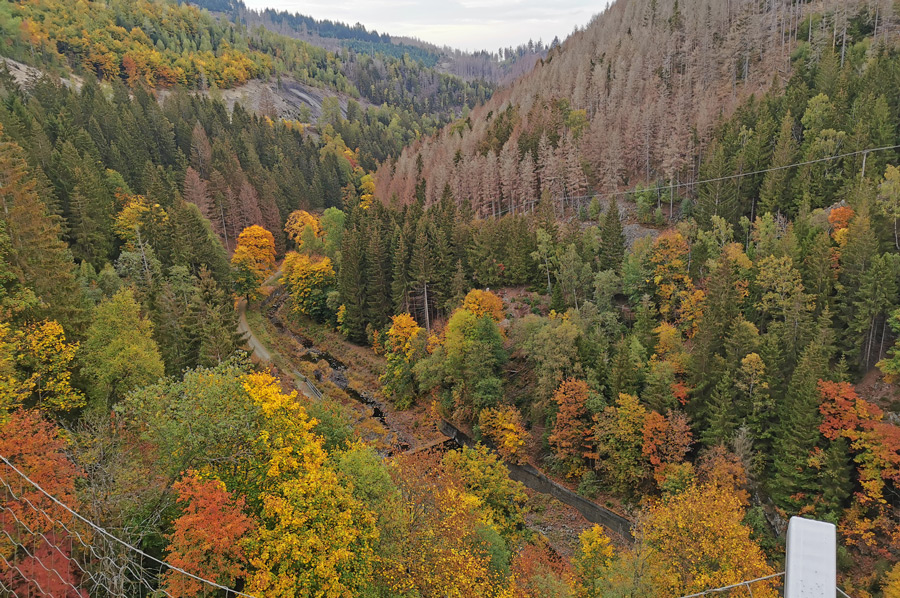
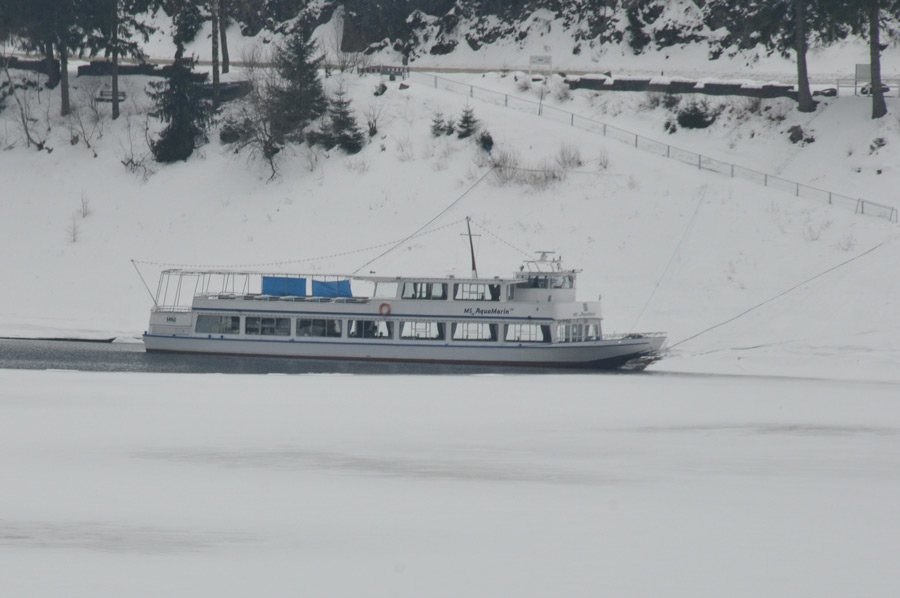
How sad today, however, when the ship lies firmly moored almost hidden in one of the side arms. It is shocking when you then add the immense dying of the coniferous forests in the Harz Mountains, which does not exactly promote the tourism income of the communities, which is so important for the region.
OKerstausee - By bike around the Oker reservoir
 But looking away and ignoring doesn't help anyone, quite the opposite, because right now tourism needs support.
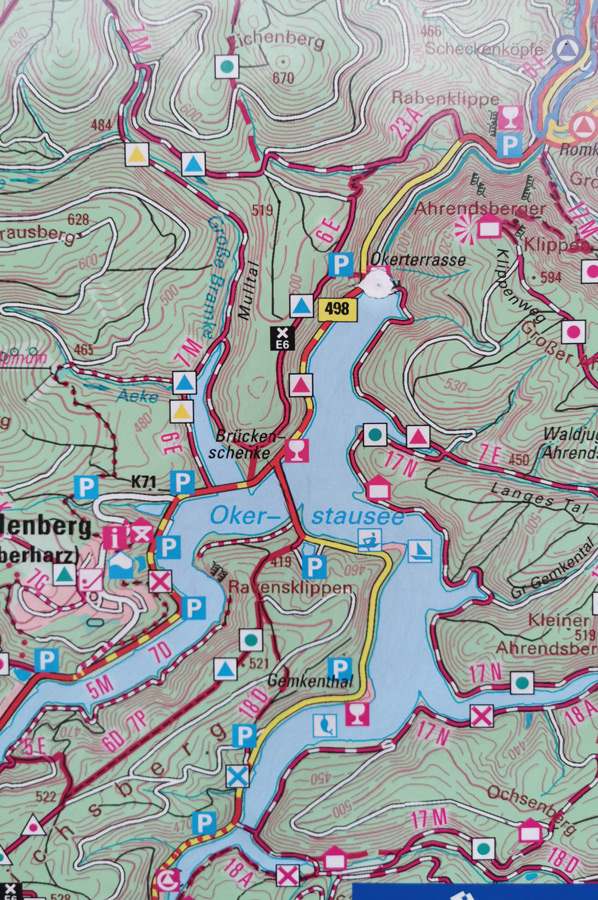
Our plan for today: Coming from Clausthal-Zellerfeld or Altenau, circle the Okerstausee, crossing the main dam wall, because the Okerstausee can be completely circumnavigated both on foot and with non-motorized vehicles on mostly asphalt or gravel roads.
Between the pre-dam and the main dam there is an almost entirely paved road, which is often used by inline skaters and roller skiers; only the path between the pre-dam and Altenau is not paved.
If this tour is not enough for you, you can also include the Romkerhall waterfall in your daily program, although hardly any water flows here either.
Research and construction of the Okerstausee
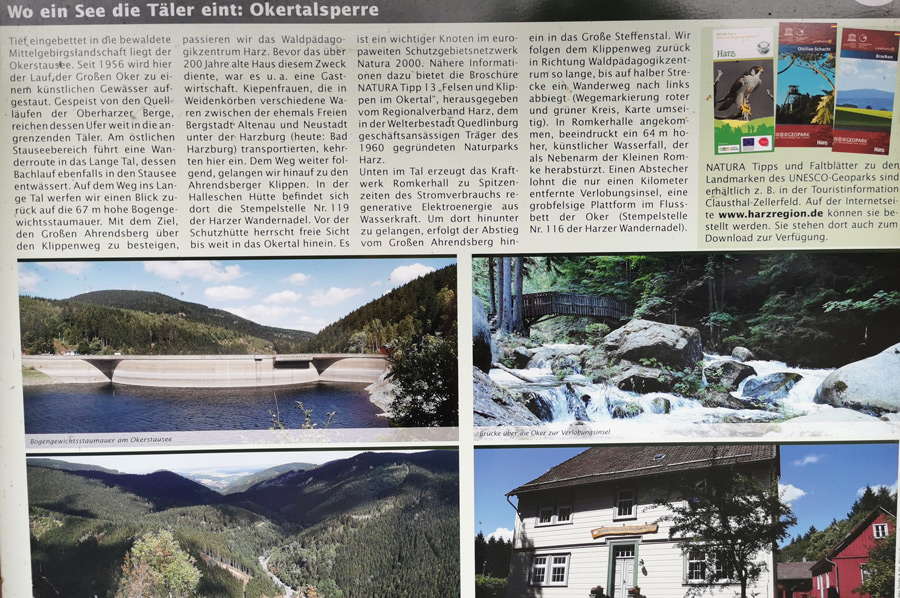
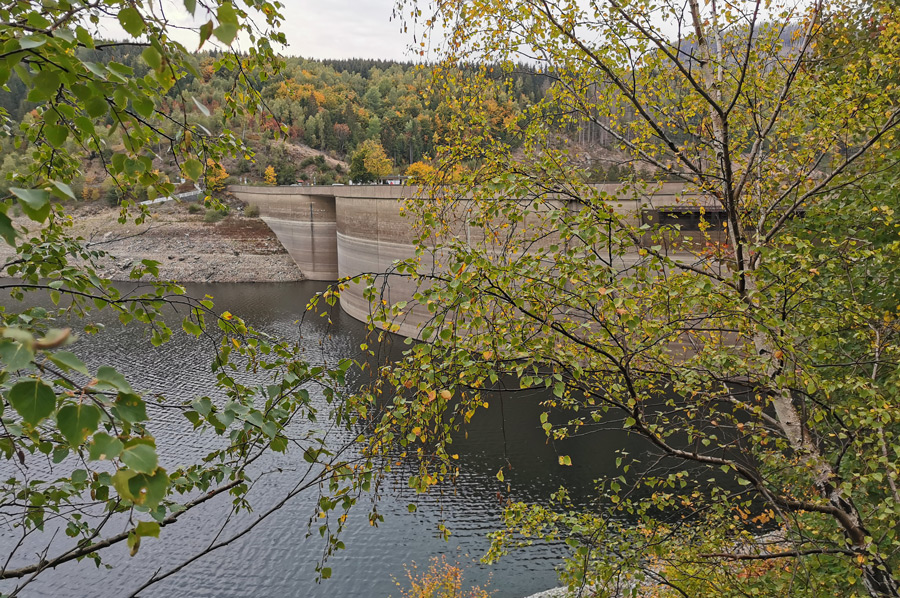
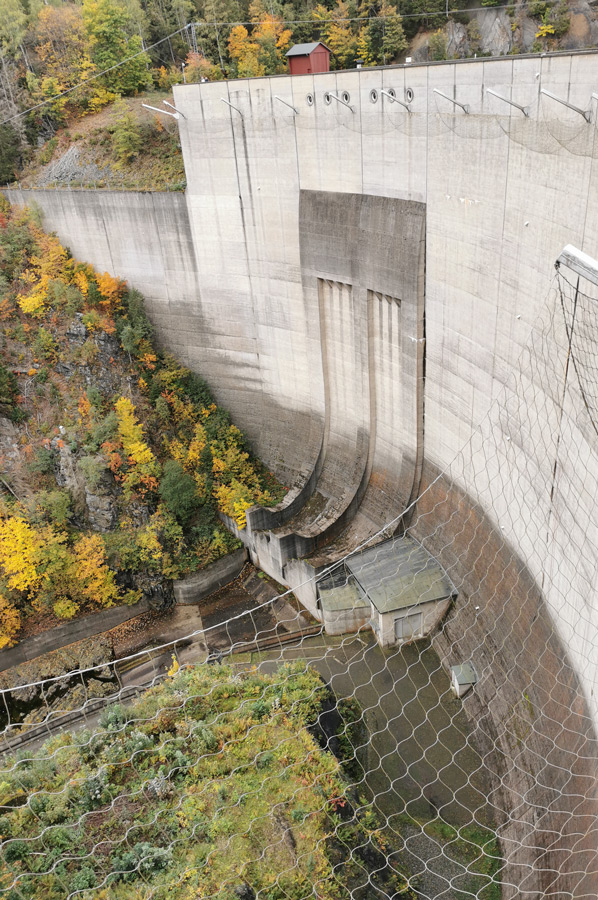 The Okerstausee is embedded deep in the wooded low mountain range landscape. Since 1956, the course of the large Oker has been dammed to form an artificial body of water. Fed by the various headwaters of the Upper Harz Mountains, its banks reach far into the adjacent valleys. In the eastern area of the reservoir, a hiking route leads into the Long Valley, whose stream also drains into the reservoir. On the way to the Long Valley, today as I said on the bike, we take a look back at the 67 meter high arch gravity dam.
The Okertalsperre is the second largest dam in the Harz Mountains after the Rappodetalsperre and the largest in Lower Saxony. The construction of the dam was particularly important for flood protection; so important that in 1954 the approximately 300 residents of Unterschulenberg and Mittelschulenberg were resettled. What was the decisive factor for the specific location of the dam in the Okertal?
Pure pressure loading saves the reinforcement
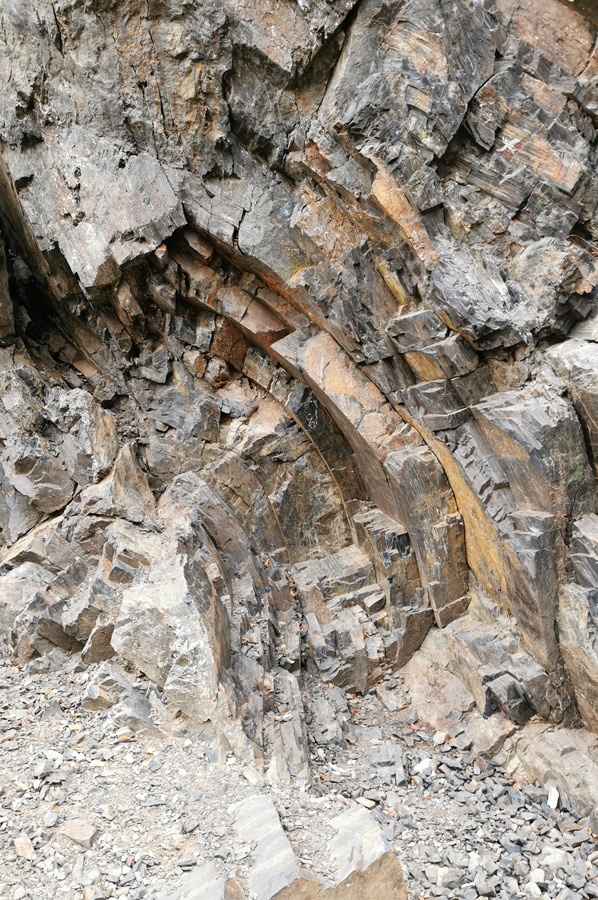
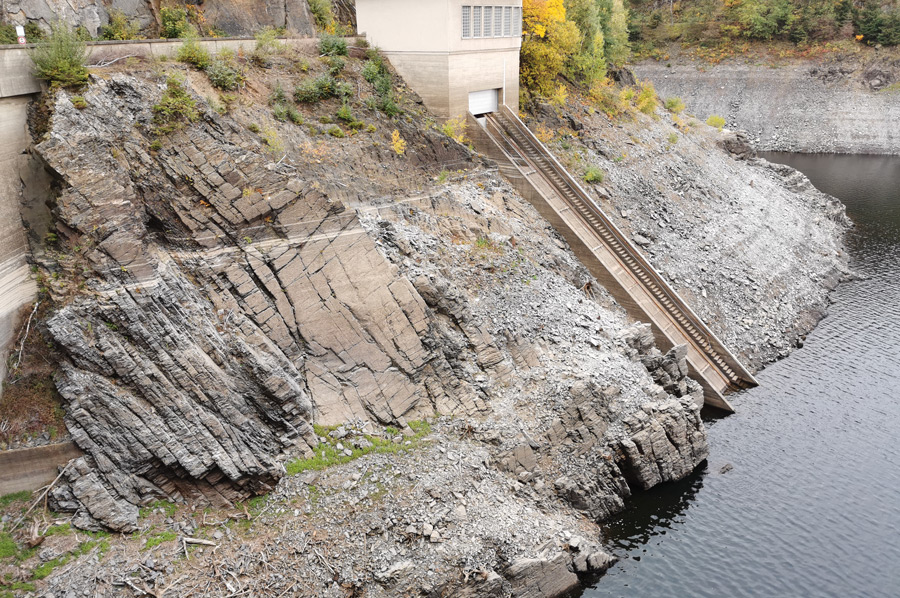
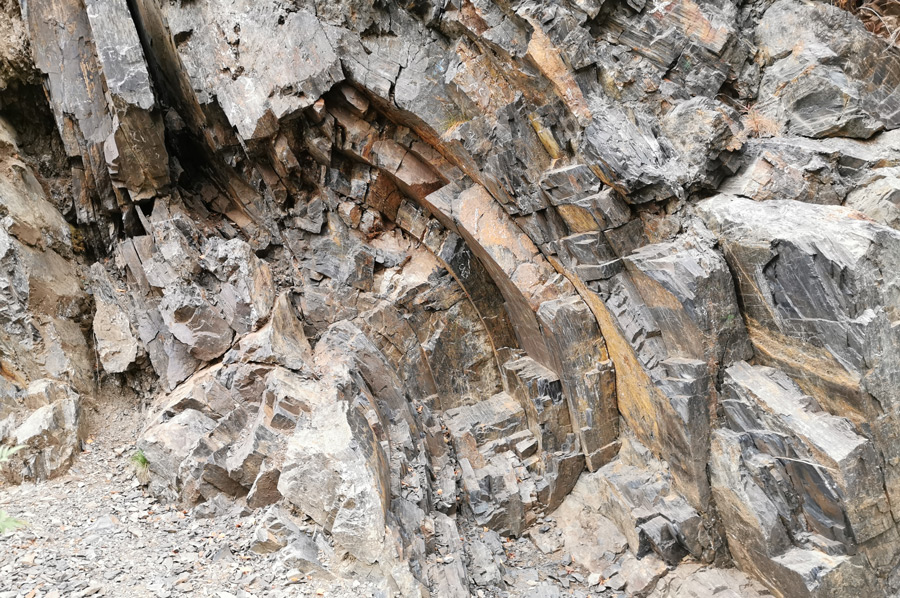
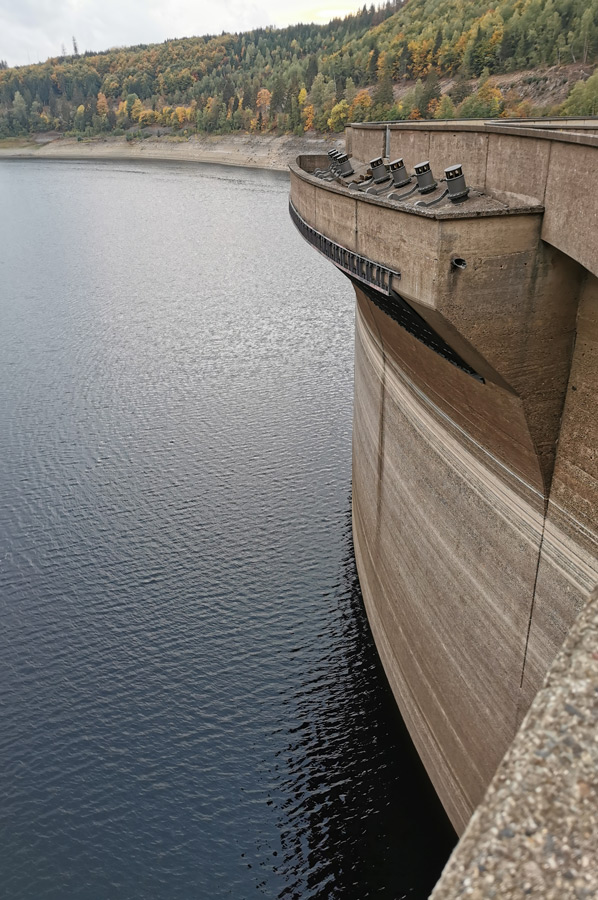 During the Lower Carboniferous geological period, 360-335 million years ago, sediment avalanched from the continental slope to the seafloor. These deposits are still clearly recognizable today along the Oker reservoir as heavily folded greywacke on clay slate. The heat from the nearby Okerpluton, which formed the granite on both sides of the valley below today's dam wall around 990 million years ago, had transformed the older slate and greywacke underground into very robust horn rocks. In the resulting, weather-resistant rock, the valley incision is narrower than in the more easily weathered granite of the Oker valley below. The hardened rock proved ideal for building an arch dam. The dam wall rests laterally on the rock, which means that the pressure on it is diverted laterally. However, the less stable greywacke could not withstand the forces at work. Therefore, a gravity wall forms the upper part of the dam. Due to its own weight, it defies the forces generated by the water pressure. Cracks in the rock were sealed by grouting cement. Compared to a pure gravity dam, the decision to build an arch gravity dam resulted in a concrete saving of around 60%.
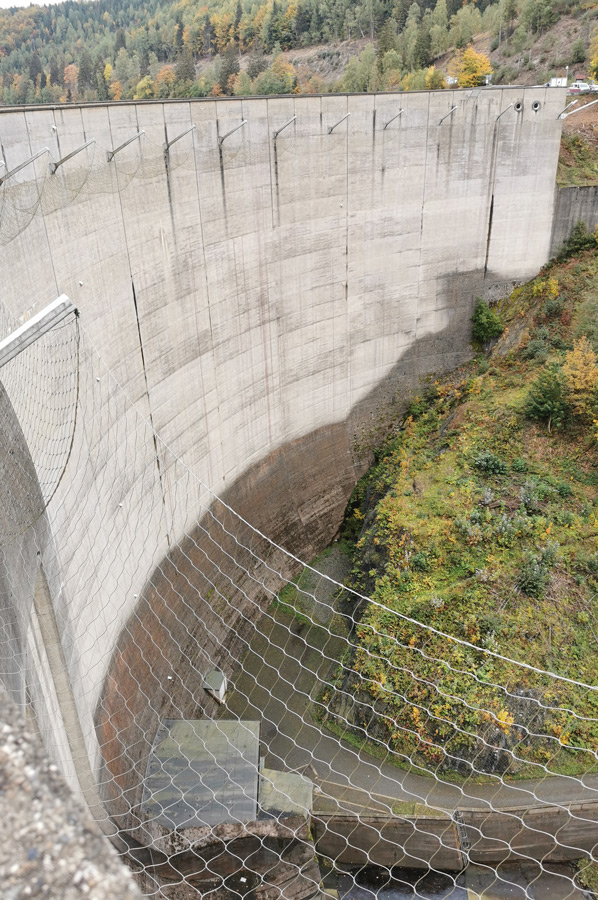 The dam wall only has to absorb compressive forces and can therefore do without reinforcement. In order to minimize heat development during the setting of the concrete, a coarse vibrated concrete was used. For this purpose, up to 40 cm large diabase stones were vibrated into the relatively normal concrete. This reduced the proportion of cement. Since diabase has a relatively high density of up to 3.0 tons per cubic meter, its proportion also increases the weight of the concrete, which gives the wall additional stability.
The construction of the Okerstausee was tackled by the Harzwasserwerke between 1938 and 1942. For this purpose, the valley roads were initially relocated to the western and northern banks and the two road bridges "Weißwasserbrücke" and "Bramkebrücke" were built. Soviet prisoners of war were also used, whose graves are in the Altenau cemetery. Construction was interrupted in 1942 because of the war and the need to set different priorities. The dam itself was built between 1952 and 1956. Further construction also became urgent after flooding occurred in the snowy winter of 1946/47, especially in Wolfenbüttel and Braunschweig. During construction, the Unterschulenberg forest workers' settlement had to be abandoned; it was rebuilt to the west of the reservoir on the Wiesenberg.
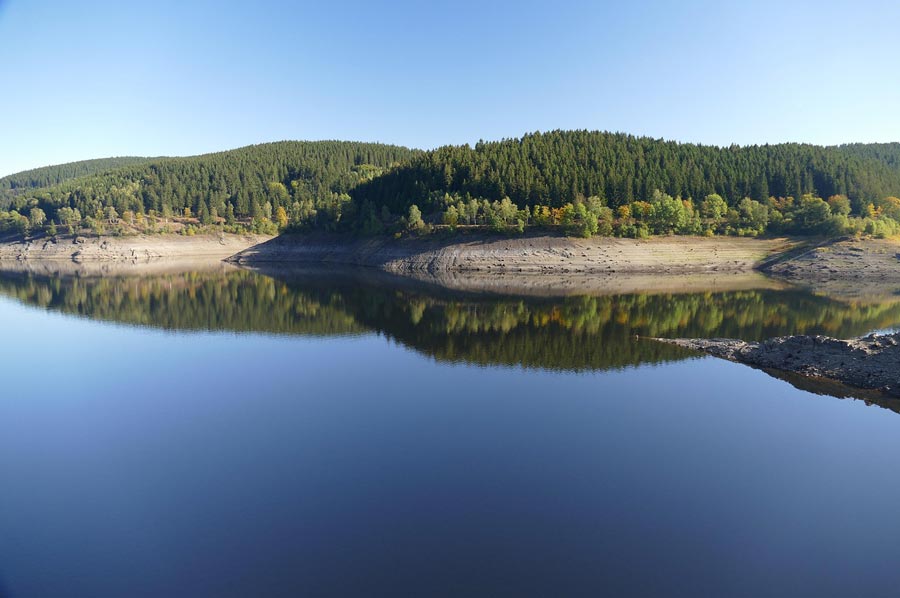
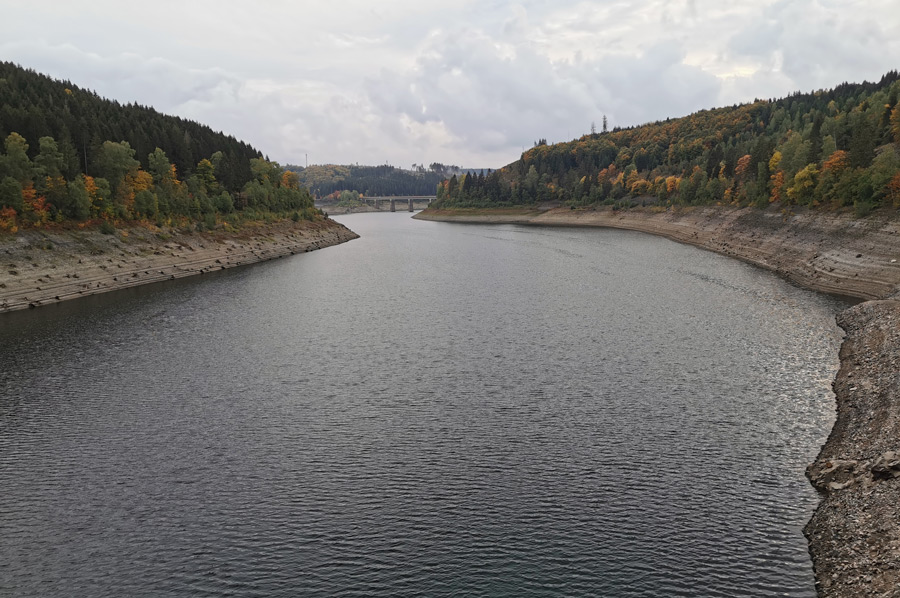
 In years with little rain, the water level of the dam can drop so much that the remains of individual foundation walls and the old valley road with its bridges become visible again.
The dam is still used today to generate electricity, increase low water levels and protect against flooding; indirectly, it is also used to obtain drinking water. The average annual discharge is 75 million m³. The water from the reservoir drives the turbine of the Romkerhalle hydroelectric power station.
Okerstausee – When will the long-awaited heavy rain arrive - more details
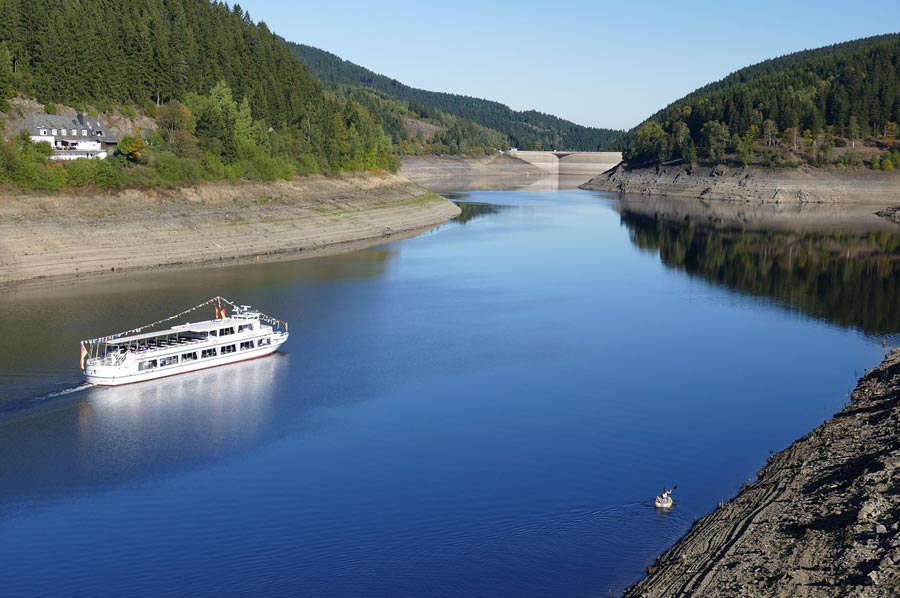 The Oker Reservoir in the Harz Mountains of Lower Saxony is one of the most important reservoirs in Northern Germany. However, in recent years, the idyllically situated lake has been increasingly overshadowed by a pressing problem: the persistent water shortage. When will the heavy rain finally arrive to refill the Oker Reservoir?
Location & Significance of the Okerstausee
The Oker Reservoir is located in the western Harz Mountains near Altenau and was built in the 1950s to:
- store drinking water for the Braunschweig region and the Harz foothills,
• ensure flood protection,
• generate electrical power, and
• provide a popular destination for tourism and water sports.
With its imposing dam wall and picturesque water basin surrounded by mountains, the Oker Reservoir is a true natural gem – but only when there is enough water.
Water levels in crisis – years of drought put pressure on the dam
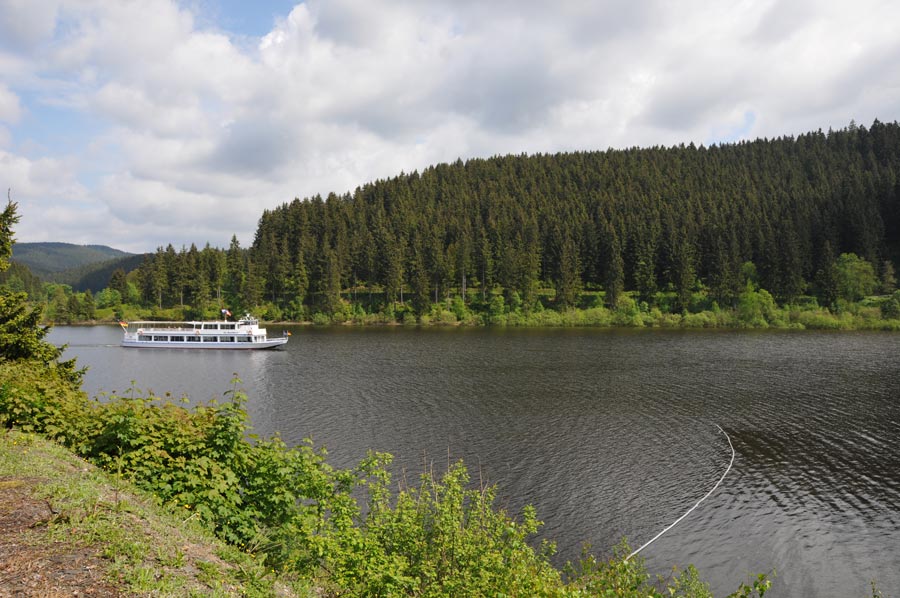 The long-awaited "big rain" has been missing for several years. The consequences:
- Low water levels, sometimes at historic lows
• Visible dry cracks on the banks and exposed soil
• Impact on the region's water balance
• Decline in recreational activities such as boat rentals, fishing, or swimming
The summers of 2022 and 2023, in particular, brought little rainfall. Spring 2024 also saw little rainfall – a development that worries experts.
Why is rain so important for the Oker Reservoir?
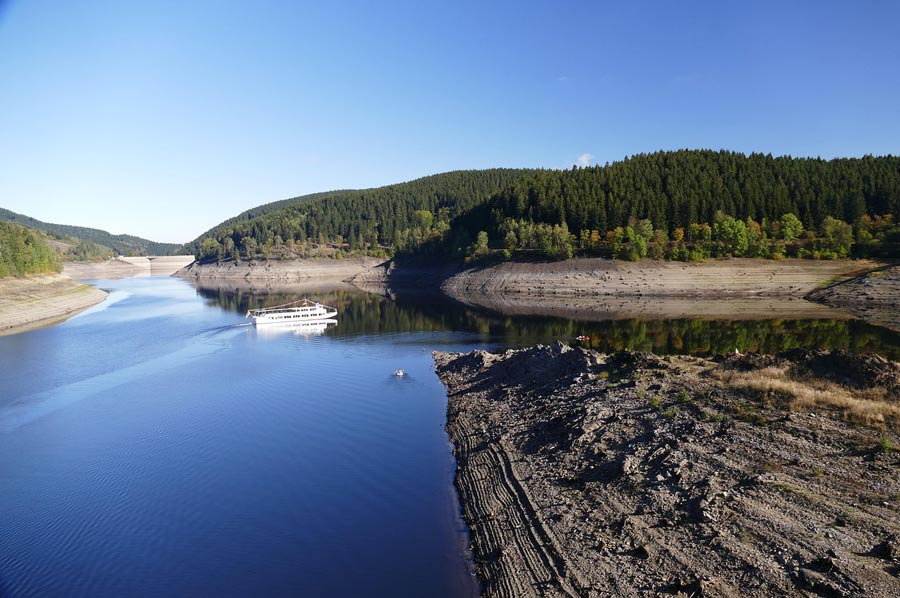 The Oker Reservoir is primarily fed by:
- Precipitation in the Harz Mountains
• Meltwater from winter
• Tributaries such as the Oker River that flow through the catchment area
If these natural sources fail to materialize, water treatment for cities like Braunschweig could be limited – with serious consequences for people, nature, and industry.
The Harz Mountains are drying out – climate change up close
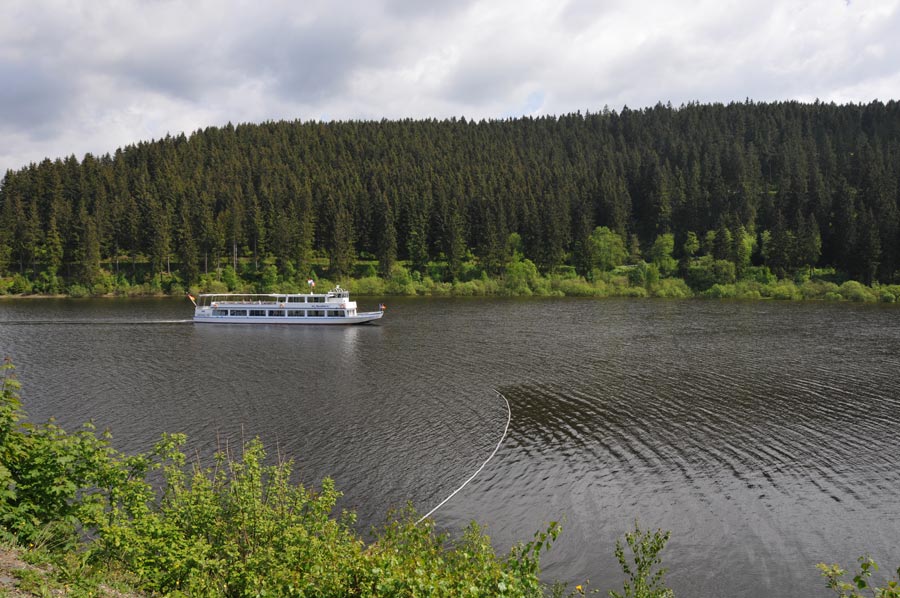 The current situation at the Oker Reservoir is a clear example of climate change in Germany:
- Milder winters → less snow
• Earlier springs → faster runoff
• Longer dry periods → lower refilling
• Extreme heat → higher evaporation
All of this means that the lake can barely fulfill its storage function – with alarming ecological and economic consequences.
Impact on Tourism and the Environment of Okerstausee
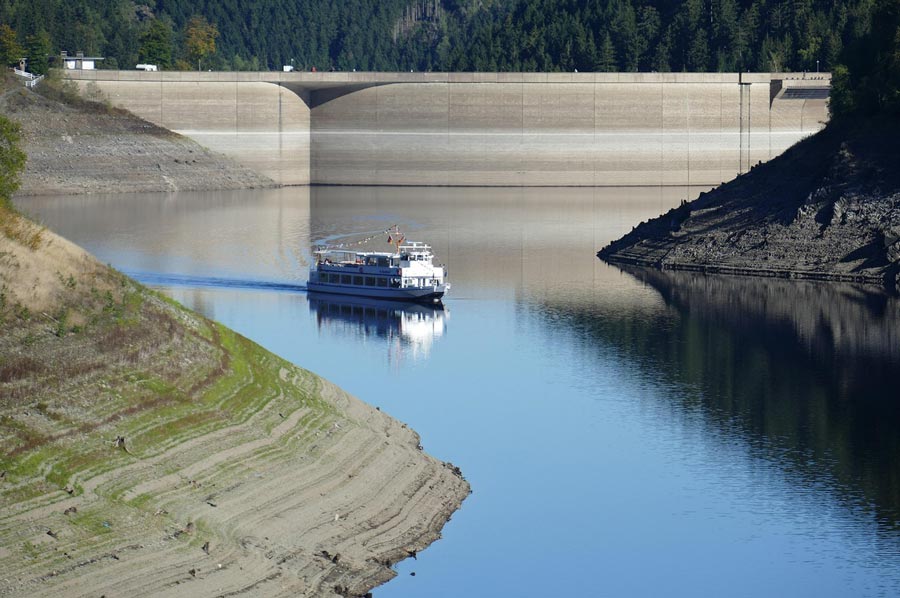 The Oker Reservoir was once a magnet for:
- Water sports enthusiasts
• Hikers and cyclists
• Nature observers
• Family outings
But the ongoing drought is changing the picture:
- More frequently cancelled boat trips
• Restricted swimming
• Declining fish populations
• Declining rare bird species that require moist habitats
When will the heavy rain come? – Forecasts & Hope
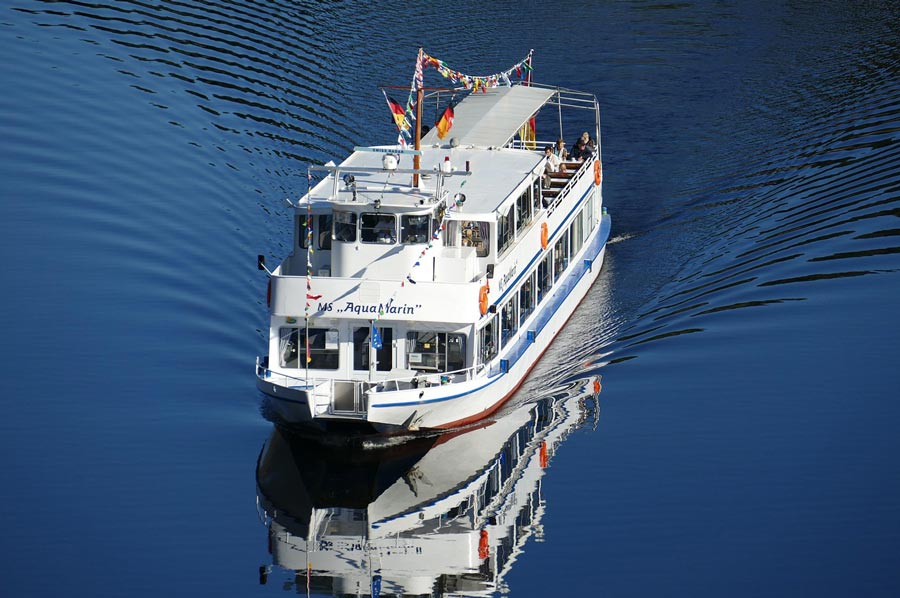 Meteorologists are cautiously optimistic: According to current climate models, the summer of 2025 could bring more low-pressure systems, especially from the Atlantic. However:
- Rain must fall slowly and steadily, not as heavy rain
• The soils are currently extremely dry and absorb water poorly
• Even with increased rainfall, the Oker Reservoir needs months to recover
So this heavy rain is not just a meteorological event – it is a beacon of hope for the entire region.
What can we do? – Sustainable use of water
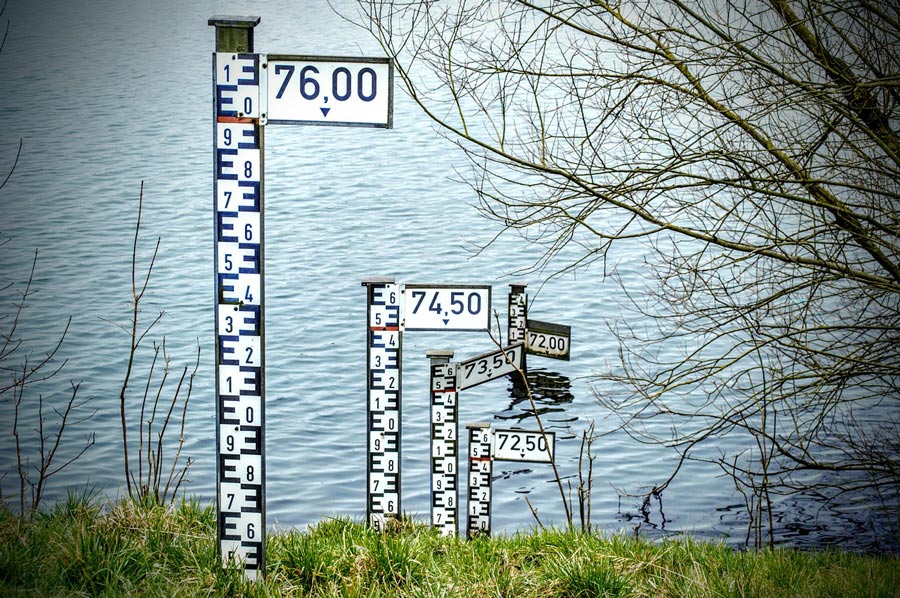 In times of change, it is also up to us to use water more responsibly:
- Collect rainwater for gardens and households
• Conscious water consumption in everyday life
• Promote tourism that is environmentally friendly
• Actively protect the climate: fewer emissions, more green spaces
Conclusion: The Oker Reservoir in Transition – Between Drought and Hope
The Oker Reservoir is more than just a tourist destination – it is a symbol of the state of our environment. The lack of heavy rain makes it clear how vulnerable even robust systems are in times of climate change. Nevertheless, hope remains: for a change in the weather, for smart water policies, and for a new awareness of our natural resources.
Frequently Asked Questions (FAQs)
 1. Is it currently possible to swim in the Oker Reservoir?
Partially, yes, but many shore areas are inaccessible due to low water levels.
2. Is drinking water becoming scarce in Lower Saxony?
Not yet acute – but the situation is being monitored and new strategies developed in the long term.
3. Is the lake still an attractive destination?
Yes! The surrounding area offers great hiking trails, viewpoints, and nature experiences – even when the lake isn't full.
4. How can you support the lake?
Everyone can contribute through sustainable tourism, regional products, and education.
Please read as well:
Citizens' festival in Erfurt on the day of German unity
Balaton - Lake Balcsi - not just an intermediate destination
-
 Oker Dam by Bike from Altenau
Oker Dam by Bike from Altenau
Oker Dam by Bike from Altenau
-
Oker Dam by Bike from Altenau
Oker Dam by Bike from Altenau
-
Oker Dam by Bike from Altenau
Oker Dam by Bike from Altenau
-
Oker Dam by Bike from Altenau
Oker Dam by Bike from Altenau
-
Oker Dam by Bike from Altenau
Oker Dam by Bike from Altenau
-
Oker Dam by Bike from Altenau
Oker Dam by Bike from Altenau
-
Oker Dam by Bike from Altenau
Oker Dam by Bike from Altenau
-
Oker Dam by Bike from Altenau
Oker Dam by Bike from Altenau
-
Oker Dam by Bike from Altenau
Oker Dam by Bike from Altenau
https://www.alaturka.info/en/germany/lower-saxony/5824-okerstausee-when-will-the-long-awaited-big-rain-come-back?layout=default&print=1&tmpl=component#sigProId0c6432c4a8