Evros, Maritsa, or Meriç Nehri - a river border
- Written by Portal Editor
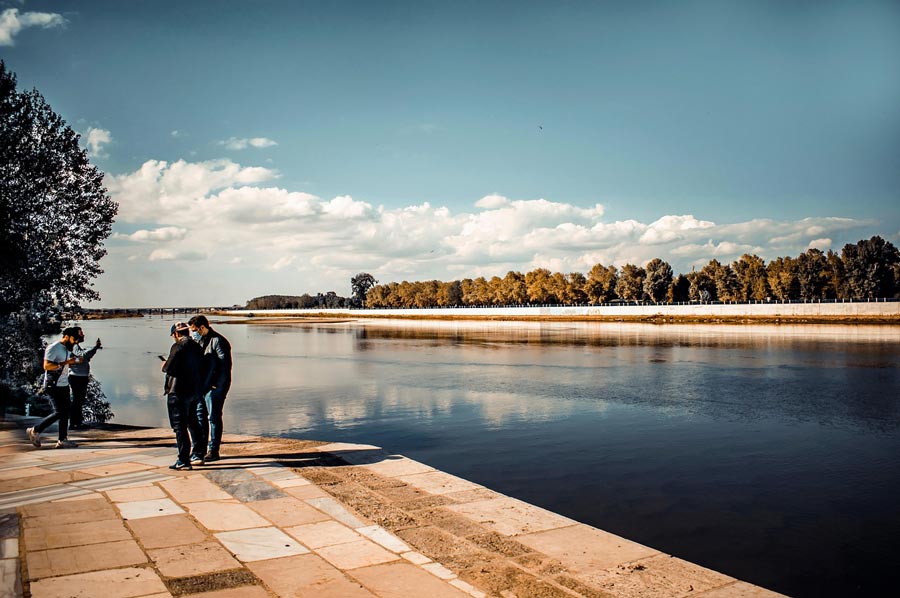
Evros - Just last week, we read about it again: the Meriç Nehri, or as the Greeks say, the Evros, which also forms the national border for almost the entire length of the border between Turkey and Greece.
The river has once again become the focus of daily news due to the large number of illegal border crossings by immigrants on their way to Europe.
Many of the border crossers have already died in their life-threatening attempts to cross the river, while at the same time, Greece is facing major problems due to the masses of refugees making it across the border.
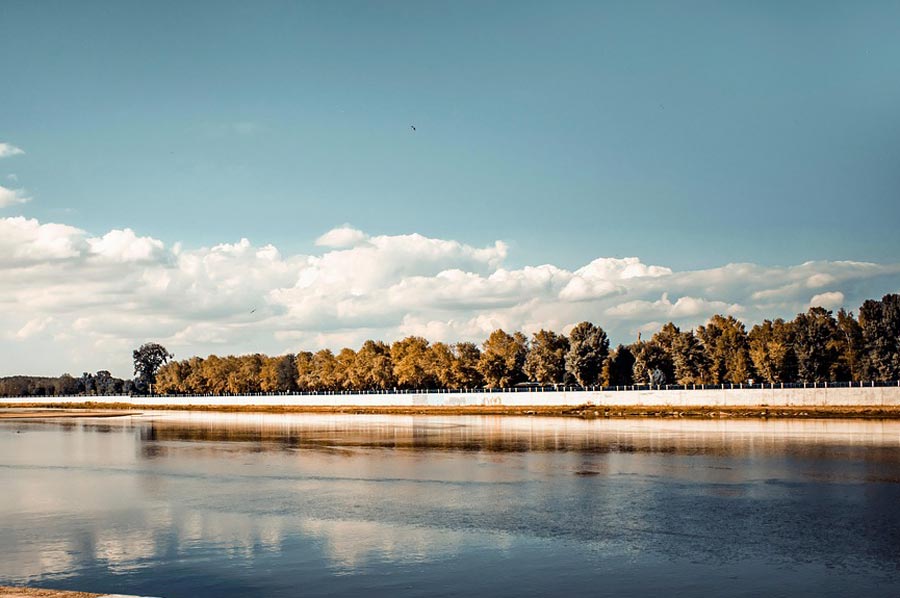
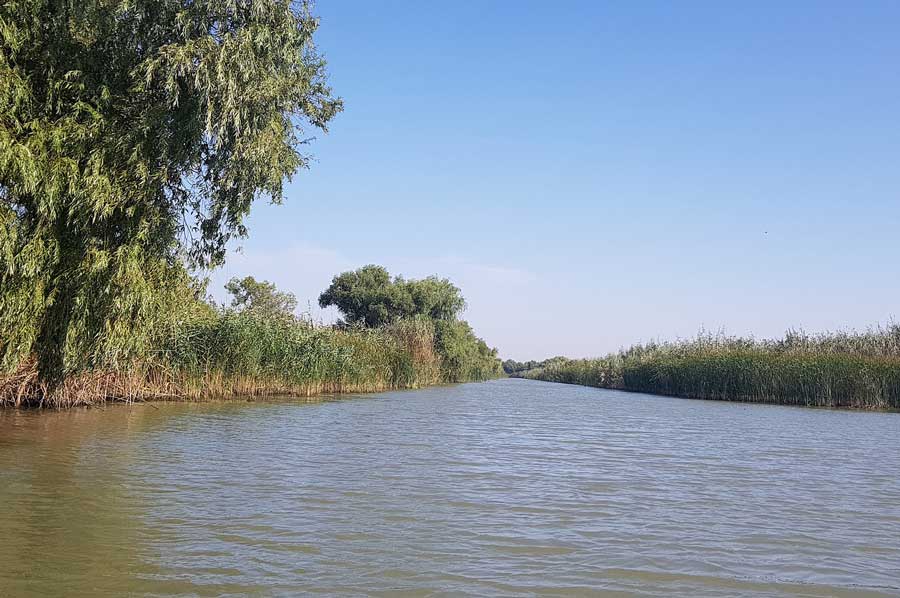
This historic river originates in the Rila Mountains in Bulgaria and flows eastward through the Maritsa Plain, named after it, with the important cities of Plovdiv and Edirne, then southward for about 515 kilometres, reaching the Aegean Sea near the ancient city of Ainos, close to the modern city of Kesan. Edirne is located about 220 km west of Istanbul, near the border triangle of Bulgaria, Greece, and Turkey, on the northern bank of the Meriç River, which forms the border between Turkey, Bulgaria, and Greece. The oldest buildings in Edirne are the ruins of the Roman city walls with a Byzantine tower, the Macedonian Tower, or Makedon Kulesi in Turkish.
As a border town with Turkey, Edirne is also an important trade hub, and waiting times can be correspondingly long.
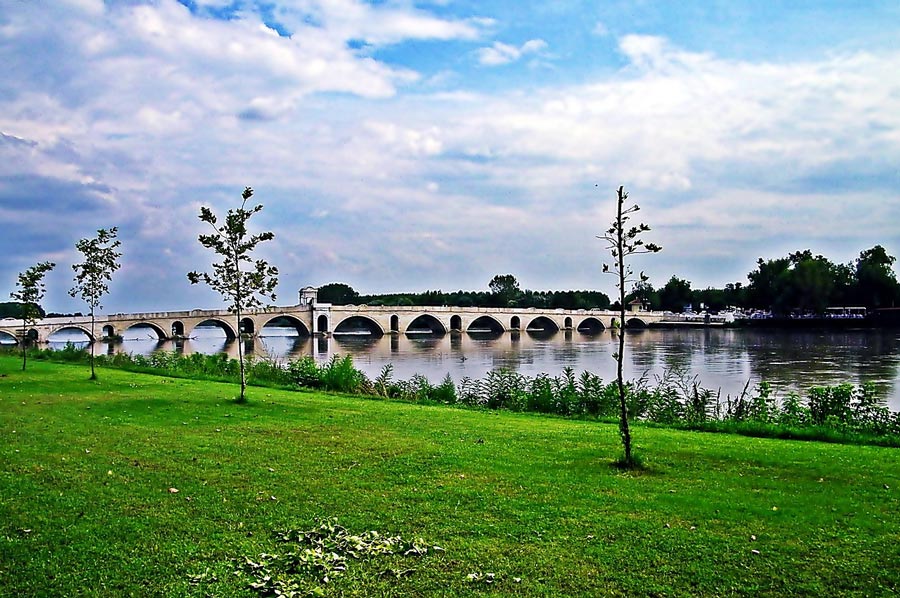 The river appeared several times in Greek mythology, as the Maenads are said to have thrown Orpheus' head and lyre into the Evros River after various disputes. The story goes that Orpheus was close to the god Apollo, who, like Orpheus, loved the muse. Both of them disliked Dionysus, the god of intoxication, due to his wild debauchery. It was these same intoxicated followers of Dionysus, the Maenads, who tore Orpheus apart, and his head and lyre were thrown into the river, where he continued singing all the way to the Aegean Sea. Even the sea could not stop Orpheus's song, and when his head washed ashore on Lesbos, the song continued there as well until Apollo put a stop to it. The reason for the Maenads' actions was supposedly Orpheus's renunciation of his love for women; he was even spoken of as a misogynist. His lyre was later placed in the heavens by the gods as a constellation.
Even later, there were repeated special events and conflicts on the Evros River:
- the Battle of Adrianople (324) between the Roman emperors Constantine and Licinius;
- the Battle of Adrianople (378) between the Visigoths and the Roman Empire;
- the Battle of Adrianople (813) between the Bulgarians and the Byzantine Empire;
- the Battle of Adrianople (1205) between the Bulgarians and the Latin Empire.
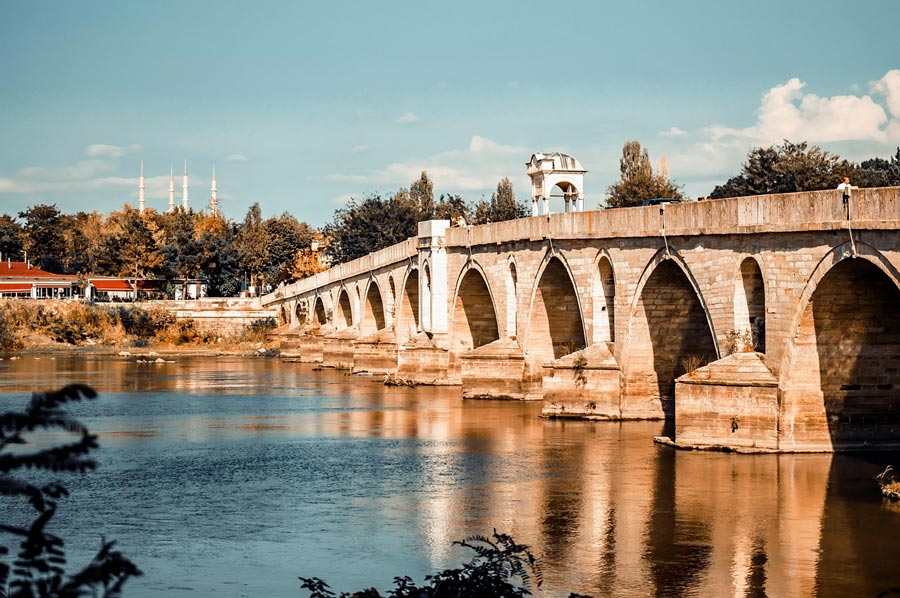 Also recorded in history is the Battle of Maritsa, when in 1371 a Christian Bulgarian-Serbian army confronted the Ottoman Empire in an attempt to halt the advance of Islam. The Ottoman Turks had continued to expand and made Edirne (then Adrianople) their capital in 1369. With a constellation of troops from diverse backgrounds, although numerically superior, the Ottomans were able to prevail after the Serb and Bulgarian leaders had fallen. The Turkish general Lala Şahin Paşa was the victor of the battle.
In the Treaty of Sèvres in 1920 and again in the Treaty of Lausanne in 1923, the Evros was designated as the border river between Greece and Turkey. Despite the Second World War, the Evros remained relatively quiet in the years that followed. This changed again when, as part of dam construction and reservoir projects, Greek and Turkish governments implemented significant river regulation measures, which frequently led to severe flooding in the lower reaches of the river. For years, Greek and Turkish politicians have repeatedly attempted to create a kind of Euroregion on the Evros-Meriç to address these problems. In 2010 alone, 41 people drowned while illegal immigrants attempted to reach Europe. The Greeks hope to stem the flow of refugees from Turkey with a border fence and water canals, which has led to renewed tensions.
The Trench on the Evros / By Frank Nordhausen
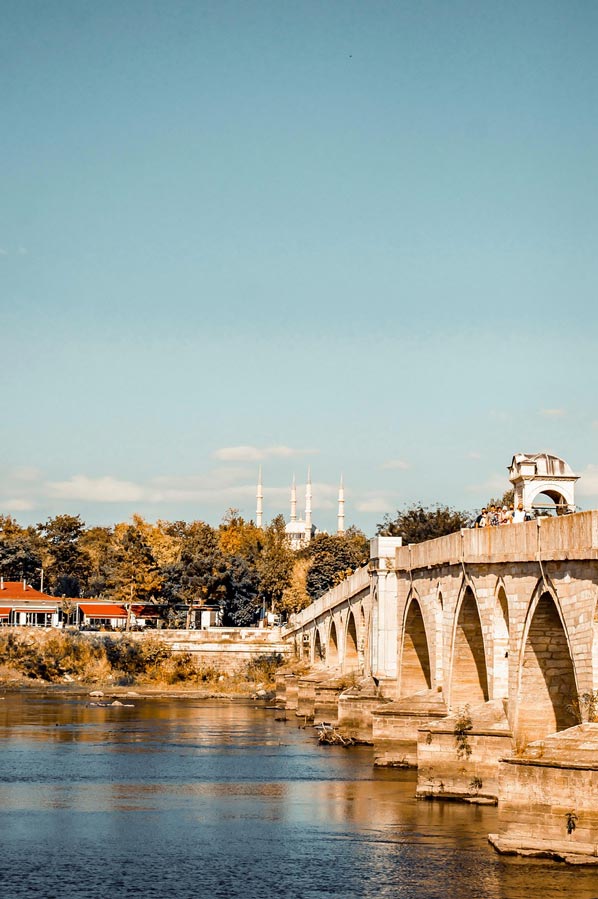 Edirne/Orestiada – The young Iraqi was probably just too excited. There's no other explanation for why he left his passport in the taxi. Karzan Afrasiaw Mohammed has a narrow face with intelligent black eyes. He is a New Year's child, born on January 1, 1990. Three months ago, he had himself taken from the bus station to the city centre in the eastern Turkish city of Edirne. Then his trail goes cold. All that remained was his passport in the taxi, which the driver later found.
Karzan Afrasiaw Mohammed is one of thousands from Iraq, Afghanistan, and Somalia for whom Edirne is the gateway to Europe. That is, if they make it to Greece. Or even to the border.
"In any case, we're not allowed to drive them here anymore," says Cengiz Mendeli, a Turkish taxi driver. The risk had become too great; he faced ten years in prison, and it wasn't worth it, says the friendly man with the gray beard. He stops on the gravel road ten kilometres beyond Edirne in the village of Bosna, where the road ends. Mendeli thoughtfully examines Karzan Afrasiaw Mohammed's passport, which he has kept as a souvenir. "You could say I made a lot of money from the refugees. But unfortunately, that's now in the past." Two shepherds drive their cows past, kicking up dust. From here, it's another three kilometres to Greece, to the European Union, straight through the cornfields.
Behind the apple trees
Anyone who wants to continue without valid papers must cross the green border on foot. Bosna lies in an area where the border river Meric, known in Greece as Evros, does not mark the border for a length of twelve kilometres. Only here can one walk into Greece. Of the 128,000 people who, according to authorities, crossed the border into Greece illegally last year, most crossed here, sometimes 400 in one night. "They sneak through the apple trees over there, often with children," says Turkish farmer Aslan Korkmaz, a laid-back man who keeps dairy cows and grows corn here. "Since the helicopters started flying, not as many have come," he says.
A year ago, the mayors of the Greek municipalities across the border sent a dramatic plea for help to Brussels. They felt hit by a wave of refugees that was steadily growing. The flow of people had sought a new outlet because it was becoming more difficult to cross the Mediterranean. 80 percent of all illegal immigrants entering the EU now take the route via Greece. The country faced fierce criticism. The reception centres along the border are said to have inhumane conditions, and the sanitary conditions are catastrophic, say aid organizations like Pro Asyl.
The Greek government declared that it could no longer cope with the onslaught alone and put forward two proposals: sealing the border with a high-tech fence like the one between the US and Mexico, and calling in the EU border protection agency Frontex for assistance. Since November 2010, 200 Frontex soldiers have been patrolling the Evros River with helicopters, searchlights, and thermal imaging cameras. Discussions about the fence continue.
Evros - A Moat to Protect Fortress Europe
 As it has now emerged, the Greeks had already conceived another plan. A secret plan. Just a month ago, Athens newspapers revealed what the military has been working on since December 2009: a gigantic construction project, perhaps the ultimate refugee barrier. A moat to protect Fortress Europe, along the entire border with Turkey. A project that evokes associations with the Cold War, with the Berlin Wall; only here, instead of building walls, they are digging.
The Greek newspapers are reporting as if it were a military front. The "high-quality trench" is to be 120 kilometres long, 30 meters wide, and seven meters deep, stretching from Bulgaria to Alexandropoulis on the Aegean Sea. 14.5 kilometres have already been completed. Twelve officers and 452 soldiers are deployed, and 156,900 hours of work have been completed so far.
The actual purpose of the rampart, writes the newspaper Gnomi, is military: to ward off Turkish tanks, "a purely defensive measure" against the archenemy and NATO partner. Yet the border line here is completely undisputed – unlike in the Aegean. "Significantly fewer refugees are already crossing the Evros Triangle," Gnomi noted, before admitting: "Now they are crossing the border at other points."
Namely, increasingly across the wide, dangerous Evros River itself. Which is why the trench is to be further built parallel to the river.
Twice through water, that's as reliable a barrier as it is for tanks, says Karl Kopp, European affairs officer for the aid organization Pro Asyl in Frankfurt, who knows the Evros border well. "It's all about how best to physically prevent people from crossing the border." Although the EU Fundamental Rights Fund has approved almost ten million euros to improve refugee aid, apparently not a cent of it has reached the crisis area so far. "Human rights are being massively violated there every day. But instead of alleviating the suffering, a moat is being built that further exacerbates the situation." One thing is clear, says Kopp: New border installations only delay refugee flows. The smugglers benefit from this, the refugees have to pay more, and there are more deaths. "This is our common border. German officials are also deployed there. Everything that happens there is also done in our name," says Kopp. "How is it possible that the other EU countries didn't know about the moat? Why isn't Brussels commenting on it? And who is paying for this madness?" The strangers sit in the "Utopia" café
In the Greek village of Nea Vissa, which is about the same distance from the border as Bosnia in Turkey, it's easy to understand why the project remained secret for so long. A military exclusion zone begins 200 meters beyond the village. Between corn and sunflower fields, one comes across sandbags, behind which are bored Greek soldiers shielding the border area. They shout: "No entry here." And from the hill at the edge of the village, near an illegal garbage dump, the minarets of Edirne are visible in the distance, but no trench. But somewhere back there, among the green, yellow, and brown of the fields, that's where it must be.
"Yes, there's a lot of digging going on here," says Georgios Dolis, the owner of the "Utopia" café on the village square in Nea Vissa. "You can see where our money is disappearing—in a trench." That morning, he saw five refugees in Nea Vissa. Now they're gone. "It used to be 50 to 100 people a day. Poor devils. They come at night, sit on the bench over there, and wait until it gets light. Then when I open the café, they buy water bottles and ask how far it is to Athens. They think it's very close." Athens is a thousand kilometres away.
So, the strangers sit in this village square in Europe, opposite a café called "Utopia," not far from a gas station that says "Welcome." It's the first image they have of the West.
Georgios Dolis has nothing against the migrants, unlike many of his fellow citizens. Take, for example, the 68-year-old former farmer Georgios Tsoknidis. The old man says he can't say anything bad about the strangers, but he doesn't trust them either. "Cars have already been stolen. You feel unsafe." He is pleased about the construction of the border ditch. "This helps against both – the refugees and the Turks. We can't expect anything good from the Turks. That's a fact."
Frontex officially denies having any knowledge of the construction work.
 Evangelos Maraslis, the deputy mayor of Orestiada, the nearby provincial capital, which was built in 1923 and laid out strictly according to a checkerboard pattern, sees things similarly. "We have to be vigilant," says Maraslis, a compactly built, resolute man. The refugees are the current problem, the Turks the existential one. The deputy mayor is also responsible for Nea Vissa and is aware of the construction progress on the border ditch. "They're working hard on it. The military believes it's making a difference."
And what if the Turks come not with tanks, but with fighter jets? Evangelos Maraslis shrugs. Thanks to Frontex, the number of illegal immigrants making it across the border at Nea Vissa has roughly halved, he says. "But of course they come anyway. The police arrest them and take them to a refugee camp. There they are registered, and then they are let go."
Then he says, "Let me show you something." He pulls his cell phone out of his pocket and plays a video. A boat on a river. The Evros. On the bank, a bloated corpse can be seen floating in the water. "One of many. They're dying because they want to come to us. Fifty drowned last year. Now many more are coming across the river again. Is that humane? Is that what we want?" Evangelos Maraslis has his own opinion. "The real problem can only be solved in the countries themselves: with a better life and democracy." He leans back in his chair and rubs his strong, farmer-like hands. "Well, and until then, we have Frontex."
The EU border agency maintains its regional office in Orestiada, in a small house across from the town's dilapidated police station. On duty there on this day is a young Dutchman who has only recently joined the force. He hasn't heard of the ditch. Officially, even Frontex headquarters in Warsaw denies any knowledge of the construction work.
How many millions of euros will the structure cost – euros that Greece doesn't have? The government in Athens has since confirmed the trench construction "for defense reasons," but hasn't disclosed any details, claiming it's a military project and national security. And in Orestiada, the police and administration are also reluctant to provide details. Only the military knows the costs, says police captain Jorgos Petropoulos.
"We work nine hours every day," reports a simple Greek soldier in Orestiada. "It's cheapest with us soldiers; we get our pay anyway." If you only consider the pay, the project costs at least half a million euros a month, plus the costs of compensating landowners, construction equipment, and fuel. "The machines consume so much diesel that we could only use half of our tanks and trucks in the winter. We ran out of fuel. Even the heating in the barracks was cut back," says the construction soldier. He even knows someone who recently photographed the trench near Nea Vissa. The images show a perfectly straight canal, partially already flooded, piles of earth next to it, and heavy military-gray excavators in a field. These are images the likes of which have never been published anywhere before. Getting near the trench is impossible.
Alleged Attack Plans
The very first news of the construction of the protective wall on the Evros River alarmed EU candidate Turkey. The new Turkish EU Minister Egemen Bagis explained that they are observing the excavation work in the neighbouring country with "concern and astonishment." He can only hope that Greece is not trying to provoke a foreign policy crisis to distract from its financial problems.
A secret document from the Greek General Staff from the fall of 2010 is reported. It allegedly states that Turkey is planning an attack and has new tanks that can only be stopped with a 30-meter-wide trench. The days following the Turkish parliamentary elections in June 2011 are particularly sensitive. If Prime Minister Recep Tayyip Erdogan loses, the military will cross the border.
Now Erdogan has won, and no Turkish tanks have crossed the border. But the digging is making everyone nervous. "It's also surprising that Greece is spending money on such a project while struggling through a financial crisis," said Minister Bagis. A trench is ultimately always a trap; the only question is for whom: "Those who build trenches fall into it themselves."
Turkey, on the other hand, does not want to dig new trenches, but rather overcome existing ones. "Turkey wants to work toward a future in which our soldiers spend their holidays together in the Aegean instead of on manoeuvres." Turkish newspapers wrote about the "Metaxas Line" and mocked "Greek paranoia." One blogger wrote: "By the time they finish the trench, they'll be so broke that we can simply buy the land. But do we want that?"
Please also read: