Greece, Hellenism and the Roman Empire
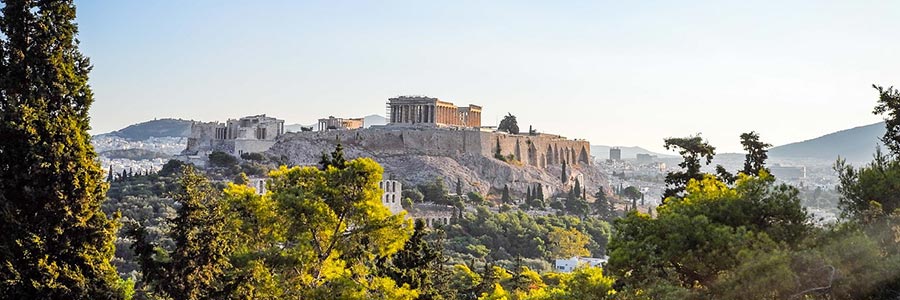
antike header

Classical antiquity differs from previous and subsequent epochs through common and consistent cultural traditions, the influence of which continues to be influential in many subject areas right up to modern times. It covers the history of ancient Greece, Hellenism and the Roman Empire. The Roman Empire politically unified the Mediterranean from the 1st century AD. Rome's cultural influence was primarily felt in the western part of the empire, while in the east the Greek-Hellenistic tradition (Byzantium) continued alongside oriental traditions until it was pushed back in the course of Islamic expansion (from 632 AD).

In a broader sense, antiquity also includes the history of the ancient Near Eastern civilizations of Egypt, Mesopotamia (Sumer, Akkad, Babylonia, Assyria), the Iranian region (Elam, Media, Persia) and Asia Minor (Phoenicia, Israel, Aram-Damascus). around the beginning of writing around 3500 BC. BC began. This larger period of about 3500 B.C. BC to the end of antiquity is preferably referred to as antiquity to distinguish it from the narrower concept of antiquity limited to the Greco-Roman world, or it is used in relation to the Middle East until its incorporation into the Macedonian-Greek sphere of influence under Alexander the Great ( around 330 BC) spoken by the Ancient Near East.

Aulus Cornelius Celsus - Roman Doctor?

  • Written by Portal Editor
  • Category: Antiquity
  • Hits: 95616
Aulus Cornelius Celsus - Roman Doctor

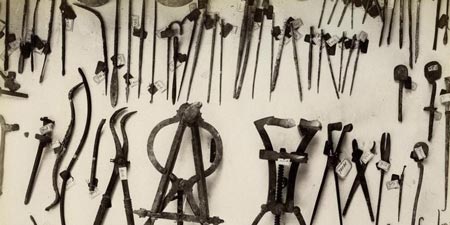
Aulus Cornelius Celsus - Always people tried to work in the field of medical treatment to help others when injured or helpless. Some big steps could be done in Greek and Roman period because of development in research and for the first time experiences were written down.

Coinage - History of the Means of Payment "Coin"

  • Written by Portal Editor
  • Category: Antiquity
  • Hits: 133
Coinage - History of the Means of Payment

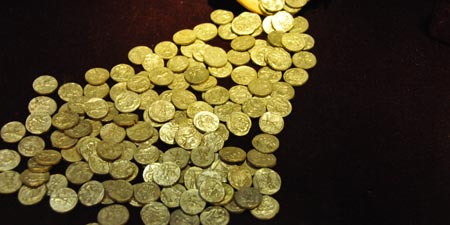
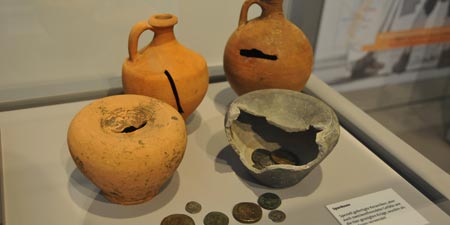
Coinage - During our travels through the ancient cities and the associated visits to museums in the various regions of Asia Minor, we often encountered coin collections in the exhibitions that were already used as a means of payment in antiquity.

Pamphylia – from Attaleia to Side

  • Written by Portal Editor
  • Category: Antiquity
  • Hits: 142
Pamphylia – from Attaleia to Side

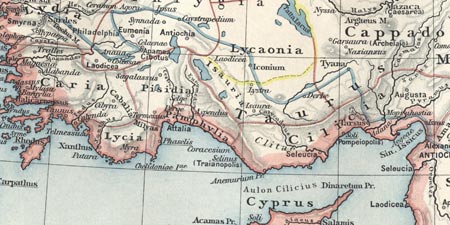
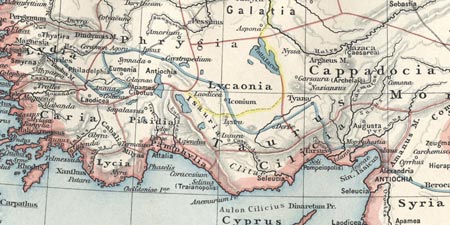
Pamphylia was an ancient region on the central southern coast of Asia Minor, roughly situated between the modern cities of Antalya and Mersin, bordered by the Taurus Mountains in present-day Turkey.

Pisidia - Pamphylia and Lycia to the south

  • Written by Portal Editor
  • Category: Antiquity
  • Hits: 205
Pisidia

Pisidia – The name Pisidia also referred in antiquity to a region in Asia Minor, geographically stretching from the coastal plain near Antalya in the south to the lakes near present-day Burdur, after crossing the Taurus Mountains.

Limes – A Border on the Edge of the Empire

  • Written by Portal Editor
  • Category: Antiquity
  • Hits: 152
Limes – A Border on the Edge of the Empire

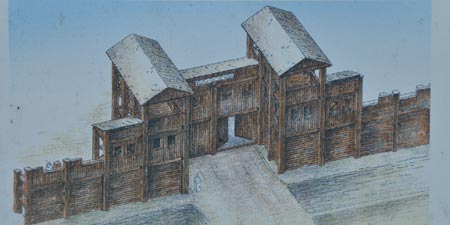
Limes – Rome's Border with the Barbarians – A companion book to the permanent exhibition at the Limes Museum in Aalen. Published by the Württemberg State Museum Stuttgart. With 342 illustrations, mostly in colour.

Artemisia - Ruler of Ancient Halicarnassus

  • Written by Portal Editor
  • Category: Antiquity
  • Hits: 2686
Artemisia - Ruler of Ancient Halicarnassus

Artemisia was a daughter of Lygdamis. Around 480 BC, she ruled Halicarnassus, the modern-day Bodrum, as guardian of her son Pisindelis. She was subject to the suzerainty of the Persian King Xerxes I.

Turkiye - Prehistory and Antiquity of Asia Minor

  • Written by Portal Editor
  • Category: Antiquity
  • Hits: 3198
Turkiye - Prehistory and Antiquity of Asia Minor

Large parts of what is now Turkey were already settled in the Paleolithic period, so the Neolithic period began quite early, particularly in the east of what is now Turkey.

Water supply in the Roman Empire

  • Written by Portal Editor
  • Category: Antiquity
  • Hits: 4803
Water supply in the Roman Empire

The quality of execution in the Roman Empire is absolutely comparable to the technology of road construction and in some cases very cleverly combined with road construction is the construction of the water supply systems in the cities of the empire.

The tribal organization of the Celts in Asia Minor

  • Written by Portal Editor
  • Category: Antiquity
  • Hits: 5223
The tribal organization of the Celts in Asia Minor

In our article about the origin of the Celtic immigrants to Asia Minor, we had already roughly written about the local division of the tribes. Basically, the ethnic group of the Celts who immigrated to Asia Minor is also referred to as Galatians.

Technical development in the major cities of the Romans

  • Written by Portal Editor
  • Category: Antiquity
  • Hits: 3049
Technical development in the major cities of the Romans

The supply of the larger cities of the Roman Empire - Rome already had 800,000 inhabitants in the first century AD - could only be ensured through structural adjustment of the surrounding rural regions, in the course of which rural estates close to the city or on trade routes began to meet the growing demand through market-oriented forms of production.

Potnia Theron - the controller of the wild

  • Written by Portal Editor
  • Category: Antiquity
  • Hits: 4631
Potnia Theron - the controller of the wild

In ancient times, Potnia Theron - the ruler of the wild, was considered a female deity who, as the mistress of wild animals, was responsible for protecting them.

Ziyaret Tepe - Assyrians did not rely on Scripture alone

  • Written by Portal Editor
  • Category: Antiquity
  • Hits: 3037
Ziyaret Tepe - Assyrians did not rely on Scripture alone

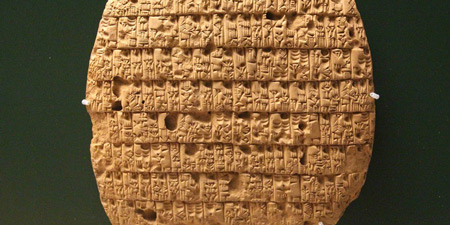
"The invention of recording systems is a milestone in human history. Any find that can help shed light on these milestones is therefore an important tool in understanding the progress of mankind," says researcher John MacGinnis in Cambridge Archaeological Journal, 2014. What is the background of this sentence?

Alexander the Great - Conquerer from Pella

  • Category: Antiquity
  • Hits: 26727
Alexander the Great

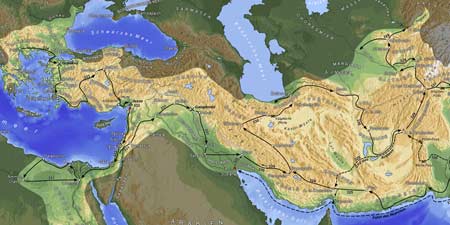
During our travels and visits of ancient cities there was always one name mentioned: Alexander the Great. Everybody learned about Alexander during history lesson at school for being the leader of one of the biggest empires ever.

Apollonios of Perge - Master of Mathematics

  • Category: Antiquity
  • Hits: 20689
Apollonios of Perge

It was Apollonius who gave the ellipse, the parabola, and the hyperbola the names by which we know them. The hypothesis of eccentric orbits, or equivalently, deferent and epicycles, to explain the apparent motion of the planets and the varying speed of the Moon, are also attributed to him.

Herodotus - Greek Historian from Halicarnassus

  • Category: Antiquity
  • Hits: 991864
Herodotus - Greek Historian

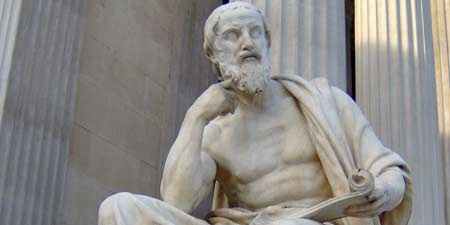
Herodotus was an ancient Greek historian  who lived in the 5th century BC (c. 484 BC – c. 425 BC). He was born in Caria, Halicarnassus ( Modern day Bodrum, Muğla, Türkiye). He is regarded as the "Father of History" in Western culture.

Hesiod - Greek Oral Poet and Mythologist

  • Category: Antiquity
  • Hits: 578228
Hesiod - Greek Oral Poet

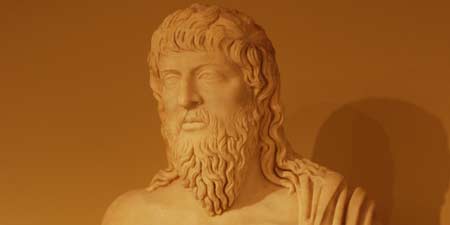
Hesiod (Hesíodos) was a Greek oral poet and is often identified as the first economist. His date is uncertain, but leading scholars favour the eighth century BC for when Hesiod lived.

Homer - Ilias - ancient historical poet

  • Category: Antiquity
  • Hits: 28210
Homer - Ilias

The ancient Greeks generally believed that Homer was an historical individual, but modern scholars are skeptical: no reliable biographical information has been handed down from classical antiquity, and the poems themselves manifestly represent the culmination of many centuries of oral story-telling and a well-developed "formulaic" system of poetic composition.

Strabo - Greek Historian and Geographer

  • Category: Antiquity
  • Hits: 72656
Strabo - Greek Historian and Geographer

Strabo was a Greek historian, geographer and philosopher. Strabo was born to an affluent family from Amaseia in Pontus (modern Amasya, Turkey), a city which he said to be situated the approximate equivalent of 75 km from the Black sea. 

News

Travelling

Culture

History

Life | Outdoors