Sirmione at Lake Garda - Scaliger Castle (Castello Scaligero)
- Written by Portal Editor
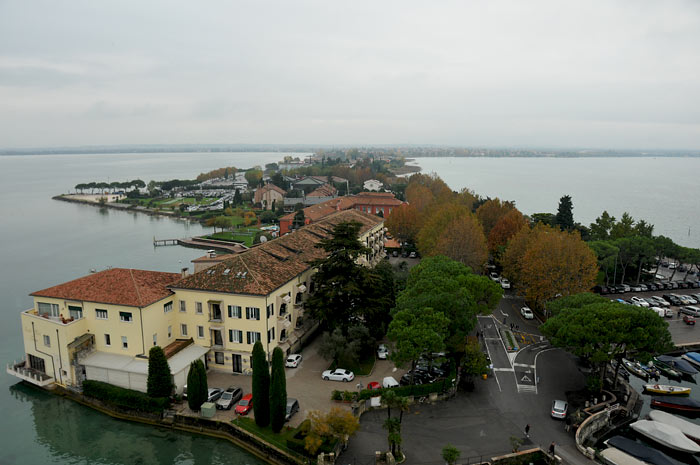
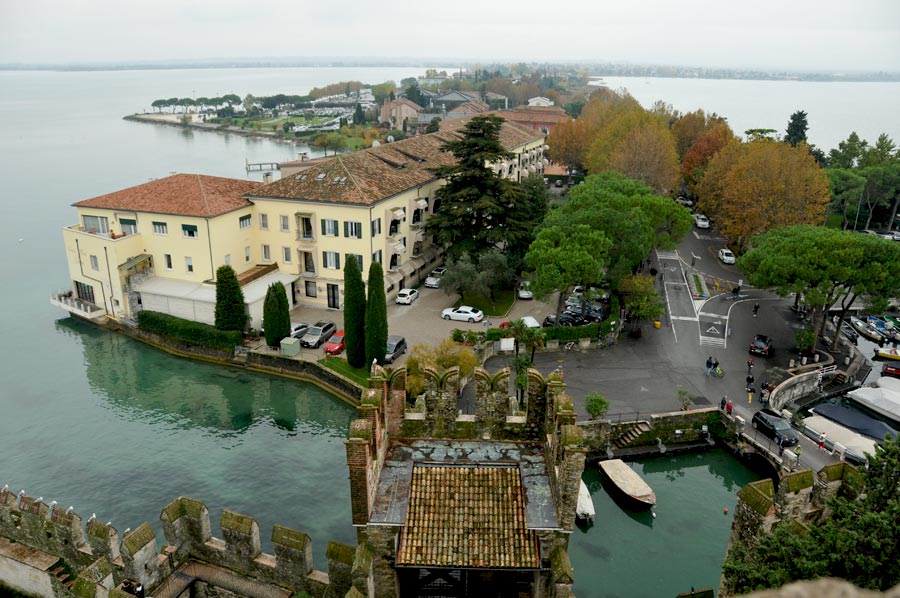
Despite the grey skies, we set off toward Sirmione, always following the coastal road of Lake Garda. Sirmione, the small town with the famous Scaliger Castle and a population of about 8,000, is partly located on a very narrow peninsula on the southern shore of Lake Garda.
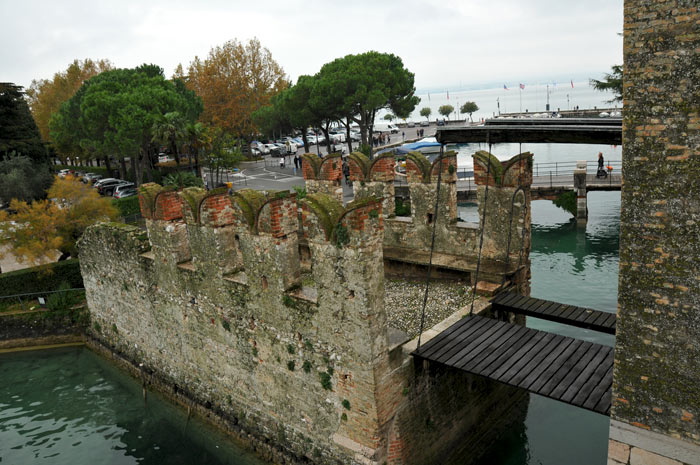
Almost at the end of the peninsula, there are large parking areas, which, while quite expensive, provide convenient access to the old town centre and the castle complex, which was a plus in this weather. Only residents are permitted to drive into the old town. Our first stop, of course, was over one of the drawbridges and into the fortress.
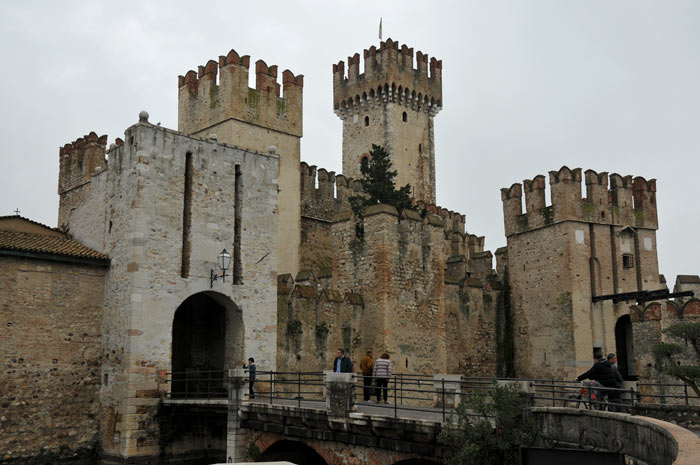
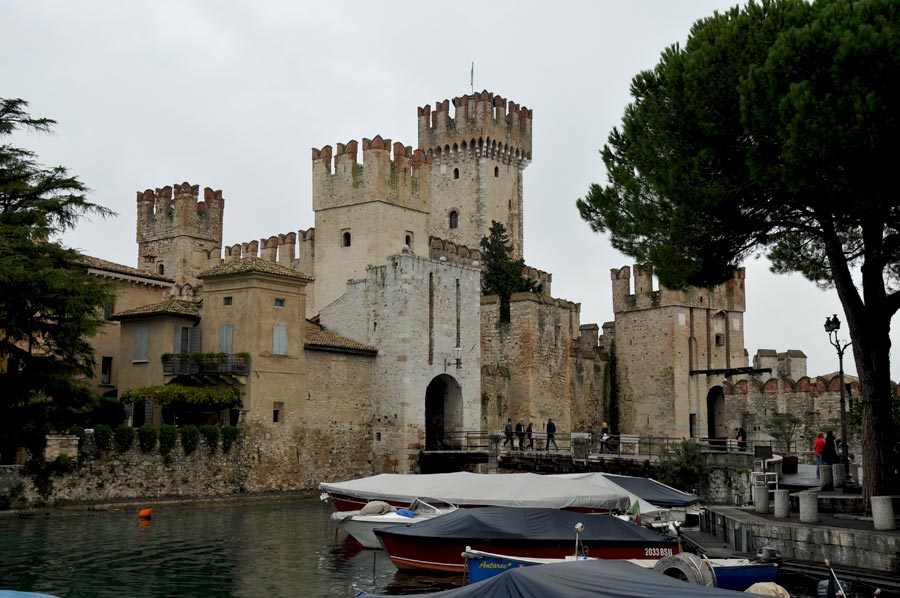
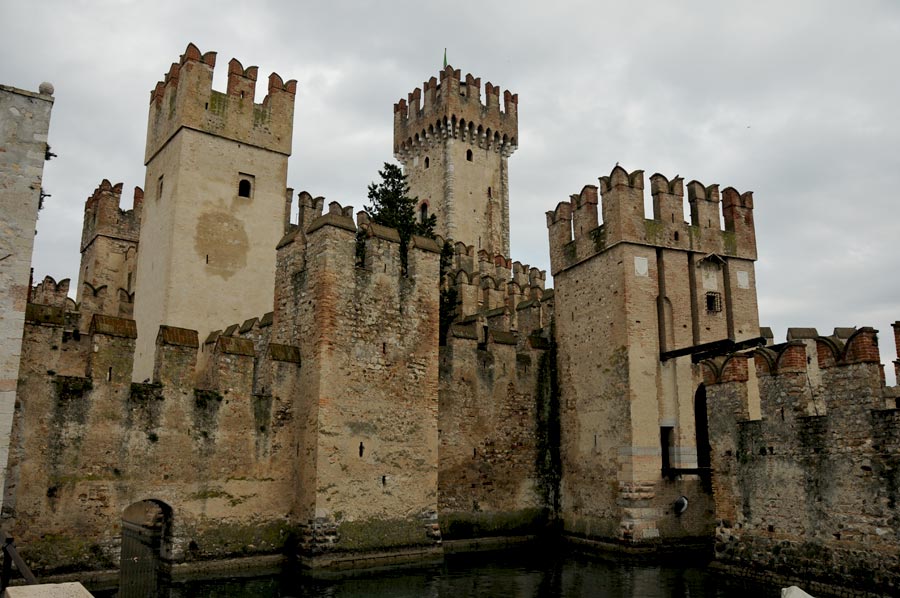
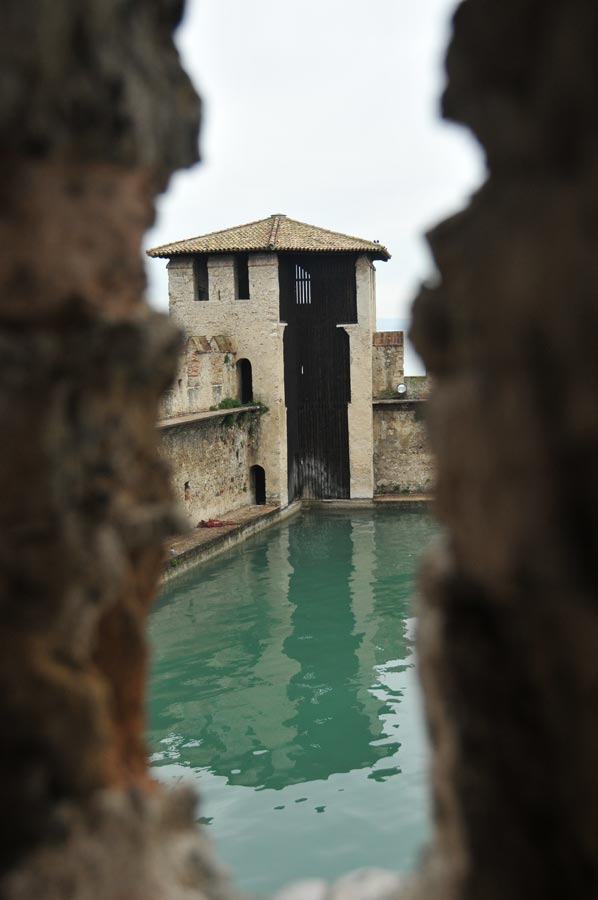
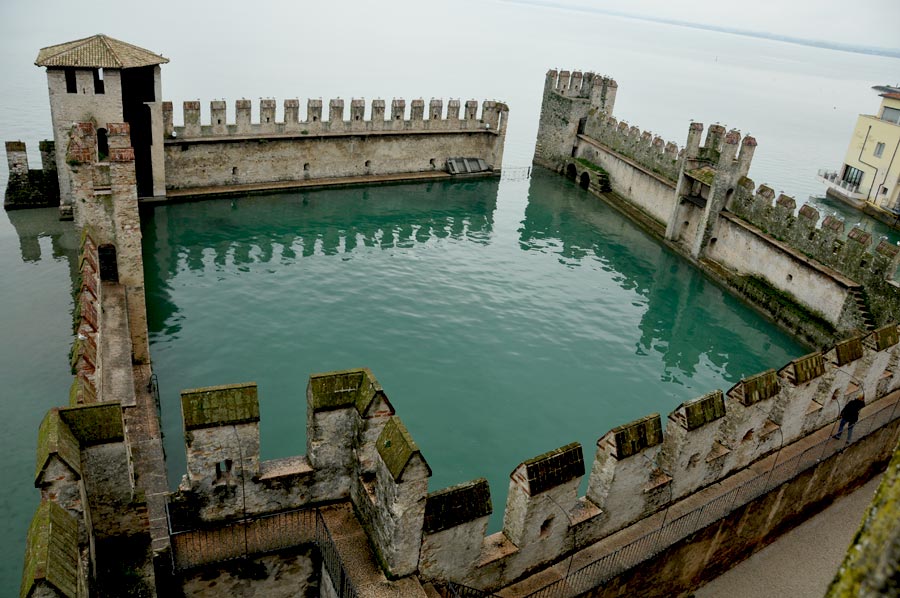
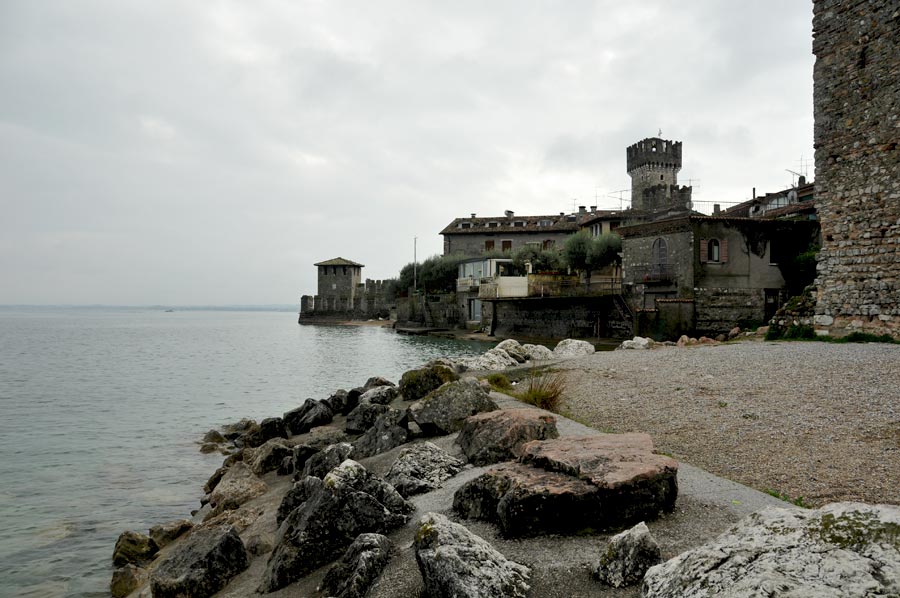
The castle in Sirmione, with its large harbour basin and complex circular wall, completely separates the town from the mainland and still dominates Sirmione's cityscape today. Under the Venetians, the Scaliger family built the fortress with its typical swallowtail battlements on the foundations of the old Roman castle at the request of the lord of Verona, Mastino I della Scala, in the 13th century.
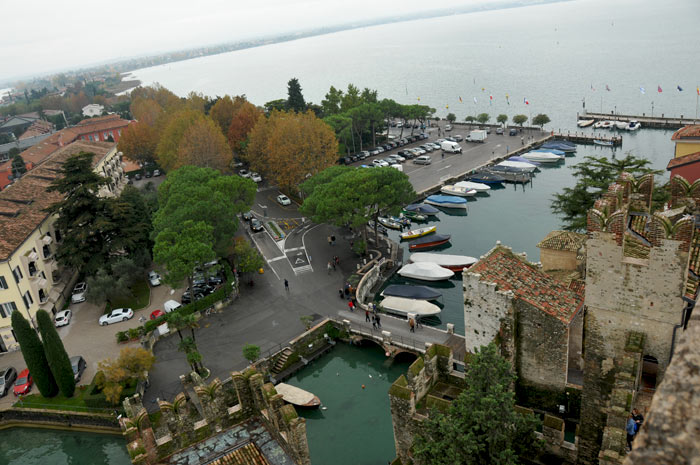
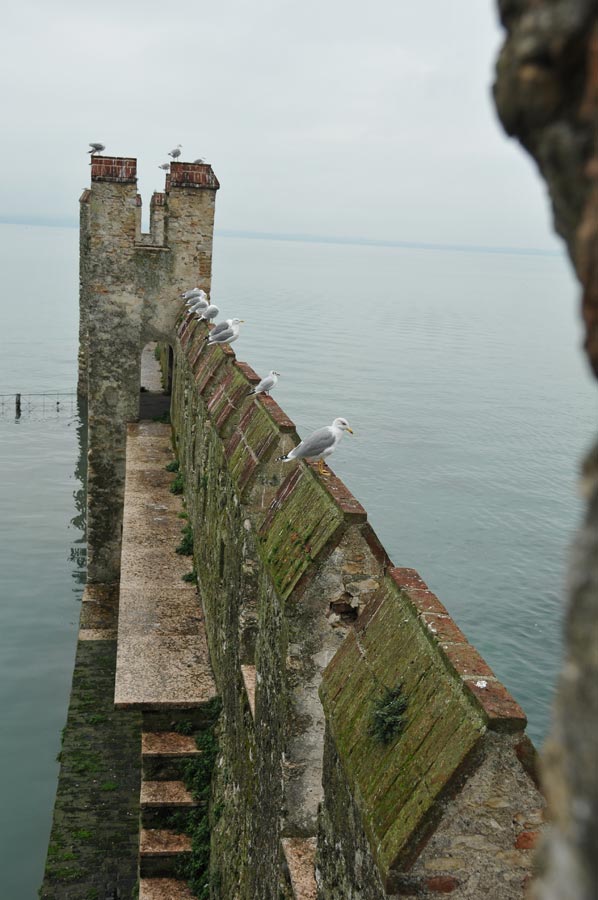
The circular route through the castle leads over the old battlements and through the corner towers, clearly revealing the sophisticated defensive lines of thick walls, staircases, and drawbridges over deep moats. Loopholes show how the castle soldiers controlled the route to Sirmione from here.
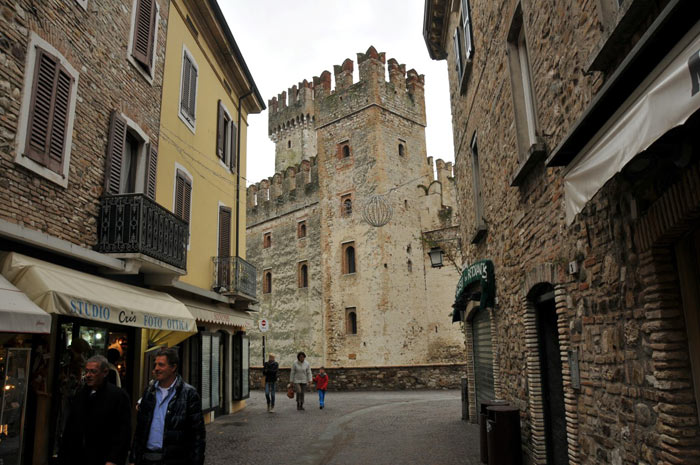
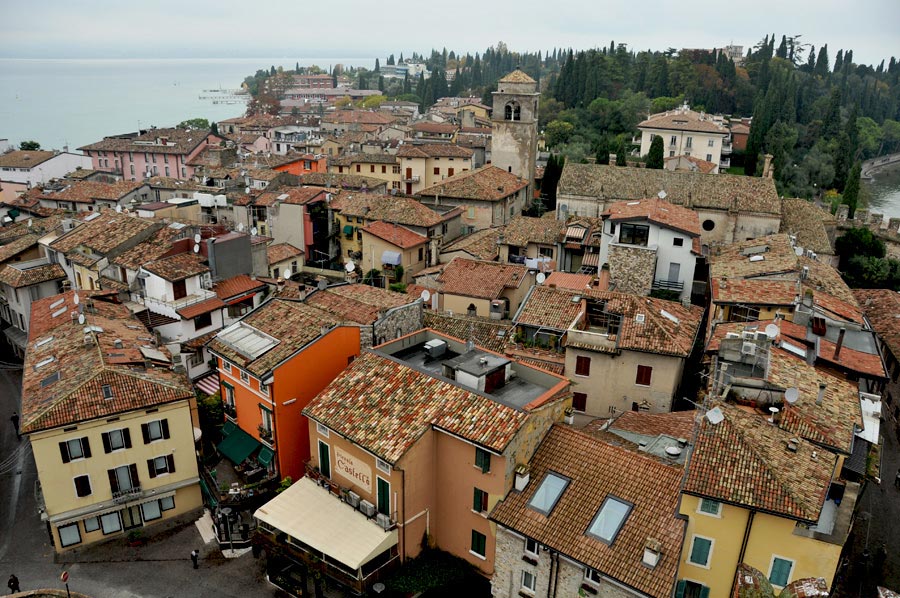
The view of the narrow streets of the old town also provides a deep insight into the history of the Sirmione peninsula. In the 13th century, the della Scala family expanded its domain to Lake Garda and took over the government of Verona and Sirmione in 1262. In 1276, Mastino I della Scala took action against the deeply religious Patarini, who resented the wealth and power of the Church.
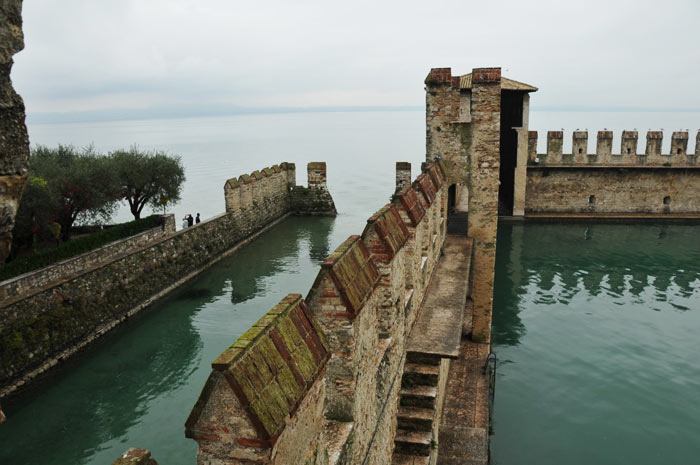
During Venetian rule, the originally Roman fortifications were continually rebuilt and expanded, and the harbour also served to secure the Lake Garda fleet. The 47-meter-high Mastino Tower in the large courtyard served as the armoury and main building of the military complex in the Middle Ages; today it offers a colossal view of the fortress and the peninsula.
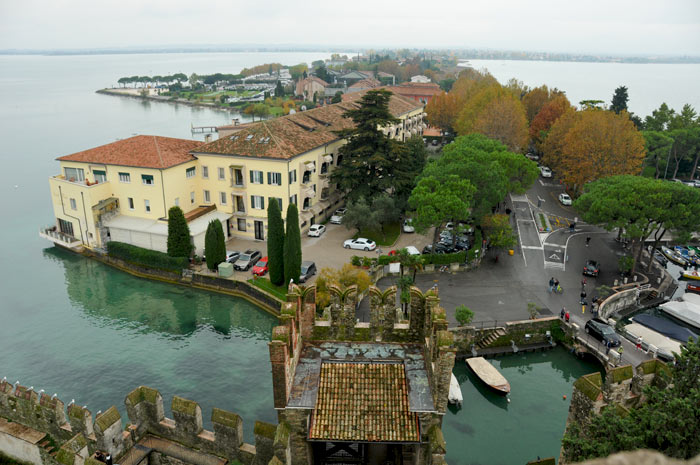
The tip of land on which Sirmione is located is triangular in shape, with a largest side length of 1,250 meters and a width of 750 meters, and consists of three hills: "Cortine", "San Pietro in Mavino", and the "Grotta di Catullo".
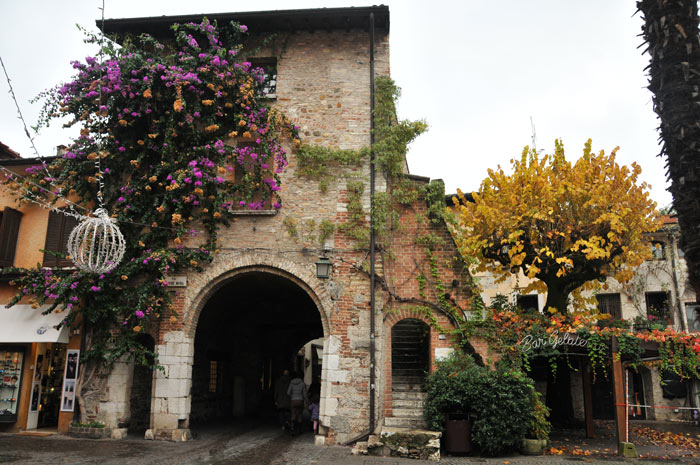
After a tour of the castle complex, we enter the old town through one of the city gates. Winding and narrow streets await us. It immediately becomes clear why access is only permitted to local residents.
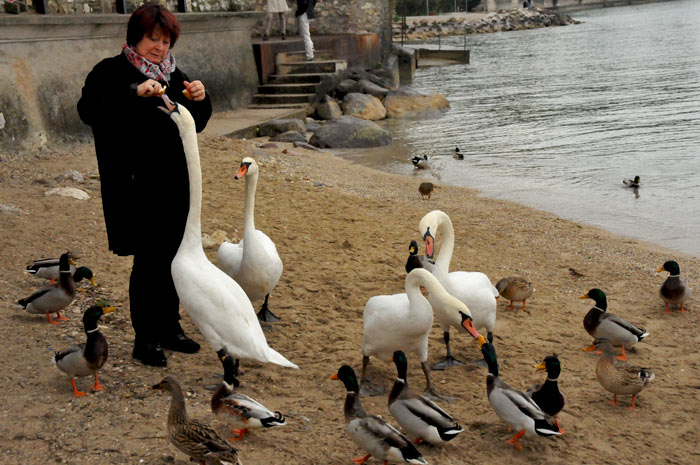
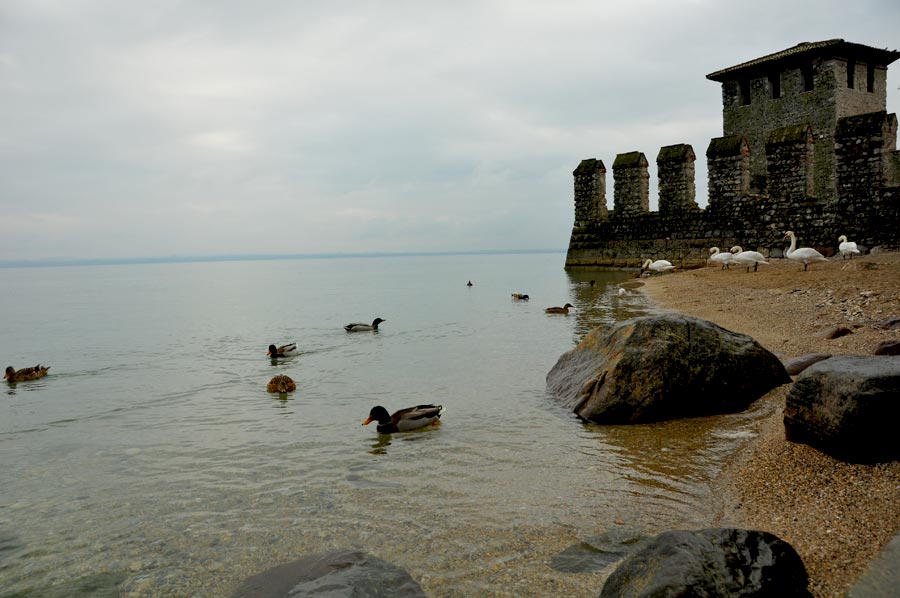
Next to the ancient harbour, we encounter this woman standing among a group of swans demanding food. The swans' necks lengthen almost infinitely.
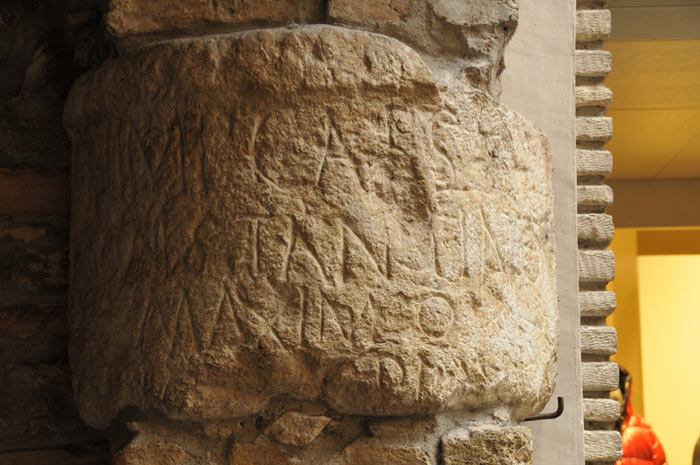
Already at the first city gate, we encounter a remnant of the Roman past in the form of this built-in artifact. The history of the peninsula dates back to the Stone Age in the 2nd millennium BC. As early as the 17th century BC, settlements of pile dwellings emerged in the shallow waters, stretching from Salò to Garda. Sirmione gained great importance due to its location on important traffic routes. The "Itinerarium Antonini," a directory of Roman imperial roads from the 3rd century, already mentions the existence of a place where travellers could stop, the "mansino Sermione," located in the middle of the road between Brescia and Verona.
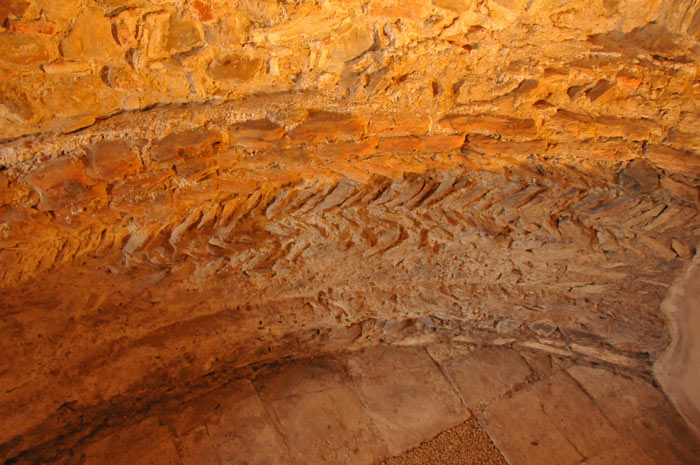
During restoration work on the church, the foundations of a Roman temple were also discovered, which today, in an adjoining room, offers visitors an insight into the long history of settlement on the peninsula. During Roman times, the peninsula was a holiday resort for high-ranking families. Of the three villas built during this period, only the "Grottas of Catullus" on the last of the three hills remain today. The poet Gaius Valerius Catullus, who lived in Rome in the 1st century BC, occasionally visited this place, thus giving the villa its name.
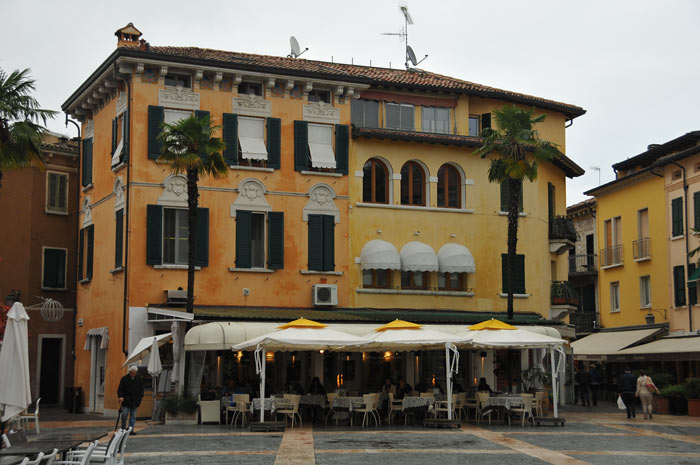
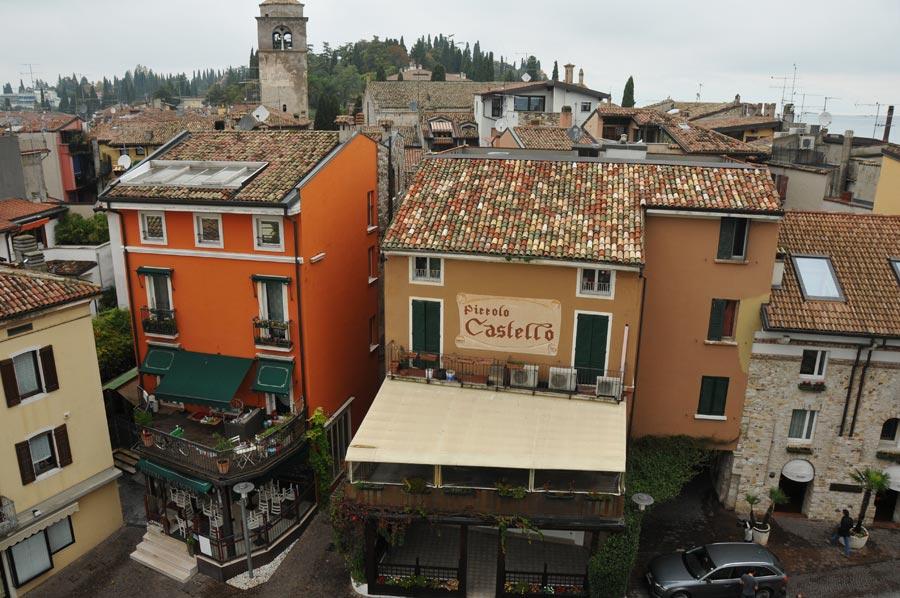
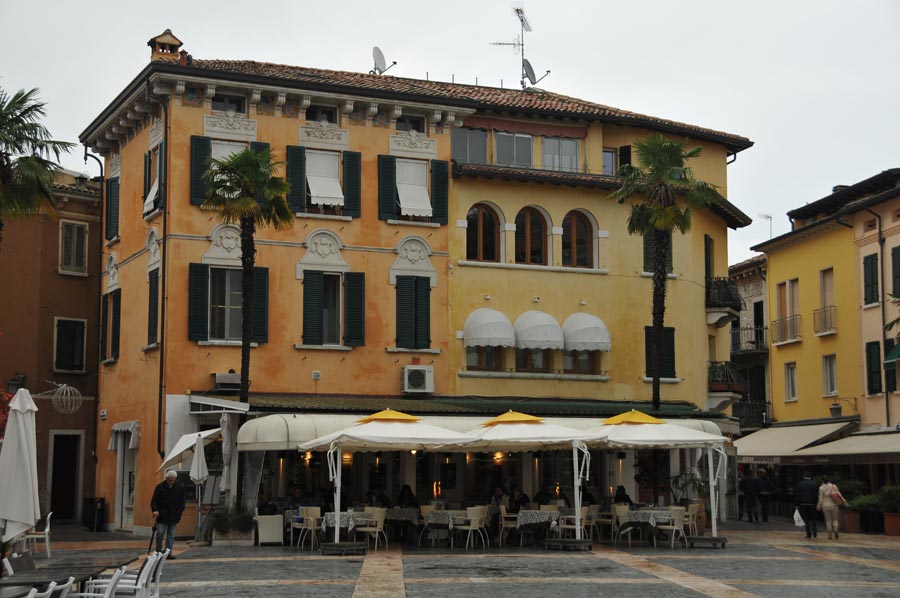
The old town of Sirmione is characterized by narrow streets and quiet squares like this piazza, where visitors will find numerous boutiques and antique shops, cafés, and restaurants, even on rather grey days.
Please read as well:
Magirus Deutz Camper at Zampetas in Thessaloniki
Silverio de Luca Square – a special tribute in Wittmund
-
 Sirmione at Lake Garda - ancient Roman Villas
Sirmione at Lake Garda - ancient Roman Villas
Sirmione at Lake Garda - ancient Roman Villas
-
Sirmione at Lake Garda - ancient Roman Villas
Sirmione at Lake Garda - ancient Roman Villas
-
Sirmione at Lake Garda - ancient Roman Villas
Sirmione at Lake Garda - ancient Roman Villas
-
Sirmione at Lake Garda - ancient Roman Villas
Sirmione at Lake Garda - ancient Roman Villas
-
Sirmione at Lake Garda - ancient Roman Villas
Sirmione at Lake Garda - ancient Roman Villas
-
Sirmione at Lake Garda - ancient Roman Villas
Sirmione at Lake Garda - ancient Roman Villas
-
Sirmione at Lake Garda - ancient Roman Villas
Sirmione at Lake Garda - ancient Roman Villas
-
Sirmione at Lake Garda - ancient Roman Villas
Sirmione at Lake Garda - ancient Roman Villas
-
Sirmione at Lake Garda - ancient Roman Villas
Sirmione at Lake Garda - ancient Roman Villas
-
Sirmione at Lake Garda - ancient Roman Villas
Sirmione at Lake Garda - ancient Roman Villas
-
Sirmione at Lake Garda - ancient Roman Villas
Sirmione at Lake Garda - ancient Roman Villas
-
Sirmione at Lake Garda - ancient Roman Villas
Sirmione at Lake Garda - ancient Roman Villas
https://www.alaturka.info/en/blog-en/7012-sirmione-at-lake-garda?layout=default%2Famp%2Famp#sigProIda9b967d6b6