


Nysa of Caria - Buleuterion and river crossing
- Written by Portal Editor
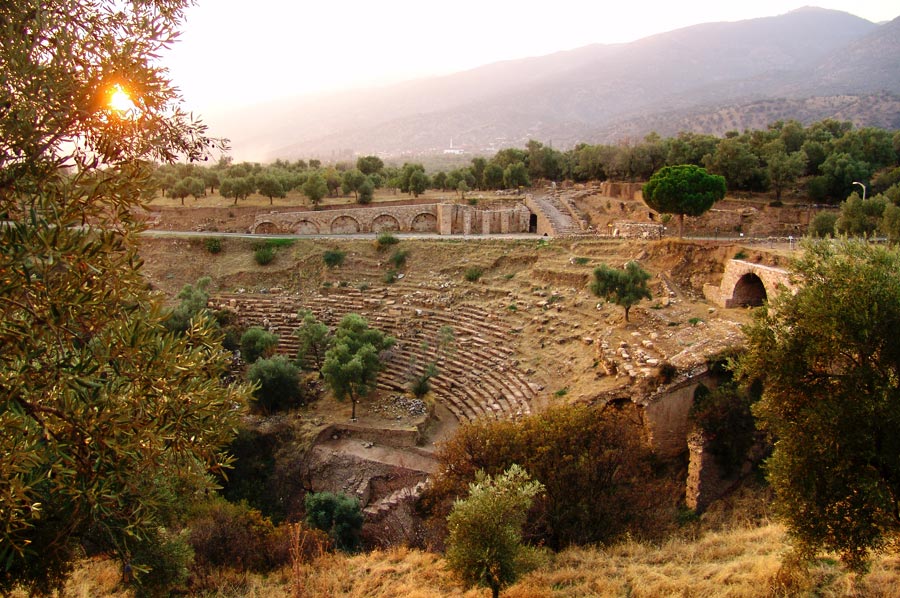
Nysa – A Touch of Romance in the Ancient City – We were on our way to Izmir and Kusadasi for additional reports and photos when we saw the sign for the ancient city of Nysa in Sultanhisar.
We've passed by here several times before, so we quickly checked our schedule and made a swift decision: let's make a stop here and visit Nysa.
 The ancient city of Nysa in Caria (Asia Minor), on the border with Lydia, lies 30 km east of Aydin, about 2 km northwest of the modern village of Sultanhisar, and is a famous early Greek-Roman settlement in Western Anatolia. During the Roman Empire, Nysa was known as a centre of learning; the historian Strabo was educated here around 50 BC. The Stoic philosopher Apollonius and the Homeric scholar Menecrates also came from Nysa. In Late Antiquity, Nysa was a bishopric in the Eparchia Asia. The renowned traveller Strabo of Amaseia referred to the city as a "twin city" due to its location on both banks of a stream. Nysa experienced its golden age during the Roman Empire and remained important during the Byzantine and Ottoman periods. Its prosperity during the Roman Empire was largely due to the sanctuary of Pluto and Kore in Acharaka, located 4 km to the west, which boasted famous sulphur springs.
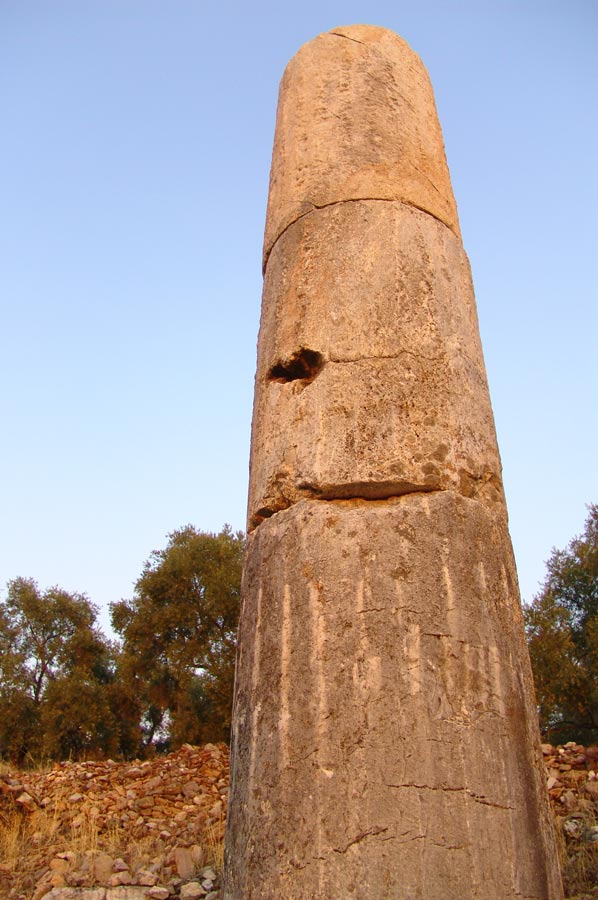
 The following structures have survived to this day: the gymnasium, the stadium, the theatre, the library, the tunnel, three bridges, the bouleuterion, and the Roman-Byzantine baths. The sanctuary of Pluto and Demeter in Acharaka, near Salavatli, lies approximately 7 km west of ancient Nysa.
The first archaeological investigations were carried out by Lieutenant Walther von Diest in 1907 and 1909. Excavations by the Museum of İzmir at the theatre and the bouleuterion took place in the 1960s, followed by excavations by the Museum of Aydın at the theatre from 1982 to 1988. Since 1990, a team from Ankara University, led by Vedat İdil, has been excavating in Nysa. Since 2002, the library has been excavated by archaeologists from the University of Freiburg, led by Volker Michael Strocka.
Bridge of Nysa
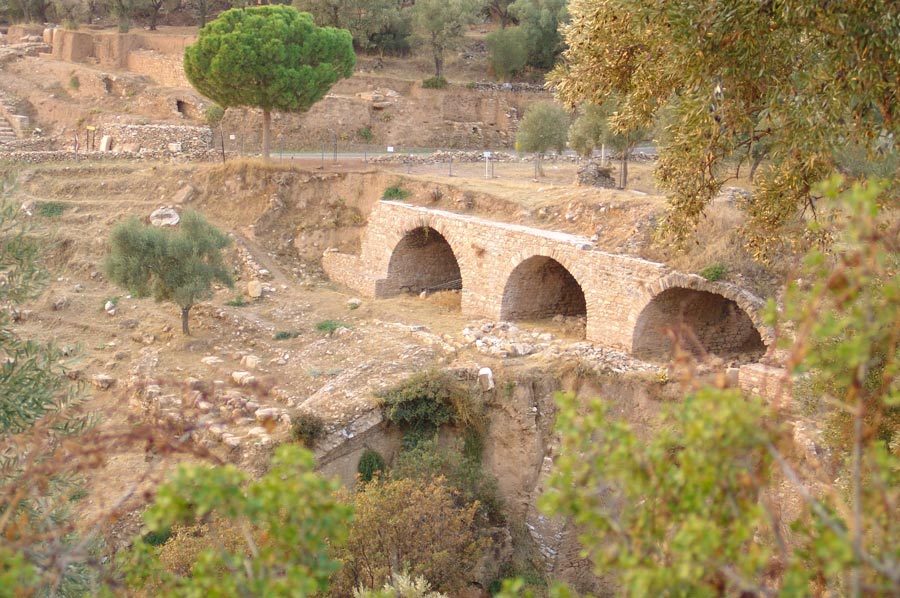
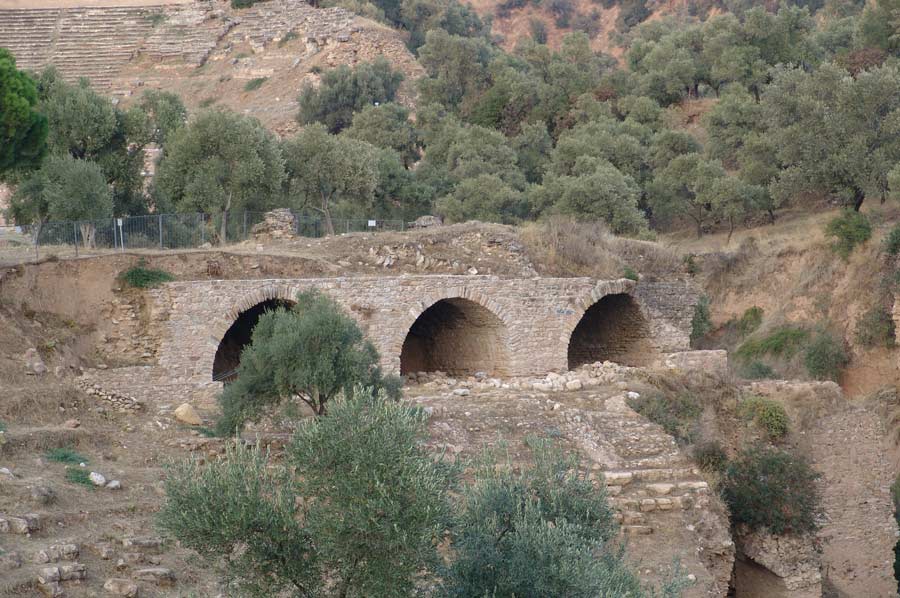
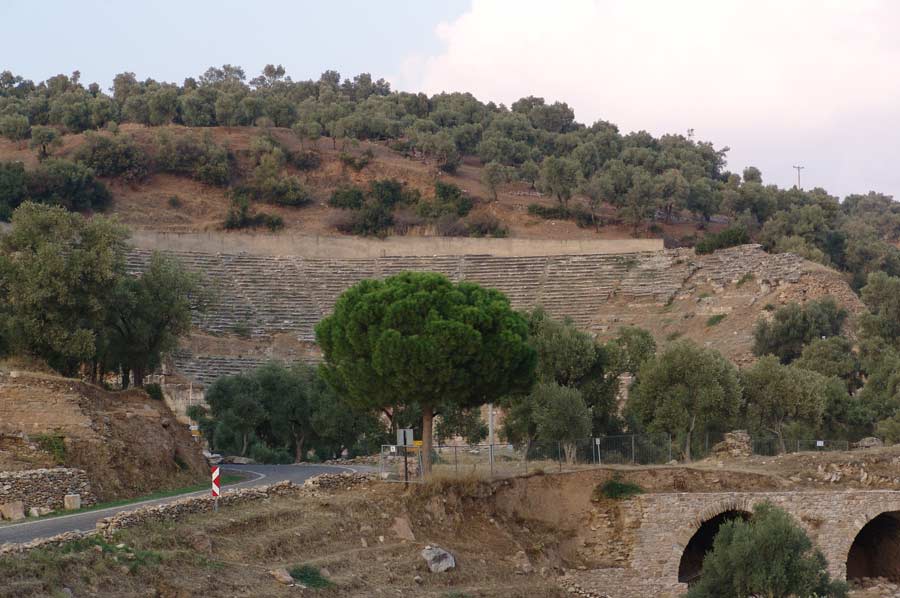
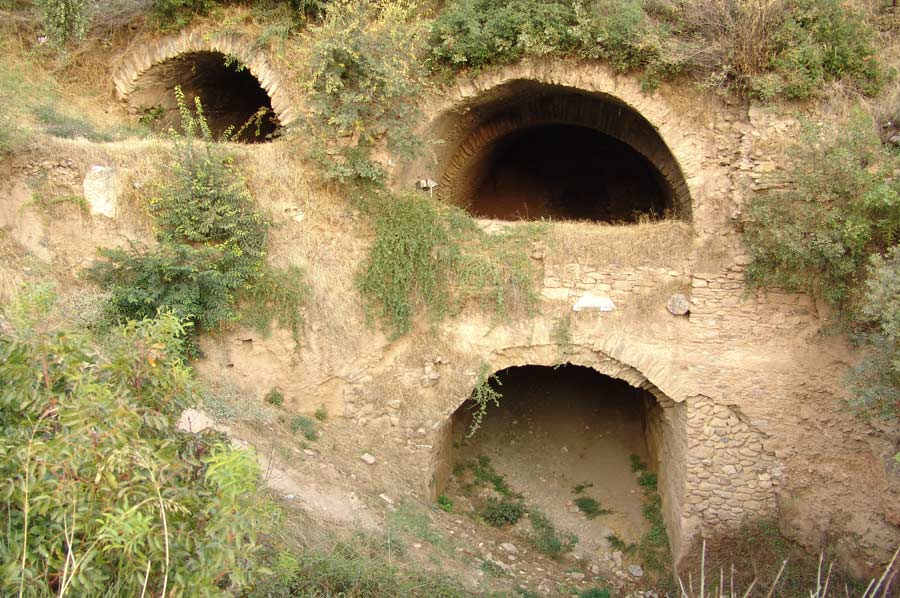
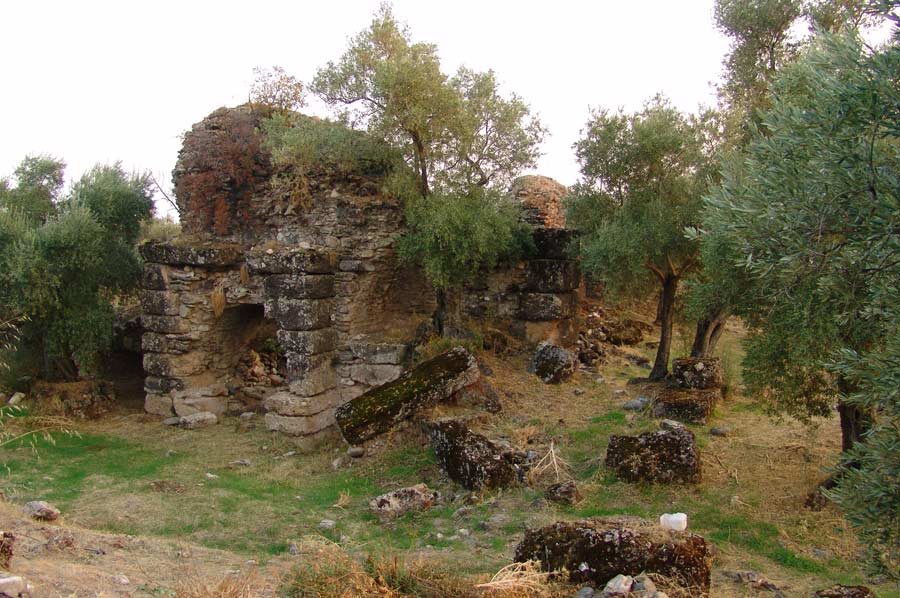
 In this area rich in archaeological ruins, the Bridge of Nysa is particularly noteworthy. It served as a substructure for the theatre forecourt and is considered the second longest of its kind in antiquity. The 100-meter-long, tunnel-like structure spanning the deep gorge of the Cakircak stream, dating from the late Roman Imperial period, was the second largest of its kind in antiquity, after the bridge at Pergamon.
The Nysa Bridge crosses the Cakircak stream, which runs through the ancient city, over a total length of approximately 100 meters, giving it the appearance of a tube or tunnel to the casual observer. Despite this outward appearance, however, the structure, built entirely above ground, is a river crossing, i.e., a particularly wide bridge that combines elements of both bridges and tunnels.
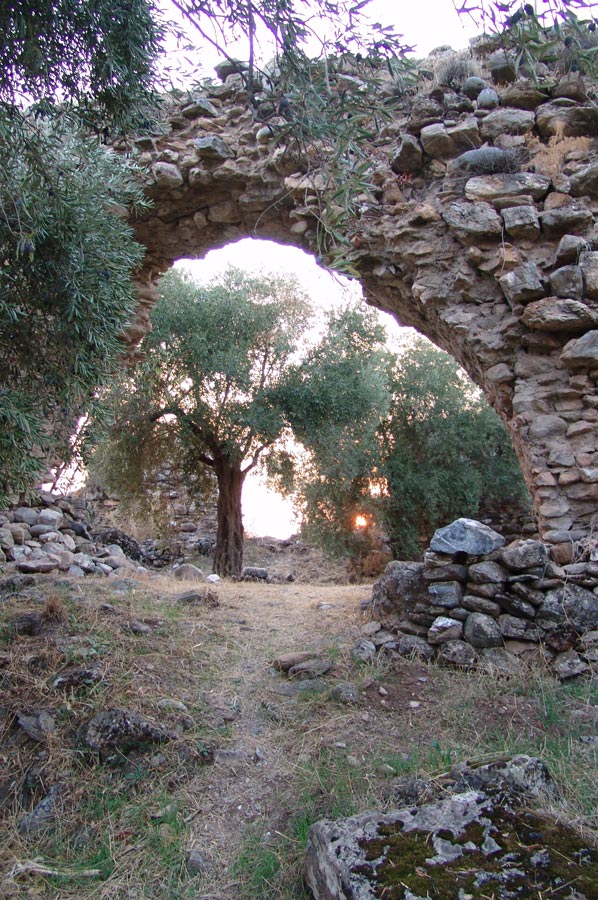
 While its hydraulic and hydrological properties are comparable to a tunnel, the arch, resting on two abutments, is structurally similar to a bridge. Its above-ground location completely eliminated the technical challenges typical of tunnel construction, such as determining the direction of advance underground or taking precautions against ceiling or water ingress. River culverts, designed to cover longer stretches of waterways, primarily served to expand urban space in antiquity. In the case of Nysa, the purpose was to create a spacious plaza for the theatre located near the stream.
The Greek geographer Strabo (63 BC–21 AD), who lived in Nysa, described a secret, water-filled passage in the city, though it is unclear whether he was referring to the culvert that still exists today. Based on a construction inscription on the north wall of the tunnel near the bend, which points to one of the builders ("Work of Praülos up to this point"), the Nysa Bridge is dated to the late Roman Imperial period.
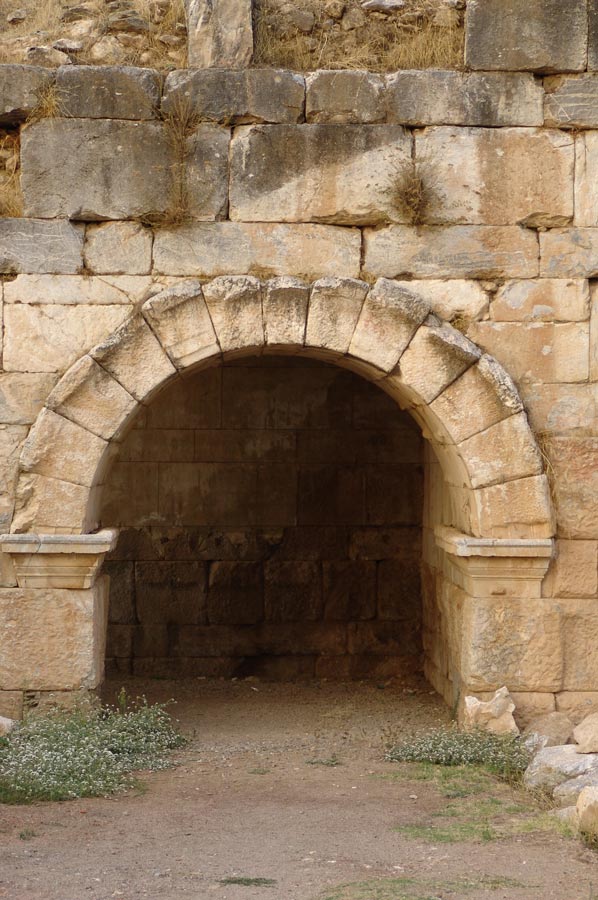
The Nysa Bridge consists of a single, 5.7-meter-wide tunnel that widens to 7 meters at the entrance on the hillside. The arch, which begins approximately 3 m above the foundation level, has a rise of 2.95 m, resulting in a total height of 5.9 m. The vault is constructed of unworked stones laid in mortar and rests on a substructure of differently sized stone blocks measuring 0.3–0.9 × 1.0–1.4 m.
 The originally continuous river spanning structure has now collapsed in two places: In the upper section, the closed arch has survived for 75 meters, with the tunnel making a bend after 25 meters. Following the covered section is a 10-meter-wide collapsed area, after which the structure continues as a single arch, which, due to its isolated position, is often mistakenly described as a separate bridge structure. The valley-side end of the tunnel has also collapsed, so the total width of the bridge was probably 100 meters – a bridge width surpassed in antiquity only by the double structure in Pergamon. For comparison, the width of ordinary Roman bridges, not serving as substructures, usually did not exceed 10 meters.
Furthermore, as it flowed through the city of Nysa, the Çakircak River also crossed the stadium, where water sports competitions could be held. Remnants of two bridges, one above and one below the stadium, have survived.
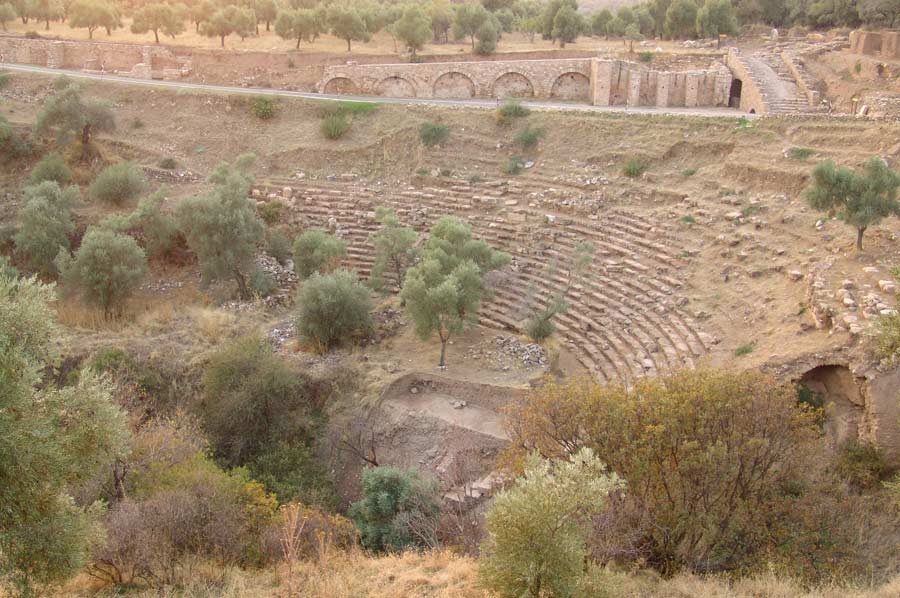
The Theatre (1st century BC to 2nd and 3rd centuries AD)
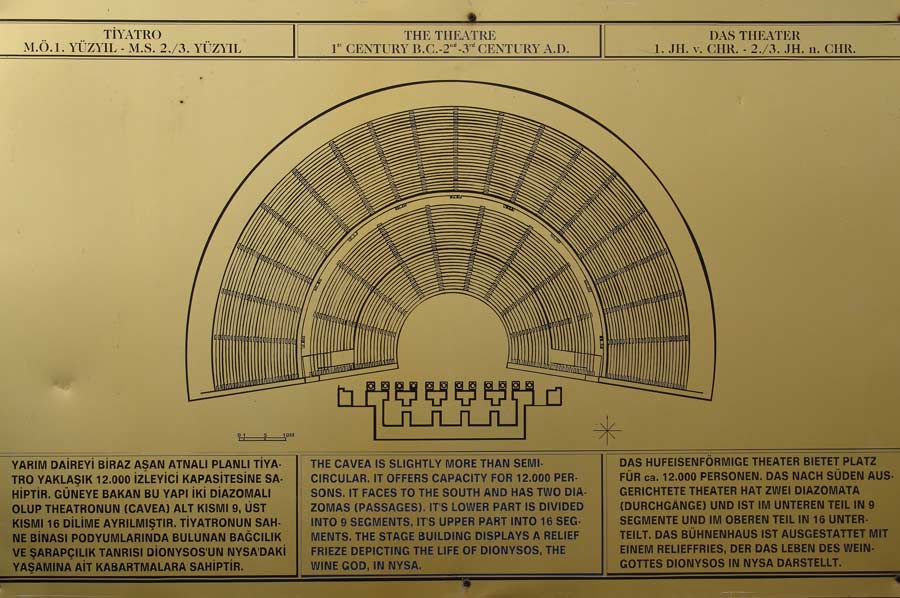
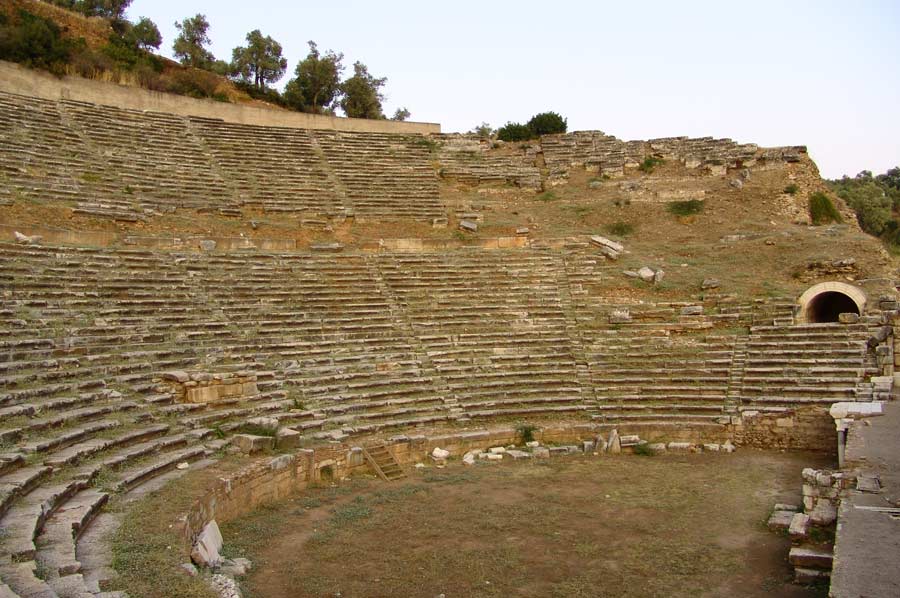
 The horseshoe-shaped theatre seats approximately 12,000 people. Facing south, the theatre has two diazomata (passageways) and is divided into 9 sections in the lower section and 16 sections in the upper section.
The theatre was built in the late Hellenistic-early Augustan period and expanded in two further construction phases in the 2nd century AD.
The stage building is decorated with a relief frieze depicting the life of the wine god Dionysus in Nysa. The scenae frons is adorned with scenes from Dionysus' childhood.
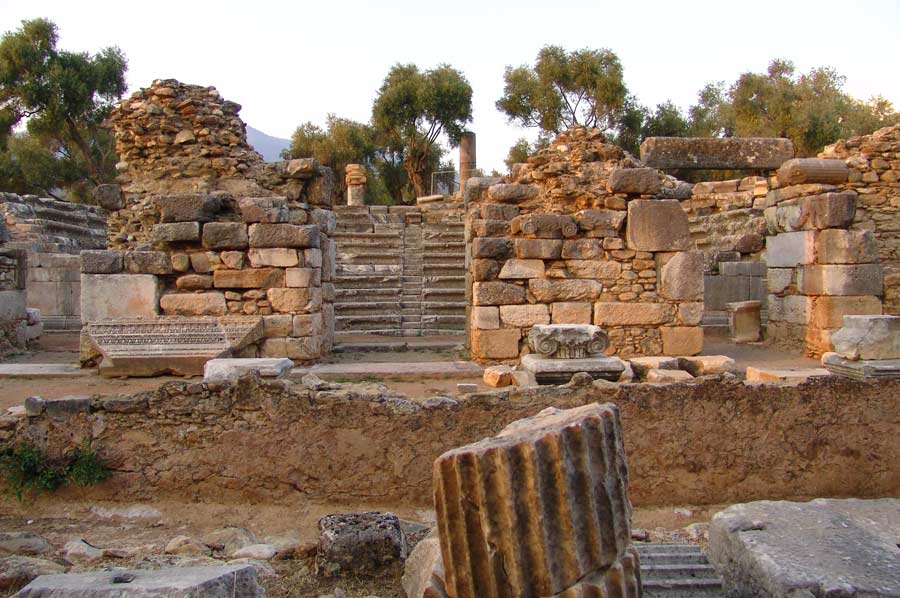
The Bouleuterion (Town Hall/Council of Elders)
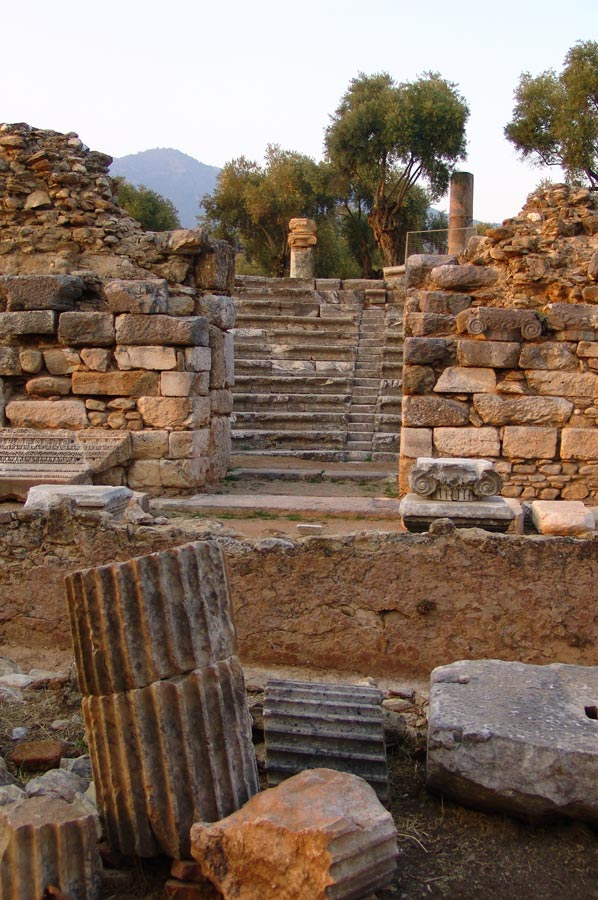
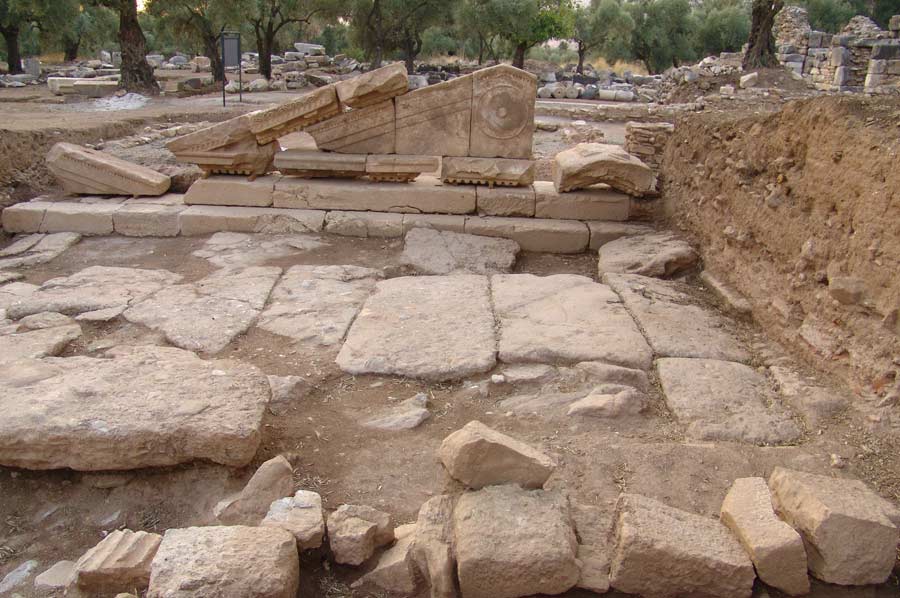
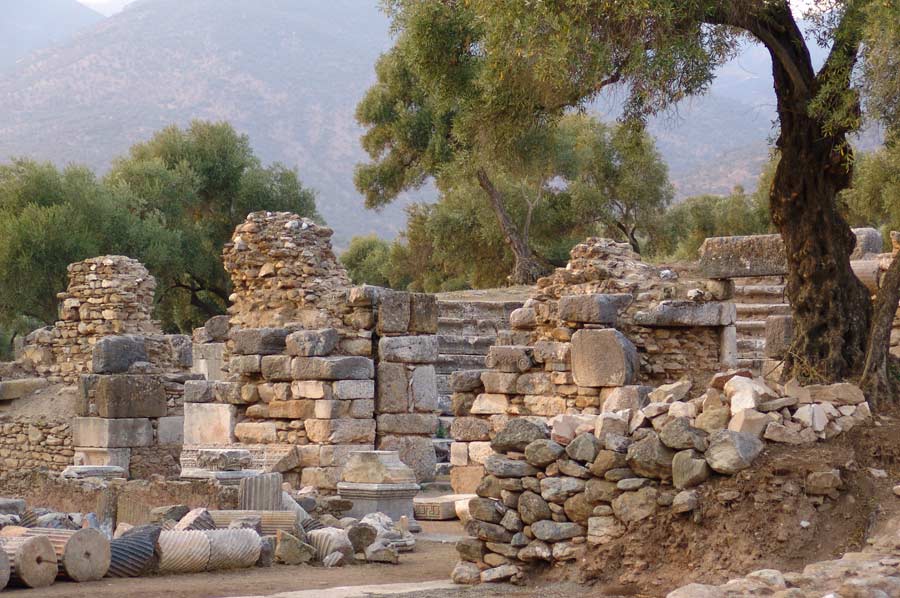
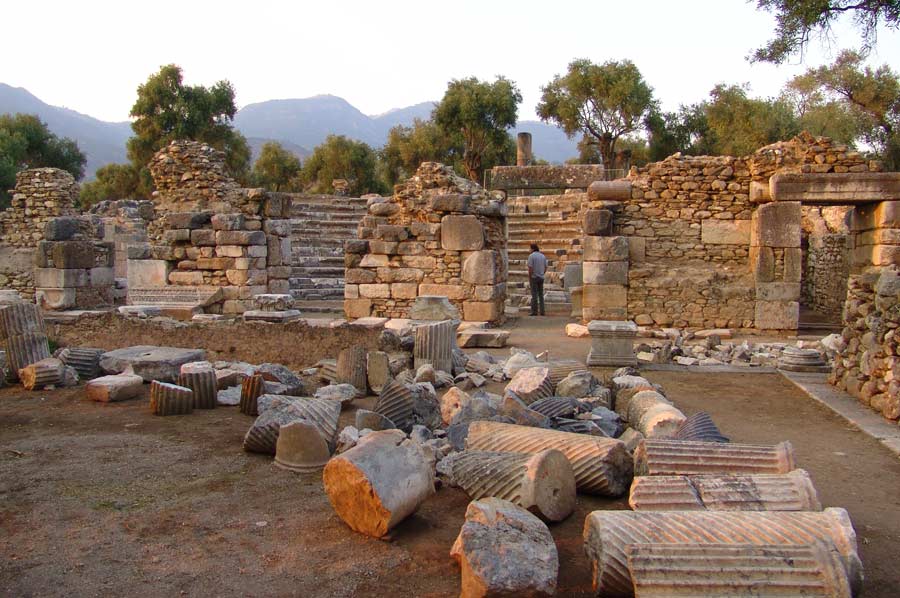
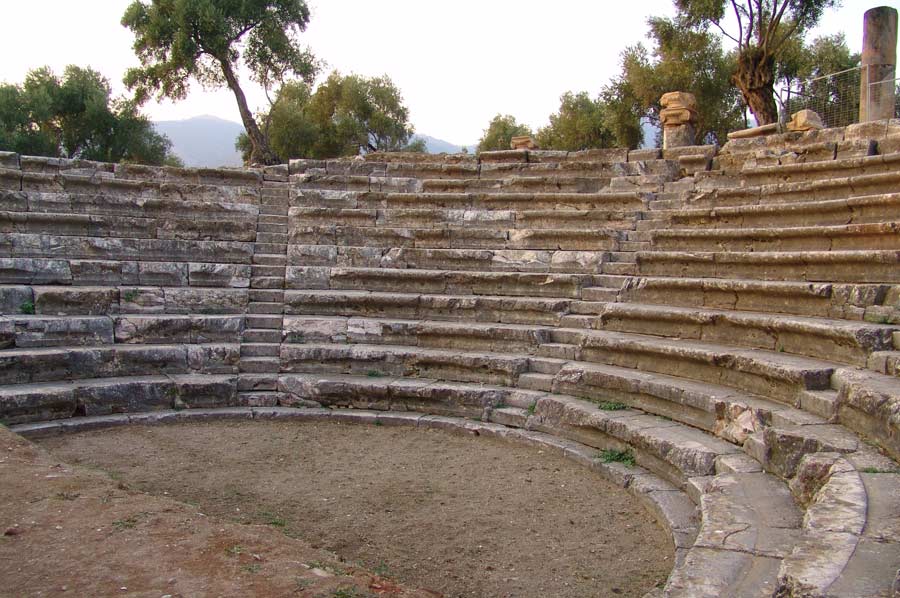
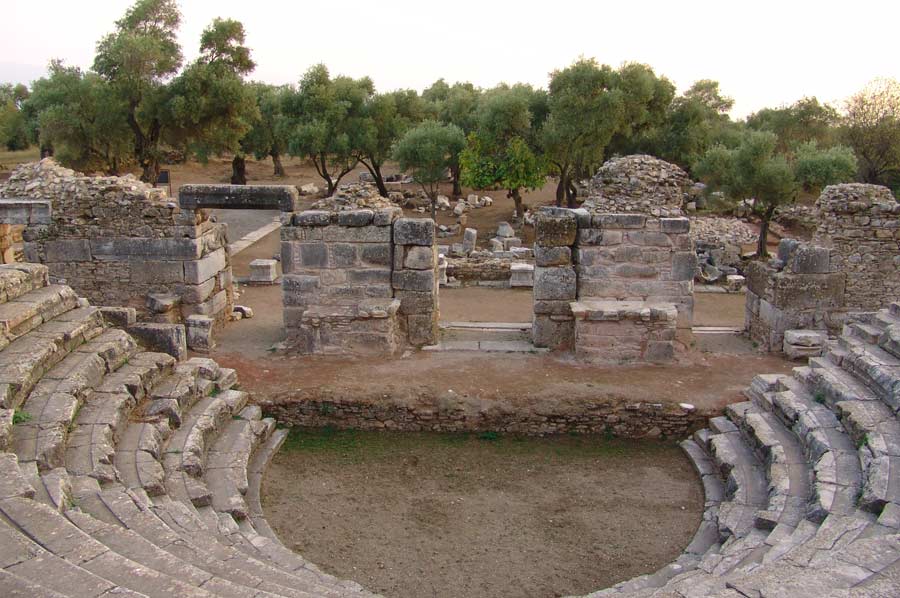
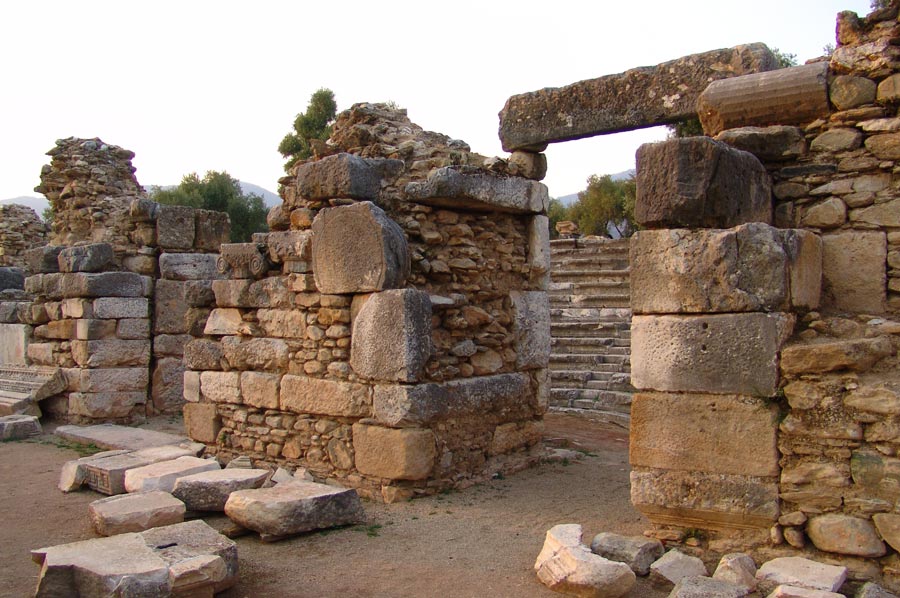 The best-preserved building in the ancient city of Nysa is the Bouleuterion (Town Hall), which Strabo referred to as the Gerontikon (House of the Council of Elders). It is a rectangular building whose council chamber is laid out in the rectangular shape of a cavea (semicircular). This cavea is divided into four segments by five staircases, each containing 12 rows of seats. It thus offers seating for approximately 600 to 700 people.
Please also read:
Aphrodisias - Sculpture School and Aphrodite Cult near Geyre
Tralles or Tralleis near the provincial capital Aydin
https://www.alaturka.info/en/turkey-country/aegean/1562-nysa-of-caria#sigProIdb32a5bfa97