Maroneia - Ancient port city near Komotini and Via Egnatia
- Written by Portal Editor
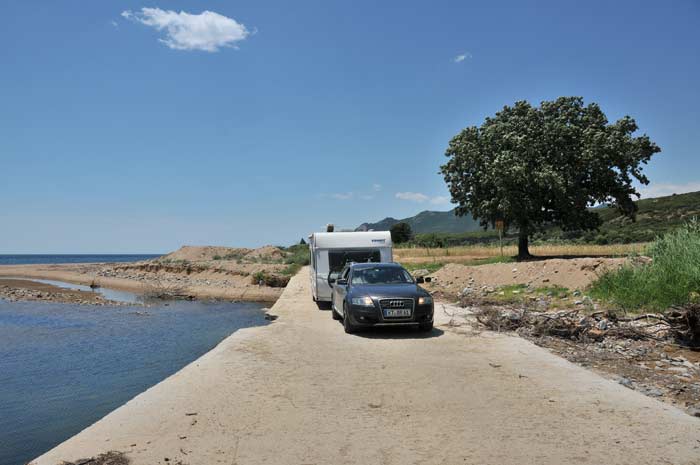
Maroneia - We left the Alexandroupolis campsite that morning and headed for Thessaloniki. Since the ruined city of Maroneia was on the way, we wanted to at least make a short stop there to get a first impression. We will explore the area in detail during our return trip in December.
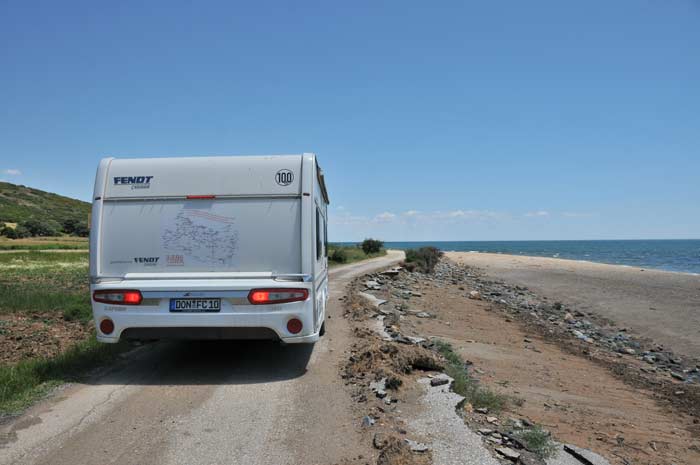
It quickly became clear that the considerations we had already had along the way about whether traveling there with a caravan would make sense turned out to be correct. What initially began as a paved road directly along the coast ended shortly afterwards as a rocky dirt road that was barely passable, despite being marked on the map and the navigation system. Parking on the side of the road wasn't an option on the way to Maroneia.
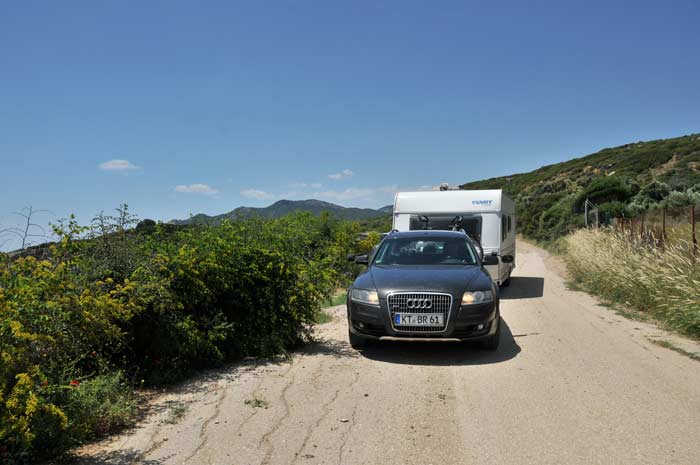
Fortunately, we met an enduro rider who knew the remaining route and suggested turning back, as large rocks would block the way. A good suggestion, which, thanks to our caravan mover, was also feasible. Without this device,... we don't want to think about it.
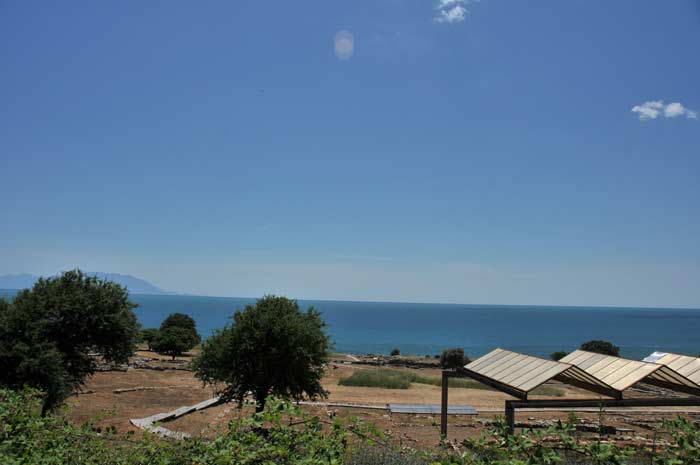
So we were glad to reach the asphalt again and pass the Maroneia archaeological site. Next time, we'll leave the caravan behind, which is better left at the campsite. The Maroneia ruins stretch hundreds of meters along the coast and were once an important port city.
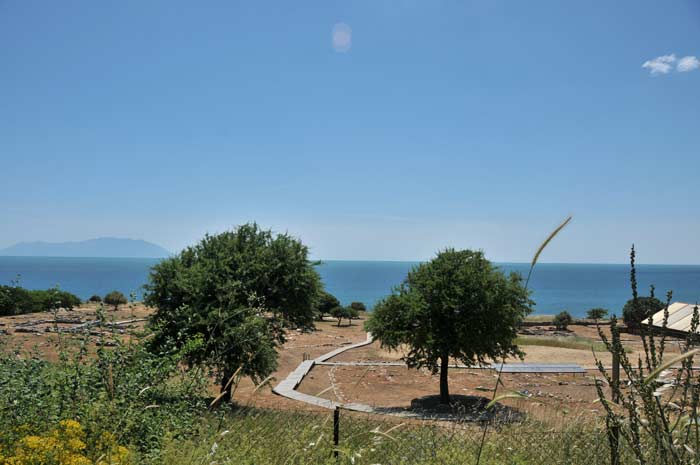
Maroneia lay between Hebros and Mesta, presumably the Homeric Ismarus. The port city stretched from the present-day village of Maronia, south of Komotini at the foot of the Rhodope Mountains, to the Aegean coast.
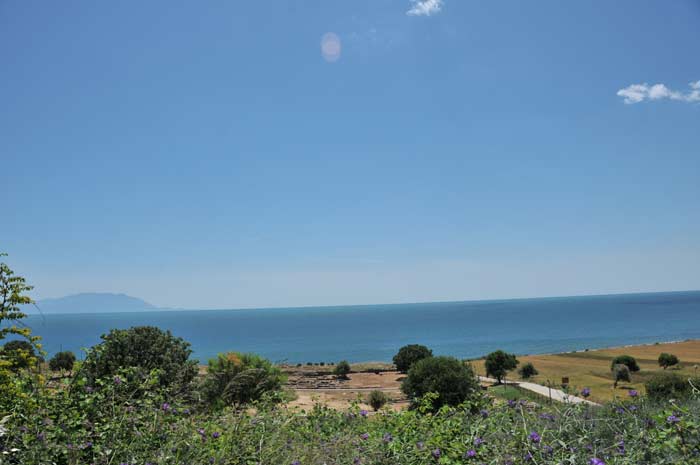
Ismarus was already famous for its wine in the Odyssey. Odysseus received the intoxicating red wine there from Maroneia, the Thracian priest-king of Apollo, son of Euanthes and king of the Cicones, with which he drunkenly blinded the Cyclops Polyphemus.
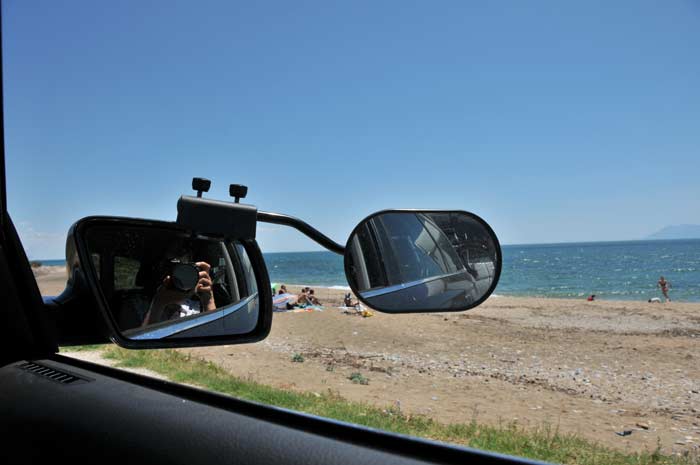
Every now and then, we came across bathers on the beach who had sought solitude to pursue their pleasures in peace. Pure nature!

At least to get a first impression.........

A little later, we reached the main road to Komotini and, lo and behold, there were signs pointing to the ancient Via Egnatia route, which we immediately followed on foot. It's clearly visible in the picture to the left of the caravan.
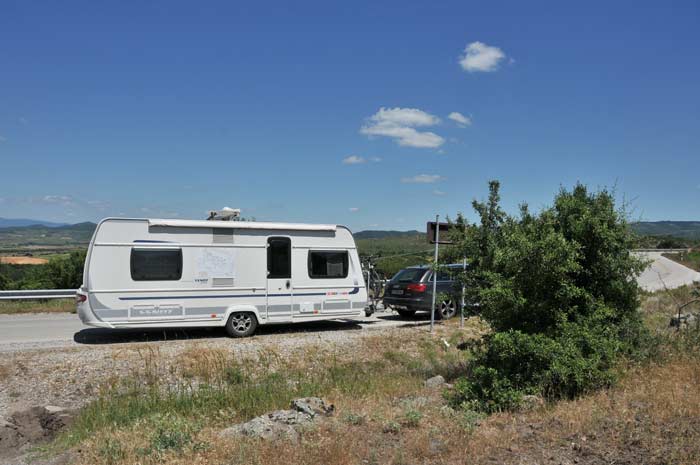
We followed the path, barely recognizable today, for a few hundred meters until we finally saw a road paved with rough stones. It wasn't nearly as intricately constructed as you'd see in some city entrances today, but rather rustic and rural.
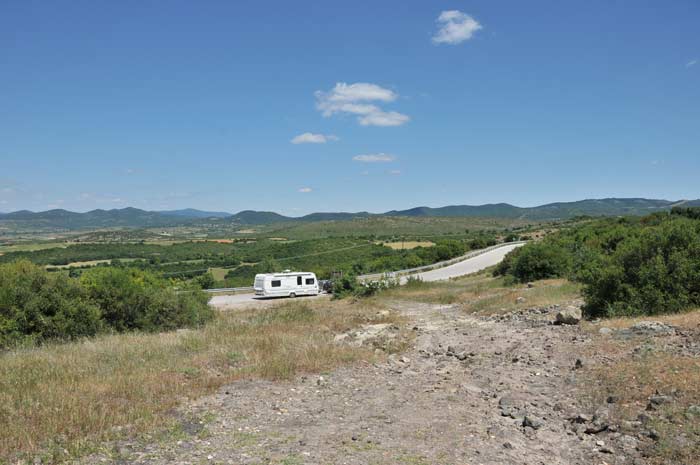
Sufficiently solid and flat enough to transport goods, weapons, religions, technology, and people quickly over long distances and to have existed for more than 2,000 years.
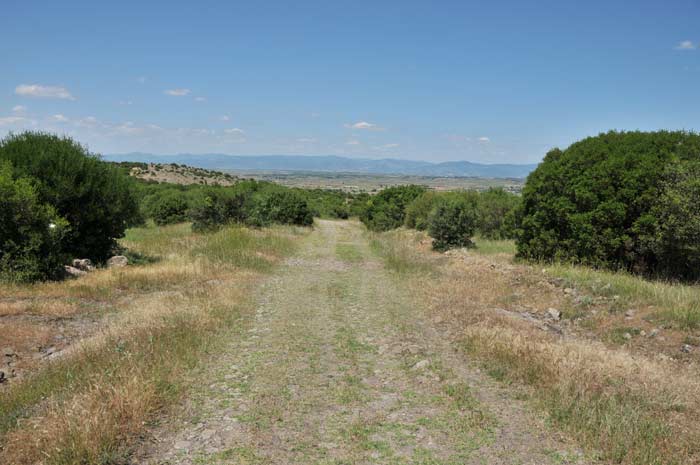
An ancient road network that also served as a platform for cultural exchange.
Please read as well: