Assos – The Ancient City in Turkey’s Çanakkale Province
Assos – We had driven from Bergama along the D550 towards Çanakkale, turning left onto the narrow coastal road towards Assos just before the ascent to the winding mountain pass. The town is now known as Behramkale; right at the entrance, we encountered a sign pointing the way to the ancient city of Assos.
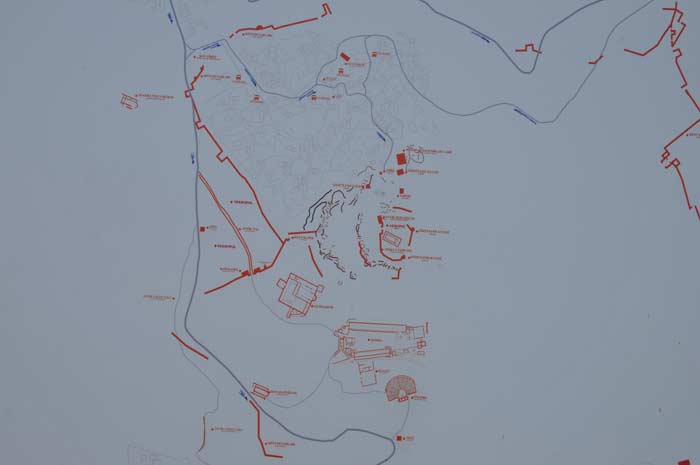
In addition to visiting the ancient city of Assos, we had arranged to meet a hotelier whom we had met at the EMITT trade fair in Istanbul to discuss setting up a campsite for overnight stays as part of our "Wintering in Turkey" plan.
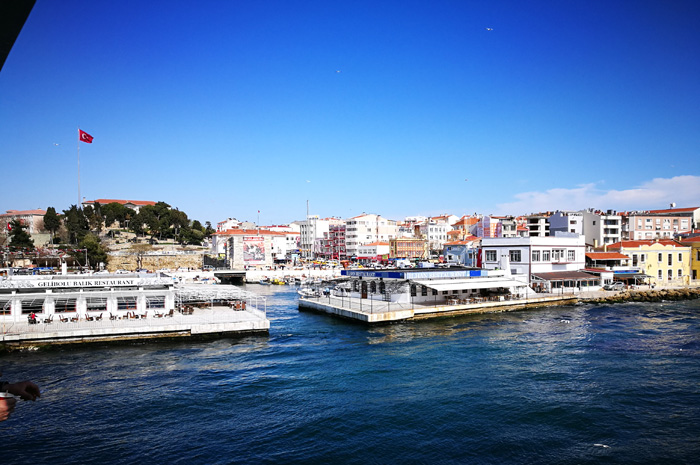
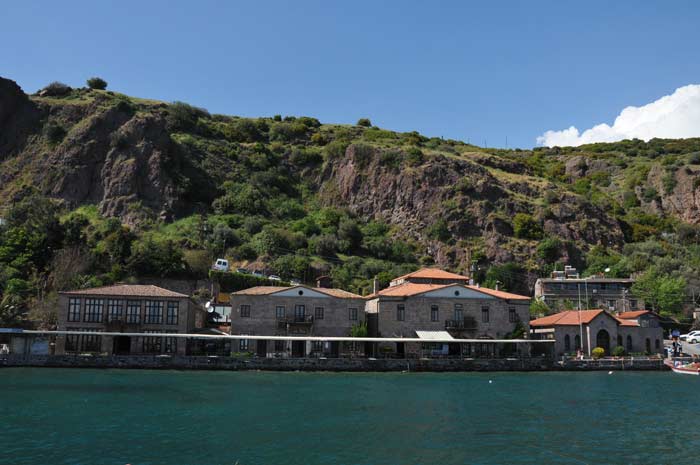
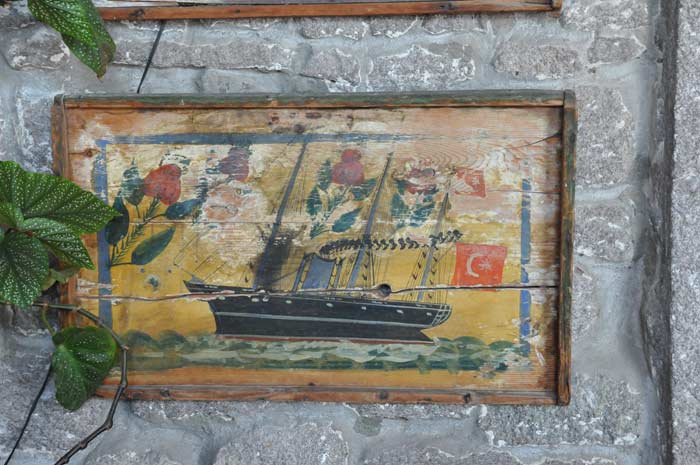
Our host Hilmi’s hotel was located right by the fishing harbour of Assos; the buildings had once served as trading houses. Their conversion into a hotel and a hammam was carried out with painstaking attention to detail. Lovingly selected decorative touches could be found throughout the building.
An ancient road leads into the middle tier of what was once the vast city of Assos. Massive walls, stretching approximately three kilometres, had been erected to protect the city. To the left, outside the city walls, lies the necropolis, containing a vast number of sarcophagi some of which remain sealed.
Large sections of this mighty wall, along with several fortified towers and the imposing main gateway, remain remarkably well-preserved. The road that once led to the Agora and continued past it to the Bouleuterion has so far been only partially excavated.
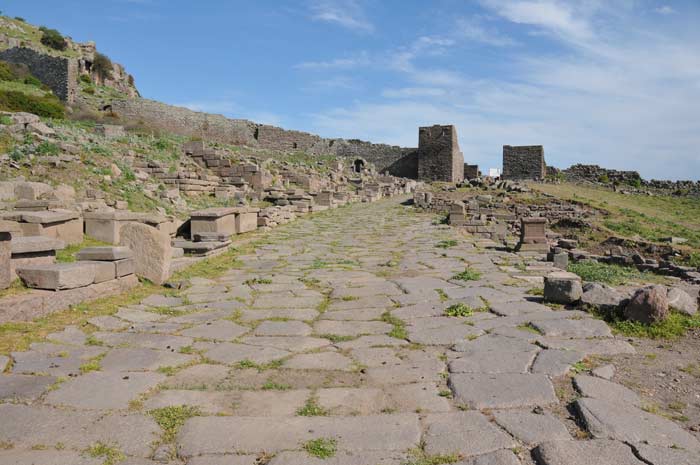
The sheer scale and grandeur of ancient Assos are clearly evident in its impressive Agora; with its two rows of columns and five steps lining the magnificent thoroughfare, it must have made a powerful impression on every visitor. At the far end of the Agora only the first section of which has been excavated lies the Bouleuterion; atypically, it was built with a nearly square floor plan rather than as a circular structure.
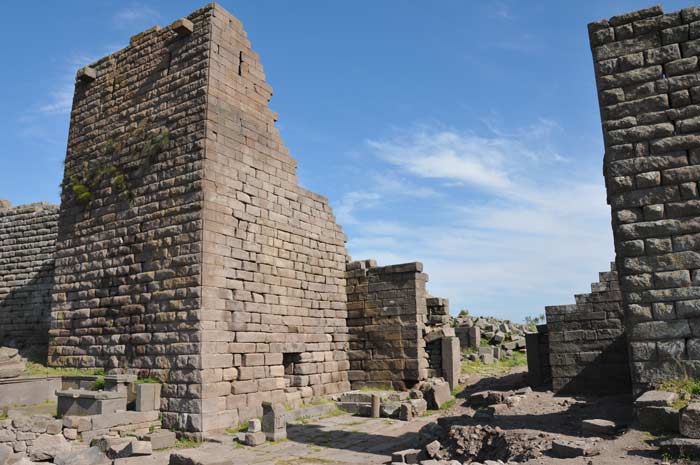
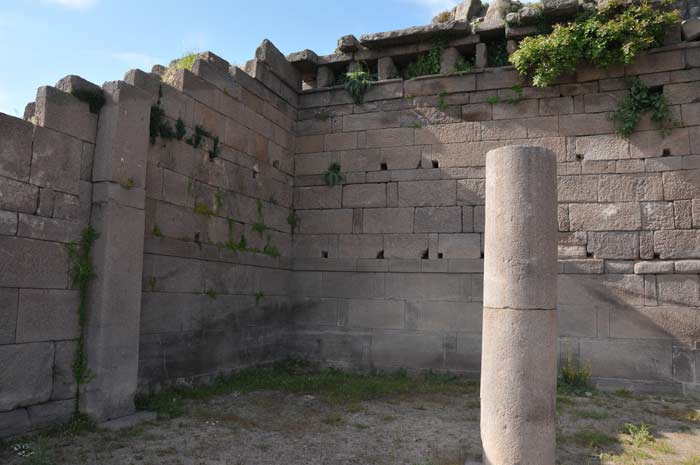
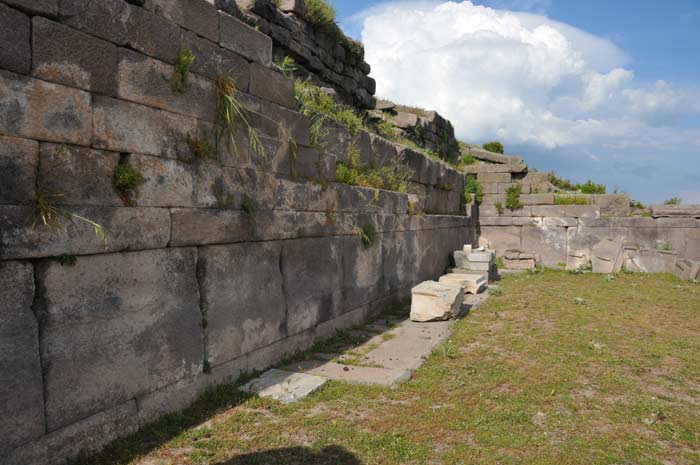
Another section of the excavated ceremonial avenue is located right next to the remains of the Gymnasium walls. The substantial nature and evenness of the street paving remain impressive to this day.
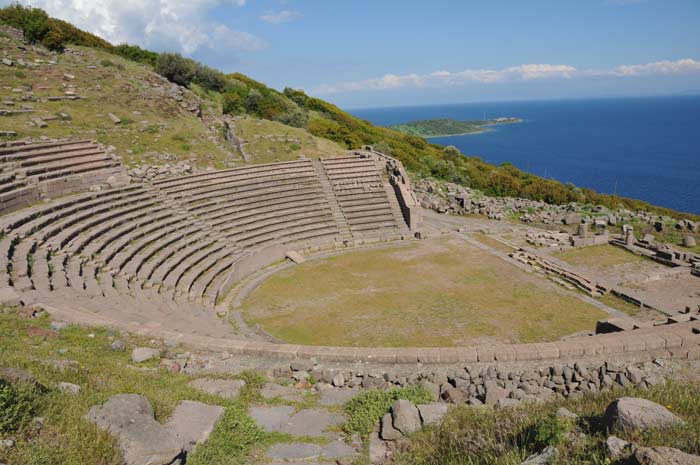
Situated on a lower terrace is the remarkably well-preserved theatre of Assos; although the stage building itself is gone, its foundation walls are still clearly visible. The seating tiers are in such good condition or have been so well restored that they still meet modern requirements for hosting events.
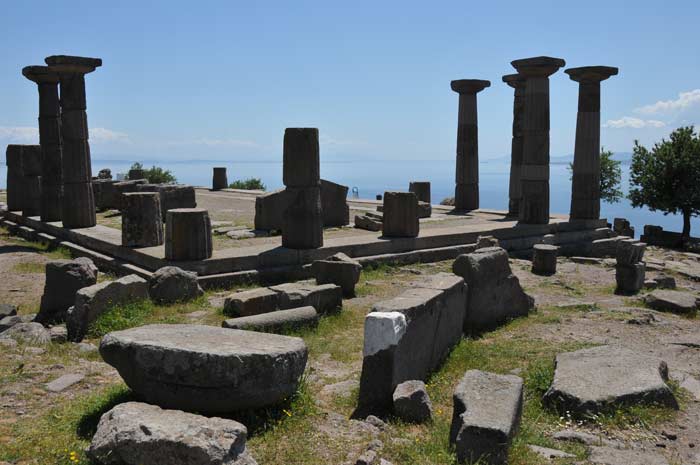
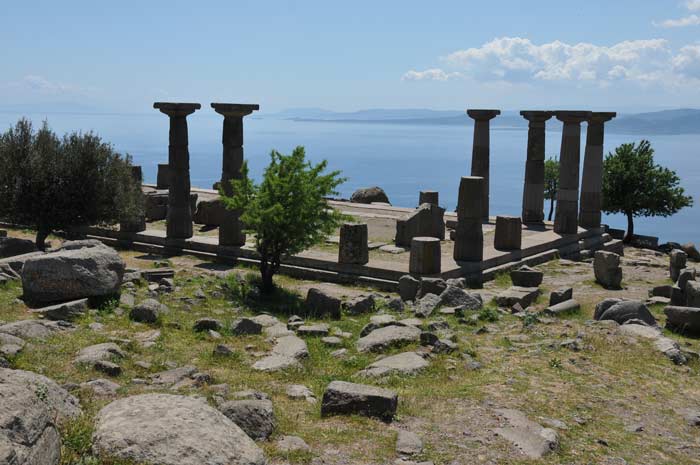
The Doric Temple of Athena, located at the highest point of the acropolis, was built around 530–520 BC. Some of the columns made of local trachyte but originally coated in white marble stucco in antiquity have been partially re-erected as part of archaeological research. In the background lies the Greek island of Lesbos.
A detailed article about visiting Assos will follow shortly.
Please also read:
Peraia – The beach opposite Thessaloniki
Thessaloniki: A city for cyclists – Promising signs are there!