Margot Klee – Arteries of the Empire
The Literature and Encounter Festival in Regensburg has now come to a close we learned a great deal, including insights from the genre known as travel literature.
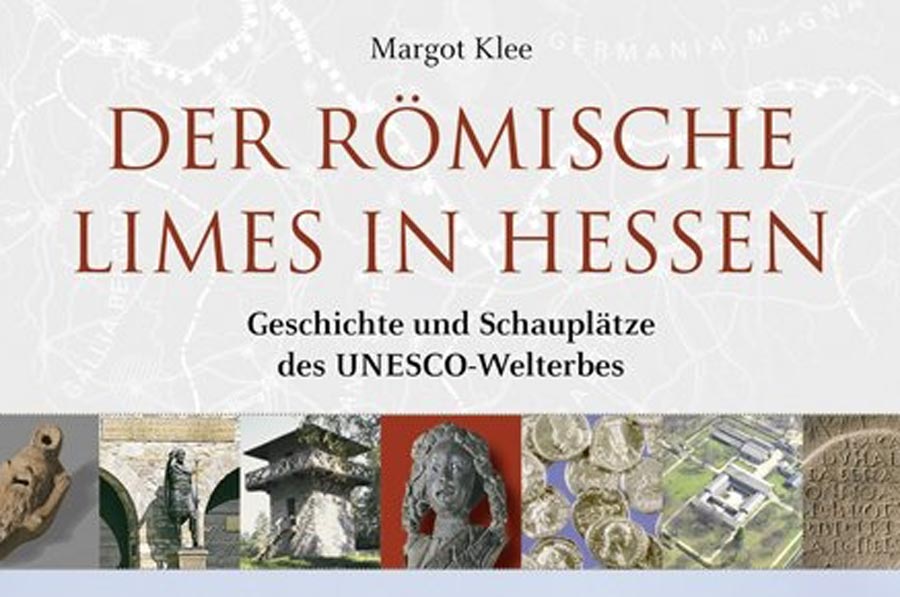
I would like to particularly recommend one book from this field, as it could almost serve as a blueprint for the ongoing three-year cultural and cross-cultural journey currently being undertaken by the "Alaturka" team along the Roman road network.
It is hard to fathom: more than twice the circumference of the globe! The roads that connected and held together the Roman Empire spanned 85,000 kilometres. They enabled the movement of armies, the flow of goods, and travel itself all in remarkably short amounts of time.
A significant side effect: these routes were to use a modern term true "cultural highways." They functioned as the world’s first "tracks," providing a safe passage for carts and, later, horse-drawn carriages; 2,000 years later, they have even evolved into the steel rails used for modern railways. In many places, the visual resemblance is striking.
 While today’s highway bridges often fall into such disrepair after 50 years that they require replacement, many bridges built by the Romans are still standing today. The Romans constructed their roads in perfectly straight lines spanning deep ravines and carving through mountains reaching into the most remote corners of their empire.
Names like the Via Appia, Via Claudia Augusta, and Via Egnatia have survived to this day. The Romans also established foundational legal principles, sophisticated surveying techniques, standardized repair methods, and strict specifications for the geometry of curves not to mention their famous milestones, which have left such a lasting mark that they remain part of our idiomatic language even now. This book is a treasure trove for anyone who has ever wondered how the Romans managed to establish such an empire and sustain it for 1,000 years. Through architectural history, cultural history, archaeology, and not least vivid accounts of what life and travel were like along and upon Roman roads, the book offers a wonderful insight into this significant chapter of European history, the influence of which is still felt today.
Christian Röhrl, Bücherwurm bookstore.
2010, Teiss Verlag, Stuttgart
160 pages with 120 illustrations
ISBN: 978-3-8062-2307-1
Price: 19.95
Margot Klee grew up in Wiesbaden, where she attended primary school and subsequently the Helene-Lange-Schule at that time a Gymnasium (secondary school) for girls graduating with her Abitur in 1970. That same year, she began her studies in Classical Archaeology and Ancient History at the Ruprecht Karl University of Heidelberg. In 1974, she transferred to the Ludwig Maximilian University of Munich, where she continued her studies with a specialization in Provincial Roman Archaeology. In 1982, she earned her doctorate there with a thesis on the Nordvicus (northern settlement) of Arae Flaviae, located on the northern edge of Rottweil.
Following her studies, Klee worked primarily in the fields of heritage conservation and museums. Her professional career included positions at the Baden-Württemberg State Office for Monument Preservation in Stuttgart, the Reiss-Engelhorn Museums in Mannheim, the Saalburg Roman Fort, and, most recently, the Museum Wiesbaden, where she served as senior curator (Oberkustodin) in charge of the Roman department. She currently works for the Hessian Ministry for Science and the Arts.
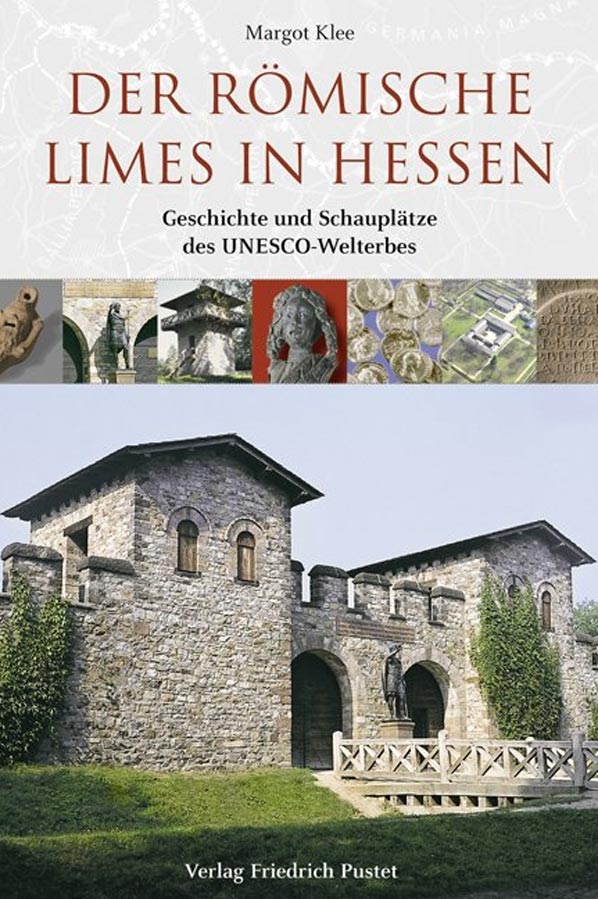
Margot Klee’s work focuses, in particular, on the Roman frontiers the *Limes* in Germany. She published several books on this subject.
Please also read: