Winter Quarters for Pests: What Do Mosquitoes Do in Winter?
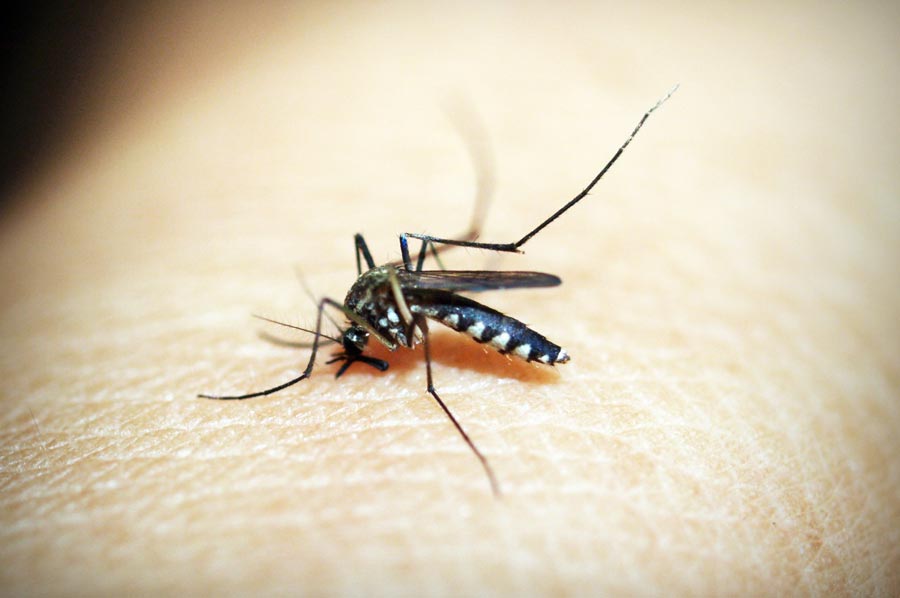
Fortunately, one rarely hears it these days the buzzing of mosquitoes in search of food (or should we say "victims"?), given how much these pests used to annoy us, especially at night.
Despite mosquito nets and other protective measures, they usually managed to find a way to their human food source. Years of laboratory and field experiments have revealed that mosquitoes primarily locate their victims by detecting exhaled carbon dioxide and body odors specifically fatty acids and ammonia. The mosquito follows this scent trail; even barriers rarely deter it, as the scent trail provides information not only on the chemical composition but also on the victim's size, structure, shape, and distance. Visual cues and body heat only come into play as navigational aids when the mosquito is in close proximity.
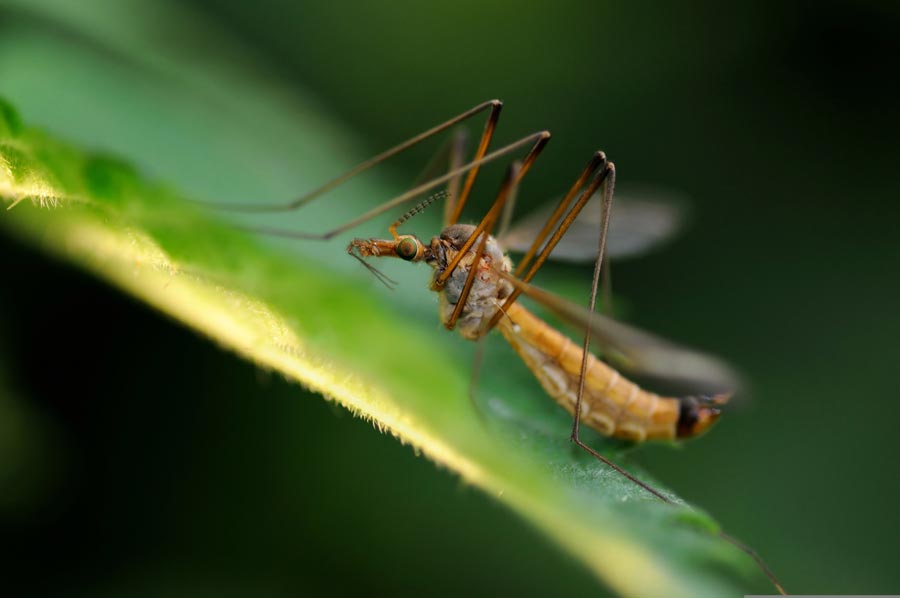 As a rule, mosquitoes have a vegetarian diet; the males, in fact, feed exclusively on plant matter. It is the females that require the blood of mammals and birds in addition to nectar. A blood meal is essential particularly after mating to provide the foreign protein needed for egg production. Acquiring this protein source is therefore vital for reproduction. Blood is ingested through a piercing proboscis, an organ possessed only by females. Males cannot bite, as their proboscis is greatly reduced; instead, they can only lap up exposed liquids, such as sugary plant sap. In search of a blood meal, the mosquito locates a spot on the victim's skin with a blood vessel lying beneath it. Its various mouthparts then form a bundle of piercing bristles capable of penetrating the victim's skin, creating two channels in the process: through one channel, the mosquito injects saliva to liquefy the victim's blood, which is then sucked up through the second channel. The victim usually only notices the bite if a pain nerve is struck. It is only later, when the itching sets in, that one realizes it has happened again.
House mosquitoes bite even in cold weather
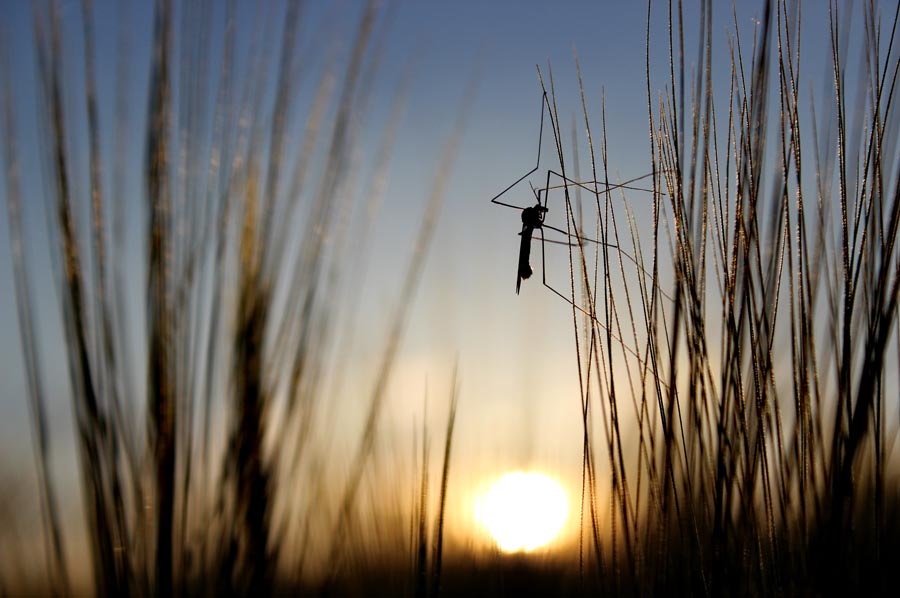 The last rays of sunshine are fading: the cold season has arrived. Many wild animals are retreating into hiding. But what actually happens in winter to the summer pests that tormented us so much? Where have all the mosquitoes gone?
"The males don't live through the winter," says Eva Goris, spokesperson for the German Wildlife Foundation. "They die in the autumn." Male mosquitoes do not participate in the "blood frenzy" anyway. The real pests are the females, which need blood for their offspring. "And they are the ones that survive the drop in temperature," says Goris.
There are numerous mosquito genera with a wide variety of overwintering strategies. Most species, such as woodland mosquitoes, overwinter in the egg stage. House mosquitoes, on the other hand, see fertilized females through the cold season without difficulty. This allows them to lay their eggs as early as possible in the spring. Cool, damp, and sheltered spots in cellars, caves, livestock barns, and houses offer them ideal conditions for survival.
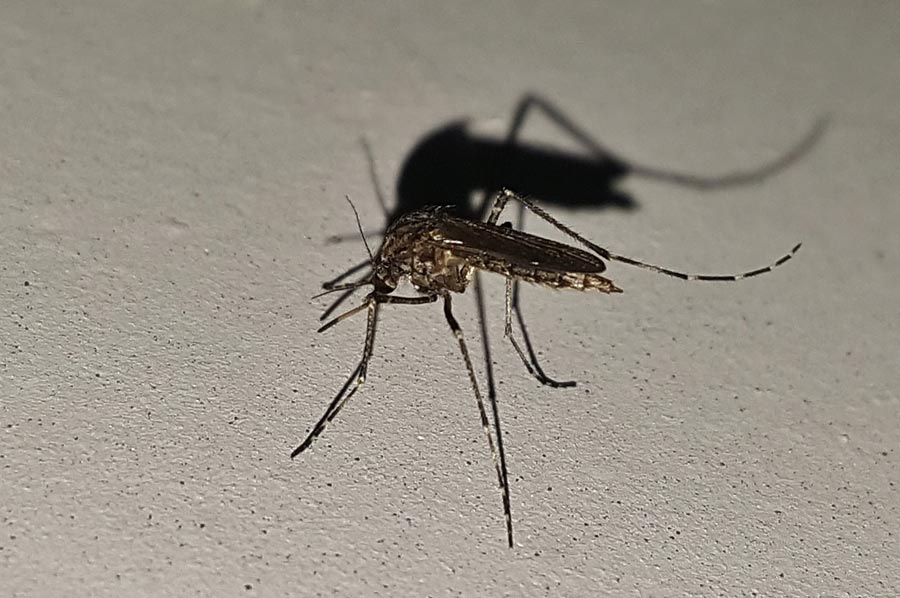 "There, the insects enter a state of cold-induced dormancy," explains the German Wildlife Foundation spokesperson. To do this, they expel excess body fluid. A sugar that acts like antifreeze is incorporated into the remaining fluid. However, if a mosquito manages to sneak into the house, it will wreak havoc and bite the residents! "It usually doesn't survive the entire winter, though," the press officer reassures.
Eggs already laid by mosquitoes are also rarely damaged by frost. "Mosquito eggs can easily overwinter in the mud at the bottom of a body of water, provided it doesn't freeze solid," explains Goris. Development conditions in spring and summer are the decisive factors for a mosquito plague. Prolonged rainfall creates ideal breeding grounds for the larvae. When warm temperatures are added to the mix, the conditions for a new mosquito plague are perfect.
Eva Goris Press Officer
German Wildlife Foundation (Deutsche Wildtier Stiftung)
Billbrookdeich 216, 22113 Hamburg
Please also read:
Damlatas Park – A highlight near the cave and Cleopatra Beach
Alanya – Stone Sculpture Symposium 2026: 21st Edition