


Sarimsakli - Karl-Heinz Kraus explains the surroundings
- Written by Portal Editor
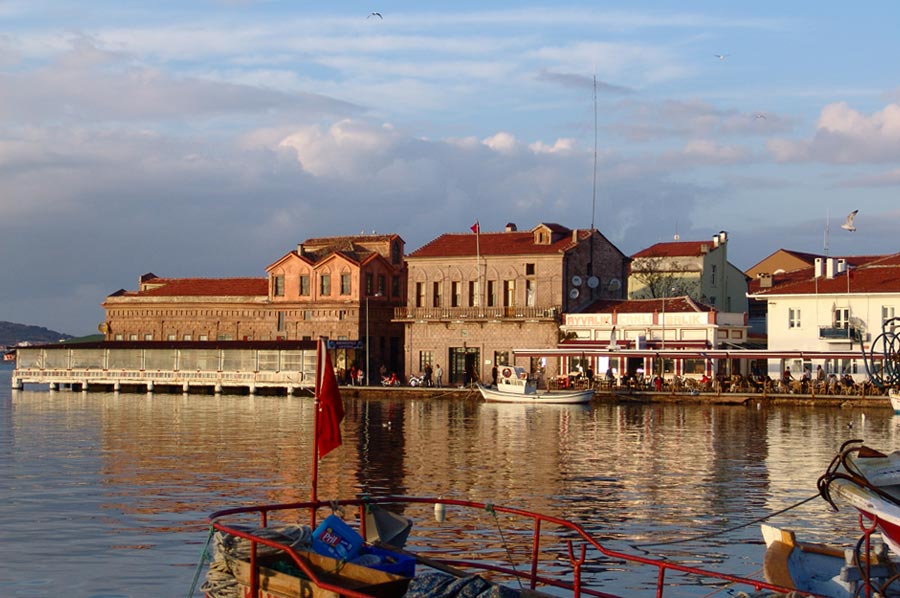
Sarimsakli - After describing how I came to Turkey in general and then to Sarimsakli in particular, I'd like to tell you a bit more about this place today.
Sarimsakli is a district of the municipality of Küçükköy. And Küçükköy lies about three kilometres inland from the coast. While Küçükköy proper is a small, sleepy village, its districts of Sarimsakli and Badavut have developed into genuine holiday resorts. However, when I use the word "holiday resort," I mean absolutely nothing to do with a resort like Alanya, Belek, or other well-known beach resorts in southern Turkey. Compared to those, Sarimsakli is really just a sleepy village. But not everyone needs the hustle and bustle and the excesses of mass tourism.
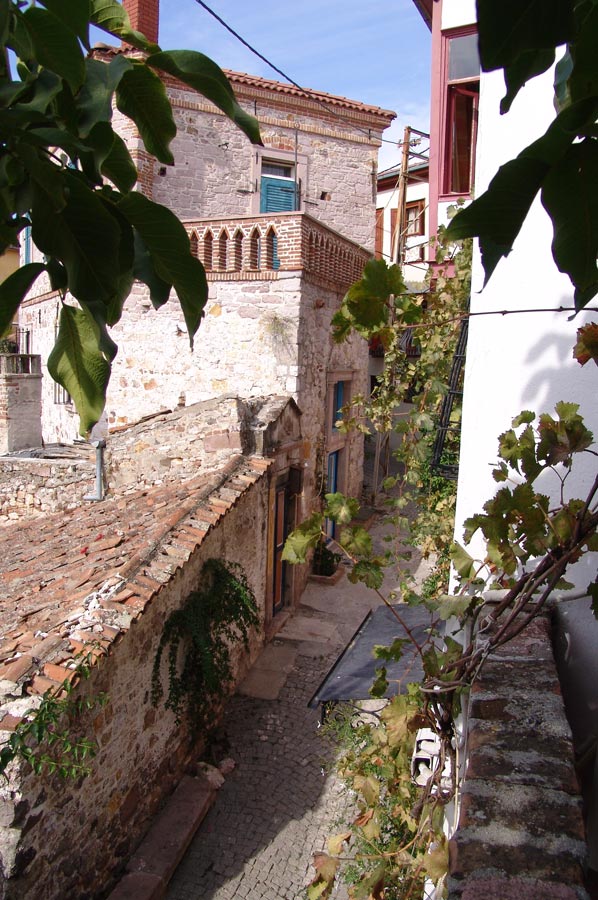 In Sarimsakli you'll find plenty of hotels at affordable prices, though no five-star establishments. Despite the sometimes boastful advertising, they're really just mid-range hotels. Of course, there are also guesthouses, apartment hotels, and private rooms. However, when I say "plenty," that doesn't apply when Turkish holidays (e.g., the end of Ramadan) fall during peak season. Then everything is completely booked; you won't find a free bed. People even sleep on the beach or simply live in their cars. Otherwise, though, things are quite relaxed. Compared to the well-known resorts, the hotels here are much smaller; hardly any have more than 100 rooms, and most are family-run.
I think there are several reasons for this. One reason seems to be the fact that the season here on the west coast is much, much shorter than in the south. At the beginning of May, I practically have the kilometre-long sandy beach to myself. I can count the few other swimmers around me on two hands, and the same is true at the beginning of October. So you see, the actual season only lasts about four months. Too short for large international hotel chains to make a decent profit. That's why it's mainly Turks themselves who spend their holidays here. I estimate that more than half of all apartments in Sarimsakli are used purely as holiday homes. When I look around "my" building, only eight out of 16 apartments are occupied year-round; the others are only occupied during the summer months. The fact that the nearest international airport (Izmir) is a good two-hour bus ride away might also play a role.
Sarimsakli - The transfer
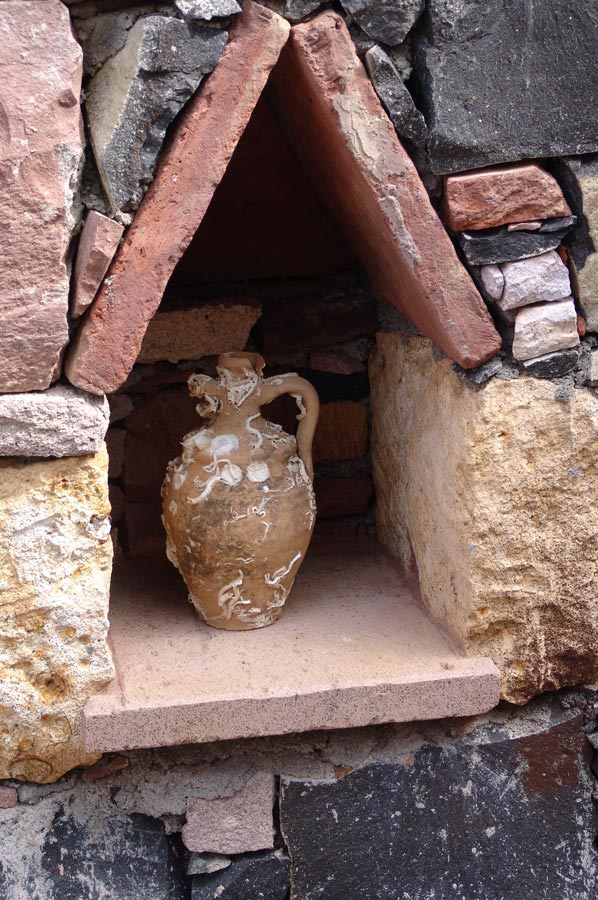 For a package holidaymaker, it's no problem; they're taken directly from the airport to their hotel. An independent traveller has to figure out how to get from the airport to their destination themselves. The easiest thing, of course, is to get into one of the waiting taxis when leaving the airport building. Unfortunately, this puts a strain on the holiday budget, as the distance from Izmir airport to Sarimsakli is almost 180 kilometres, and taxi drivers currently charge €200 (as of October 2012). Of course, the price is negotiable, but the journey isn't exactly cheap. The return trip from Sarimsakli is more affordable; if you haggle a bit, you can get it for around €100. Therefore, I always take the "Havaş bus" from the airport, which parks right outside the airport exit, to the "otogar" (bus station) in Izmir for about €5. From there, a "Sebat" bus departs hourly (but only between 7:00 a.m. and 8:00 p.m.) to Sarimsakli. The price for this was only about €8 in October 2012! Anyone who's ever travelled on Turkish public buses knows that even a small snack and soft drinks are included in the price. It doesn't get any cheaper than that.
The owners, the Billurcu family, lived in Nuremberg
And from the bus station in Sarimsakli, it's just a stone's throw to your booked hotel or guesthouse. I don't want to advertise any of the hotels here, especially since every traveller's needs and expectations are different, but anyone booking, for example, the "Gran Temizel," a four-star hotel, should be aware that it's quite remote, located on the very edge of town, and will either have to take a "nice long walk" or another taxi to get to the town centre. Not quite so far out, at the opposite end of town, is the "Billurcu," more of a family-run hotel. The advantage here is that they speak German. The owners, the Billurcu family, lived in Nuremberg for many years, and one of the sons still runs a travel agency here, certainly not to his parents' detriment. Those who want to stay directly on the beach should inquire about the "Berk Hotels," the "Mare," or the "Oliviera." A little further back, in the second row, so to speak, you'll find the "Kalif," the "Milano," or the "Prens Yildiz," to name just three.
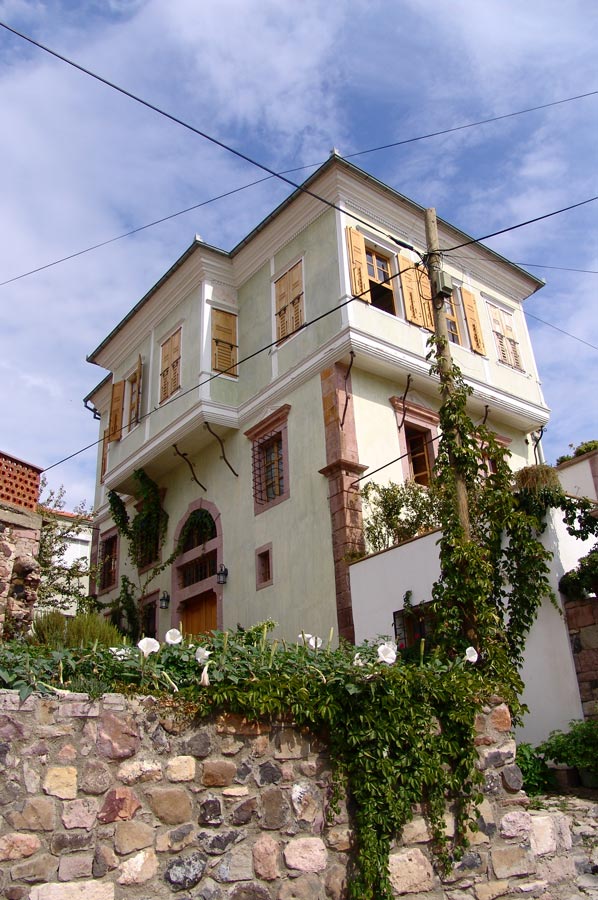 Along this street, which now also boasts beautifully developed, wide sidewalks, you'll find numerous hotels, restaurants, cafes, ice cream parlours, as well as souvenir shops, a few shopping arcades, and countless stalls selling nuts (trail mix), stuffed shellfish, baked potatoes, and much more.
So, no one will go hungry or thirsty here. The fact that restaurant prices are somewhat higher than in the nearby town of Ayvalık is simply due to tourism. But firstly, there are also plenty of reasonably priced restaurants in Sarimsakli, and secondly, you can always take the city bus or one of the many shared taxis (dolmuş) to Ayvalık. I recommend doing this for a shopping trip anyway, as I've already mentioned.
But what does Sarimsakli offer besides its truly wonderful sandy beach and clear water? For those who don't want to just bake in the sun all day, many interesting and historically significant places are easily accessible from here:
Bergama, located just under 50 km southeast, can be easily reached by dolmuş (shared taxi) from Ayvalık, or you can rent a car and take the scenic route away from the main road to Kozak and then on to Bergama through beautiful pine forests, over a mountain ridge, and alongside a mountain stream (where you can also enjoy fresh trout).
Troy is about 150 km north. I definitely recommend renting a car to get there.
Sarimsakli -You can also take a boat trip to Assos
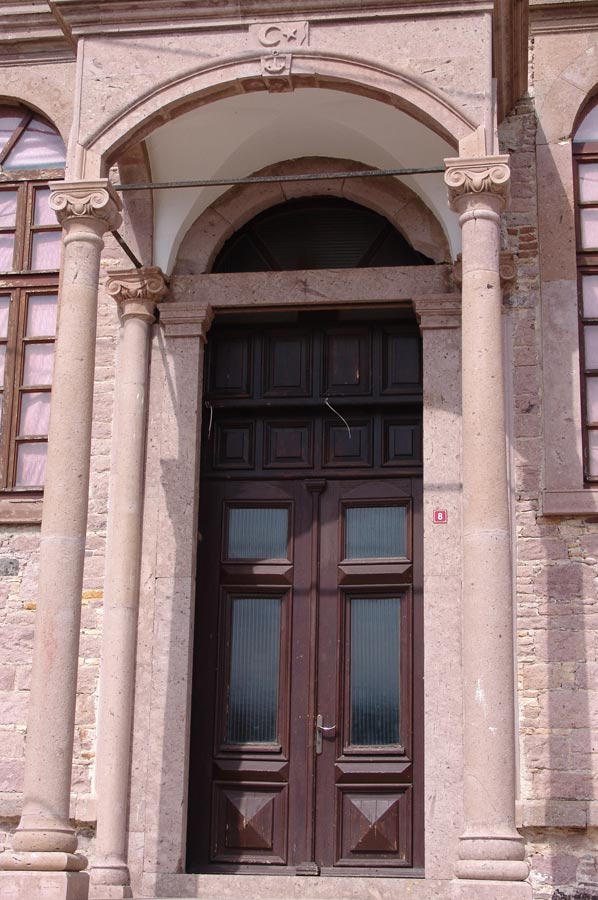 From Ayvalık, you can also take a boat trip to Assos, which is about 50 km away as the crow flies, also to the north.
And since we're already on the subject of boat trips, you simply must experience an island tour. Excursion boats depart from the port in Ayvalık every morning for their island tours. To understand this, you should know that Ayvalık is surrounded by 23 small islands. Your captain will take you to picturesque swimming coves (some boats even have a water slide), you might even get the chance to dive for shells, and there will definitely be plenty to eat (grilled fish, salad, and bread). Most boats also stop at Cunda on the return trip. For a Turkish coffee, I highly recommend "taş kahve" there. In Germany, it would probably be called "Cafe Stein."
Cunda, also known as Alibey, is an island connected to Ayvalık by a causeway. You can get there by bus, or, much nicer, by ferry from Ayvalık. The crossing takes about 20 minutes. Once inhabited by Greeks, you can still see remnants of their architectural style: the narrow alleyways, the houses with their typical balcony windows, and the cobblestone streets. And the uniquely beautiful view of the sea from one of the many cafes or restaurants on the harbor wall. Anyone who's anyone comes here on weekends with family and friends to eat fish in one of the countless fish restaurants. But be careful when ordering! The waiter will show you such a variety of hot and cold appetizers that you can quickly lose track of the (financial) cost. And even with the fish, the actual main course, you should compare prices beforehand and definitely try to negotiate. You'll often still end up paying too much, but if you've haggled the price down beforehand, you'll at least feel a little better about it. There's always a bazaar on Saturdays, but here on Cunda it's quite small, really just a fruit and vegetable market.
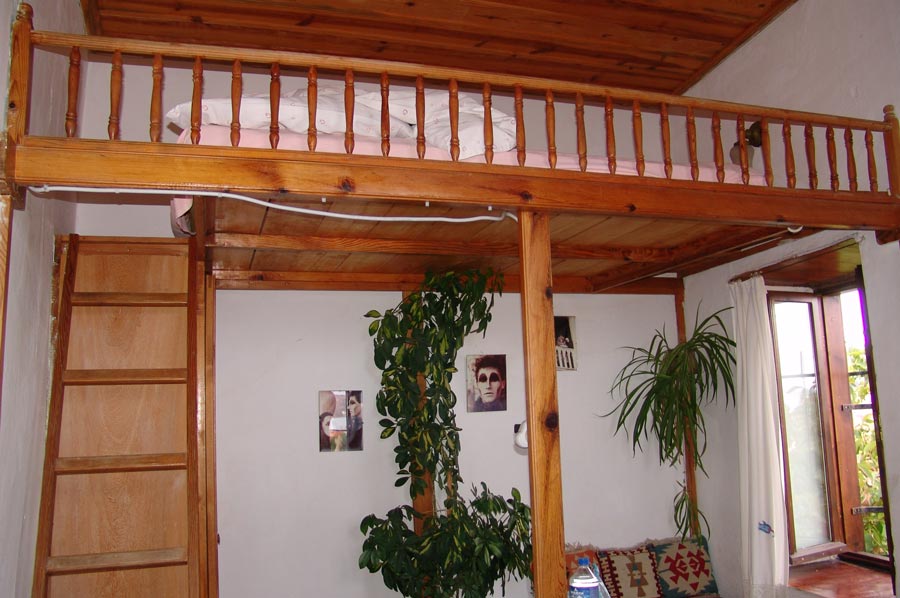 If you want to experience a real bazaar, you have to come to Ayvalık on Thursdays. In the narrow streets of the old town and in parts of the pedestrian zone, you can find everything imaginable. From rat traps to (fake) Chanel perfume, from rubber boots to women's lingerie. Add to that the market criers, from whom even the famous Hamburg barkers (like Eel-Uwe and his ilk) could learn a thing or two. And a crush like on a workers' bus heading to the early shift. The fruit and vegetable market is set back and covered. Besides the wonderful fruit and fresh vegetables, you'll also find cheese, olives, eggs, and other groceries. If you're looking for something specific, you'll also come across the "farmers' market." Here, local farmers offer their produce. While it may not be the most visually appealing, it (always???) comes from the region and is often superior in taste to the products sold by the vendors. Need a live chicken or some chicks? No problem, "you'll find what you need here."
Sarimsakli - Want fresh fruit on Sunday too?
That's no problem either. There's a market in the Armutcuk district of Ayvalık on Sundays. This market is also covered and has both a non-food and a food section.
And since we're already on the topic of bazaars, Sarimsakli naturally has its own. It's held every Tuesday, opposite the post office, and has been covered for the past two years. I always mention the "covered" part because of the heat and sun during the summer months. But anyone who comes here in winter or early spring and gets caught in a heavy Turkish downpour will also appreciate such a shelter.
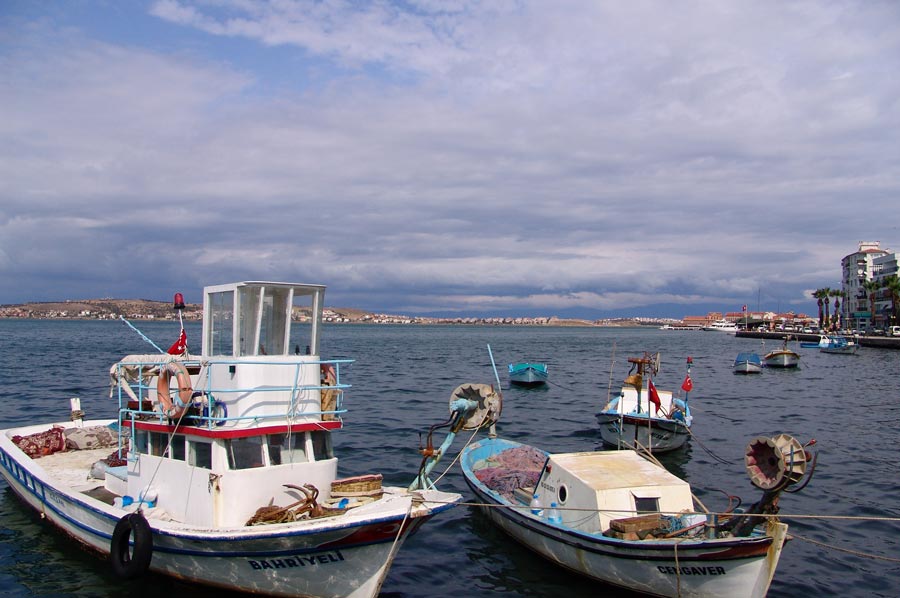 For anyone visiting Sarimsakli, a trip to "şetan-sofrası" is simply a must. It's a viewpoint about five kilometres from the town centre. A paved road winds its way up a mountain from the sea, through pine forests. Once you reach the top, you'll find a few restaurants. But above all, you'll have a breathtaking view of the many islands stretching all the way to Ayvalik and, on the horizon, Lesbos. Especially at sunset, buses arrive from near and far to enjoy this spectacle. This mountain gets its name from the imprint of an oversized "foot" in the rock. Legend has it that this imprint was made by the devil, and since the mountain is very rocky, it's called "Devil's Rock."
If you simply want to take a stroll, you should walk or rent a bicycle to Badavut. From the town centre, head to the beach promenade and then continue on, past the aforementioned Hotel Billurcu, and past the former depot of the jandarma (military police), which still performs police duties here. "Jandarma" is the same as "gendarmerie." As you can see, both words have the same origin. Continue until you reach Badavut. Here, too, you'll find a beautiful beach. Overall, Badavut is much smaller than Sarimsakli. A little beyond Badavut, there's a salt lake with many bird species. You'll also find secluded swimming spots on the beach there.
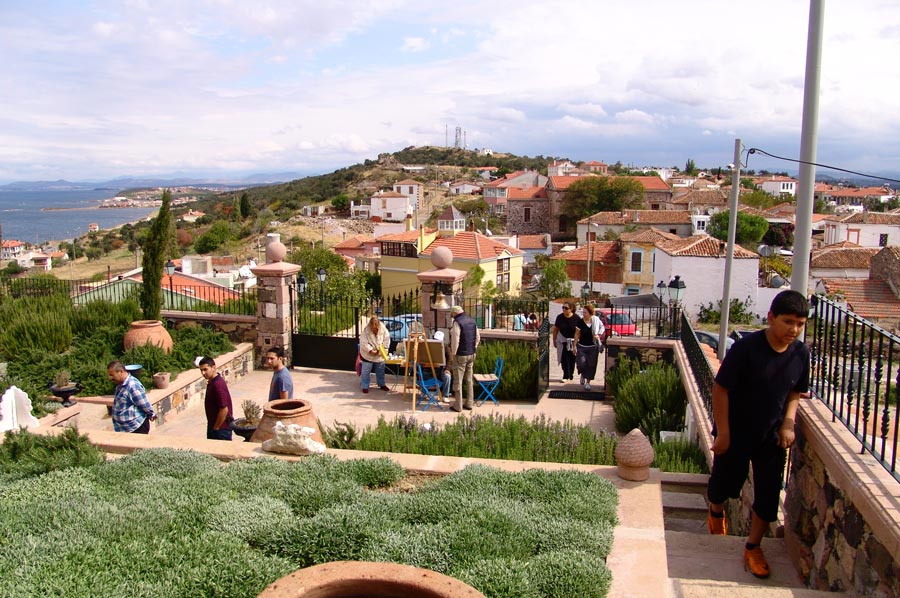 Of course, you can also simply walk along the beach if you prefer. If you head east, you'll pass the aforementioned Hotel "Gran Temizel" after about 2 km, and Sarimsakli Airport is located at roughly the same latitude. Yes, you read that right: the airport. But you're unlikely to be bothered by aircraft noise here, as only the occasional small sports plane lands. The dry ground serves as the runway; there's no control tower. However, you can book a scenic flight over Sarimsakli from here. About three kilometres further on, you'll reach a sea salt production facility. You'll see large, shallow basins from which the water simply evaporates, leaving the salt behind as a crust. This coarse, unrefined salt then piles up in large mounds before being transported to the salt factories for purification. A number of flamingos are always present in these shallow basins. And it's not just flamingos; wild boars also love salt and therefore frequent the saltworks, especially at night.
Flamingos aren't the only animals that love salt; they also frequent the saltworks, especially at night.
Karl-Heinz Kraus
Please also read: