Karst Springs – Hydrological Wonders of Nature?
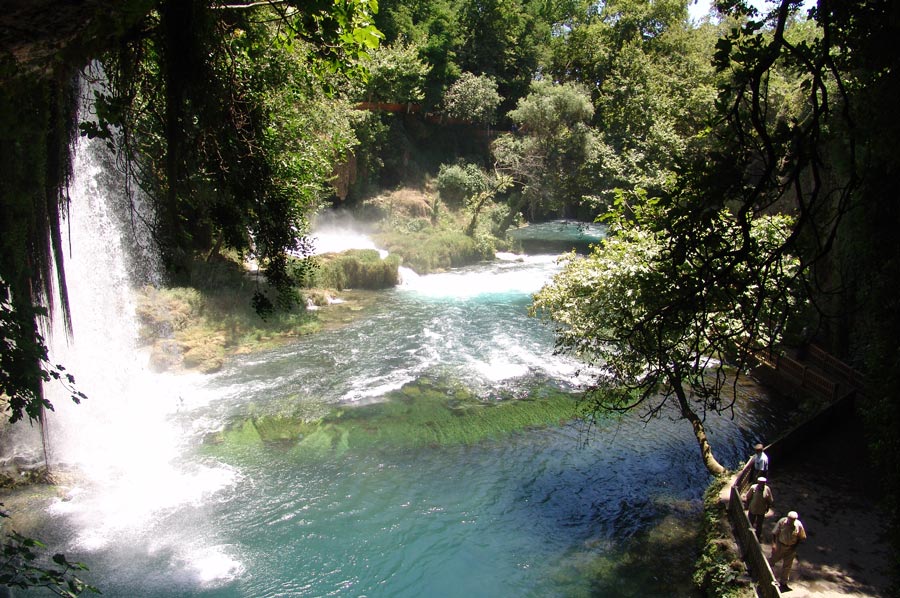
Karst Springs – A whole succession of karst springs, sinkholes, and waterfalls can be found in the immediate vicinity of Antalya.
If, 11 km northwest of Antalya at the junction with the main road to Korkuteli, one follows not the new expressway to Burdur but rather the old route via Döşemealtı, one reaches a few kilometers past this town two major karst springs: Kırkgöz (located near a massive caravanserai dating from 1236) and Pınarbaşı.
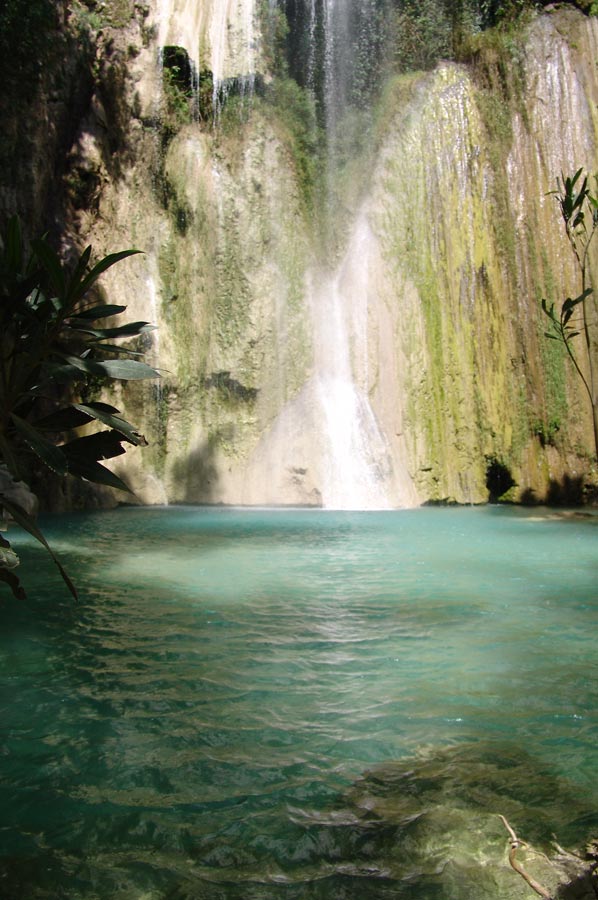 These high-discharge springs disappear into the Bıyıklı Düdeni cave system immediately downstream of the water regulator (*Regülatör*).
Some of these karst sinkholes are so large that they could absorb an entire river or lake (handling flows of up to 30,000 litres per second).
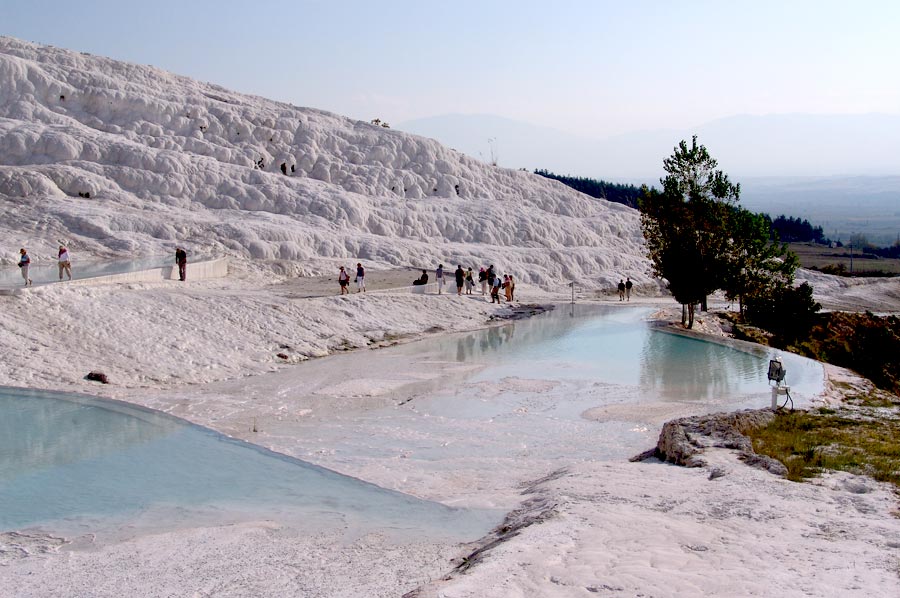
Over the past 1.5 to 2 million years, these and other karst springs situated along the edge of the Taurus Mountains north and west of Antalya have deposited extensive travertine terraces (similar to those at Pamukkale) through the precipitation of dissolved calcium carbonate. These terraces reach thicknesses of up to 275 meters, span a length of 35 km and a width of up to 20 km (covering an area of 650 km²), and extend all the way to the sea.
From Bıyıklı, the water flows underground for 14 km; it briefly surfaces at the Varsak Obruk (a giant sinkhole) before disappearing again for another 2 km, only to re-emerge into the daylight at Düdenbaşı under considerable pressure.
 The water diverted at the regulator near Bıyıklı is channeled back into the stream at this point; together, the combined waters of the Düden Çayı then plunge down a series of spectacular cascades into a narrow gorge carved into the travertine. The Upper Waterfalls (Düdenbaşı Şelalesi) can be reached from Antalya’s northern ring road via a small access road (Kızılırmak Caddesi) located northeast of the city.
The Lower Waterfalls of the Düden Çayı (Düdenbaşı Şelalesi) plunge into the sea from a 20-meter-high travertine cliff in the southeast of the city, adjacent to a small park located directly along the coastal road leading to Lara Beach.
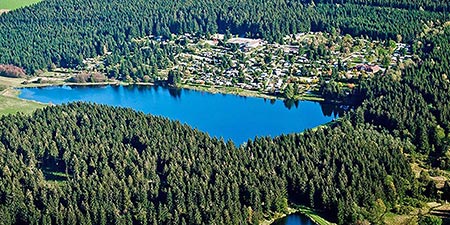
Fundamentally, a karst spring is the point where water emerges from a karst aquifer within a karst system. This phenomenon involves the underground drainage of a large area, which often results in karst springs exhibiting a very high discharge volume.
Karst springs are found in many locations around the world.
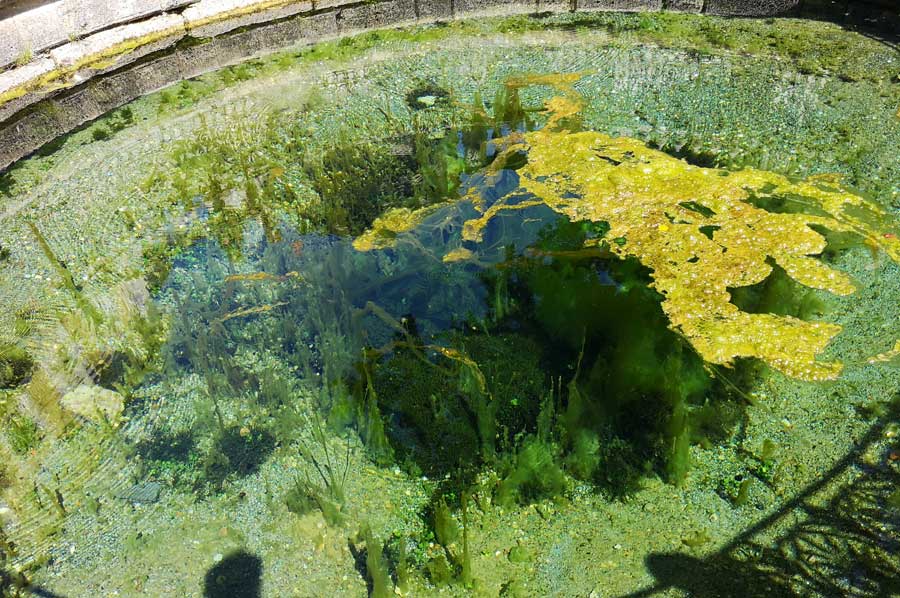 Karst springs emerge at specific points within a karst aquifer where the geological structure facilitates the easy release of water from the karstic rock formations. They constitute a distinct element of karst geomorphology and may release water at multiple points distributed along a specific elevation level forming what is known as a karst spring line.
When a karst spring takes on a funnel-like or basin-like shape, such points of water emergence are often referred to as *Quelltöpfe* (spring pots) a terminology reflected in the names of various bodies of water such as the Aachtopf, Blautopf, Brenztopf, or Lonetopf. Other karst springs emerge directly from rock faces, examples of which include the Kuhfluchtquelle, the Source du Lison, the Tote Weib, and the Rinquelle.
Please also read: