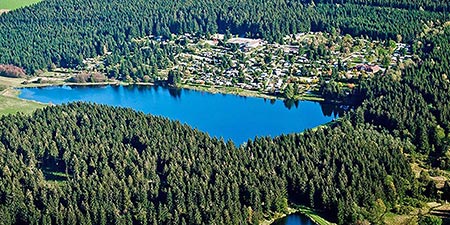
Ahrweiler – A Walk Through the Old Town
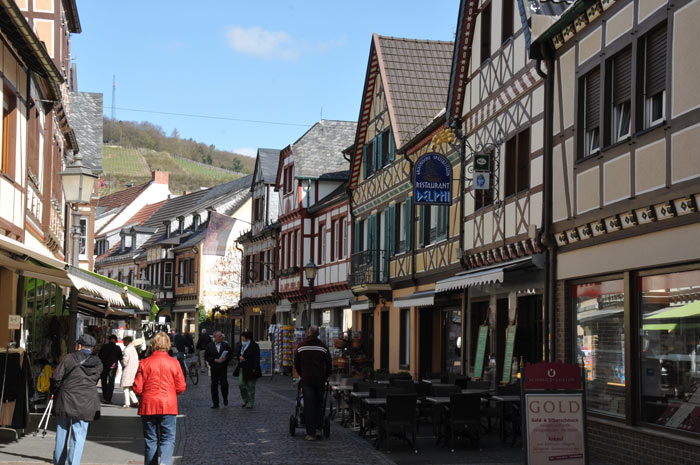
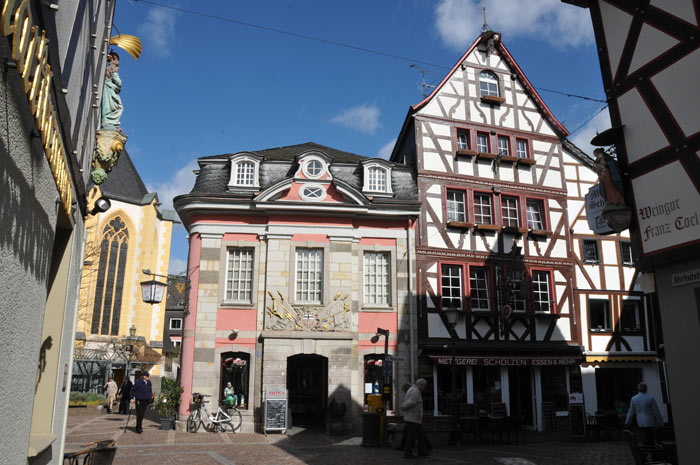
Ahrweiler – During our visit to the Roman Villa in Ahrweiler, we also took the opportunity to walk through the medieval Old Town itself. Its main attractions aside from the idyllic pedestrian zone with its half-timbered houses are the fully preserved town fortifications, featuring towers and a town wall complete with a defensive walkway.
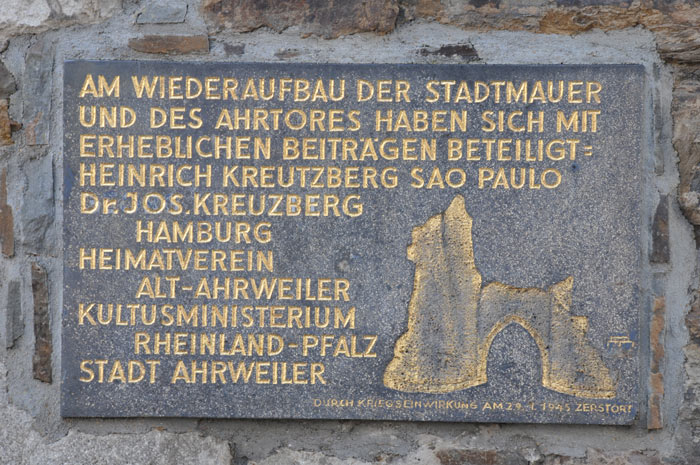
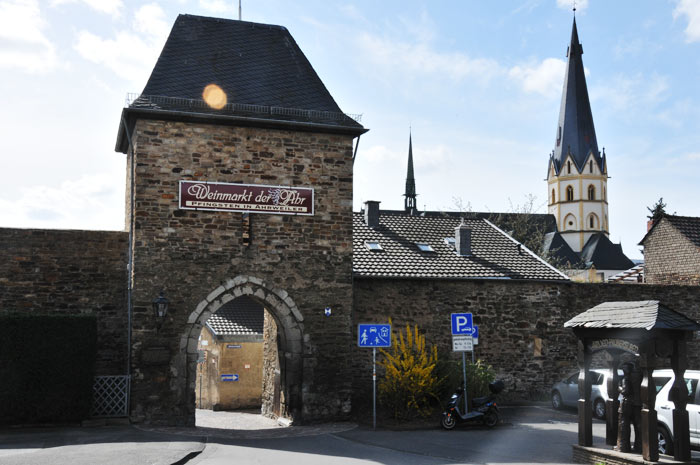
The Ahrweiler town wall encircles the town and has four gates. We entered the town center through the *Ahrtor* (Ahr Gate); the other gates are the *Niedertor*, the *Obertor*, and the *Adenbachtor*. Following wartime destruction, a defensive walkway was reconstructed at the *Ahrtor* in a modern style, a fact noted on a commemorative plaque.
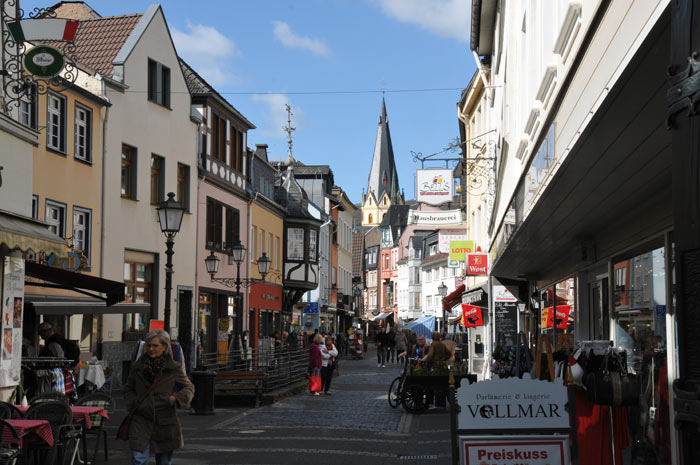
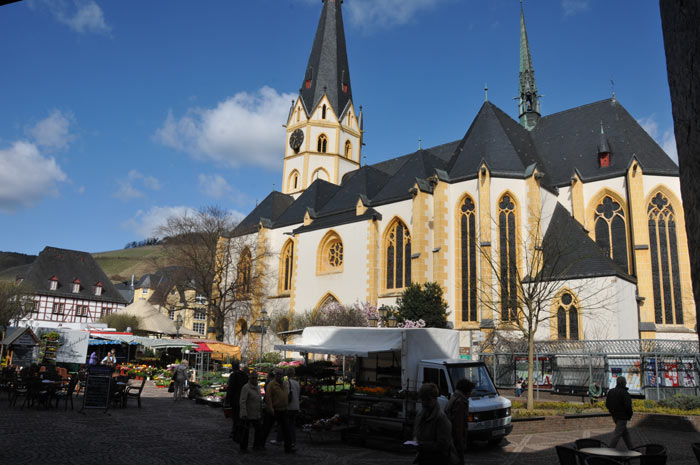
Upon reaching the heart of the Old Town, the narrow lane opens up into the "Marktplatz" (Market Square). On the day of our visit, this area hosted a small weekly market and was also the site of St. Lawrence’s Church (St.-Laurentius-Kirche).
St. Lawrence’s Church believed to have been founded in 1269, based on historical records is the oldest Gothic Hall church in the Rhineland. The interior features a remarkable number of wall paintings dating from various centuries.
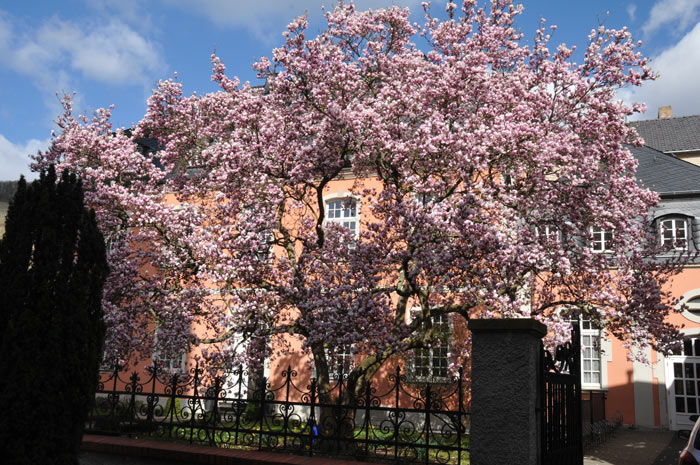
The church is surrounded by a fountain and colourful flowerbeds. Opposite stands the "Stadtwache" (Town Guard House), dating from the late 18th century. We were particularly captivated by the magnificent, blooming magnolia tree.
Shortly thereafter, we reached the next town gate, the "Adenbachtor". It is easy to see that Ahrweiler is a renowned wine town; right by the gate, signs point the way to wine-tasting rooms (visible on the right side of the image). From here, one can access the *Rotweinwanderweg* (Red Wine Trail) directly. The Ahrweiler district is particularly renowned for its outstanding Pinot Noir (Spätburgunder) wines and is the northernmost wine-growing region in Rhineland-Palatinate.
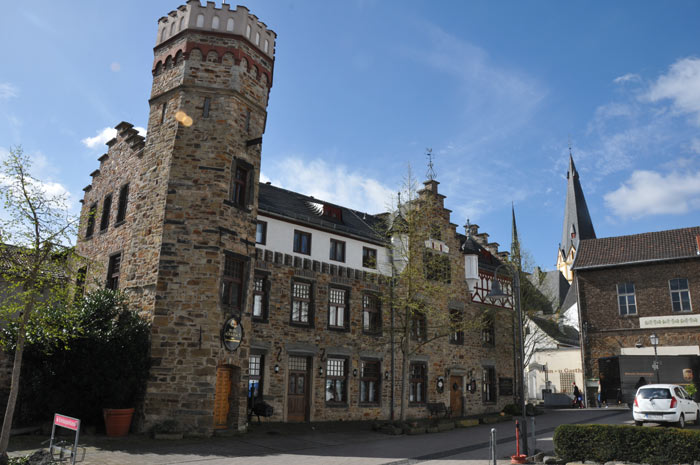
Here is Adenbach Castle, located near the city gate of the same name. We now continue our walk along the outside of the city wall until we reach the Niedertor (Lower Gate).
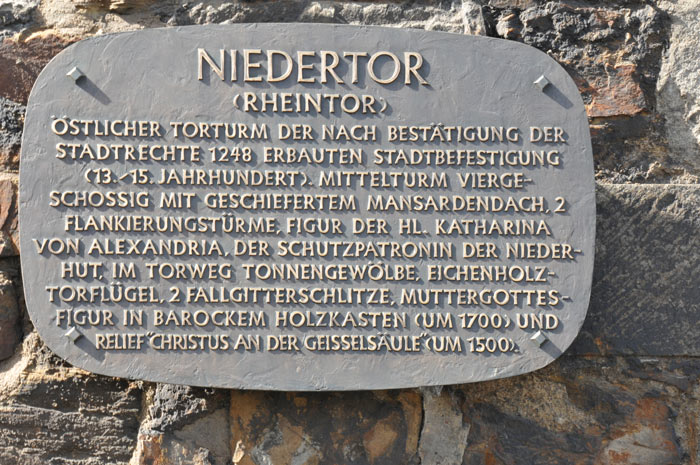
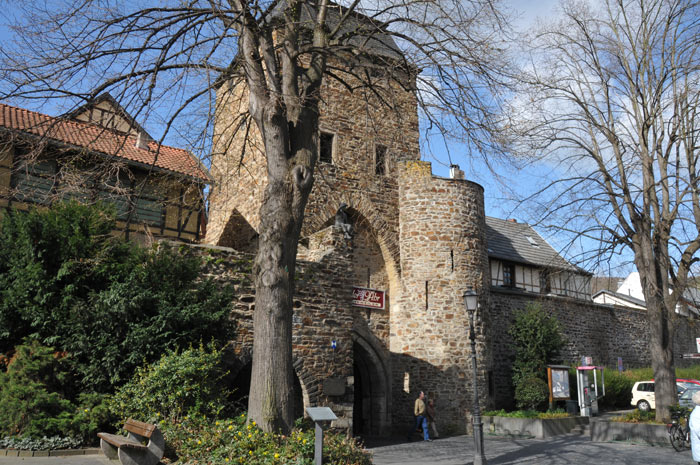
After the Ahrtor, the Niedertor is arguably Ahrweiler’s most impressive city gate, featuring a narrow passageway that is closed to vehicles.
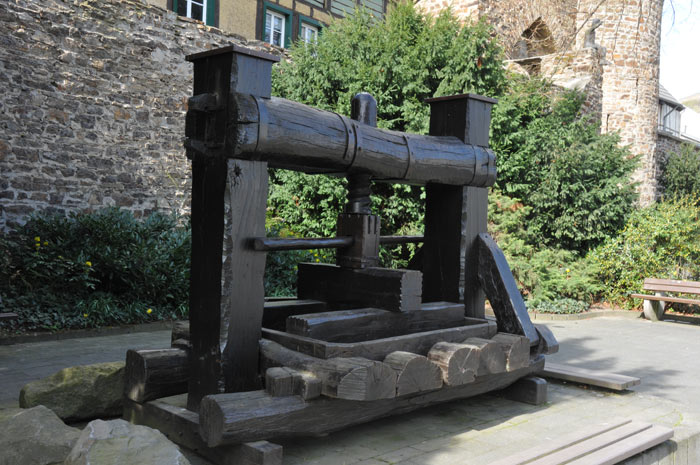
Right next to the Niedertor stands this historic spindle press.
A particularly positive feature was the information plaques we noticed throughout the Old Town; they allowed us to quickly read up on key details regarding the historic buildings. It is a truly well-executed solution that makes it much easier for visitors to identify and understand the sites.
We passed through the Niedertor back into the Old Town, which is almost entirely car-free and serves as a pedestrian zone. The diverse and colorful house facades some dating back to medieval times invite you to take a leisurely stroll.
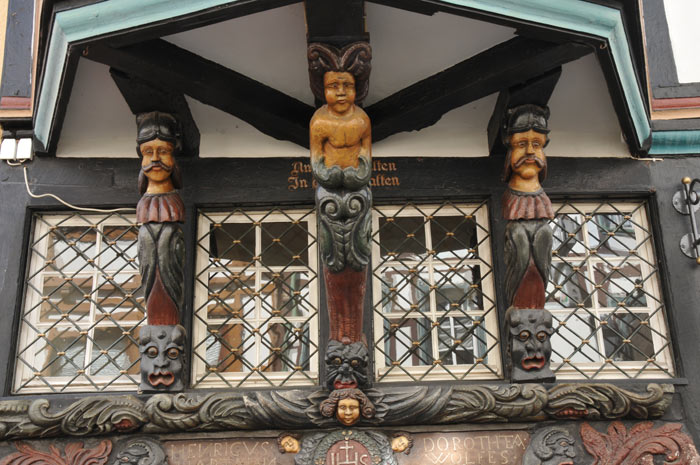
One example that draws every eye is the "Haus Wolf," featuring the richly decorated support beams of its oriel window.
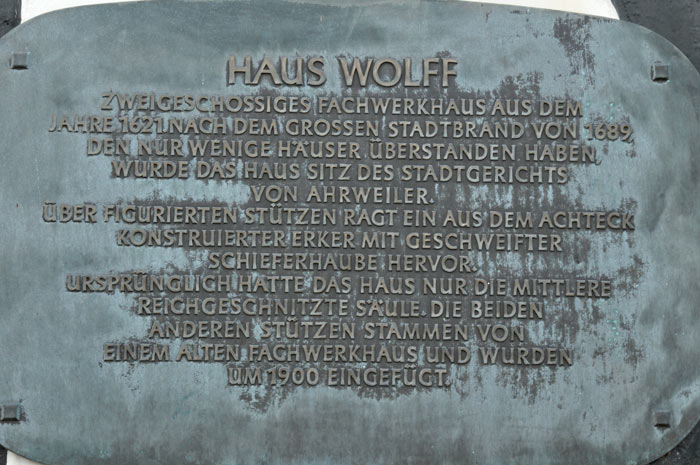
Here, too, there is an explanatory plaque. This is what makes a city tour enjoyable.
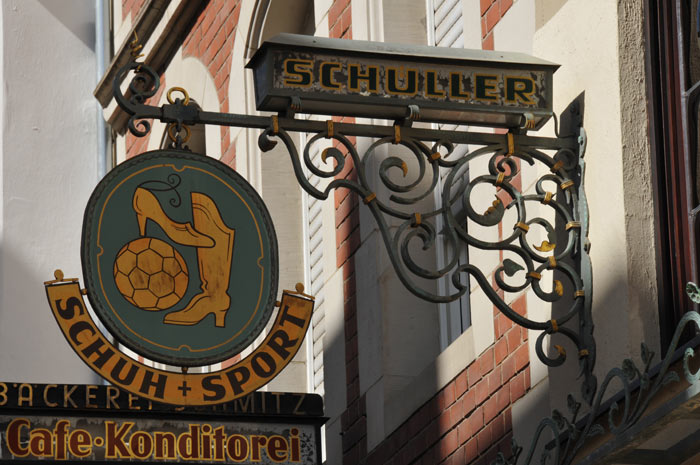
Also striking are the many guild signs in the Old Town; their symbolism hints at the trades practiced behind the facades. In fact, written explanations are hardly even necessary.
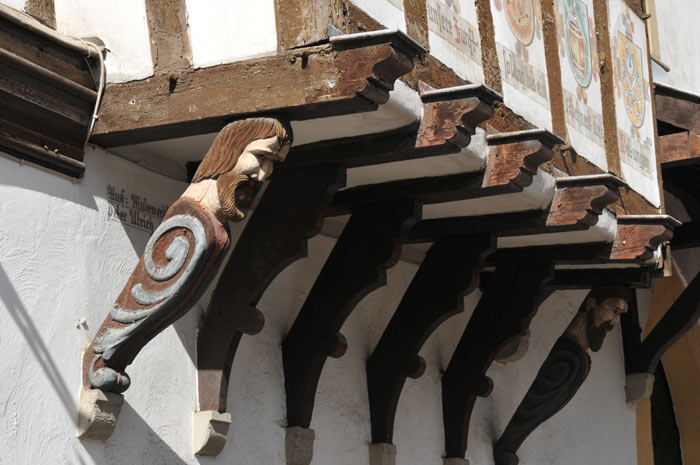
The many half-timbered houses on Niederhutstraße and Ahrhutstraße the Old Town’s two shopping streets also create an idyllic atmosphere, with oriel windows richly adorned with ornamentation. A wonderful Old Town; we will be back.
Coordinates: 50° 32′ 24″ N, 7° 5′ 26″ E
Please read as well:
Next stop: the Roman Villa of Ahrweiler a recommendation well worth following!