Solo Along the Rhine: A Sentimental Journey in Spring

The Rhine is arguably Germany’s most important river a waterway that, like no other, embodies the transition from a nation-state to a unified Europe.
Long before anyone even conceived of a united Europe indeed, even before a German state existed the Rhine already served as a symbol of connection. In fact, the establishment of the Central Commission for the Navigation on the Rhine marked the creation of the very first inter-European organization.
No other river of this scale in Europe possesses as many facets as the Rhine, making it the perfect destination for a motorhome trip.
A symbol, a lifeline, a figure of legend all set within a landscape that is consistently charming yet never monotonous. Could there be any better reason to experience "Father Rhine" on your own this spring? Surely not. Here, we outline a brief itinerary for exploring this great river.
The Journey Is the Destination
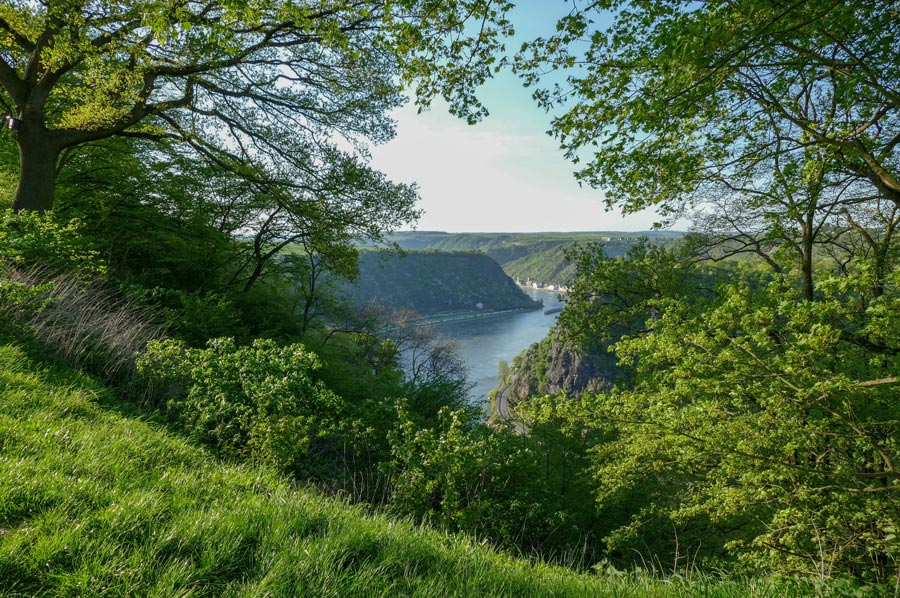 The Rhine spans 1,232 kilometres. While that may not seem like a vast distance, it is ideal for a road trip.
A timeframe of about two weeks is perfect for the journey. It is best to set off no earlier than the end of April:
- Only then is the weather reasonably stable along the entire length of the river.
• Many tourist attractions do not open until (late) spring.
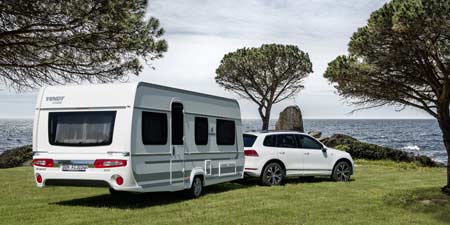
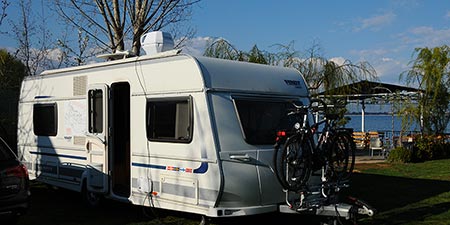
For solo travellers, a motorhome is the ideal choice. It not only saves on accommodation costs especially since many guesthouses do not offer single rooms but also provides the freedom needed to truly "experience" the river (in every sense of the word).
In fact, this way of traveling offers many other benefits, not the least of which is the chance to switch off and unwind. Furthermore, the Rhine is exceptionally well-catered for in terms of parking areas, campsites, and similar facilities, making any necessary advance planning a breeze.
1. Lake Toma
 The Rhine begins as a multitude of trickles, tiny streams, and glacial meltwater. It is only at Lake Toma, in the Swiss canton of Grisons (Graubünden), that these currents converge.
One could, of course, explore the Rhine in reverse. But to truly experience its transformation from a tranquil mountain stream into a massive aquatic highway it is best to follow its course.
Those who prefer to avoid the hike to the lake can begin their journey in Reichenau, where the two headwaters the Anterior Rhine (Vorderrhein) and the Posterior Rhine (Hinterrhein) meet.
It is hard to believe, but this small mountain stream serves as one of the starting points for Europe’s most important waterway.
2. From the Alpine Rhine to Lake Constance
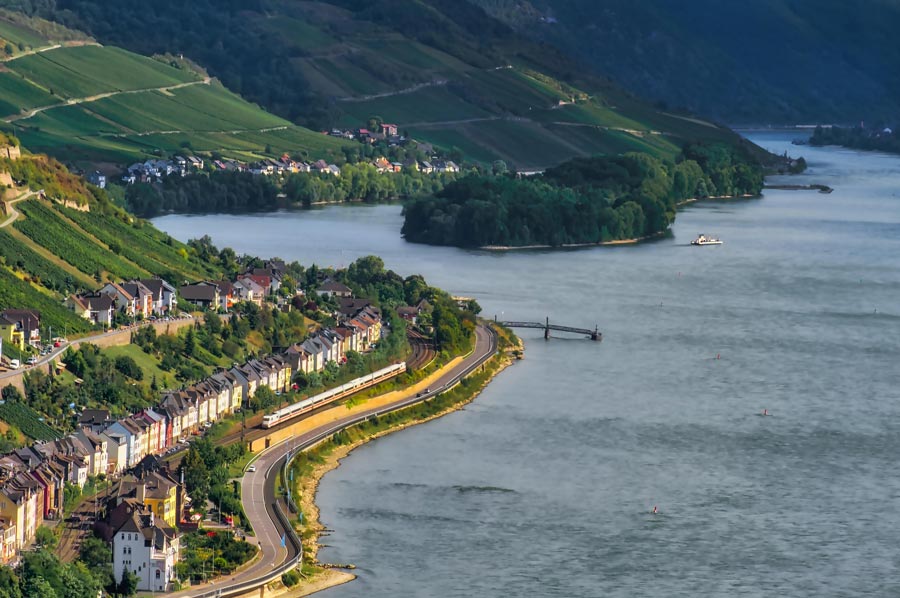 As the journey continues, you will likely look back on this moment; by the time the Alpine Rhine covers the distance between Reichenau and Lake Constance, it has descended more than 200 meters in elevation.
Here, the river is wild and quite narrow, set within a rugged valley. Only when Lake Constance comes into view does the pace grow calmer and this area, steeped in history, is a gem in its own right.
Yet, we cannot linger; however tempting the lake may be, the great river draws us onward.
3. The Long Road to Basel – The High Rhine
After leaving Lake Constance, the river which has largely been heading northward turns westward. The entire stretch as far as Basel is known as the High Rhine; it possesses a unique beauty and is dotted with numerous spots that invite you to linger.
Among these, naturally, is the Rhine Falls at Schaffhausen, right at the start. While it is certainly a prime example of tourism along the Rhine, it is far too spectacular to simply drive your motorhome past.
4. Where Borders Blur – The Upper Rhine
 Nowhere is the Rhine’s role as a Franco-German boundary more evident than along the course of the Upper Rhine.
From Basel to Au am Rhein just south of Karlsruhe the river serves as a living, flowing border between the two nations. It was not always this way, however; between 1871 and 1918, when Germany held control over Alsace-Lorraine, the river flowed entirely within German territory.
Yet today, this stretch offers the clearest insight into how German and French cultures can intertwine and those in the know claim that this is the best place along the entire Rhine for fine dining.
From Karlsruhe to Mainz, the Rhine’s dual nature becomes apparent. As it flows past various industrial sites, the immense importance of the river as a vital artery is laid bare.
5. A Romance for the Soul – The Middle Rhine
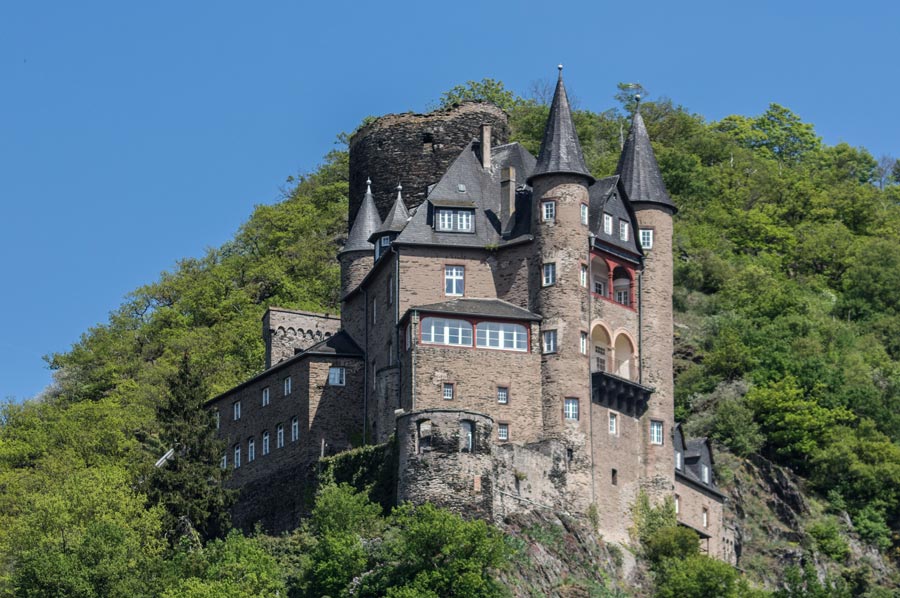 A few kilometres west of Mainz, the landscape surrounding the great river shifts abruptly. Past the Binger Loch, the expansive floodplains narrow, and the mountains rise up, drawing ever closer.
Here begins what is arguably the most romantic section of the river a stretch that, more than any other, has captivated and inspired poets.
Moreover, this is a place that cannot be defined by individual sights alone. All the way up to historic Koblenz, where the Rhine and the Moselle converge, the river is one long, continuous feast for the eyes a place where one should never hesitate to linger.
6. The River as a Workhorse: The Lower Rhine
 The Rhine Valley remains narrow until it reaches the border between the states of Rhineland-Palatinate and North Rhine-Westphalia. But then, at the southern edge of the Cologne Lowland, the valley widens, and the river bids a final farewell to its romantic, mountainous, wine-growing character.
Some might say it loses a bit of its picturesque charm, but in truth, its beauty simply transforms becoming more rugged, less whimsical.
From Bonn onwards, the Rhine evolves into a broad, full-bodied artery of industrial culture. Cities like Cologne, Düsseldorf, and above all Duisburg reveal to any traveller following its course that the Rhine is more than just beautiful.
It is essential. It serves as a steadfast, ever-present helper a role made especially striking during periods of low water, when the inability of ships to navigate highlights just how vital the river is to our modern lives.
Yet, in its final kilometres through Germany, the river reveals one last, almost apologetic glimpse of a different, harsher kind of beauty as it meanders through the flat landscapes between Wesel and Emmerich.
7. A Taste of the Dutch Delta
 Upon reaching Millingen aan de Rijn, the Rhine effectively becomes Dutch and begins to branch out. For the traveller, this distinction is of great importance.
If you follow the main branch (which heads south), you are no longer on the Rhine, but on the Waal. In exchange, you are treated to a tranquil, flat landscape that you can follow at a leisurely pace all the way to the North Sea.
If you follow the northern branch, you are on the Nederrijn. The landscape is similar, though significantly more industrialized for this is home to Europe’s largest port: Rotterdam. And however, picturesque its surroundings may be, they are immensely important to one’s affection for the Rhine.
Regardless of which route you choose, after the days you have spent traveling, a sense of melancholy is bound to set in a feeling further amplified by the Dutch weather, which, even in spring, often remains as misty and overcast as the sea.
Yet, this is a trip I would recommend to anyone. Other rivers may be more consistently beautiful, but the Rhine is truly unique in a state of perpetual change, and yet always the same.
Image sources:
1) fotolia.com © Luis
3) fotolia.com © juhumbert
5) fotolia.com © Marc
7) fotolia.com © Adrian72
8) fotolia.com © Markus
Please also read:
Eskişehir and Meerschaum
Motocross grounds near Alanya – training trails used by MotoGP stars