


Krüllkoken - Rullerkes - or simply New Year's Cakes
- Written by Portal Editor
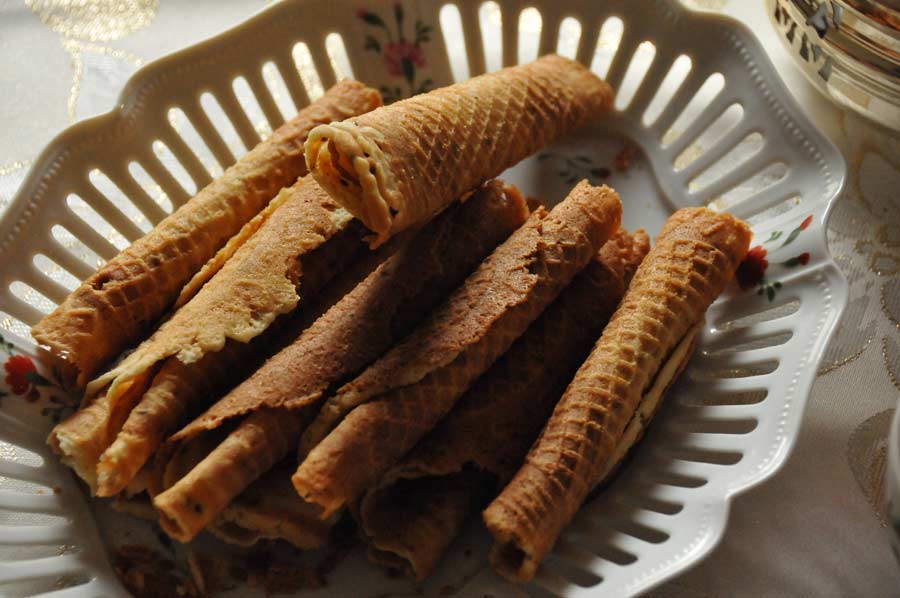
Krüllkoken - No sooner have the calorie-laden Christmas holidays with their many delicacies passed than the next festive days are already upon us, bringing with them some typical regional delicacies: "Happy New Year - are the Krüllkoken all ready?"
At least that's what will be heard in the north in the coming days, when delicious aromas waft from the kitchen between Christmas and New Year's.
 The New Year's cakes, which are also called Rullerkes, Neejahrskoken, or Krüllkoken depending on the region and its local Low German dialect, are a sweet pastry traditionally prepared for New Year's Day, especially in Northern Germany, and predominantly in the Emsland and East Frisia regions.
They are then enjoyed for the first time on New Year's Day with tea. These rolled cones, made from a special pancake batter, are baked in a special waffle iron and usually served on New Year's Day when neighbours and friends visit each other, or so the widespread custom goes.
Happy New Year - are the Krüllkoken all clear?
 In the Emsland and the County of Bentheim, the pastry is called New Year's Cake, on the border with Münsterland also Iron Cake, and in the Rhineland, New Year's Little Cakes. In Monschau, the Monschau Dütchen, made according to a similar recipe, have been a specialty since the mid-19th century and are now popular with tourists. In Münsterland, the name Piepkuchen is more common. The batter used is almost the same, but the preparation differs.
The pastry is rarely rolled after baking but is left in its flat, round shape. The ritual of "piepkuchen baking" is often central to this tradition, where the pastries are traditionally baked over an open flame using antique waffle irons. When the two waffle irons are pressed together, though these days they are usually electrically heated, the batter produces a high-pitched squeaking or chirping sound – hence the name.
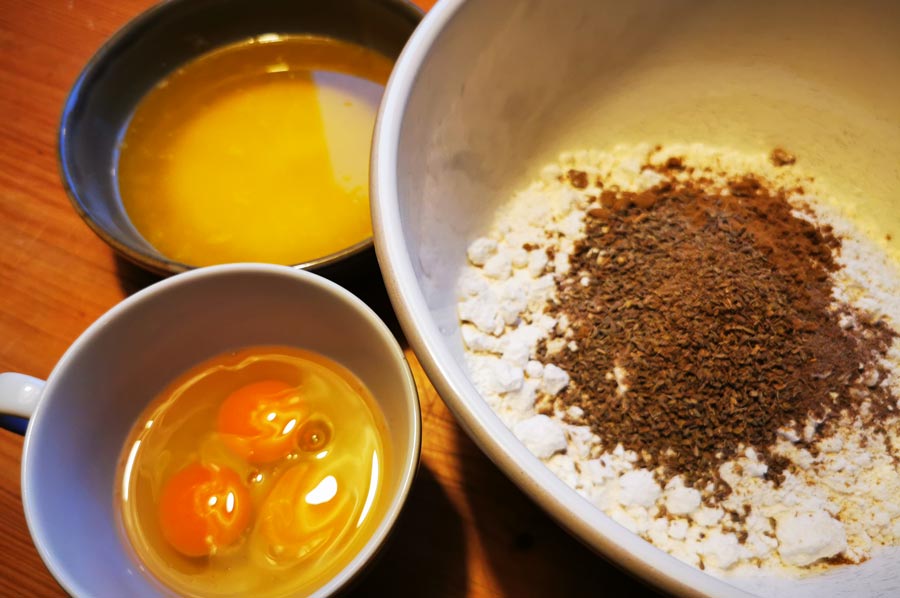
 What makes these special seasonal cookies unique is the use of two spices not commonly found in cooking: cardamom and coarsely ground anise. A truly interesting and delicious combination!
For readers unfamiliar with the Low German dialect, the phrase "Glückelk Neejohr - sünd de Koken all klor?" means something like "Happy New Year - are the cakes ready yet?"
First, the sugar is dissolved in hot water, then the liquid is allowed to cool. Now melt the butter and let it cool. Then, using a hand mixer, beat the butter until fluffy and gradually add the eggs, spices, sugar syrup, and flour. The batter should be thin and easily slide off a spoon. Let the batter rest overnight, then test the consistency again with a spoon (if it's not thin enough, simply add a little more water).
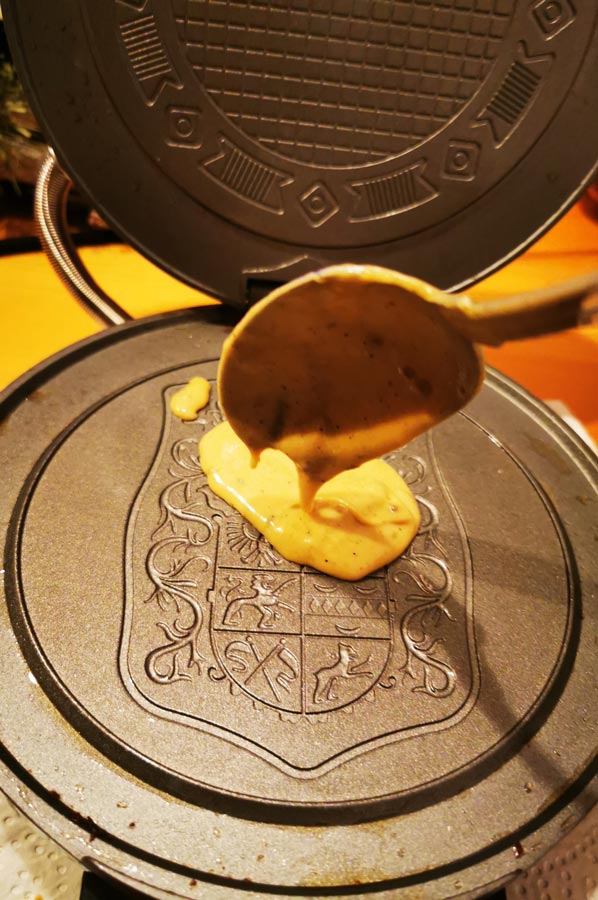
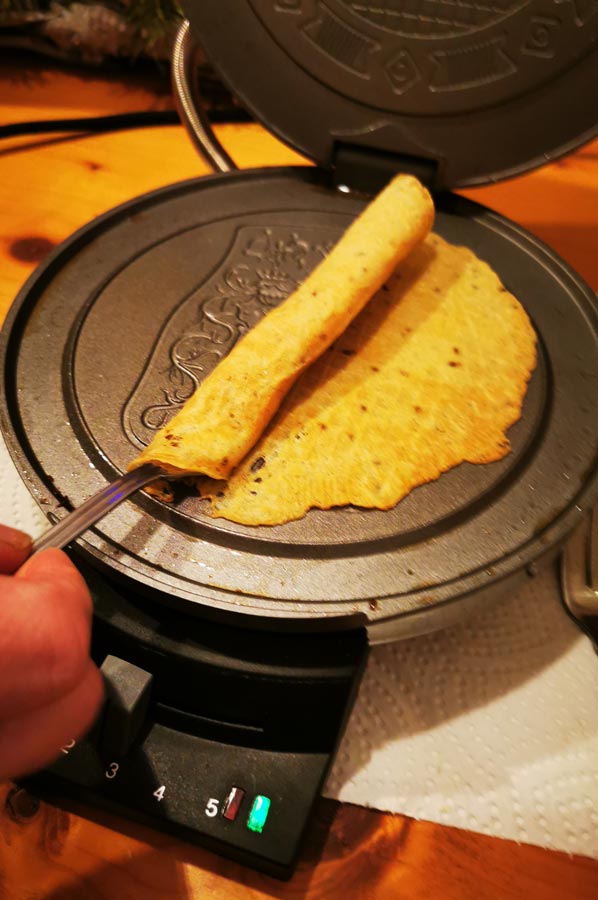
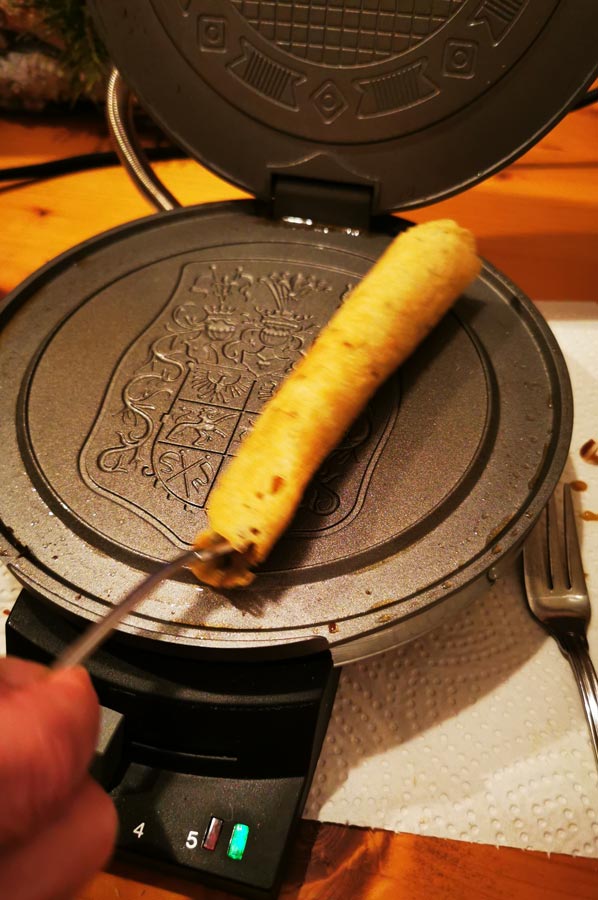 Preparing the batter for New Year's cakes: Spoon the batter onto a very hot, greased waffle iron, then press the lid down firmly to create a thin, baked waffle. Using a fork, remove the baked cake from the iron and immediately twist it into a pointed cone (the batter hardens quickly). While it's still cooling, place the cakes in a large tin to keep them crisp. Always store them in a closed container, as they absorb moisture quickly.
Distribute the batter with a spoon onto a very hot, greased waffle iron, then press the lid down firmly to create a thin, baked waffle. Ingredients:
- 300 g sugar or rock candy
• 0.5 l boiled water
• 250 g melted butter
• 500 g wheat flour
• 7.5 g ground cardamom
• 15 g coarsely ground anise
• optionally 1 tbsp whole anise seeds
• 3 eggs
Please also read: