


International Jackal Day on April 19th
- Written by Portal Editor
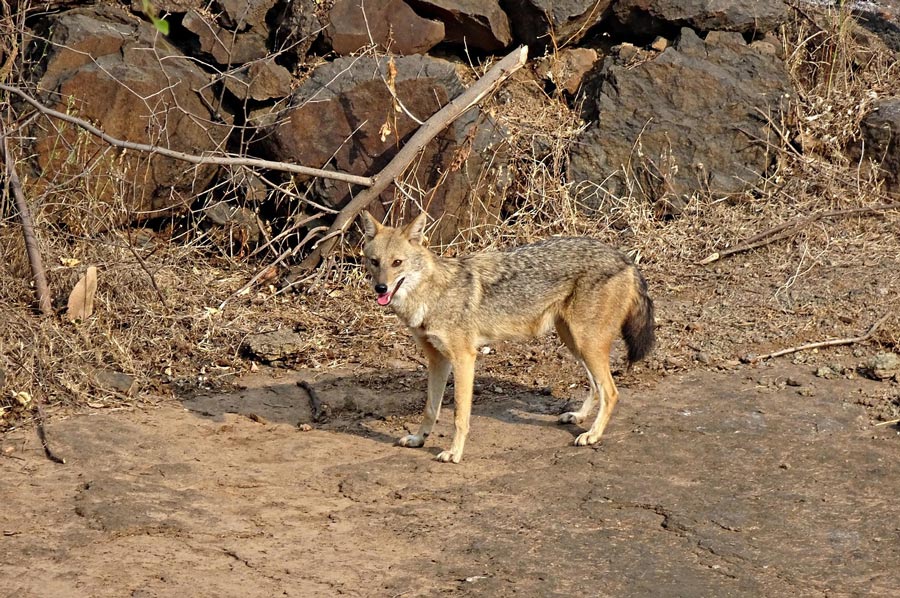
International Jackal Day on April 19th is still a relatively new anniversary: Initiated by BOKU University Vienna in 2023, it is intended to draw attention to the increasing spread of the golden jackal in Europe – and help publicize new scientific findings on this shy canine relative.
Although the golden jackal has been present in Germany for decades, researchers still know little about its distribution and migratory behavior. The first animals came to Germany from the Balkans, Poland, and the Czech Republic.
Experts estimate: The golden jackal has established itself in Germany in ten years.
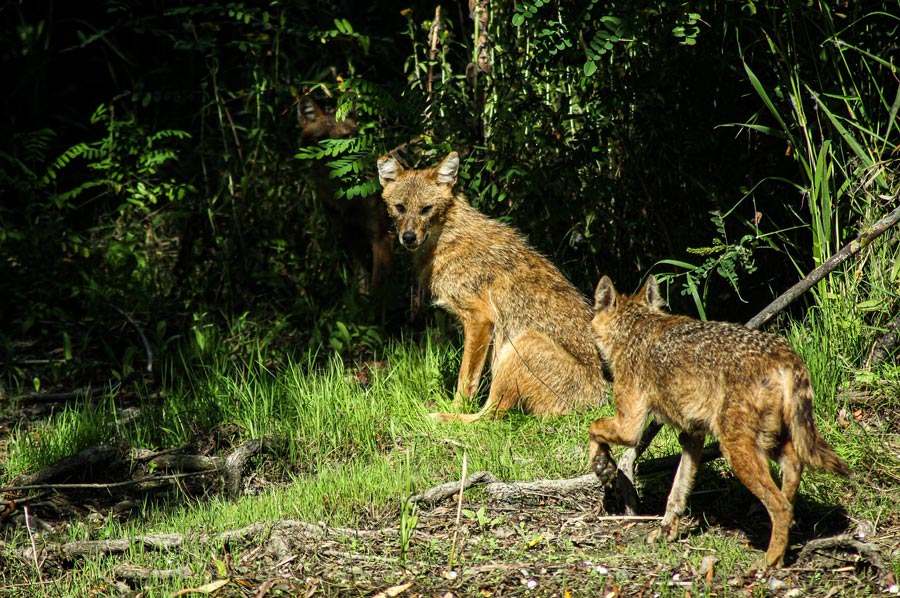 The first documented sighting of a golden jackal in Germany dates back to 1997 – an animal was spotted in Brandenburg. There are now sightings from all German federal states except Rhineland-Palatinate, Saarland, Berlin, Bremen, and Hamburg, with the number of sightings increasing. The most sightings so far have come from Baden-Württemberg, where there have been new offspring every year since 2021. And in Lower Saxony, the first jackal offspring were confirmed in the Uelzen district in 2022.
The trend is clear: The golden jackal is on the rise in Germany – and experts estimate it will be firmly established here in around ten years. However, it is difficult to say how many animals are already roaming around here. The golden-brown wild dogs are far too rare for that. They are almost always out and about at dusk and are very shy. Detection is usually achieved through camera traps or genetic traces, but some animals also end up in researchers' statistics because they fall victim to road traffic.
April 19th was deliberately chosen as Golden Jackal Day because females give birth from late April into May – often up to five pups per litter. The yellow-gray young lie well hidden in the undergrowth, thickets, or burrows and are nursed for around six weeks. Then, as with all canids, the sharp milk teeth break through the gums, and the little ones curiously and playfully follow their mother on her hunting expeditions. Golden jackals live in social family groups. The young often stay with their parents until the following spring – sometimes even longer to help raise the next generation.
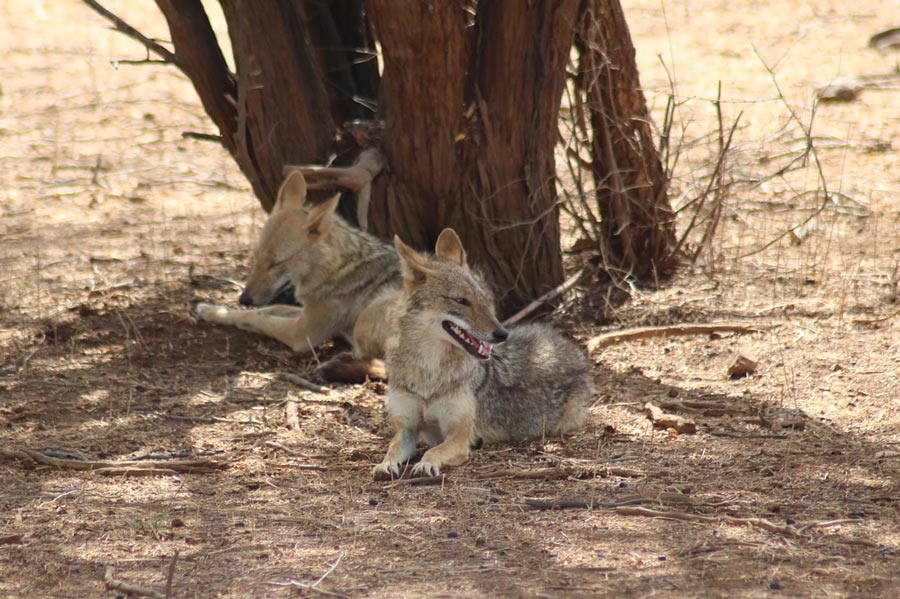 "Like foxes, jackals are opportunists when it comes to foraging – they take whatever is available," says Prof. Dr. Klaus Hackländer, wildlife biologist and board member of the German Wildlife Foundation. Mice, amphibians, insects, carrion, fallen game, but also plants such as corn and berries are on their menu. Golden jackals have also been known to attack sheep. "Thanks to their flexibility in their choice of food and their ability to adapt to different habitats, jackals can find a suitable territory almost anywhere," says Hackländer - founder of Jackal Day. Even residential areas are attractive to wild dogs if there is food such as waste or small animals and a daytime shelter nearby.
The golden jackal poses no direct threat to humans. However, it could become a threat to some wild animals if the number of packs increases: "The golden jackal could become a problem for the local population of threatened ground-nesting birds such as the partridge or lapwing, as it consumes the clutches of these species, which are already under great pressure," says wildlife biologist Hackländer. The golden jackal itself is listed in Annex V of the Habitats Directive (FFH Directive) and is specially protected nationally under the Federal Species Protection Ordinance and the Federal Nature Conservation Act.
What to do if you encounter a golden jackal?
Smaller than a wolf, but significantly larger than a fox, with yellowish-gray fur that shines golden in the sunlight, especially on the legs – anyone who spots one of these animals while out for a walk is very lucky. Golden jackals are shy, active at dusk, and still rare. During such a special encounter, one should remain calm and enjoy the moment – and ideally note the location and perhaps even take a photo. This data, which is valuable for scientific research, can be reported to the relevant contact point in the federal states. These are often the people and institutions responsible for wolf monitoring. An overview of these contacts can be found here.
More information about the golden jackals you can find here.
Jenifer Calvi / Press Officer
German Wildlife Foundation
Lucy-Borchardt-Straße 2
20457 Hamburg
Phone +49 40 970 78 69-14
This email address is being protected from spambots. You need JavaScript enabled to view it.
Please read as well: