


Ormana - Rahvan Horse Races on the Ibradi Plateau
- Written by Portal Editor
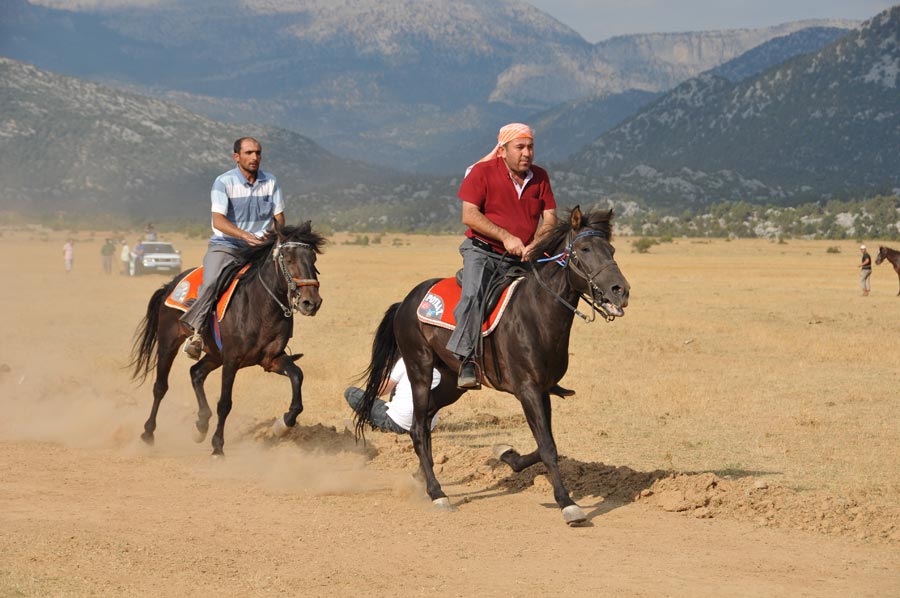
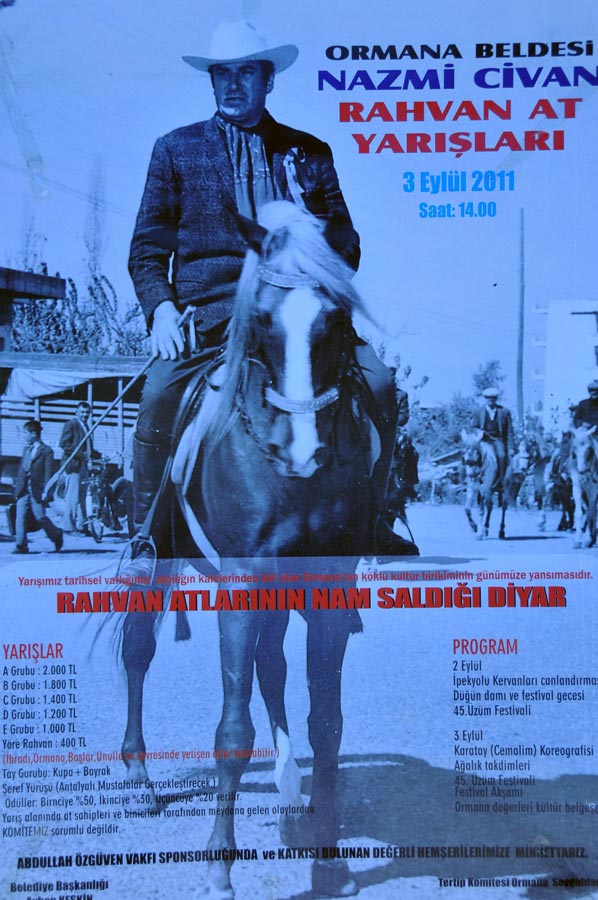
Ormana - We were thankfully told by Ömer earlier in the week about the upcoming horse races in Ormana / Ibradi on the Taurus plateau.
Since they also wanted to attend the Rahvan races, we spontaneously decided to take another trip into the mountains to once again deviate from the usual routes and use the forest tracks across the Taurus Mountains by jeep, following the old Seljuk trade routes.
Ormana - An adventurous approach through the mountains
 The plateau is otherwise easily accessible via Highway 695, which leads from Manavgat towards Konya. Shortly before Akseki, take the left turn towards Ibradi.
The more adventurous driver can also take the road towards the waterfall from Manavgat and, after passing the waterfall, continue towards the Oymapinar Dam, then turn left at the Roman bridge towards Yailaalan, Ürünli, and Ibradi.
The villages of Ürünli and Ormana lie at an altitude of approximately 1,000 meters, about 50 kilometres from Manavgat.
Typical Turkish stone houses with beautiful wooden balconies adorn these villages, which are otherwise still untouched by tourism.
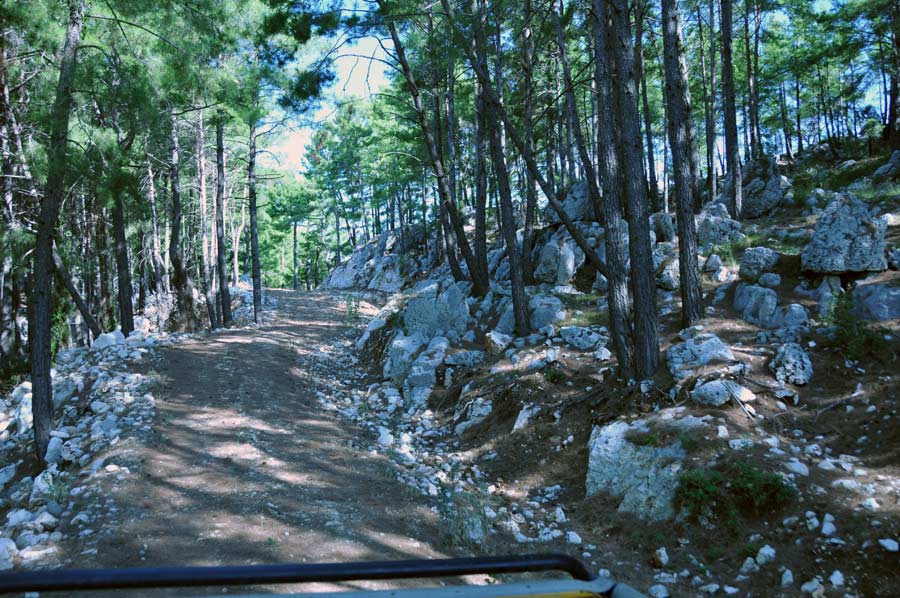
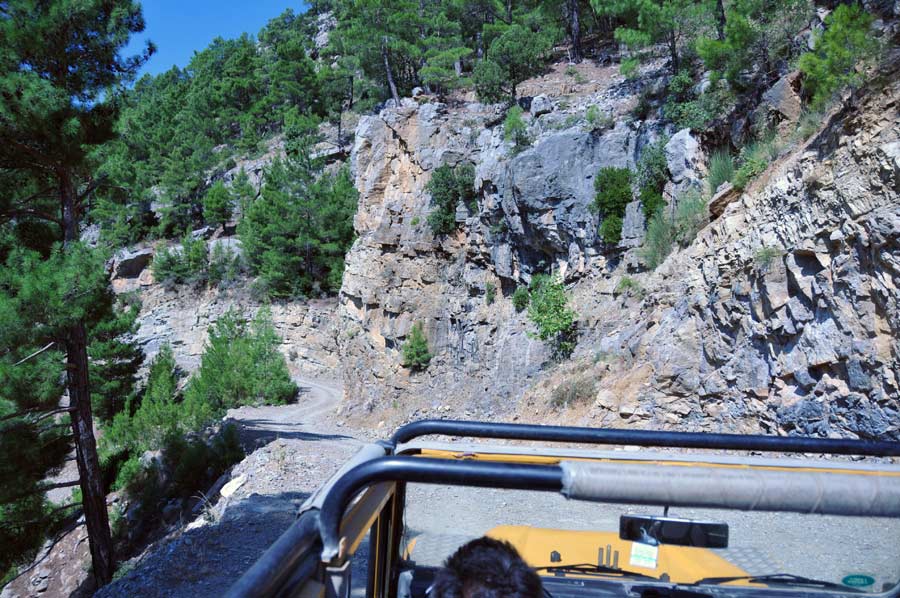
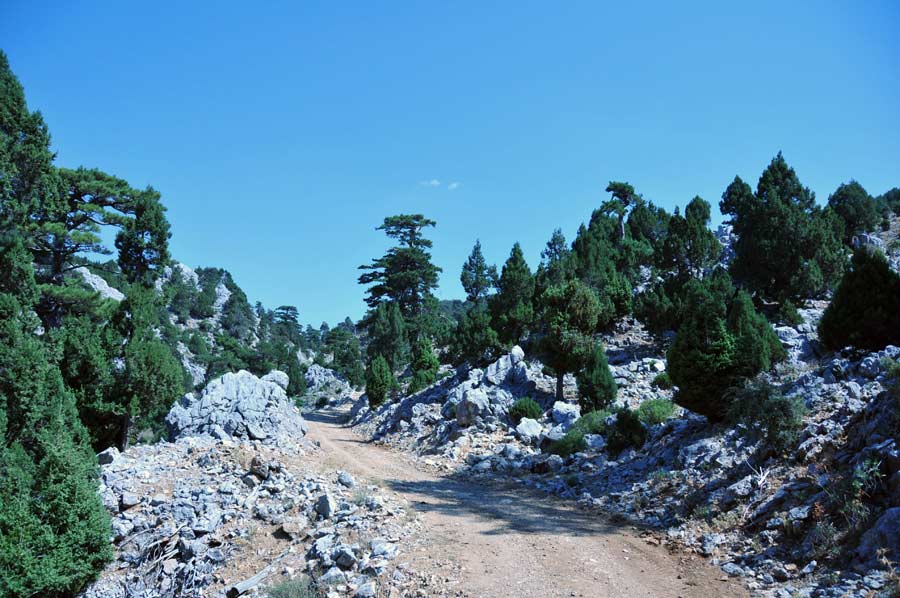
 As mentioned before, we wanted to explore the forest tracks again by jeep and thus climbed meter by meter. We drove along the 1,000-meter contour line towards Sirt and passed the Tolhani caravanserai (also called Belbidi Hani).
Quite dilapidated but idyllically situated on the banks of a stream, this caravanserai is now used by nomadic families to water their sheep and goats or even stay for a few days.
You can see some makeshift dwellings built from stones and brushwood. We were warmly welcomed by the local elder and given a brief tour of the caravanserai. He told us about an American traveler who had made some drawings of Tolhani several years ago. Despite searching online, we haven't found anything further.
Caravan Routes through the Taurus Mountains
 During the brief but peaceful Seljuk period, the caravan routes were very well developed and quickly became some of the safest trade routes in the world at that time. Goods from Central Asia reached the resurgent city of Antalya, formerly Attaleia, via two different trade routes. The first and very difficult route across the Taurus Mountains led via Silyon, Aspendos, Kargi Hane, and Tol Hane to Lake Beysehir and then east to the then-capital, Konya. The easier but longer route ran straight north from Attaleia via Evdir Hane to the first travertine terrace. This plain is relatively easy to cross, and after about thirty kilometers, one reaches Kirk Göz Hane at the foot of the Taurus Mountains. Now, on this route as well, the difficult ascent over the mountains begins, and you reach the Suzus Hane caravanserai.
The journey continues past the Incir Hane caravanserai and then on to Konya. Trade along the caravan routes was very well organized by the Seljuks and, not least due to the demands of the merchants, also very safe. The Venetians' demands for secure trade routes played a crucial role in the construction of the caravanserais. The Seljuks inherited the Persian business acumen and centuries of nomadic experience, making them successful traders.
Stalls, a tented grandstand, and a sound system in Ormana
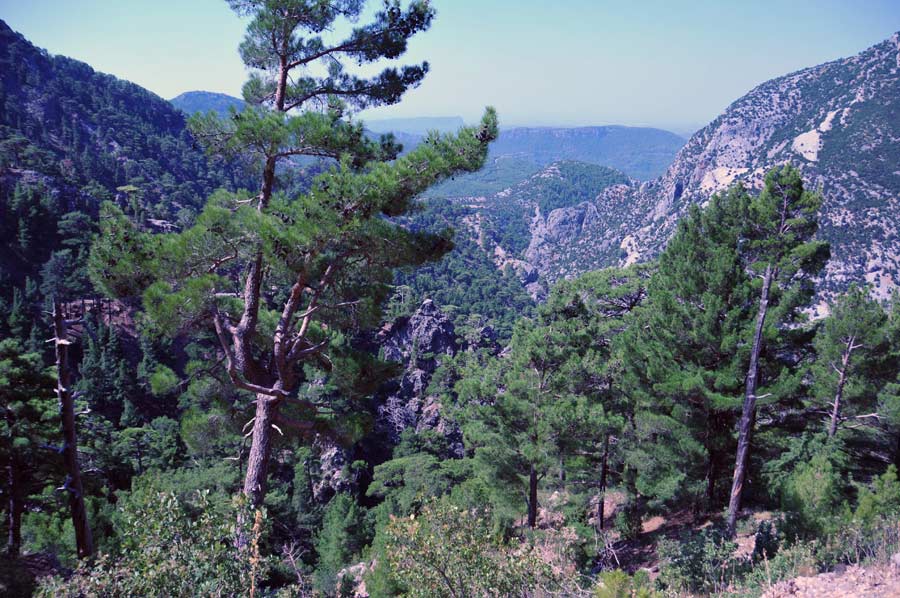
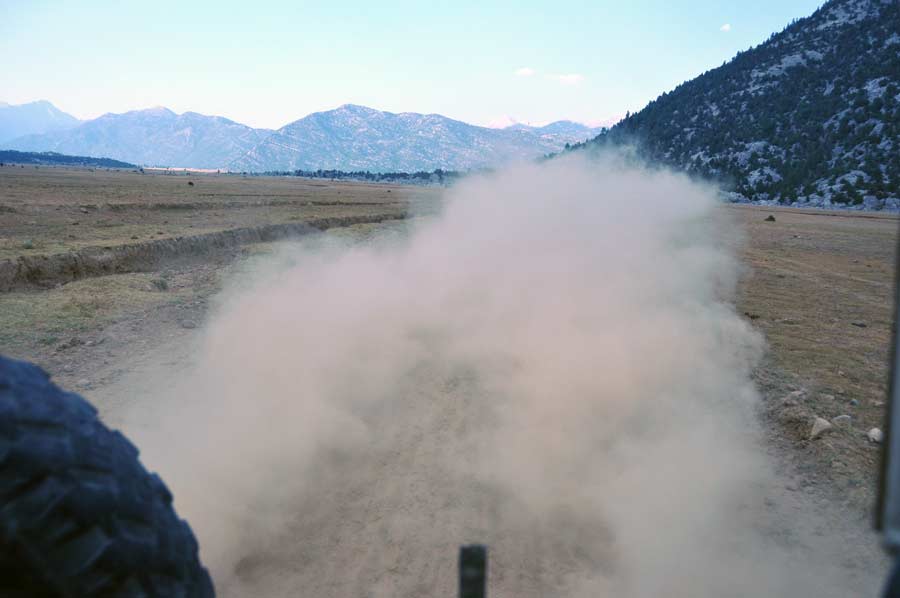
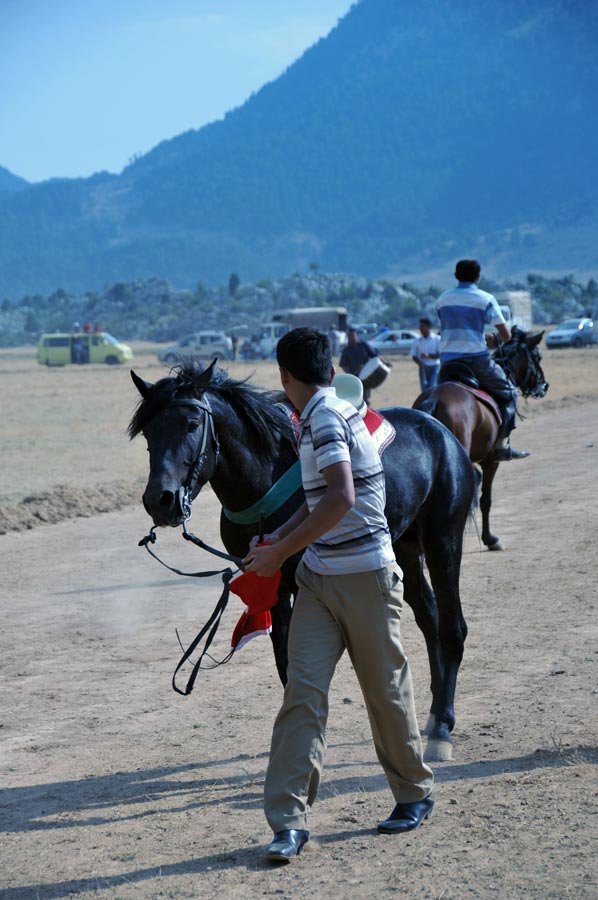 We continue along the slopes of Akdag, which, at 1,984 meters, is quite impressive, cross the pass, and then descend into the Ibradi plateau. The plateau and the town of Ormana lie before us like a vast, dried-up lakebed. Kicking up a huge cloud of dust, we arrive in the town, which boasts some truly attractive houses with magnificent wooden balconies. We're still a bit early, so we take the opportunity to have lunch in town.
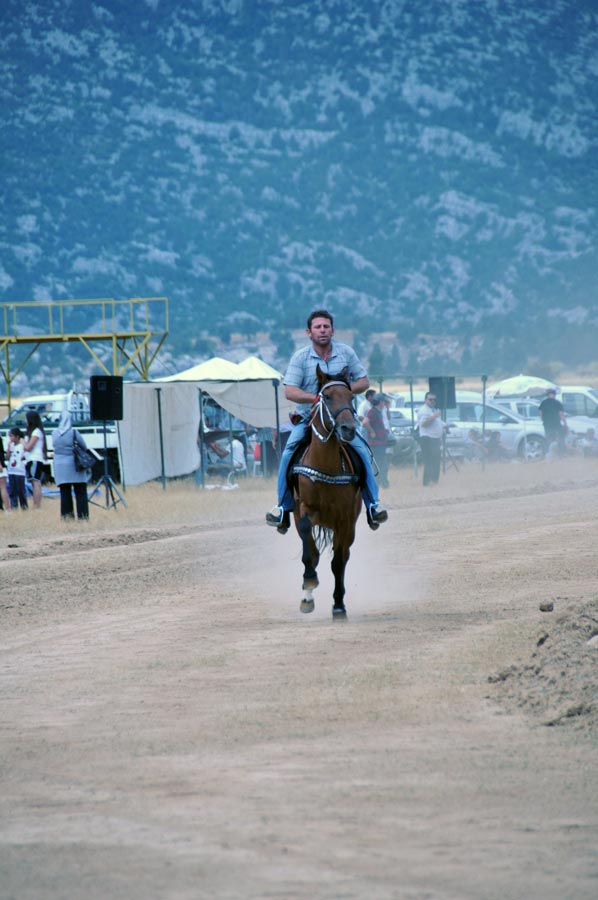
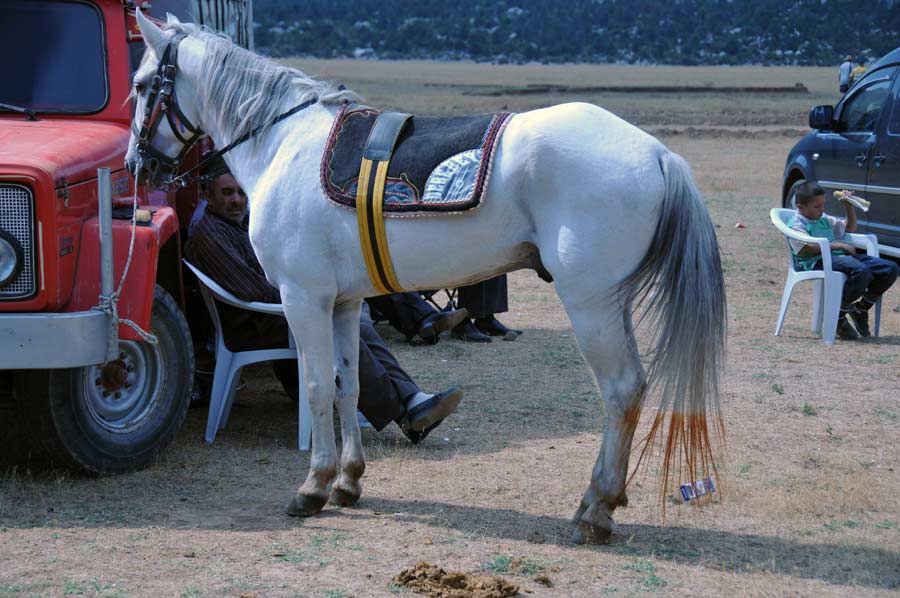
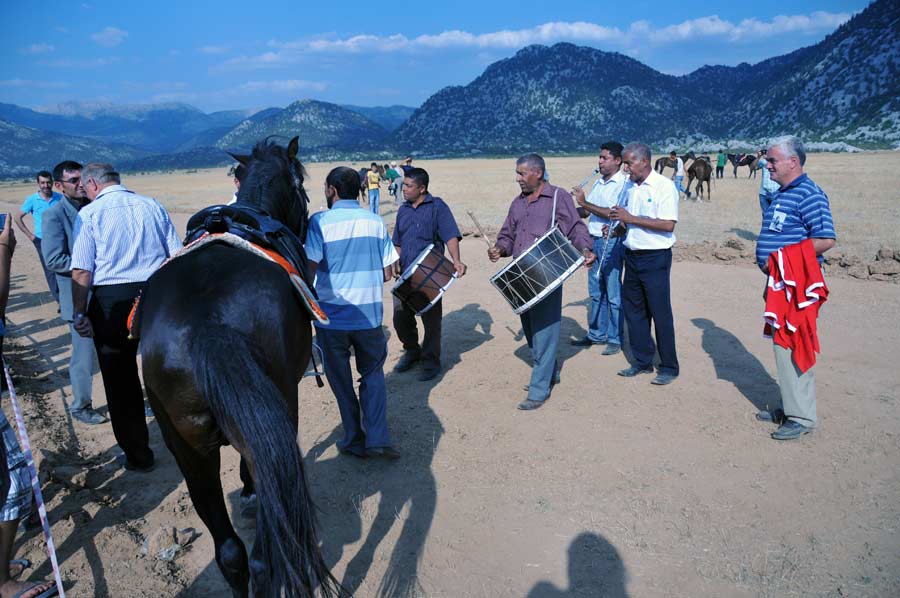
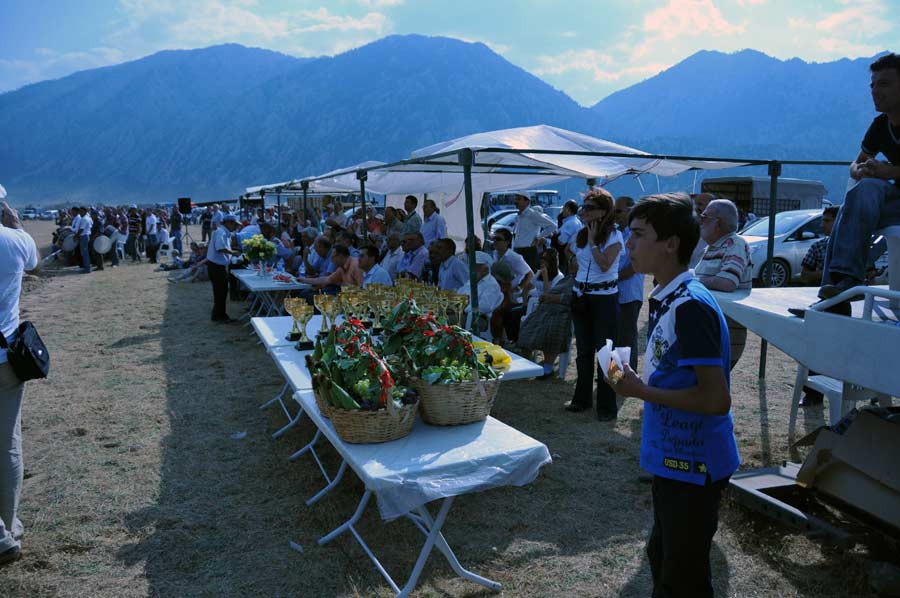
Work is still in full swing at the racetrack for the later Ormana horse races, so we have time for tea and a bit of banter with the locals. Then we head back out onto the open plateau, and we can now see the oval track already laid out in the sand. Stalls, a tented grandstand, and a sound system announce the approaching event, and the first horse trailers have already arrived. As so often before, we are surprised by the prevailing chaos of the preparatory planning, but thanks to our experience, we are now quite carefree, because as always, everything will be set up in time and the scheduled races will be able to take place.
A gait in which the horse's back barely moves.
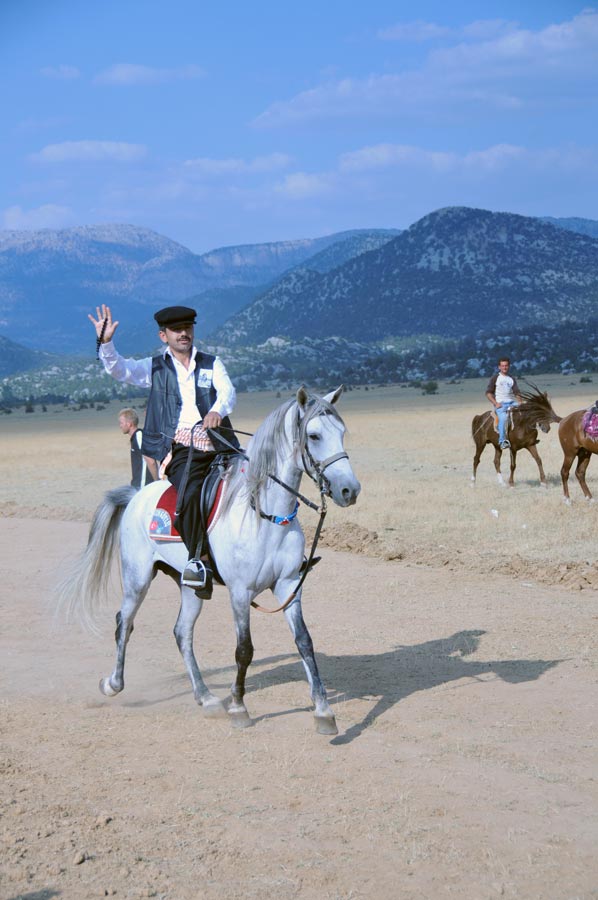 About an hour later, the obligatory introductory speeches by the local politicians take place, the religious blessing is given with a concluding joint prayer, and the first racehorses are already at the starting point in Ormana.
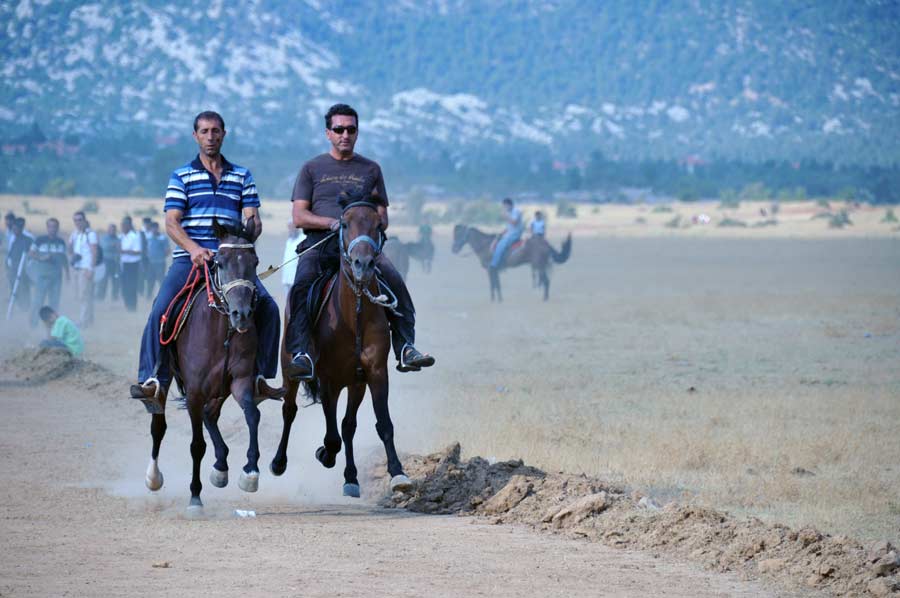
Races are run in pairs and groups of three, divided according to horse class. The winner of each race then advances to the next round.
Strict adherence to the Rahvan gait is crucial; a horse may only break its rhythm a maximum of three times, after which it is disqualified.
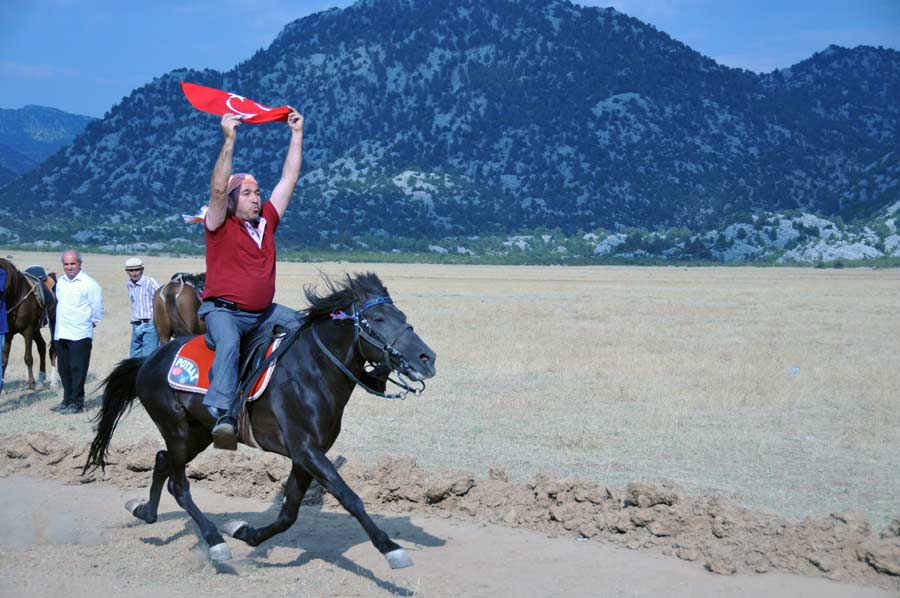
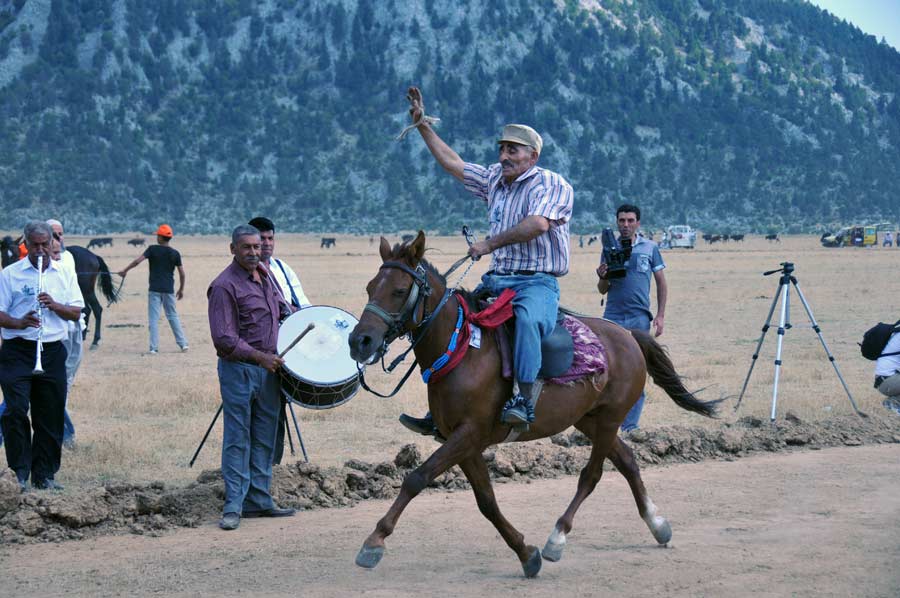
The winner receives a red flag at the finish line, which is then proudly displayed above their head in both hands during the fast victory lap.
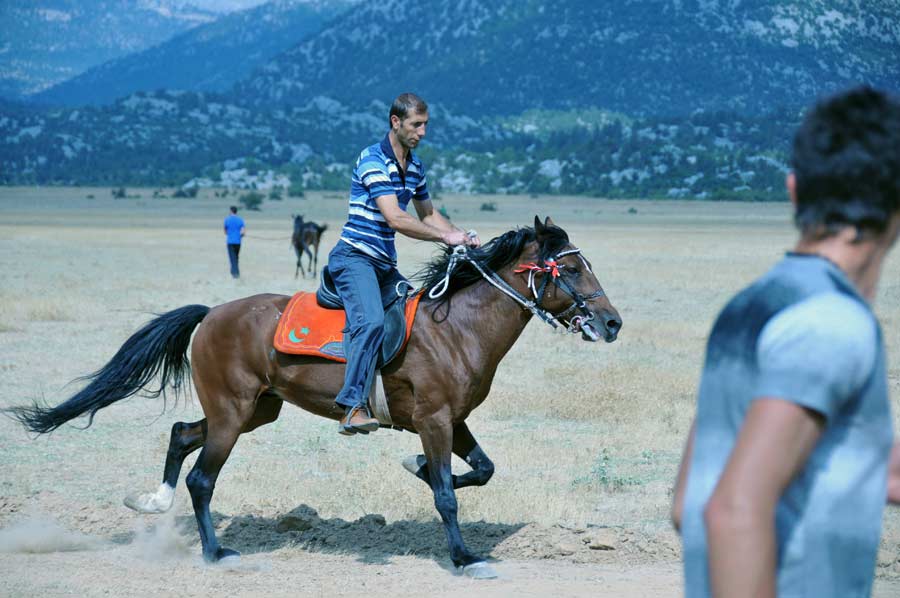
Rahvan horses, with a height of only 135-150 cm, appear small and rather unassuming at first glance. The unique feature of this horse breed lies in its gait, the Rahvan—sometimes also called tölt, trot, or pace—a gait in which the horse's back barely moves.
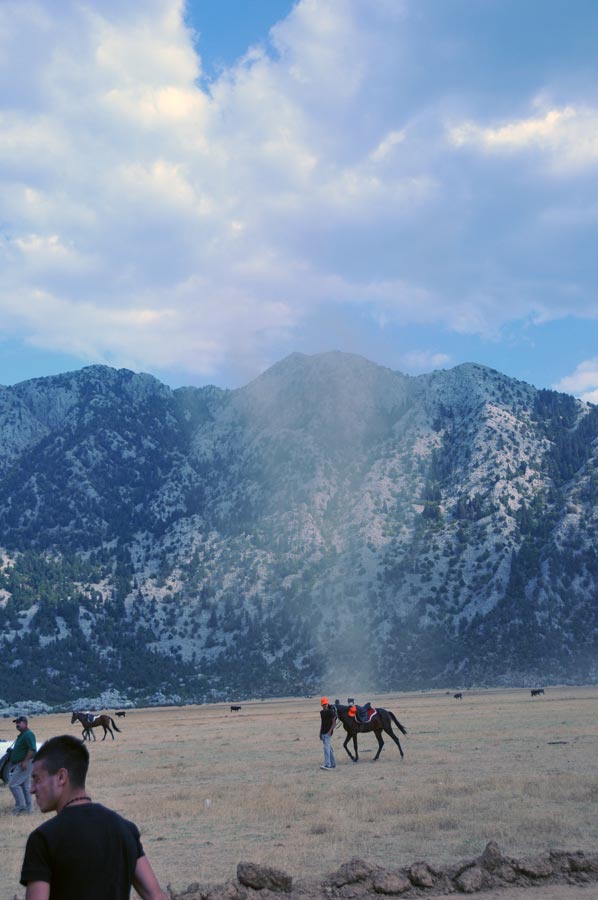 This gait is ridden with a double bridle, as the pace is difficult to control. The pace has been very popular since antiquity because it is much less strenuous for both horse and rider, especially over long distances, than gaits such as trot or canter.
Horses can reach speeds of up to 60 km/h in this gait, and the trails are very sure-footed, even over uneven terrain.
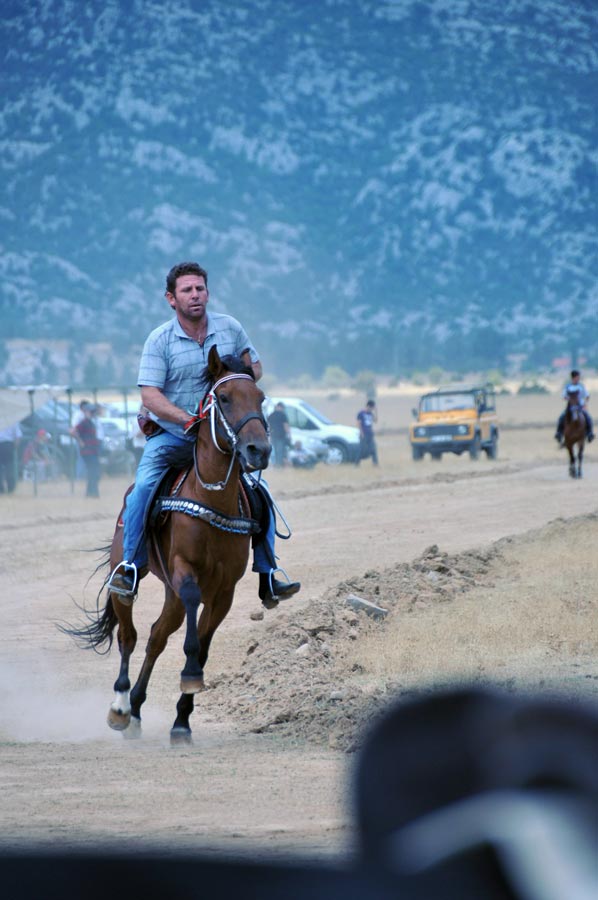
Here on the Ormanli plateau, an oval racetrack approximately 1,200 meters long has been laid out, cleared only of coarse gravel. Horses and riders compete in various categories, each in groups of up to six horses. Immediately after the start, the horses transition into the pace, achieving an almost floating state, as all four hooves are in the air simultaneously for a brief moment.
This suspension phase makes riding so pleasant, as it allows for very fast yet comfortable progress.
The Rahvan horse's character shows a strong affinity for humans, sometimes almost tender, intelligent, and sensitive when a close handler is present.
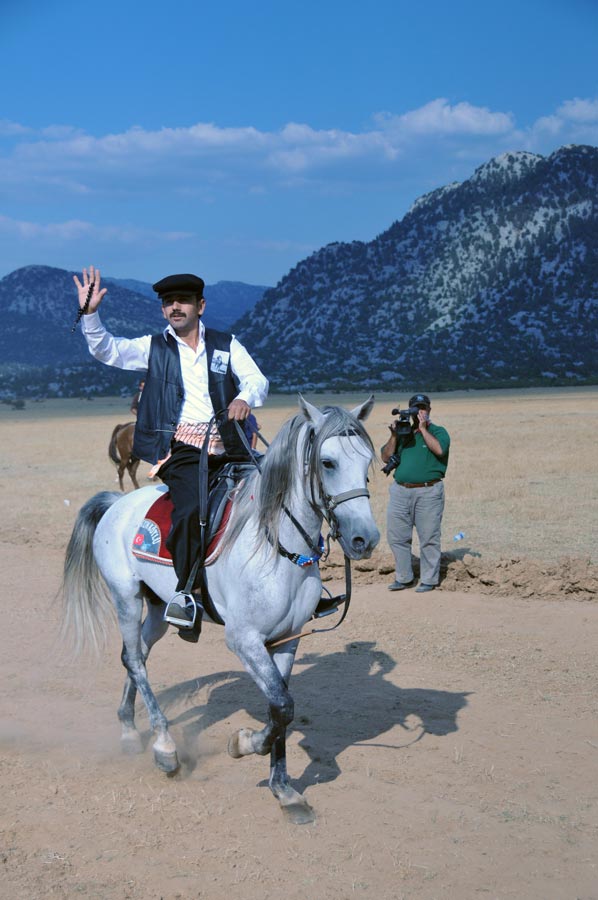 Rahvans can also be very fond of children, so much so that they can almost be considered part of the family. At first glance, some riders seemed far too heavy for these rather delicate horses, but as the expert explained to us, this is more than compensated for by the horses' short backs. Even riders weighing up to 100 kg are no problem for Rahvan horses.
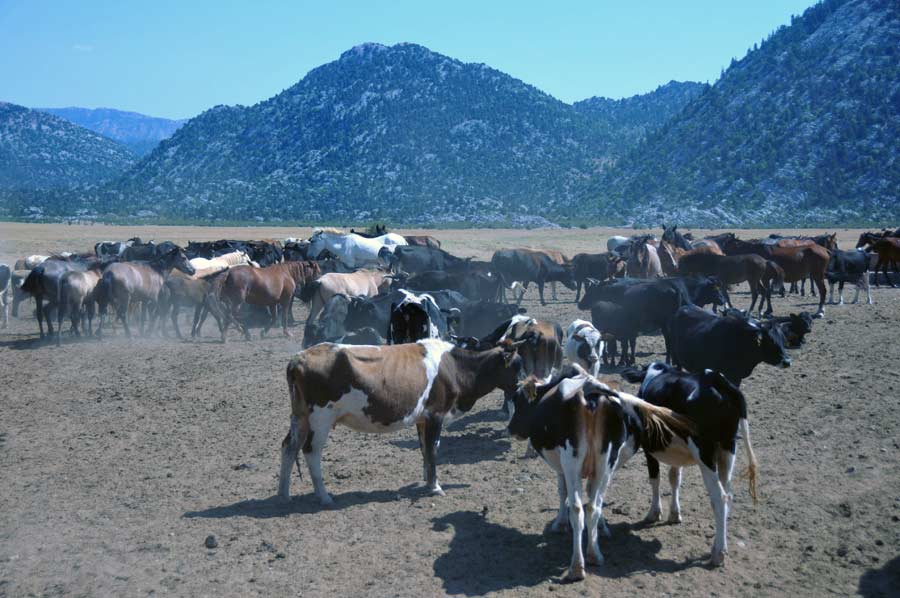
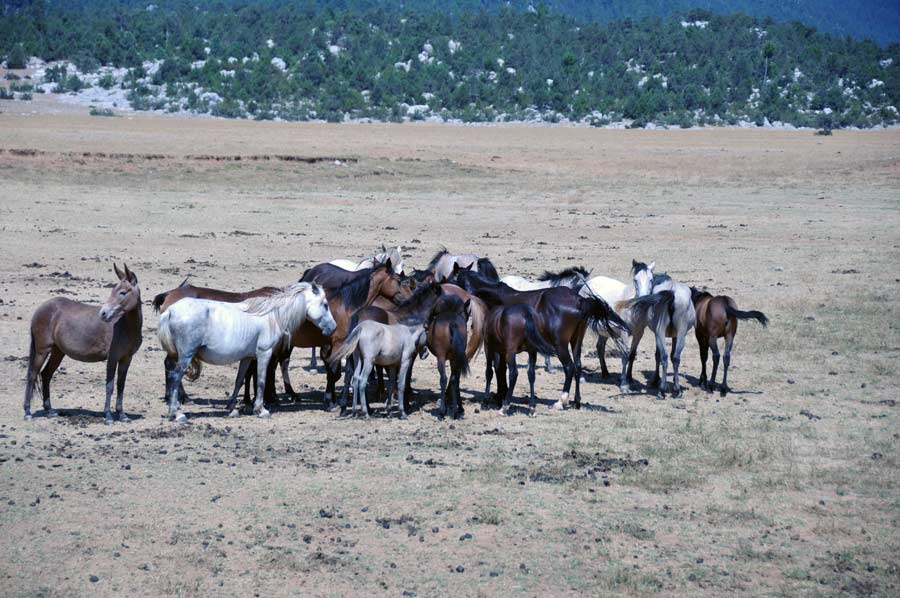
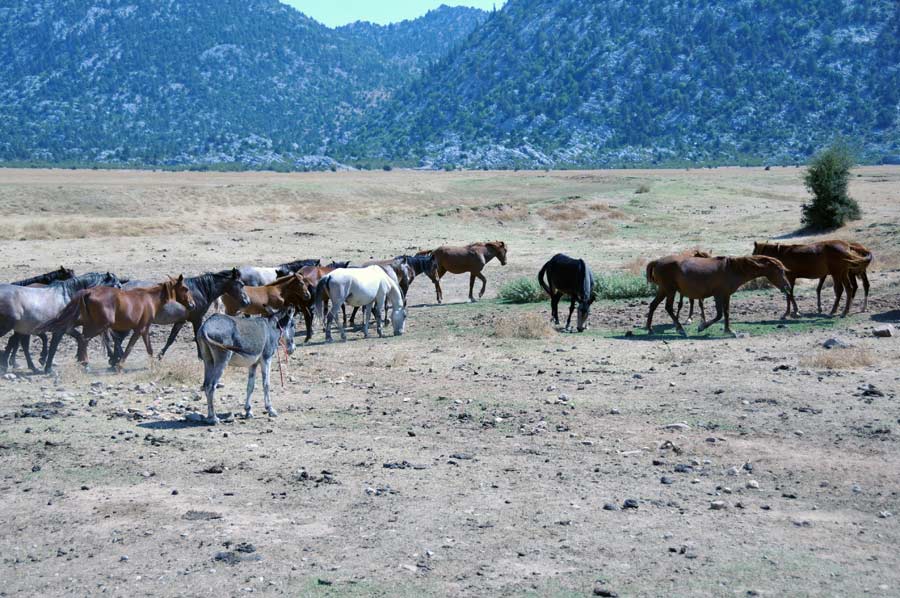
We are amazed by the speed and stamina of this inherently small breed of horse, the Rahvan, which also exists in large numbers here on the plateau as truly wild horses without owners. We were able to see and photograph herds of them at the watering hole on our approach. They simply mingle with the grazing cattle and are tolerated by the locals.
Since our return journey will also take us along the mountain pass and forest paths, we set off again well before sunset. A wonderful afternoon with some new impressions and many photos.
Please also read:
Alanya - Our Hike to the Castle Hill
Oba – Alanya's Suburb is Transforming
-
 On the way to Rahvan Horse Races Ormana
On the way to Rahvan Horse Races Ormana
On the way to Rahvan Horse Races Ormana
-
On the way to Rahvan Horse Races Ormana
On the way to Rahvan Horse Races Ormana
-
On the way to Rahvan Horse Races Ormana
On the way to Rahvan Horse Races Ormana
-
On the way to Rahvan Horse Races Ormana
On the way to Rahvan Horse Races Ormana
-
On the way to Rahvan Horse Races Ormana
On the way to Rahvan Horse Races Ormana
-
On the way to Rahvan Horse Races Ormana
On the way to Rahvan Horse Races Ormana
-
On the way to Rahvan Horse Races Ormana
On the way to Rahvan Horse Races Ormana
-
On the way to Rahvan Horse Races Ormana
On the way to Rahvan Horse Races Ormana
-
On the way to Rahvan Horse Races Ormana
On the way to Rahvan Horse Races Ormana
-
On the way to Rahvan Horse Races Ormana
On the way to Rahvan Horse Races Ormana
-
On the way to Rahvan Horse Races Ormana
On the way to Rahvan Horse Races Ormana
-
On the way to Rahvan Horse Races Ormana
On the way to Rahvan Horse Races Ormana
-
On the way to Rahvan Horse Races Ormana
On the way to Rahvan Horse Races Ormana
-
On the way to Rahvan Horse Races Ormana
On the way to Rahvan Horse Races Ormana
-
On the way to Rahvan Horse Races Ormana
On the way to Rahvan Horse Races Ormana
https://www.alaturka.info/en/turkey-country/riviera/7059-ormana-rahvan-horse-race-on-the-ibradi-plateau#sigProId6beca3699c