


Alanya - The Fortress on Castle Hill
- Written by Portal Editor
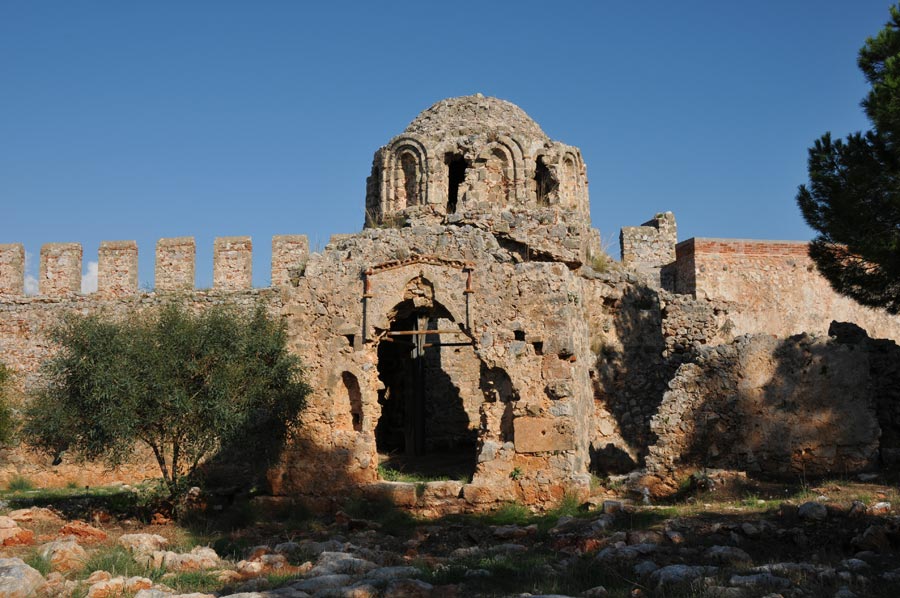
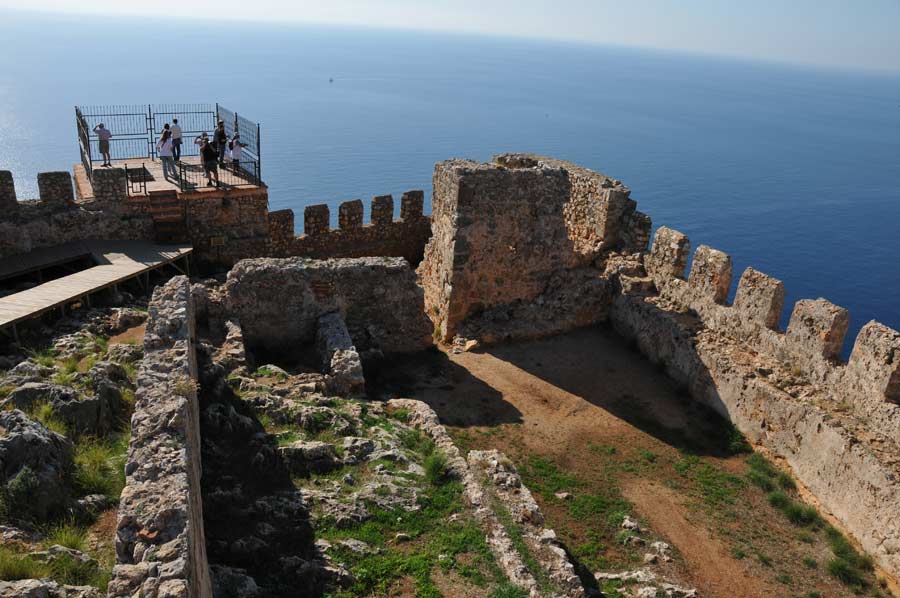
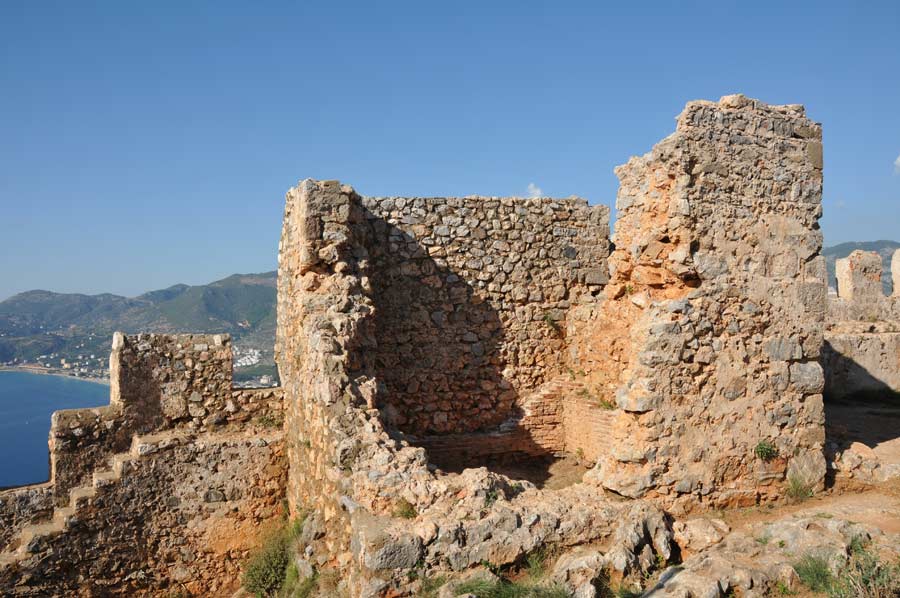
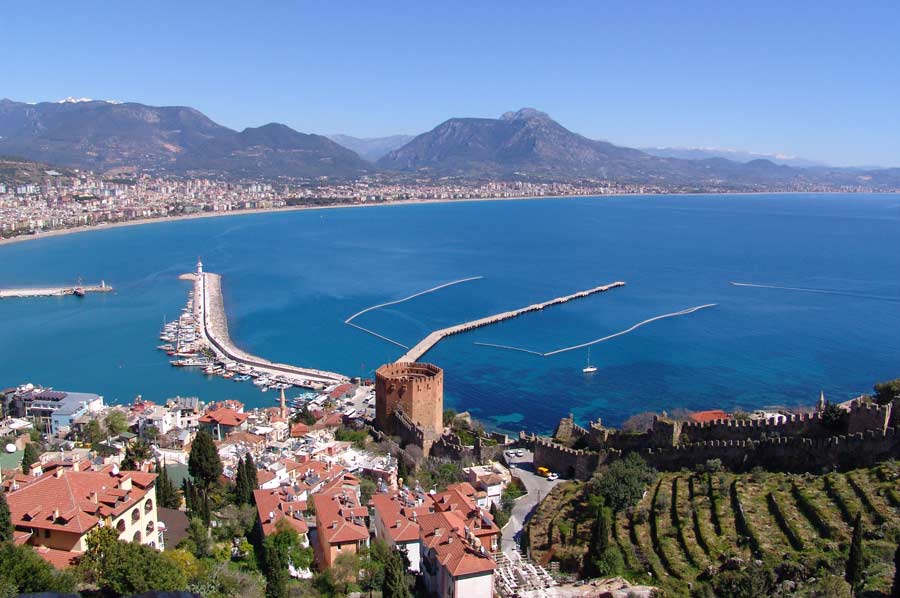
Alanya - The Seljuk fortress was one of the most resilient and important castle complexes of the early Middle Ages and is considered one of the best-preserved fortresses in all of Anatolia.
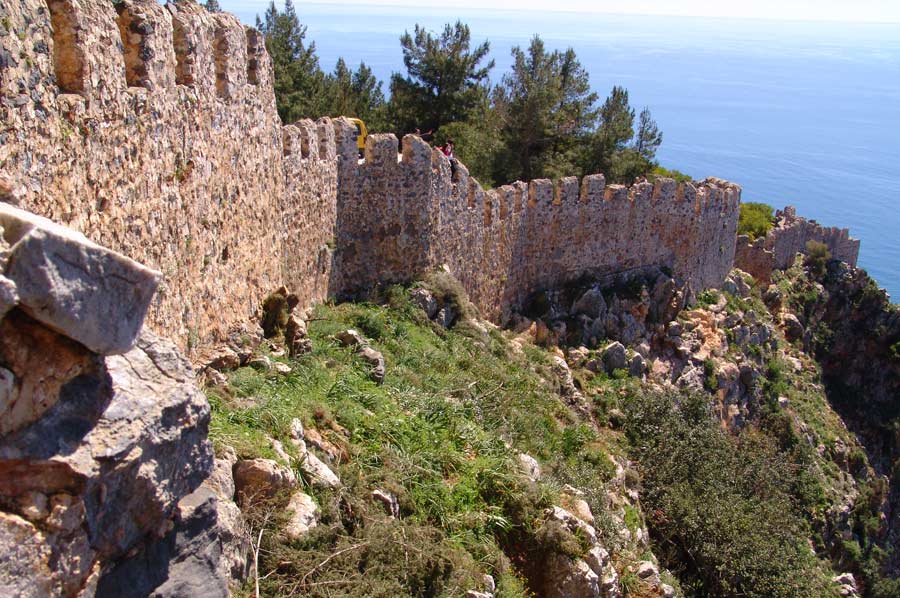
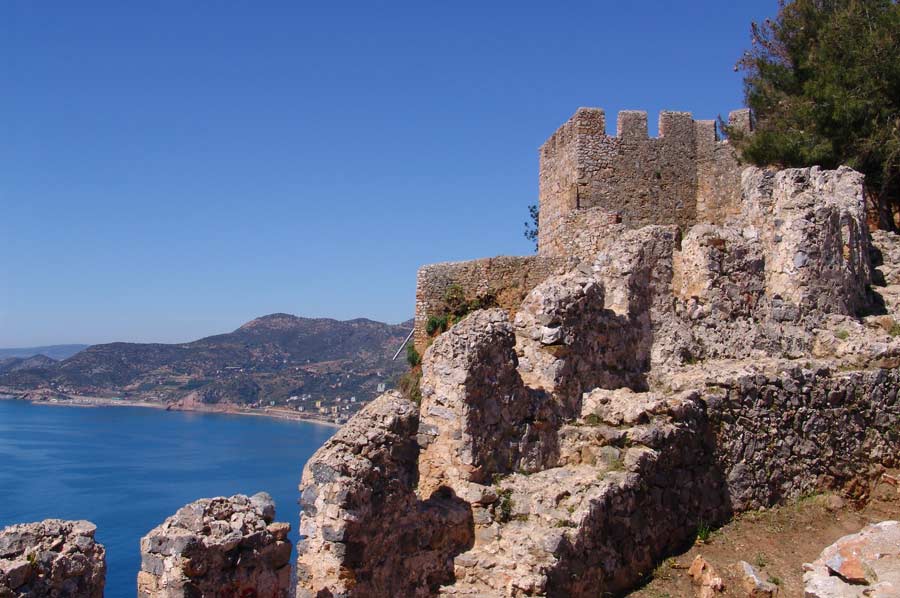
With its seemingly endless fortress walls and pointed battlements, it crowns the peninsula and gives the city an adventurous appearance.
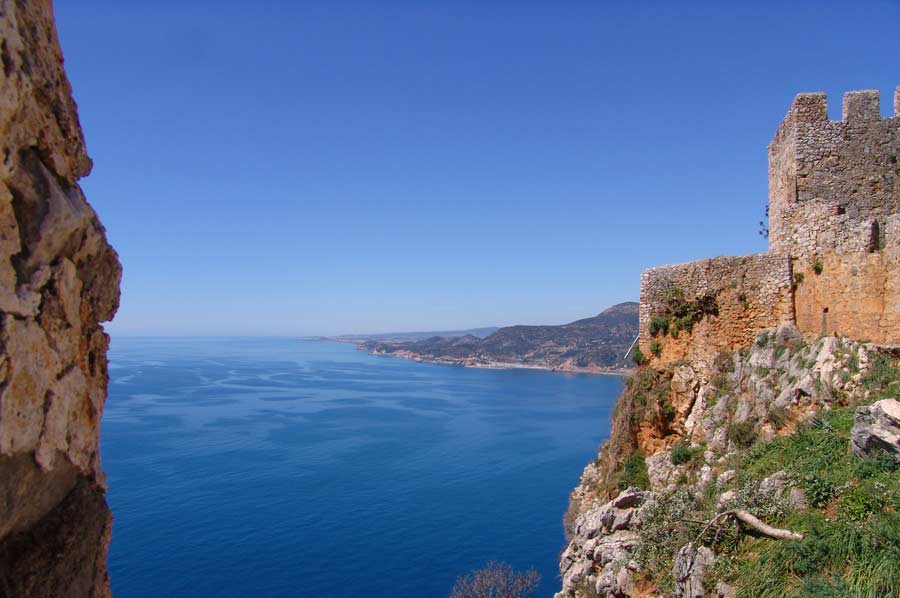
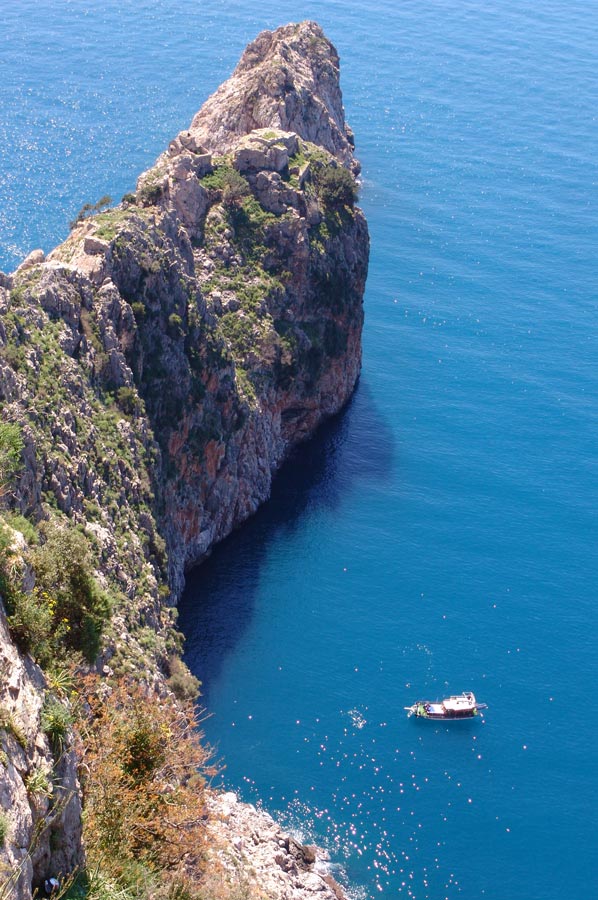 Since the rocky promontory or peninsula on which the fortress is built is not easily accessible from either land or sea, it has been continuously inhabited throughout history. The peninsula was first enclosed by a city wall during the Hellenistic period.
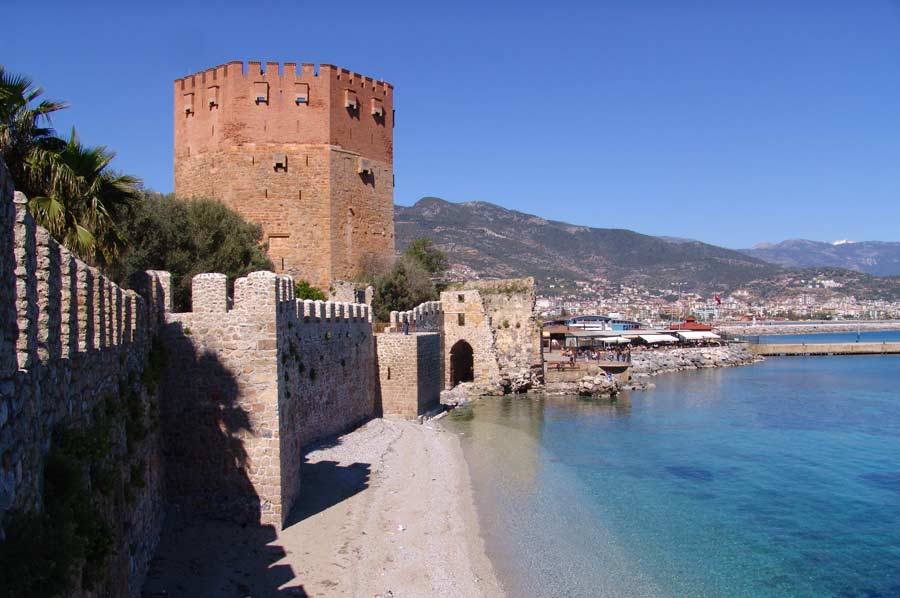
However, the still-existing parts of the mighty fortress were built by the Seljuks. The outer city wall begins at the Red Tower and, following a well-planned route in accordance with the land defense line, leads to the Ehmedek, the Inner Castle, the Execution Tower, above the Çilvarda promontory and below the lighthouse, continuing to the Arap Evliyasi (Chapel) and the East Tower.
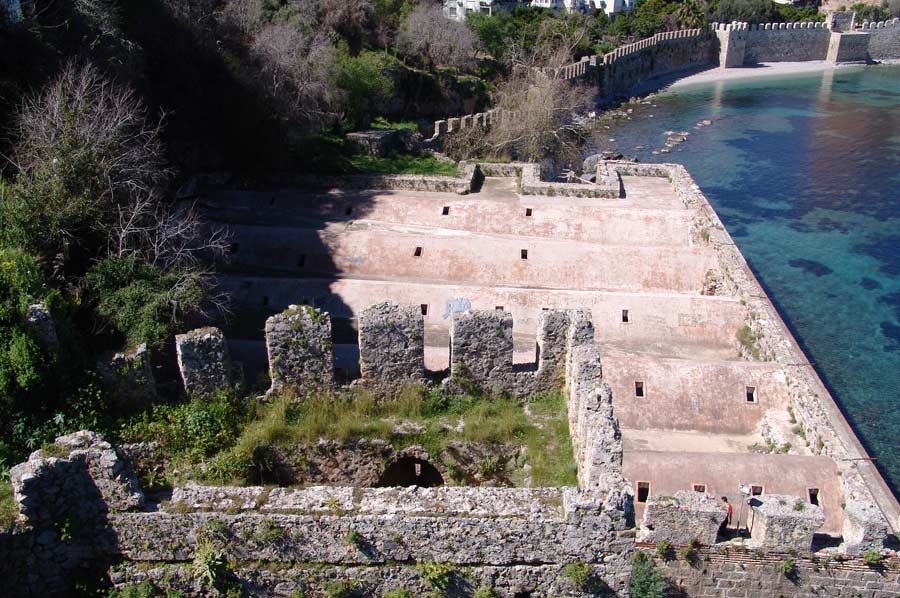
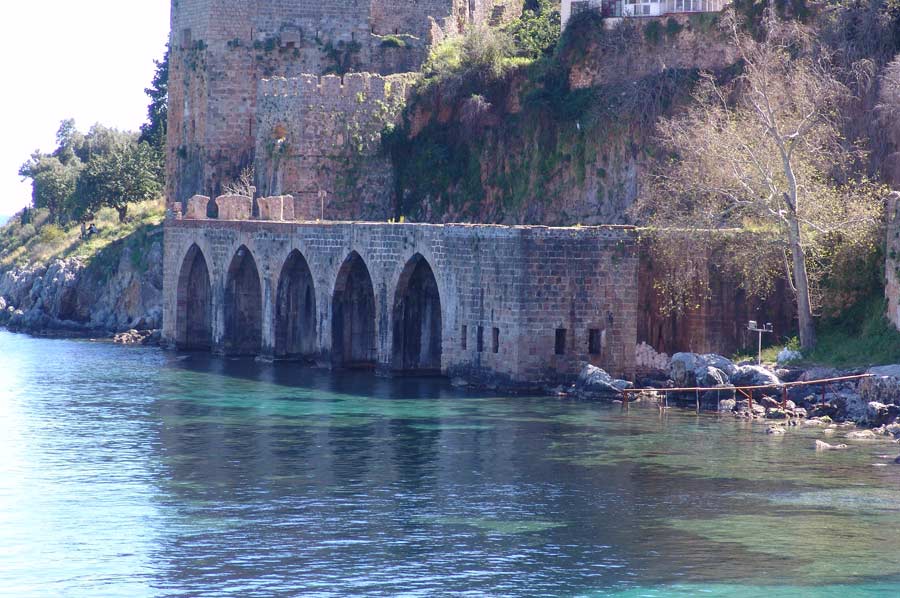
It then descends to Tophane and the shipyard in the north, ending back at its starting point, the Red Tower. The wall stretches for a total length of 6,500 meters.
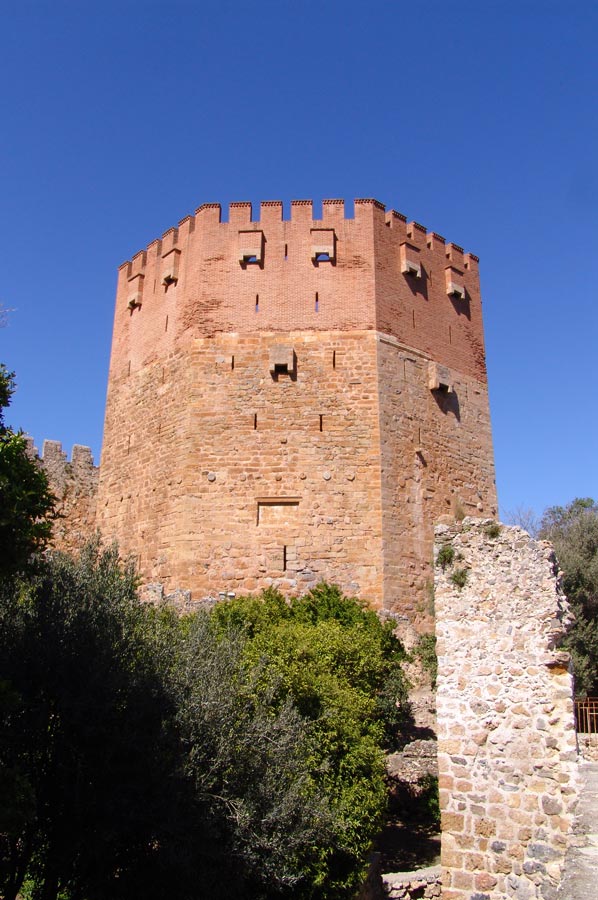 At certain points along the wall rise tall towers and embrasures, from which hot oil was poured onto attacking enemies, as well as ramps that allowed the defenders greater freedom of movement. A total of 140 towers are counted along the ramparts.
In addition to the complex known as the Ehmedek, located between the Red Tower and a Hellenistic tower, outer ramparts were built outside the actual city walls to break the initial onslaught from the land. Since the rest of the fortress was steeper, it was not considered necessary to construct similar secondary ramparts elsewhere.
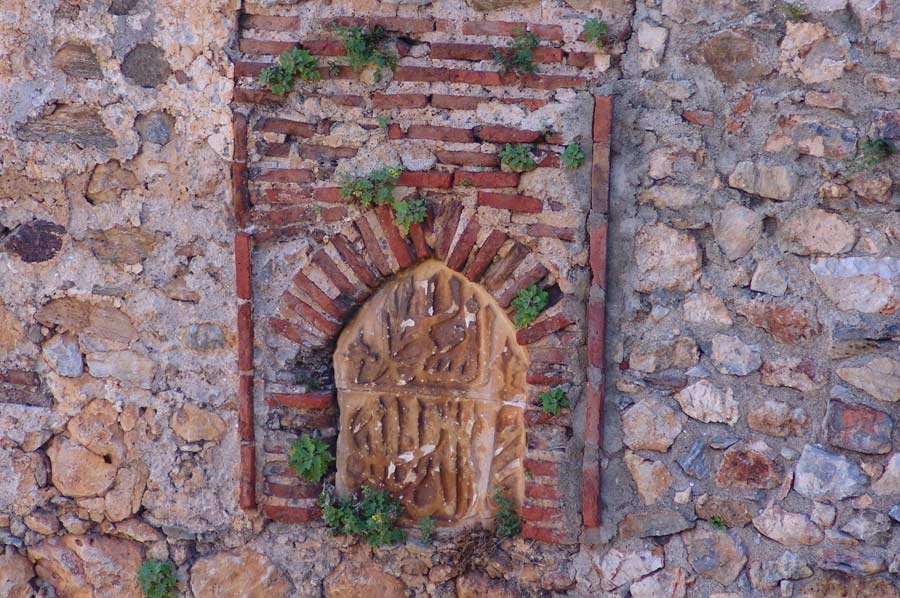
The walls and towers are constructed of stone and mortar (brick and lime) and are resistant to projectiles and battering rams. The castle contains over 400 cisterns. It was entered through arched, inscribed gates, most of which are still well-preserved today. They are monumental structures of great historical significance. With regard to the ramparts surrounding the city, the castle can be divided into three sections:
Alanya Iç Kale - Inner Fortress
 This part of the castle is located at the highest point of the western corner of the peninsula, 250 meters above sea level. There is a steep slope to the southwest, while a vertical and very rugged cliff drops away to the west.
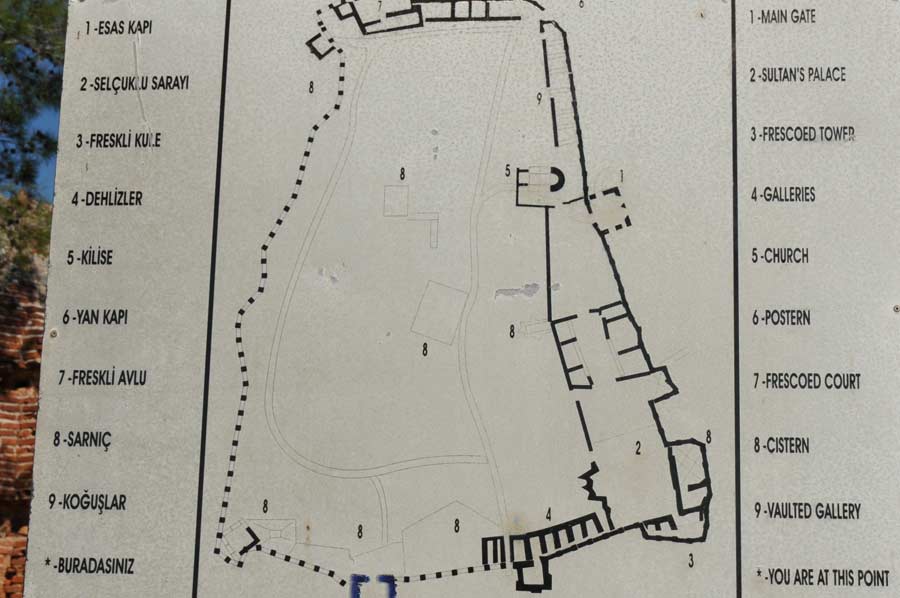
The inner fortress has the shape of an irregular rectangle. As an administrative and military center, it was completely surrounded by reinforced city walls. Access to the castle was provided by a square tower in the east.
The tower contained posts for sentries and loopholes.
Today, however, a breach in the city wall close to Alanya Harbour serves as the entrance. The best preserved and most interesting features are the numerous cisterns from the Seljuk period. Thousands of liters of water are still collected in one of these countless cisterns and used for a variety of purposes.
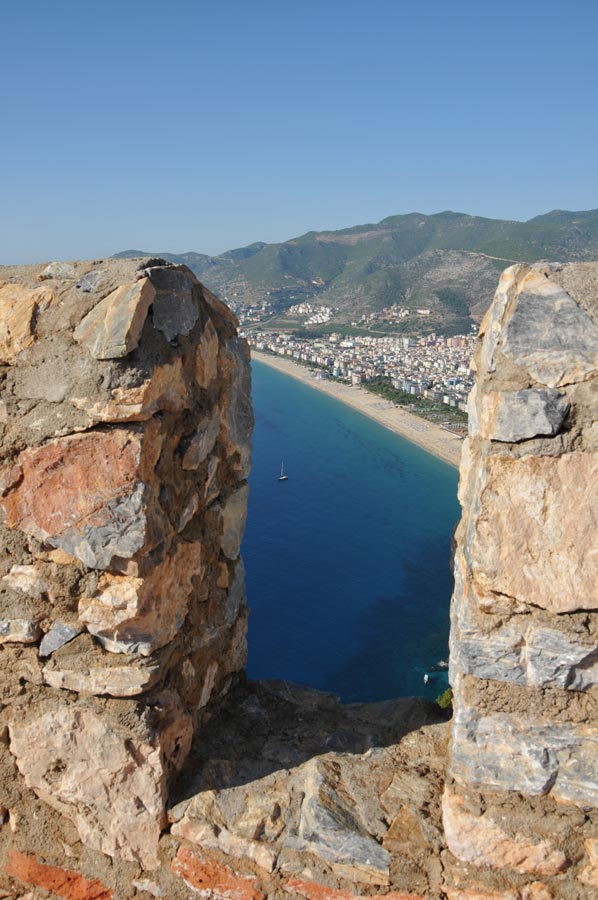 With the exception of the west side, the main buildings of the inner castle were built against the fortress walls. Turkish archaeologists have excavated a broad complex of buildings extending to the southwest corner of the castle.
Given the historical significance of the fortress, these are considered the remains of the Sultan's palace. Many signs point to the remnants of important structures in this area.
The wall frescoes found in one of the corner towers of this part of the castle seem to confirm this theory. The frescoes also serve as evidence of Seljuk rule. The abundance of Seljuk ceramics and tiles from the 13th century shows that this was the site of the Sultan's palace.
Another building complex, connected to an open courtyard below the loopholes, is believed to have housed barracks, sleeping quarters, and storage rooms for the military. A cistern shaped like a tower stands at the northwest corner of the inner fortress.
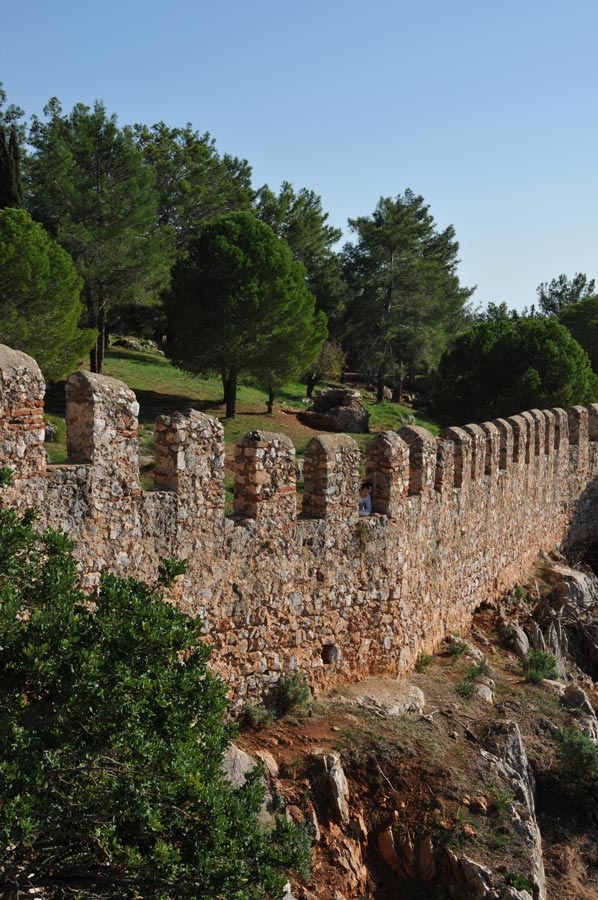 Next to it is a breach, popularly known as "Adam Atacagi" (People's Throwing). The breach opens onto a cliff plunging into the sea.
According to tradition, those condemned to death were thrown into the sea from this spot. Today, this place has become a "wishing spot": if one manages to throw a stone from here all the way to the sea, hopes will be fulfilled.
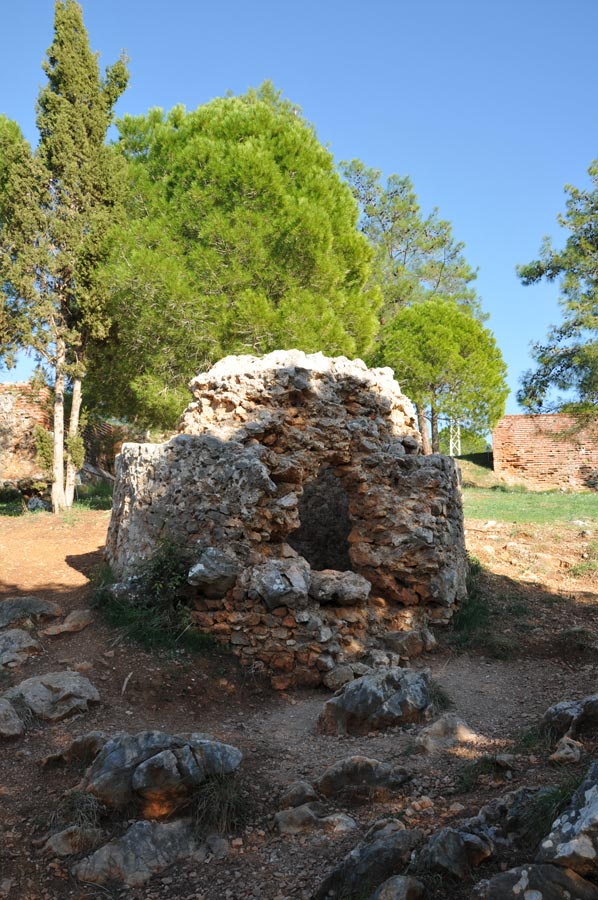
The most interesting tower in the inner fortress is located on the south side. It is topped with a low dome.
It is called "Soguk Su Hamami" (Cold Water Bath) because of the fired brick water pipes inside. Two cisterns are located near the tower. You can descend into it via spiral staircases. On the western side of the Inner Fortress lies a small Byzantine church.
 This proves that the area was already in use long before the fortress was built.
Furthermore, the fact that the church still stands demonstrates the Seljuks' respect for the religions of other faiths and their places of worship. Judging from the traces inside, frescoes were once everywhere, including depictions of the four apostles.
Based on its construction, the church is dated to the 11th century.
In contrast, it is assumed that the Inner Fortress was not completed until 1231 at the earliest (by Alaeddin Keykubat).
Middle Fortress
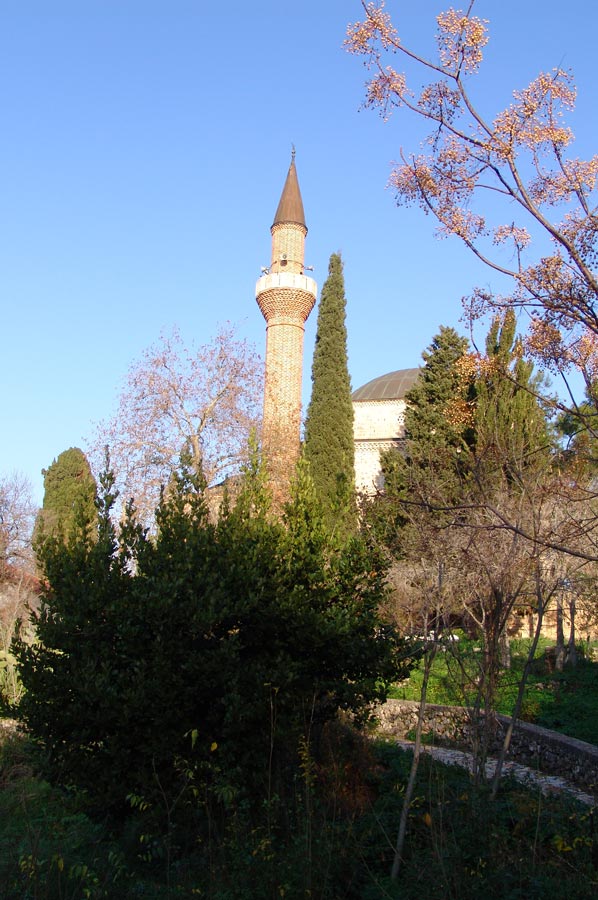
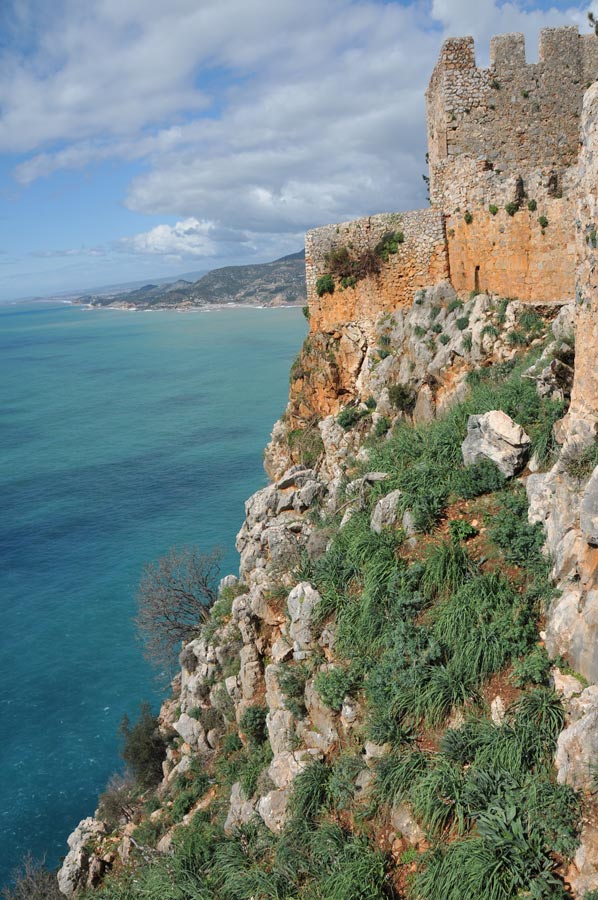 Surrounded by the ramparts of the outer fortress, you will find the Aksebe Mosque and Mausoleum, the public bath, the Ehmedek complex, the Süleymaniye Mosque, the Bedesten (marketplace), the hostel, and the Byzantine chapel called Arap Evliyasi.
Alanya - Outer Fortress
This term encompasses the ramparts stretching from Ehmedek, Arap Evliyasi, the East Tower, and Tophane to the Red Tower.
The rocky promontory extending approximately 400 meters from the Alanya peninsula is known as Cape Çilvarda.
The remains of the monastery, once situated on a fortified hill, are now in ruins.
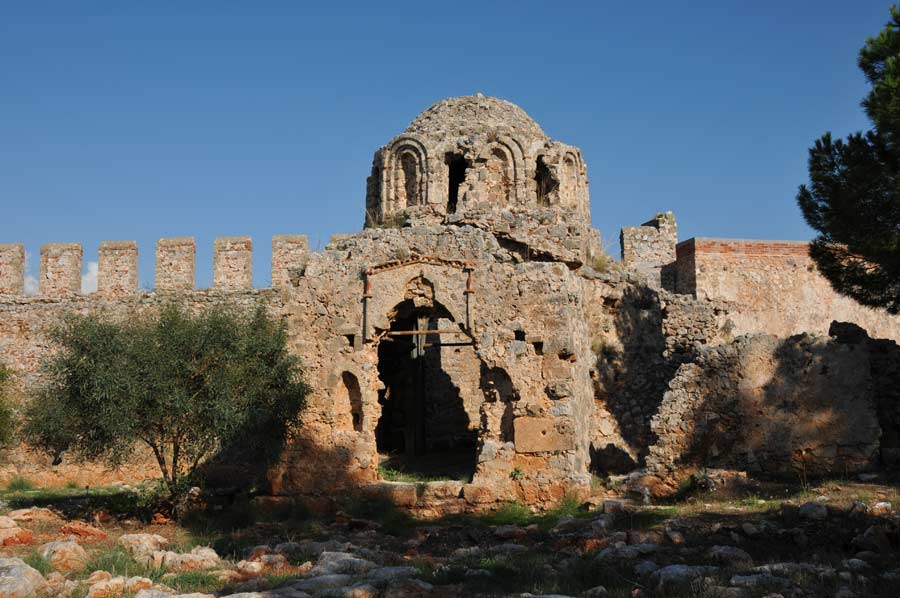
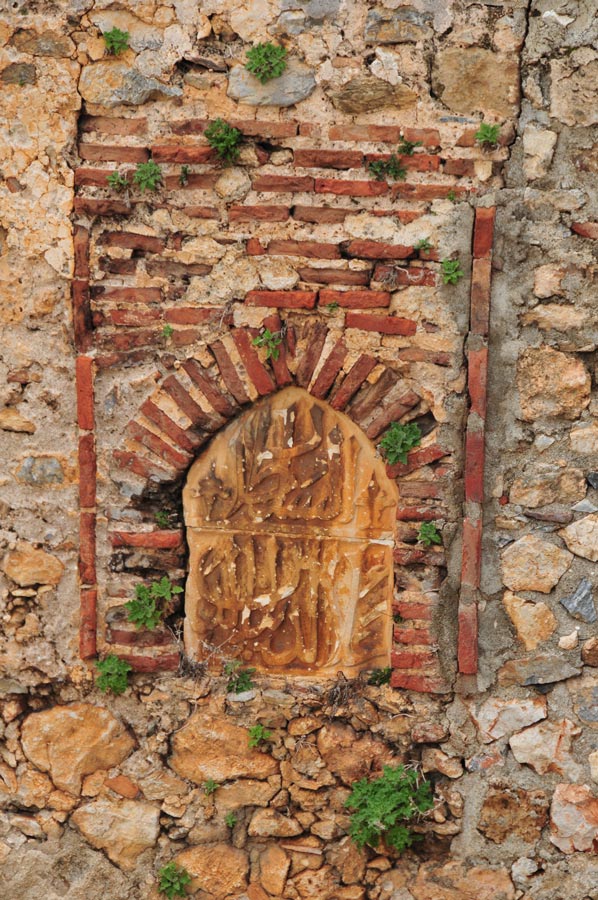 To the east of the monastery is a small chapel, part of whose dome is still remarkably well preserved.
Apart from the projecting apse and the stooped structure that housed all valuable objects, the chapel bears a strong resemblance to the Arap Evliyasi Church.
A large cistern is located next to the chapel. Both the monastery and the church date back to the 11th century.
To the east of the monastery is a small chapel, whose dome is still partially intact.
Please also read:
Alanya - Our Hike to the Castle Hill
Tersane Dockyard Alanya - monument of Seldjuks
-
 Alanya - Visiting the Fortress on Castle Hill
Alanya - Visiting the Fortress on Castle Hill
Alanya - Visiting the Fortress on Castle Hill
-
Alanya - Visiting the Fortress on Castle Hill
Alanya - Visiting the Fortress on Castle Hill
-
Alanya - Visiting the Fortress on Castle Hill
Alanya - Visiting the Fortress on Castle Hill
-
Alanya - Visiting the Fortress on Castle Hill
Alanya - Visiting the Fortress on Castle Hill
-
Alanya - Visiting the Fortress on Castle Hill
Alanya - Visiting the Fortress on Castle Hill
-
Alanya - Visiting the Fortress on Castle Hill
Alanya - Visiting the Fortress on Castle Hill
-
Alanya - Visiting the Fortress on Castle Hill
Alanya - Visiting the Fortress on Castle Hill
-
Alanya - Visiting the Fortress on Castle Hill
Alanya - Visiting the Fortress on Castle Hill
-
Alanya - Visiting the Fortress on Castle Hill
Alanya - Visiting the Fortress on Castle Hill
-
Alanya - Visiting the Fortress on Castle Hill
Alanya - Visiting the Fortress on Castle Hill
-
Alanya - Visiting the Fortress on Castle Hill
Alanya - Visiting the Fortress on Castle Hill
-
Alanya - Visiting the Fortress on Castle Hill
Alanya - Visiting the Fortress on Castle Hill
-
Alanya - Visiting the Fortress on Castle Hill
Alanya - Visiting the Fortress on Castle Hill
-
Alanya - Visiting the Fortress on Castle Hill
Alanya - Visiting the Fortress on Castle Hill
-
Alanya - Visiting the Fortress on Castle Hill
Alanya - Visiting the Fortress on Castle Hill

https://www.alaturka.info/en/turkey-country/riviera/7105-alanya-fortress-castle-hill#sigProId14e8567a2d