Barbarossa – Death of Emperor Frederick I in Saleph, 1190
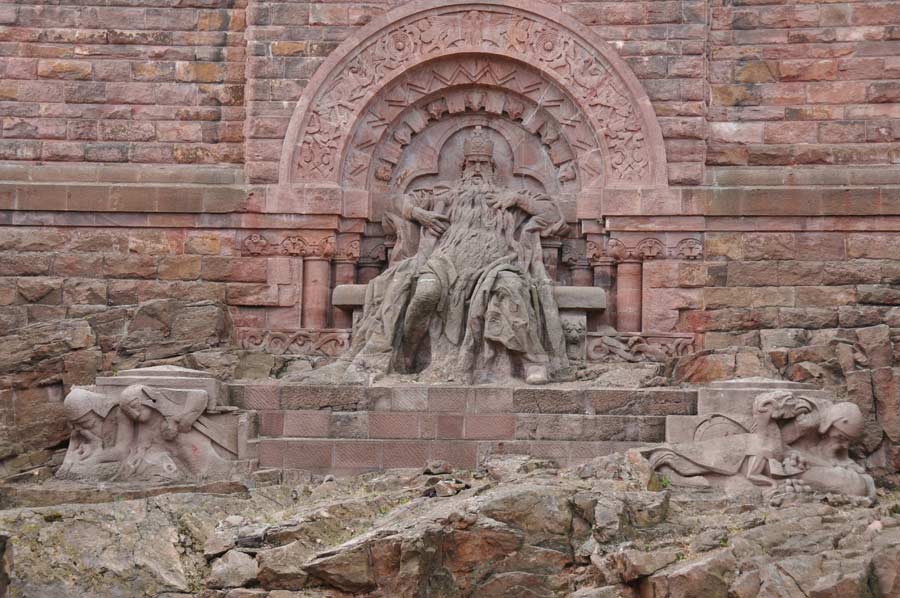
Barbarossa: “When Emperor Redbeard, worthy of praise,
Set forth for the Holy Land,
He had to lead his pious host
Through mountains desolate and bare.
Therein arose great hardship;
There were many stones and little bread,
And many a German horseman
Had to forgo his drink right there.
The horses grew so weak in the gut
That the rider almost had to carry the steed.”
Thus began the Swabian poet Ludwig Uhland in the mid-19th century his ballad “Die schwäbische Kunde” (The Swabian Tale); and indeed, he described the situation of the German crusader army during its passage through Anatolia all too aptly.
Barbarossa’s Crusade to the Holy Land and Jerusalem
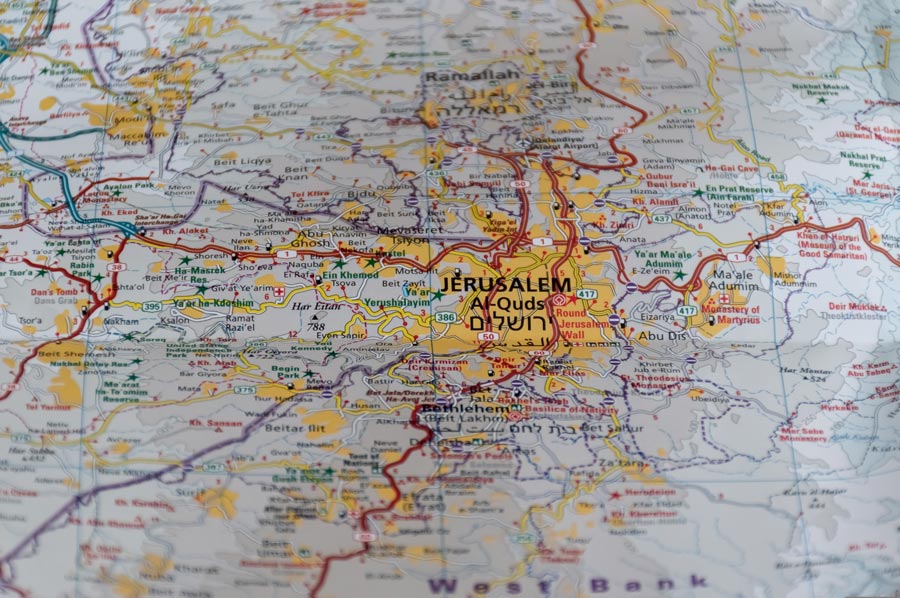 In 1189, the crusaders set out from Regensburg for the Holy Land traveling by land, just as in earlier crusades in order to reach Jerusalem.
A massive army had assembled. However, estimates among the chroniclers vary widely. With certainty, it was one of the largest crusader armies to ever leave Europe.
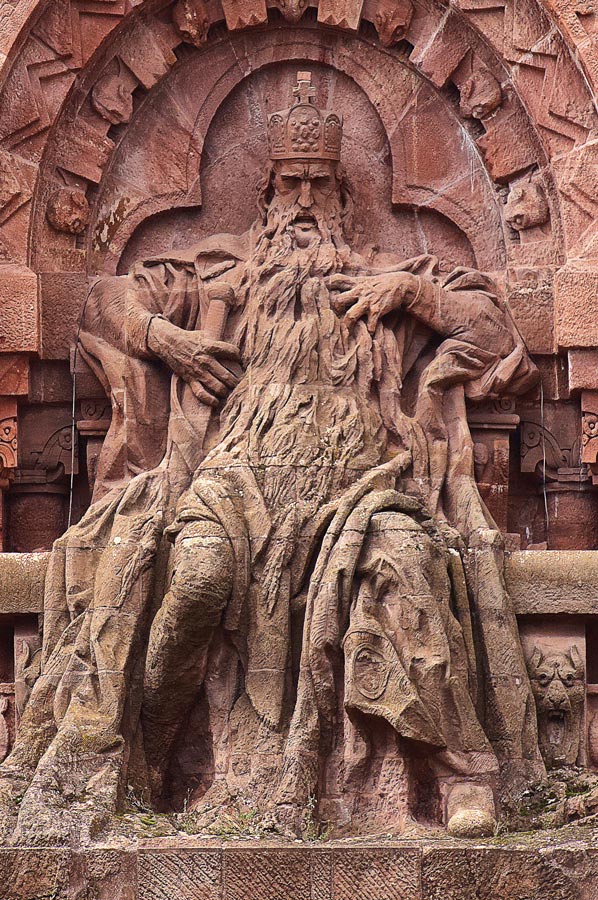 Initially, everything proceeded smoothly; the passage through Hungary presented no problems. However, difficulties arose once Barbarossa reached the Byzantine sphere of influence.
The Byzantine Emperor Isaac Angelos deeply mistrusted his “guests” and sought to deny them passage particularly since the German Emperor had allied himself with his arch-enemies from Serbia and Bulgaria and challenged him to open battle.
Frederick I defeated the Byzantine army and, after a settlement had been reached, was able to cross the Dardanelles and set foot on Anatolian soil. Barbarossa’s Arduous Journey Through Anatolia
Barbarossa - What now began was a trial of suffering without equal.
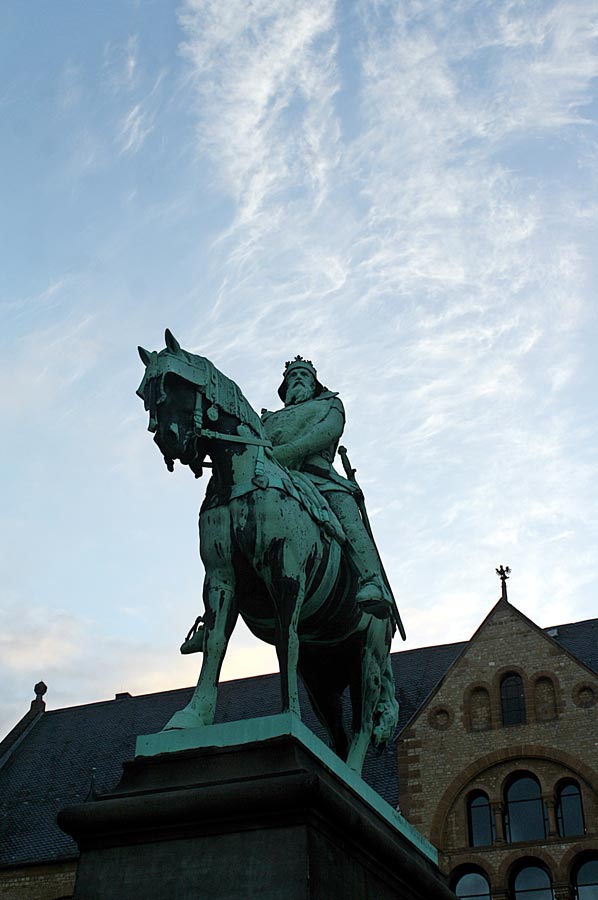 Only with great difficulty did the army carve a path through the rugged terrain, ascending onto the Central Anatolian plateau.
Bloody clashes with the local population ensued, alongside raids by marauding detachments and partisan attacks, until the army finally reached the border of the Seljuk Sultanate near Laodicea.
An agreement had been reached with Sultan Kilij Arslan IV stipulating that the Crusader army could traverse the Seljuk realm peacefully; however, his son, Qutb ad-Din Malikshah who was married to a daughter of Saladin, the Crusaders' great adversary, and who had sided with him repudiated his father's arrangements.
He attacked the Crusaders not only in open confrontation but worse still through a relentless series of skirmishes and ambushes, inflicting heavy casualties upon the army and severely depleting its ranks.
Nomadic Bedouins, Islamic holy warriors, and organized bandit gangs who had cast off the Sultan's authority harried the Crusader army throughout its increasingly arduous journey across Anatolia.
Barbarossa: The Battle of Iconium (Modern-Day Konya)
 On May 18, 1190, a pitched battle took place in which the Crusaders defeated the Seljuk army.
Three days later, the army reached the Seljuk capital, Konya; they occupied the lower city but were unable to capture the heavily fortified citadel hill.
Ultimately, a settlement was reached between the Sultan and the Emperor; the army was granted a few days to rest, during which it was resupplied with provisions and equipment.
In the Gorges of the River Saleph
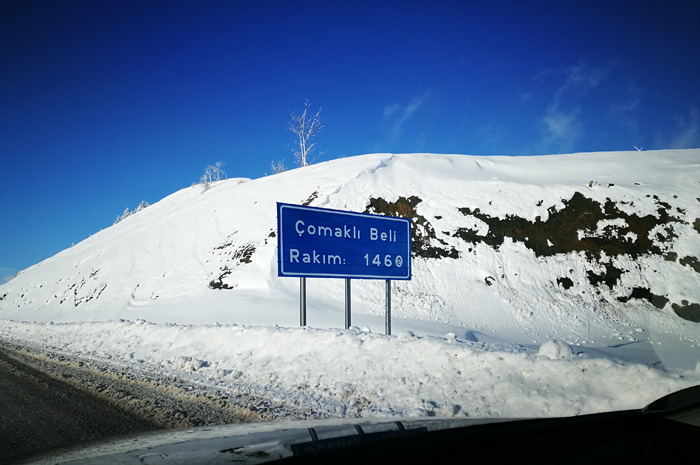
 The subsequent march leading south via Karaman and the Sertavul Pass, and then down into the valley of the Saleph (as the Gök Su was known at the time) proved to be a succession of immense hardships. Due to the loss of horses and pack animals, coupled with a lack of food supplies, a famine took hold.
Plagued and decimated by disease, hunger, and ambushes, the crusaders increasingly lost their will to fight and their confidence in a successful outcome for their expedition.
 As the army made its arduous way through the gorges of the Saleph where the path at times narrowed to a mere mule track it stretched out into a long, straggling column. Sections where the river cut through the mountains had to be laboriously bypassed along narrow trails, a process that in some instances resulted in heavy casualties.
Consequently, on June 10th, the Emperor accompanied by a small escort separated himself from the main army in an effort to reach the Armenian-Christian city of Seleucia (modern-day Silifke) more quickly.
On that very day, Emperor Barbarossa drowned in the Saleph. The precise circumstances of his death remain to this day unresolved.
Was it heatstroke? Did he fall from his horse and dragged down by the weight of his heavy armour drown?
Or was he swept away by the current while bathing, thereby meeting his end?
The Dissolution of the Army Following Barbarossa’s Death
 The news of the Emperor’s death had a devastating effect upon the army following behind. Having previously been held together by the authority and discipline emanating from the Emperor, the army in the wake of this event more or less disintegrated. The German Crusade had failed. With great difficulty, the survivors reached Seleucia, where they held a requiem mass lasting several days.
His body in accordance with the customs of the era was preserved in vinegar and transported onward to Antioch. There, it was discovered that the body despite, or perhaps because of, the vinegar solution in which it had been preserved had begun to decompose. Consequently, the Emperor’s flesh was hastily interred in the Cathedral of Antioch, while his bones were carried along during the subsequent march so that they might eventually be buried in Jerusalem.
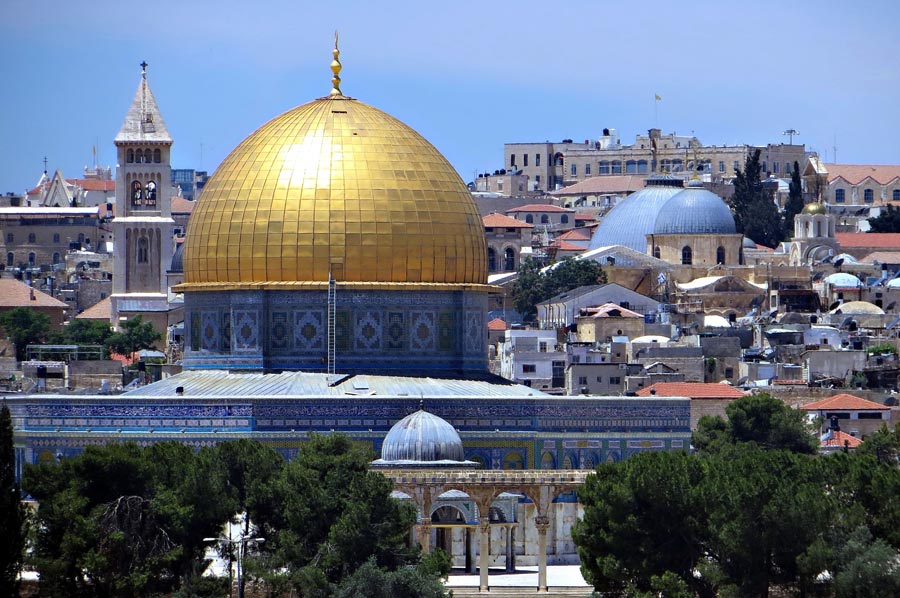 However, this was not to be. The remains were ultimately laid to rest in the Cathedral of Tyre.
Following Barbarossa’s death, the army largely disintegrated; some princes departed the crusader contingent by ship as early as Seleucia to return home, while others separated from the main force in Antioch. The remainder of the army, now under the command of Frederick I’s son Duke Frederick of Swabia eventually reached Acre, where it either dissolved entirely, was absorbed into other units, or simply vanished into the shifting sands of history.
The Founding of the Teutonic Order
 The only remaining point of note is the fact that, in the wake of the Third Crusade, a German hospital fraternity was established outside Acre in 1190 by citizens from Lübeck and Bremen. This fraternity was officially confirmed by the Pope in 1191 and gave rise to the exclusively national, spiritual order of chivalry known as the "Order of the House of St. Mary of the Germans in Jerusalem" the Teutonic Order which, too, received immediate papal recognition.
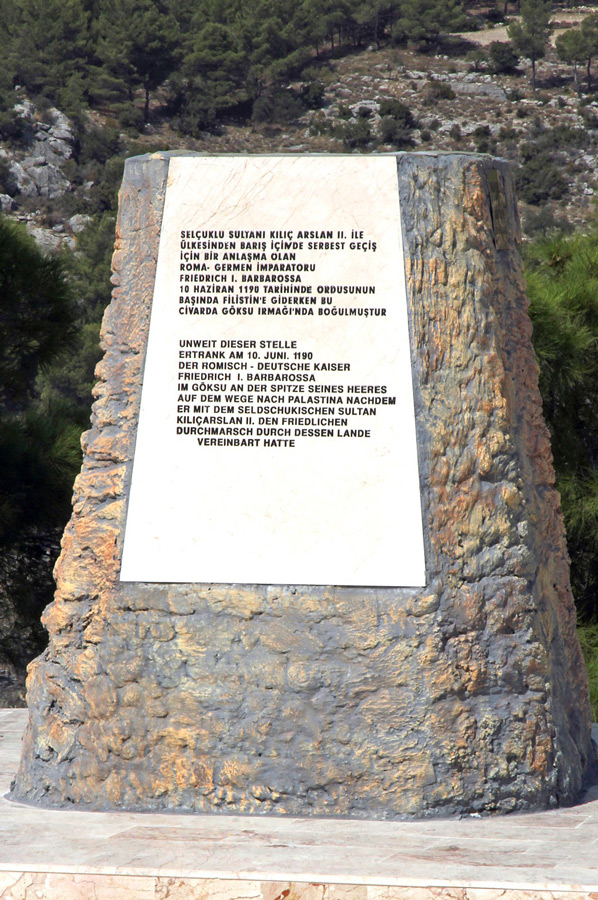
 Today, if one travels along the road from Karaman to Silifke, one arrives at a specific spot (marked by signage) where Emperor Frederick I Barbarossa drowned in the Saleph River. A plaque stands there bearing an inscription in Turkish: "Emperor Frederick Barbarossa having negotiated a peaceful passage through his realm with the Seljuk Sultan Kilij Arslan II drowned in the Göksu River on June 10, 1190, while leading his army on the march toward Palestine."
Please also read: