Gjirokastër – A Journey Inland to a World Heritage Site
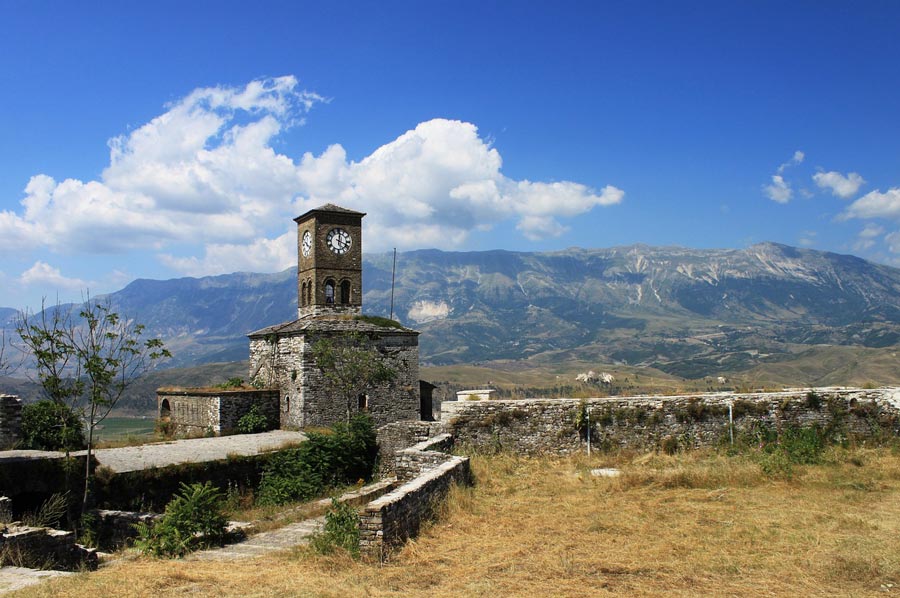
After two wonderful days at Syri i Kaltër arguably the most famous destination in Albania, coastal resort towns notwithstanding we decided to continue our journey inland toward the mountain town of Gjirokastër.
Gjirokastër which likely originated as the settlement of Antigoneia, located about 6 kilometres from the present-day town centre is one of the country’s oldest cities and arguably the most significant cultural hub in southern Albania; it has been a UNESCO World Heritage Site since 2005, though its status has occasionally been a subject of debate.
The Origins of Gjirokastër: Antigoneia Connection in Drino Valley
 The rocky outcrop near Gjirokastër, which dominates the entire valley, was likely first settled as early as the 3rd century BC. The site was fortified with walls in the 6th century AD, a period when other settlements in the Drino Valley such as the ancient city of Antigoneia were gradually losing their importance. Today, the ancient city is an archaeological excavation site situated on the slopes of the Lunxhëria Mountains, near the village of Saraqinishta, at an altitude of approximately 600 meters. Antigoneia was already inhabited by the Illyrians when it was re-established during the early Hellenistic period. While some attribute this founding to the Macedonian king Antigonus II Gonatas, it is more likely that it was established by the Epirote king Pyrrhus I, who would have named the city after his wife, Antigone. Following its conquest by the Romans in 167 BC, the city was burned to the ground and never rebuilt.
Today, the historic ruins of Antigoneia are protected by the Albanian government as an archaeological park. The excavated ruins include remnants of the acropolis, a four-kilometre-long city wall, structures within the agora, basilicas, and several residential dwellings. Those with an interest in antiquity should set aside some time to explore the site.
Gjirokastra during the Ottoman occupation
 In 1417, Gjirokastra was conquered by the army of the Ottoman Empire. However, the Zenevisi family who had converted to Islam shortly after the Turkish conquest remained the dominant local dynasty. By the end of the 16th century, Christians still constituted the majority; a *defter* (tax register) from 1583 recorded just under 80 Muslim households compared to over 230 Christian ones. Over the course of the 17th century, this demographic balance shifted. In 1419, the Ottomans designated Gjirokastra as the capital of the *sanjak* (administrative district) of Albania, a status it lost to Berat in 1466. In 1432, the local population rose up against the Ottomans, but the revolt was suppressed the following year by Turahan Bey.
Following the collapse of the Ottoman Empire, the city like the whole of Northern Epirus became a subject of intense dispute between Albania and Greece. In 1914, the Greek minority in southern Albania proclaimed the independence of the "Autonomous Republic of Northern Epirus" in Gjirokastra, though this entity proved short-lived. In 1925, Greece withdrew all territorial claims against Albania.
Gjirokastra under Enver Hoxha
 After the Communists seized power, Enver Hoxha (1908–1985) a native of Gjirokastra proclaimed the People's Socialist Republic of Albania at the end of the Second World War. During the city's socialist era, industrialization took hold, and Gjirokastra developed into a regional commercial hub. In 1961, the communist government designated it a "museum city." As a result, the medieval townscape was spared from radical transformation.
Following the fall of the dictatorship, the few existing factories were closed, forcing people to seek employment elsewhere. Today, many residents work in agriculture, livestock farming, commerce, and the service sector. Tourism is viewed as a potential economic sector for the future and is becoming increasingly important to the town. The number of visitors continues to rise steadily each year; for instance, fewer than 1,000 visitors were recorded at the castle in 2004, whereas by 2011, that figure had reached 25,000.
Gjirokastër – Impressive Old Town and Fortress Complex
 The older districts of the city of Gjirokastër are built on the steep slopes of the Mali i Gjerë mountain range, reaching elevations of up to 480 meters above sea level. Newer parts of the city extend downward toward small commercial areas along the banks of the Drino River, at an elevation of 190 meters.
Several small streams also flow through the city from the southwest toward the northeast, eventually joining the Drino below Gjirokastër. According to local residents, these streams swell significantly during heavy rainfall and occasionally overflow their banks.
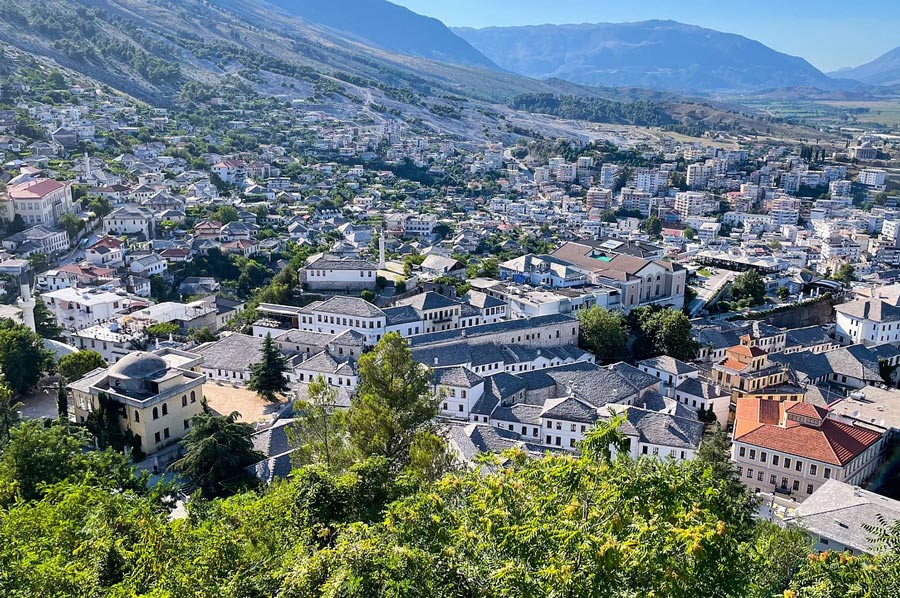
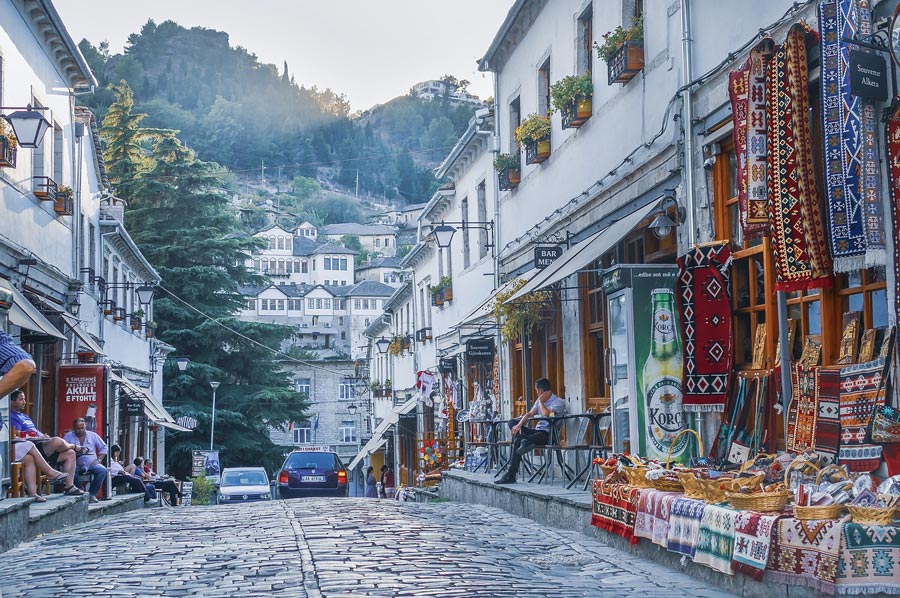
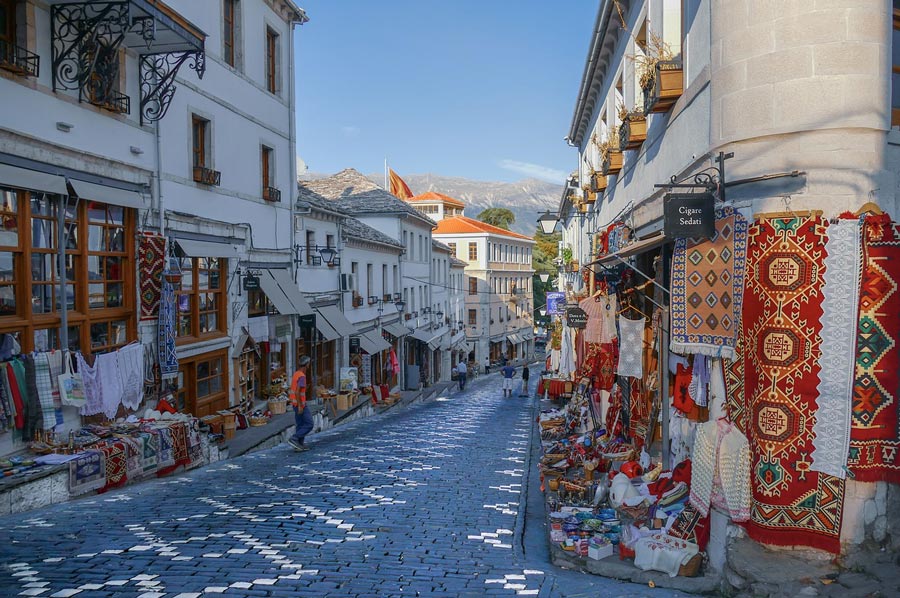
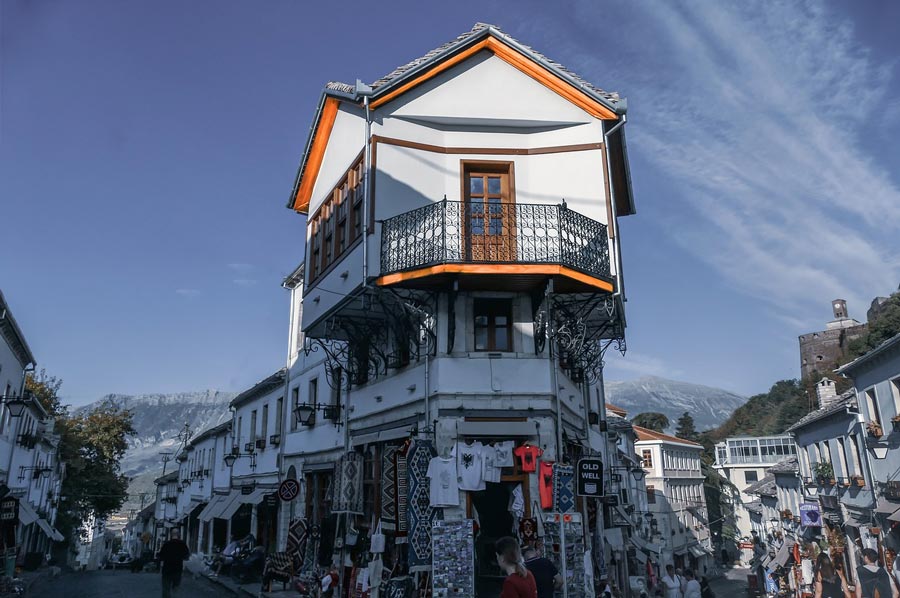
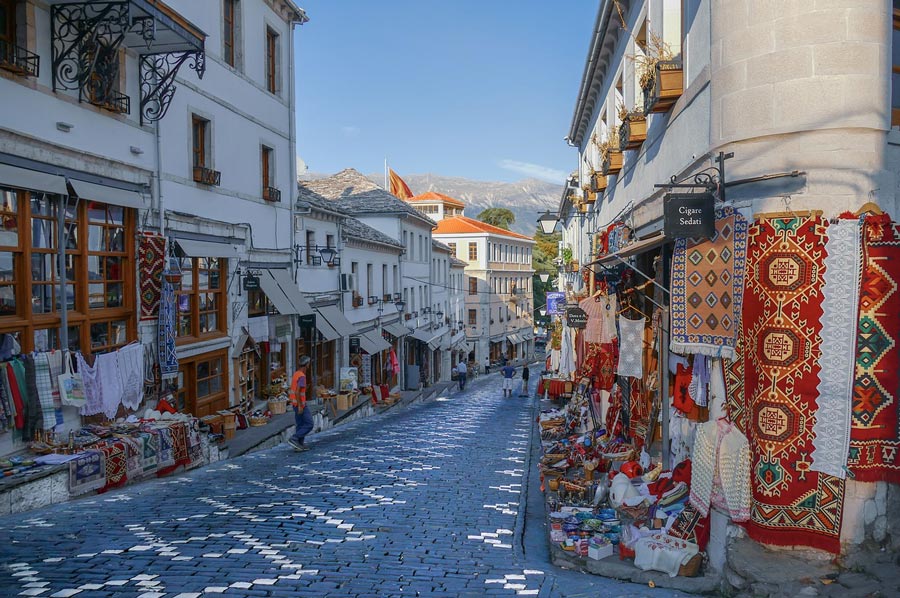 Gjirokastër owes its nickname, the "City of Stone," to its unique townscape. For centuries, the neighbourhoods surrounding the fortress which now constitute the old town have been defined by striking houses that resemble small, fortified strongholds. Their roofs, covered in stone slabs quarried from the nearby mountains, served to regulate the internal temperature of the homes a major advantage in a region characterized by a continental climate. The stone roofs kept the interiors cool during the summer and helped ward off the intense cold in the winter. Another reason for using stone was that alternative materials, such as clay tiles, were far more expensive, whereas stone was abundantly available in the surrounding area. The old town is characterized by white facades, tall wooden-framed windows, and numerous small courtyards accessed through massive wooden gates.
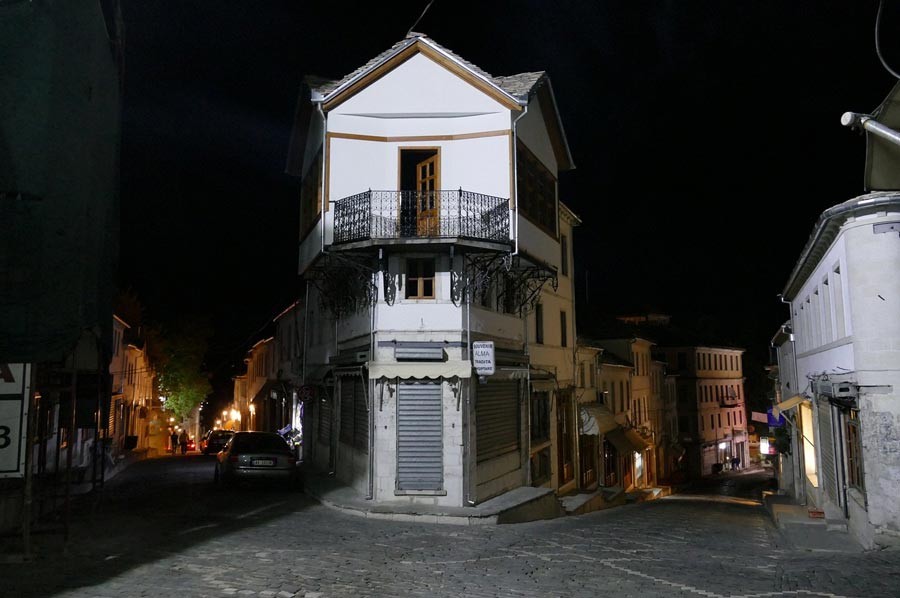 Narrow, artfully paved alleyways wind along the steep slopes, connecting the various neighbourhoods; these paths were laid out during the 18th century. The style of these houses referred to as "Balkan architecture" can also be found in a similarly cohesive form in other cities across the southern Balkans, such as Berat (central Albania), Ohrid (southwestern Macedonia), Veliko Tarnovo (northern Bulgaria), and Metsovo (northwestern Greece). Many of these houses are currently poorly maintained and are gradually falling into disrepair. Damage sustained during the 1997 "lottery uprising" was repaired throughout the 2000s. An application to have the museum city of Gjirokastër inscribed on the UNESCO World Heritage List was first submitted in 1988, but it was rejected due to the presence of several modern structures that detracted from the character of the old town.
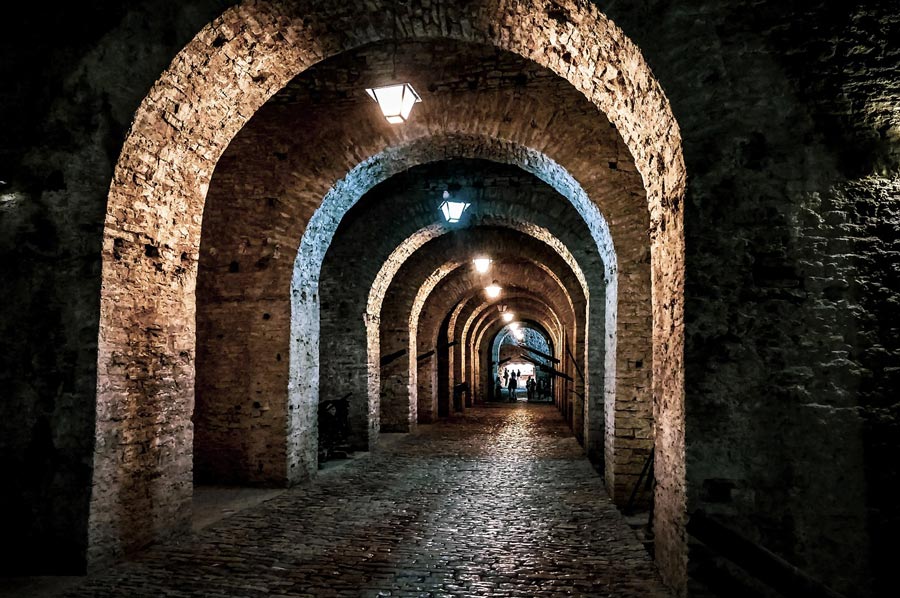 The city was eventually inscribed in 2005 as a rare example of a well-preserved town from the Ottoman era. Gjirokastër serves as an exceptional testament to a society shaped by Islamic culture. In 2008, the World Heritage site was expanded to include the old town of Berat.
Gjirokastër is home to numerous Ottoman-era mosques and Eastern Orthodox churches. The Bazaar Mosque is well-preserved, and the Tekke Mosque stands as another significant cultural monument. The Ethnographic Museum is a reconstruction of a typical traditional townhouse; other such houses remain in their original state some of which, like the Zekate House, are open to visitors. Of particular importance to the Bektashi community in Albania is the old *tekke* (dervish lodge) of Zall, located on the southern outskirts of the city one of several *tekkes* found in Gjirokastër.
Gjirokastër – Transport Connections for Tourists
The national road SH4 runs below the city, passing through the newer districts. It connects Albania’s economic hub the Tirana-Durrës metropolitan area with the Greek border crossing at Kakavija. The border crossing is only 36 kilometres away. Near Jergucat, south of Gjirokastra, the SH72 national road branches off from the SH4; it leads over the Qafa e Muzinës pass to Delvina and continues on to Saranda on the Ionian Sea. This makes Gjirokastër easily accessible from locations along the camper route.
Please read as well:
Station 11 - Camperstop Bourazani at Konitsa
Adventurous camping trips or a slower pace of life just around the corner