Berlin – A Short City Tour as a Day Trip
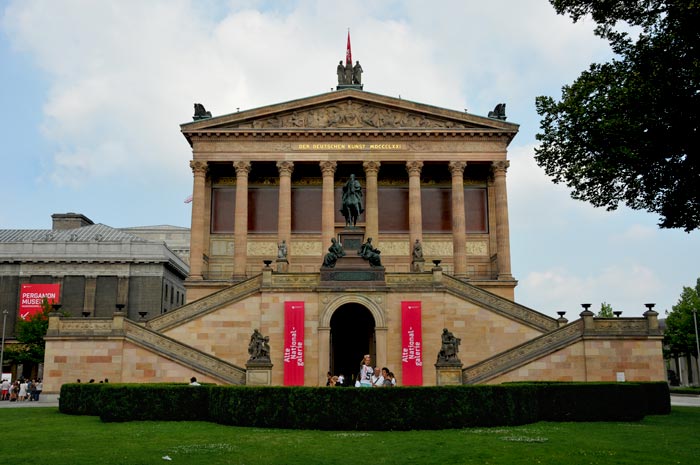
Berlin – We took advantage of our visit to Claudia and Heinrich to make a day trip to Berlin. The first item on our list of destinations was the Pergamon Museum on Museum Island, which also includes the Alte Nationalgalerie (pictured).
We were hugely surprised to find a massive queue of people waiting to enter the Pergamon Museum, even at the early hour of our arrival. Staff at the Alte Nationalgalerie estimated that the line currently in the courtyard meant a wait of about three hours’ time we preferred to spend elsewhere in the city. Pergamon Museum... we’ll see you later!
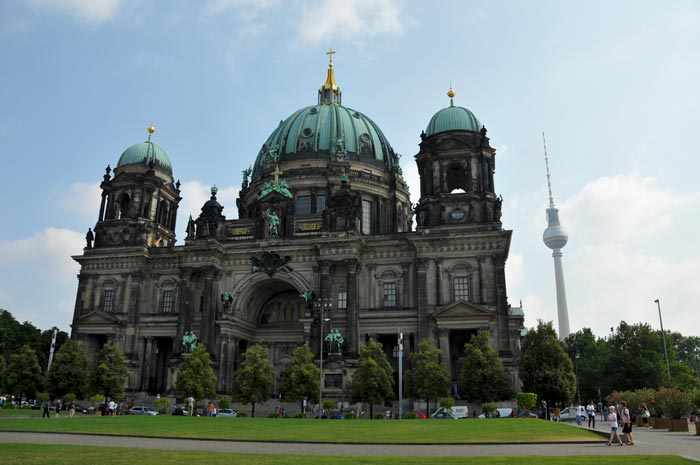 The Berlin Cathedral (Berliner Dom) officially named the “Oberpfarr- und Domkirche zu Berlin” (Supreme Parish and Collegiate Church of Berlin) is a Protestant church located on the northern part of the Spree Island; it is one of Germany's largest Protestant churches and the largest church in Berlin. Built between 1894 and 1905 based on designs by Julius Raschdorff drawing inspiration from the Italian High Renaissance and Baroque styles the cathedral ranks among the most significant Protestant church buildings in Germany. Today, it has a total height of 116 meters and a footprint of approximately 73 by 93 meters (originally 73 by 114 meters, prior to the demolition of the “Denkmalskirche” or Memorial Church). The dome reaches a peak height of 74.8 meters and has a diameter of 33 meters. A truly impressive building! Visible behind it in the picture is the TV Tower.
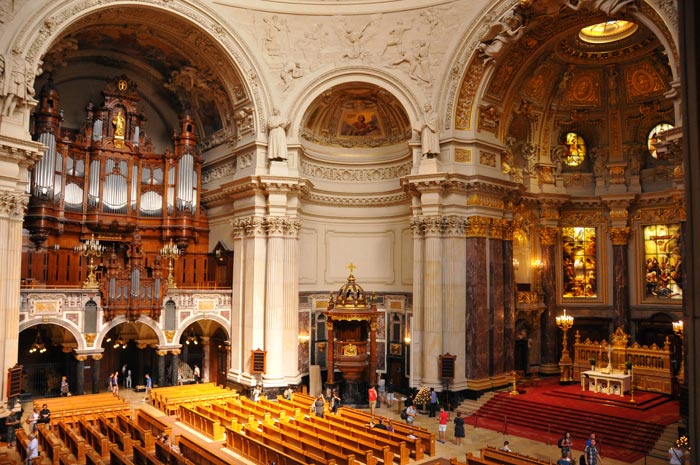
In the early 19th century, Karl Friedrich Schinkel redesigned the cathedral's predecessor in the then-modern Neoclassical style the interior in 1816–1817 and the exterior appearance in 1820–1821. King Frederick William IV considered it too small; the current cathedral offers seating for approximately 1,650 people. The organ in the *Predigtkirche* (Sermon Church) comes from the Sauer organ-building workshop, while the organ case was created by sculptor Richard Moest. The instrument was designed and built concurrently with the cathedral itself. With 7,269 pipes (113 stops, four manuals plus pedal), it is the largest fully pneumatic High Romantic organ and was, at the time of its construction, the largest cathedral organ in Germany.
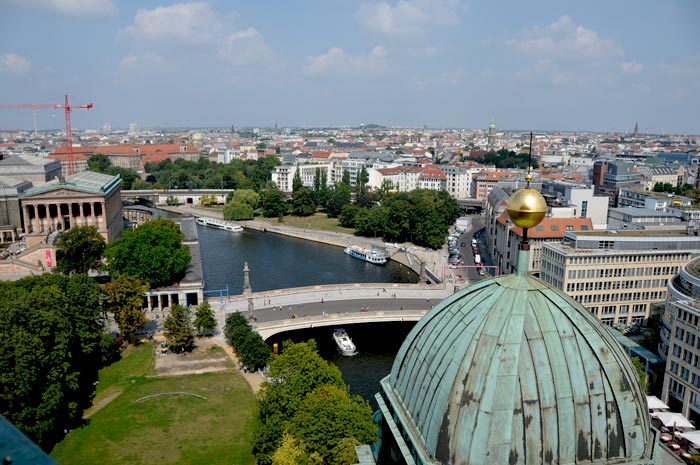
A climb up a number of steps though the exact count is unrecorded leads to the observation deck of the cathedral dome. The view overlooking the Spree River and Museum Island is not only stunningly beautiful but also reveals the massive, ongoing construction activity that has continued since the fall of the Berlin Wall; construction cranes are visible wherever one looks.
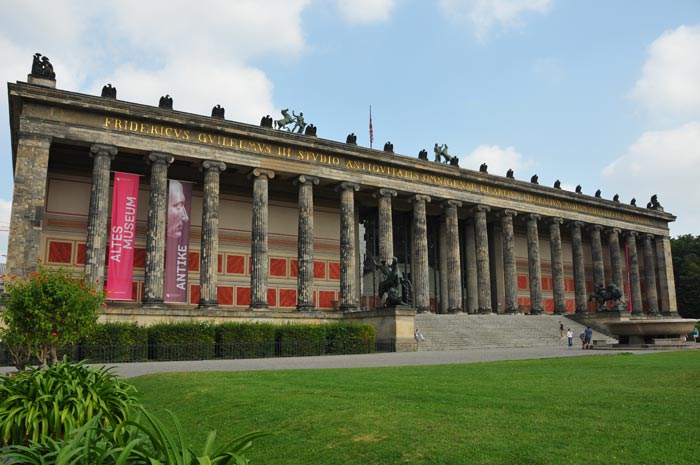
The “Altes Museum” (Old Museum) originally named the “Neues Museum” (New Museum) upon opening, and later the “Königliches Museum” (Royal Museum) until 1845 was built between 1825 and 1830 by Karl Friedrich Schinkel in the Neoclassical style. Today, it houses the Collection of Classical Antiquities of the National Museums in Berlin. This heritage-listed structure is one of the most significant examples of Neoclassical architecture and is considered a masterpiece of Schinkel’s work. It forms part of the architectural ensemble on Museum Island, which was designated a UNESCO World Heritage Site in 1999.
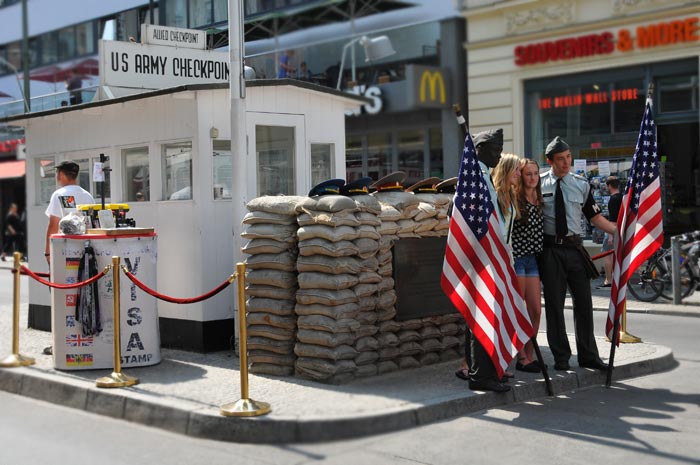
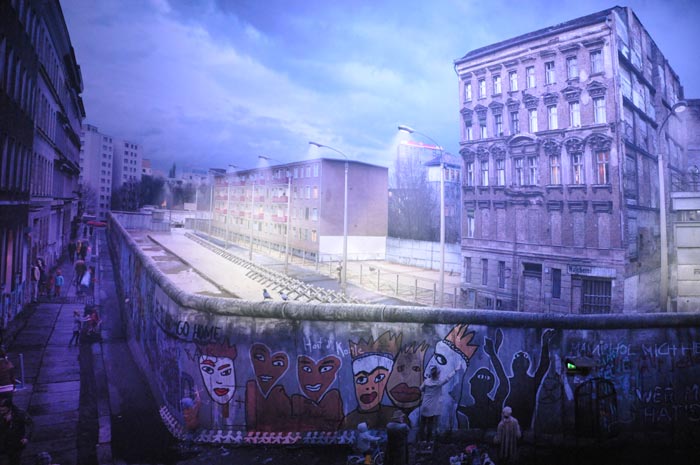
Checkpoint Charlie was one of the most famous border crossings through the Berlin Wall between 1961 and 1990. Located on Friedrichstraße between Zimmerstraße and Kochstraße (near the U-Bahn station of the same name) it connected the Soviet and US sectors, thereby linking the East Berlin district of Mitte with the West Berlin district of Kreuzberg. The checkpoint was established in August 1961 following the construction of the Wall to monitor border crossings by Western Allied military personnel, the Soviet Military Liaison Mission (SMM), and foreign diplomats. Today, Checkpoint Charlie is a highlight for tourists visiting Berlin. In the course of our travels, we have already viewed several monumental works by the artist Assisi. Right next to Checkpoint Charlie, there is another 180-degree panorama by the artist that offers an impressive glimpse of life behind the Wall. It depicts a scene complete with figures and objects with such lifelike realism that the full magnitude of the Wall’s horror is revealed.
Life pulses here like nowhere else. Thousands of people pass through the Brandenburg Gate every day whether as tourists, commuters heading to or from work, or street performers on Pariser Platz, the square that marks the end of the "Unter den Linden" boulevard. On the western side of the gate lies the Platz des 18. März, where the Straße des 17. Juni begins and runs through the Tiergarten.
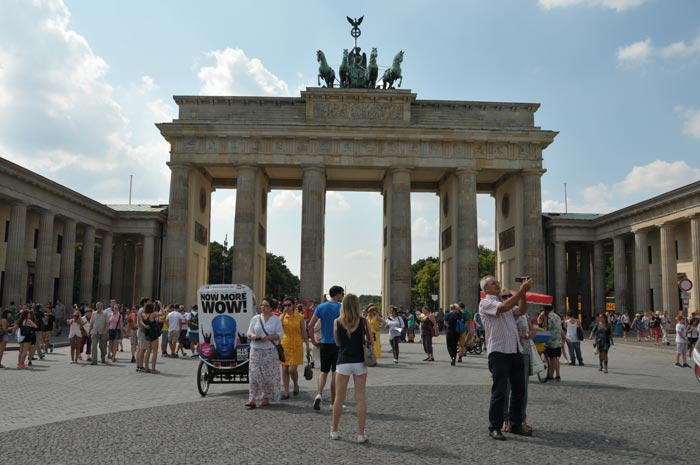
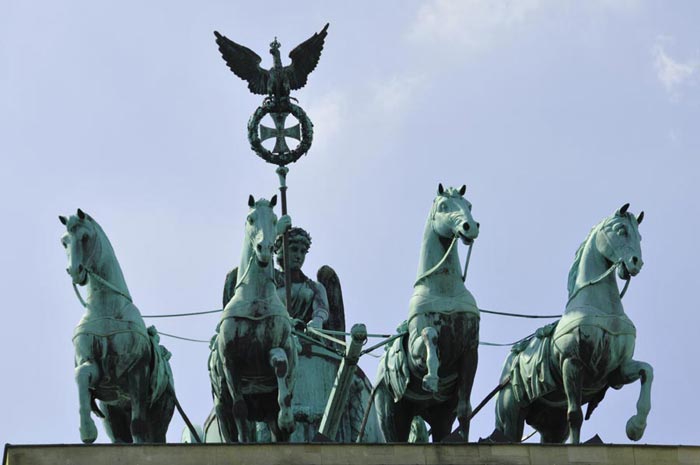
The Brandenburg Gate was erected between 1788 and 1791 by Carl Gotthard Langhans on the orders of the Prussian King Frederick William II; it is arguably the most famous landmark and national symbol associated with many significant events in the history of Berlin, Germany, Europe, and the world during the 20th century.
The Brandenburg Gate also marked the border between East and West Berlin and thus the boundary between the Warsaw Pact nations and NATO. Until German reunification, it served as a symbol of the Cold War; after 1990, it became a symbol of the reunification of Germany and Europe.
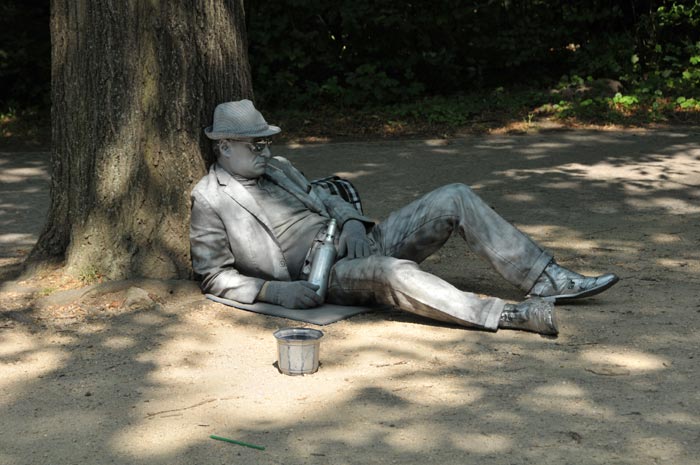
A "street performer" in the Tiergarten.
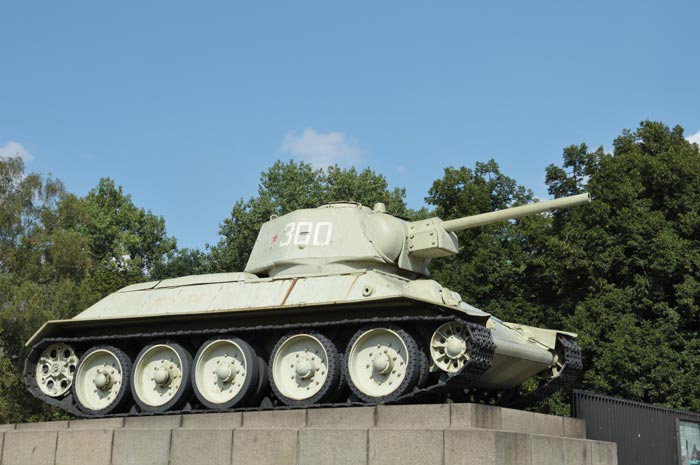
The Soviet War Memorial in the Tiergarten is located on the Strasse des 17. Juni. The complex was built in 1945 to honour the Red Army soldiers who fell during the Second World War. Honor guards from the Soviet Army and later the Russian Army were stationed there until the withdrawal of troops in 1994. Subsequently, the site was handed over to the City of Berlin. Bilateral agreements exist between Germany and the Russian Federation under which Germany has committed to maintaining this and other war grave sites.
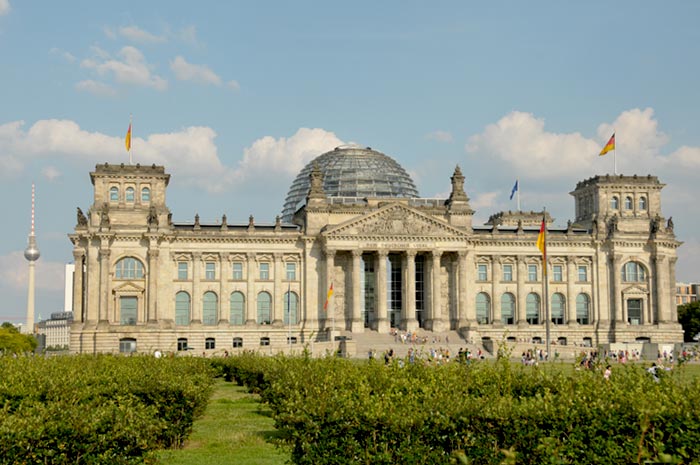
The Reichstag building (officially the Reichstag Building Plenary Area) at the Platz der Republik in Berlin has been the seat of the German Bundestag since 1999. The Federal Convention has met here since 1994 to elect the President of Germany.
The structure was built by architect Paul Wallot between 1884 and 1894 in the Neo-Renaissance style in the Tiergarten district. It housed the Reichstag of the German Empire as well as the Reichstag of the Weimar Republic. Severely damaged by the Reichstag fire of 1933 and the effects of the Second World War, the building was restored in a modernized form during the 1960s and underwent another fundamental redesign between 1991 and 1999. Bellevue Palace, located in Berlin’s Tiergarten district, currently serves as the primary official residence of the President of Germany. The palace was built between 1785 and 1786 based on designs by Michael Philipp Boumann, commissioned by Prince Ferdinand of Prussia the youngest brother of Frederick II. Previous owners of the site included Georg Wenzeslaus von Knobelsdorff, who had built a summer residence there in 1746, just south of the current palace. Boumann was required to incorporate an existing structure a former leather factory on the banks of the Spree that had been converted into a home into the new building, using it as the right wing. The palace earned the name "Bellevue" ("Beautiful View") thanks to the vista from the central building (*corps de logis*) looking west, which extended far across the park and the meandering Spree River to the dome of Charlottenburg Palace.
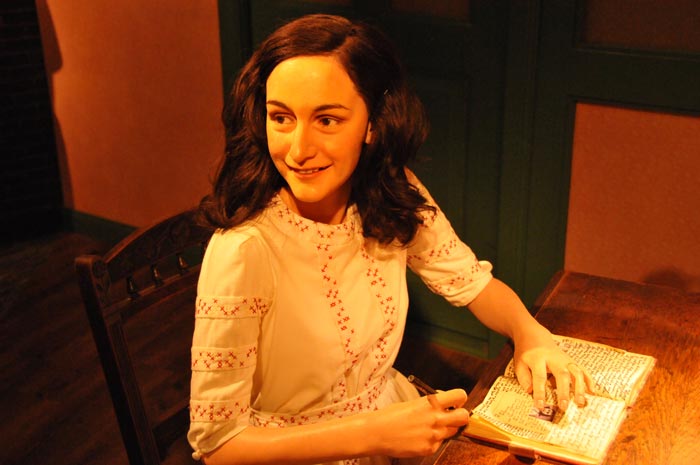
Another highlight of our short trip to Berlin was the Madame Tussauds wax museum. The founder of the modern museum chain was Marie Tussaud. She first exhibited her collection of self-sculpted wax figures in London in 1802. In 1835, she and her sons established a dedicated museum for her exhibition on Baker Street; she managed the wax museum until her death in 1850.
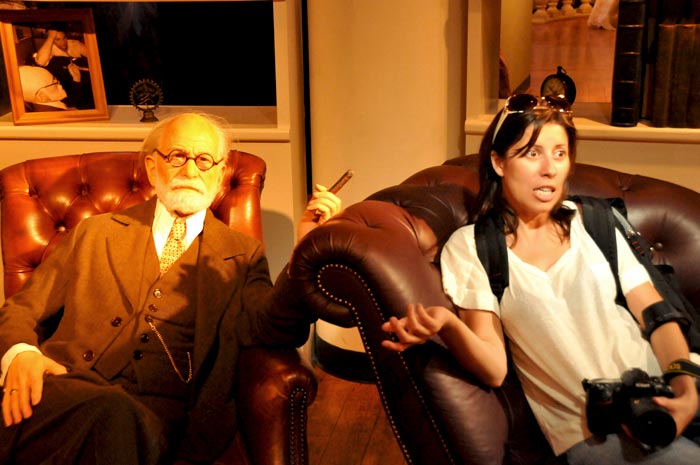
Marie Tussaud learned her craft at the age of 17 from her mentor, Philippe Curtius, in Bern. She lived in Paris from 1767 onwards, where she created models of numerous prominent victims during the French Revolution. The heads of the executed were displayed on pikes but decomposed quite rapidly; consequently, they were replaced by wax heads cast from death masks. This expertise and the models created during the French Revolution formed the foundation of the initial collection Tussaud exhibited in London. On display today are lifelike wax figures of historical figures and contemporary personalities including athletes, actors, musicians, politicians, and models such as this figure of Anne Frank writing her diary.
Please also read: