Norman Davies – "Vanished Kingdoms"

This is exactly the kind of book I love a work of non-fiction that presents a wealth of knowledge in such a skillful and engaging way that it reads like a novel.
A good non-fiction book also takes the scattered bits of "half-knowledge" a reader might possess and places them into a context that brings order to one’s understanding.
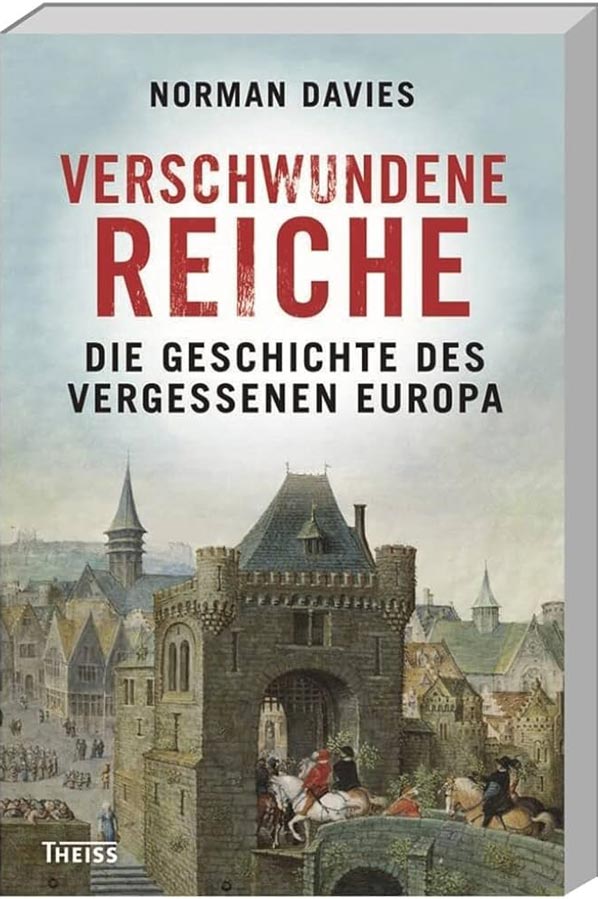 In *Vanished Kingdoms*, Norman Davies presents the histories of states that have since disappeared all located in Europe over the last 1,500 years through a series of case studies. Each study is structured in three parts: first, the region is described as it appears today; second, the history of the kingdom itself is recounted; and third, the book explores how that kingdom has been remembered or, in some cases, forgotten.
Beyond the historical account, what I find particularly fascinating is the way the book uncovers literary connections that a reader can discover while reading.
For instance, some time ago, I came across a book titled “Cagot” by Tom Knox.
It was there that I first read about the modern-day descendants of the Goths in the Pyrenees. As it turns out, the term "Cagot" is a shortened form of the Latin “canis Gotorum”.
According to Wikipedia, the word “Cagots” is derived from “chiens Gots” or *cans Gots* meaning "Gothic dogs."
“Vanished Kingdoms” tells the story of the Kingdom of Tolosa (modern-day Toulouse), which serves as the historical backdrop and inspiration for that gripping thriller. During the Migration Period and the collapse of the Roman Empire beginning in 418 AD and spanning nearly a century the Visigoths, led by Alaric and his sons, conquered the west and south of France, extending their reach across the Pyrenees and into Spain, where they established the Tolosan Kingdom of the Visigoths. In the very second chapter, another literary discovery awaits:
 The Kingdom of Strathclyde, which existed from the 5th to the 12th century. The rock fortress on Dumbarton Rock still standing today and historically situated in the north of England, amidst seven kingdoms surrounding Hadrian’s Wall could well have served as the inspiration for George R. R. Martin’s "Game of Thrones" series:
The Picts living north of the great wall, the seven kingdoms, and a landscape defined by numerous islands and peninsulas reminiscent of "The Fingers" in the novels are too many parallels to be mere coincidence. Dumbarton Rock, crowned by the remnants of a massive stronghold, continues to fire the imagination to this day.
In "Vanished Kingdoms", one encounters many other evocative names such as Burgundy, Aragon, Savoy, and the State of the Teutonic Order eventually reaching the modern era with the vanished Russian Empire.
I am certain that any reader with an interest in European history, or in novels rooted in historical reality, will find this book a true treasure trove of fascinating historical connections the likes of which they have likely never encountered before.
I believe that much of what we see in today’s Europe can only be truly understood when one grasps the historical roots from which it grew. This book contributes significantly to that understanding and is, therefore, a highly recommended read.
2) Publisher Information
Vanished Kingdoms
The History of Forgotten Europe
Davies, Norman
Translation: Karin Schuler, Norbert Juraschitz, Hans Freundl, et al.
Original Title: Vanished Kingdoms. The History of a Half-Forgotten Europe
Publisher: Theiss (2013)
Language: German
Hardcover, 958 pages, with 82 illustrations and 74 maps
ISBN-13: 978-3-8062-2758-1
Description
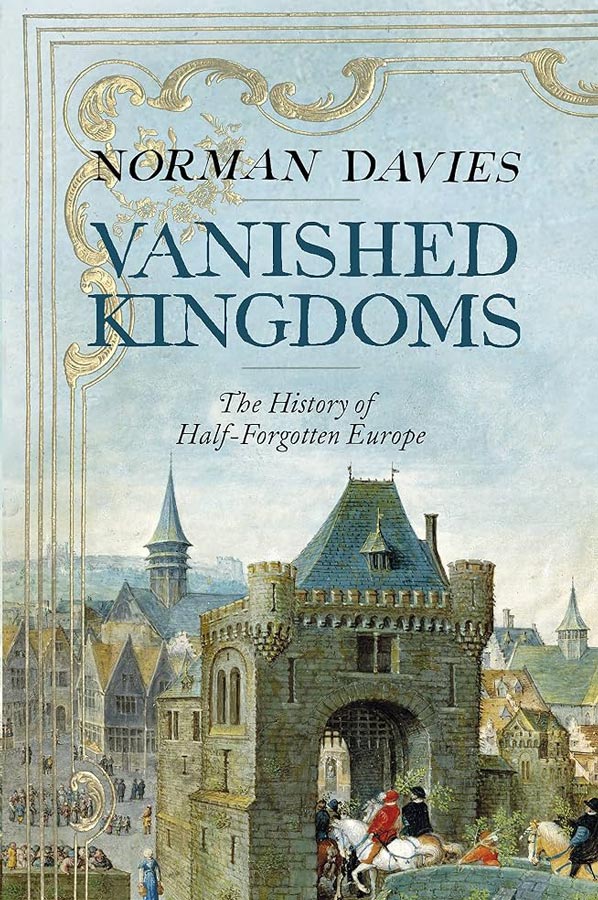 The pomp of Soviet military parades has faded. The conquests of proud Visigothic kings have long been forgotten. The coats of arms of German dukes have vanished into the whirlpool of history.
Collapsed, lost, and erased from the political map of Europe for all time the history of Europe is also a history of vanished realms. From the proud kingdom of Alt Clud now a run-down region in Scotland to the legendary Burgundy, or the Prussian heartland (the land of the Old Prussians) a *terra incognita* in the 12th century that later became one of the most influential states in Europe Norman Davies tracks down 15 such realms, visiting their sites and examining previously neglected sources.
In this masterful, linguistically brilliant, and thought-provoking work significant both politically and historically Davies recounts the stories of these realms from their rise to their fall, revealing how little remains in our memory today of their once-great past. For collective memory is essential to understanding the Europe of today.
Davies, Norman
Born in 1939 in Bolton, Lancashire, Norman Davies is a professor emeritus at the University of London. He has been a Fellow of the Royal Historical Society since 1974, a Supernumerary Fellow at Wolfson College, Oxford, since 1996, and a member of the Faculty of Modern History at the University of Oxford. He has published numerous works on the history of Poland and Europe.
Please also read: