


Schloss Bladenhorst – former moated castle now in private use
- Written by Portal Editor
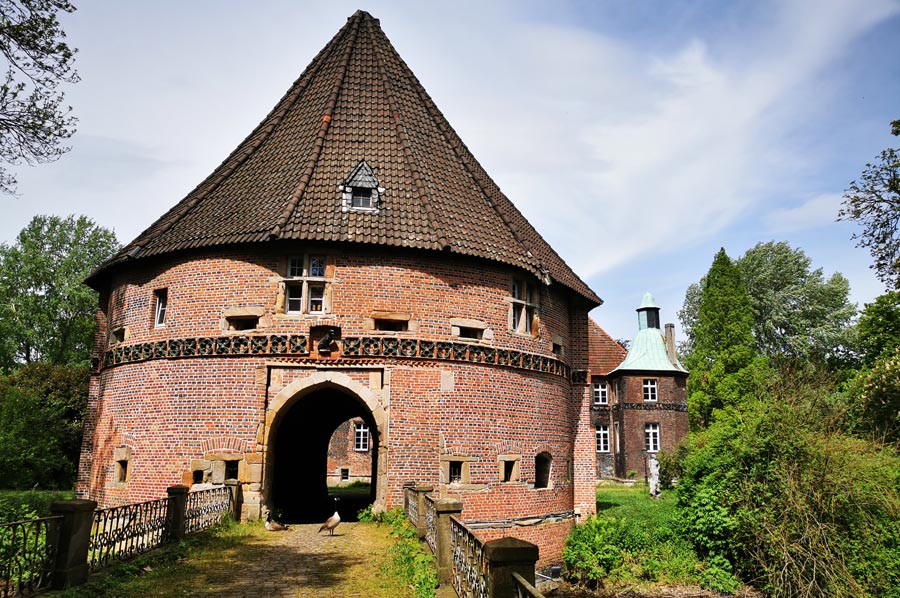
Schloss Bladenhorst – It was another wonderful day that beckoned us to go hiking or at least get outdoors so we decided to pay a visit to Schloss Bladenhorst.
Schloss Bladenhorst: From Knight’s Castle to Manor
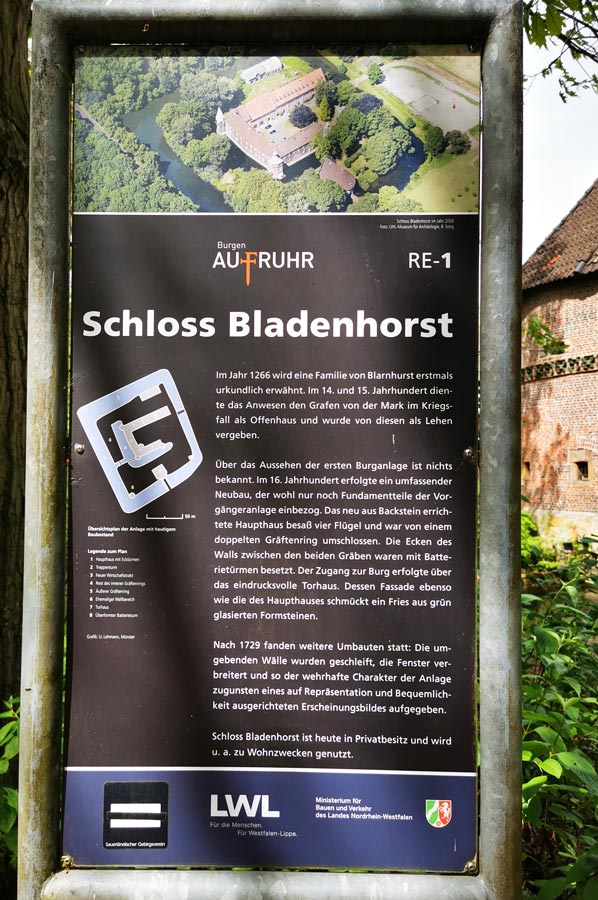 Schloss Bladenhorst is located in the Castrop-Rauxel suburb of the same name.
It was first mentioned in historical records in 1266 as the knight’s castle of the von Blarnhurst family, from which the modern name Bladenhorst evolved.
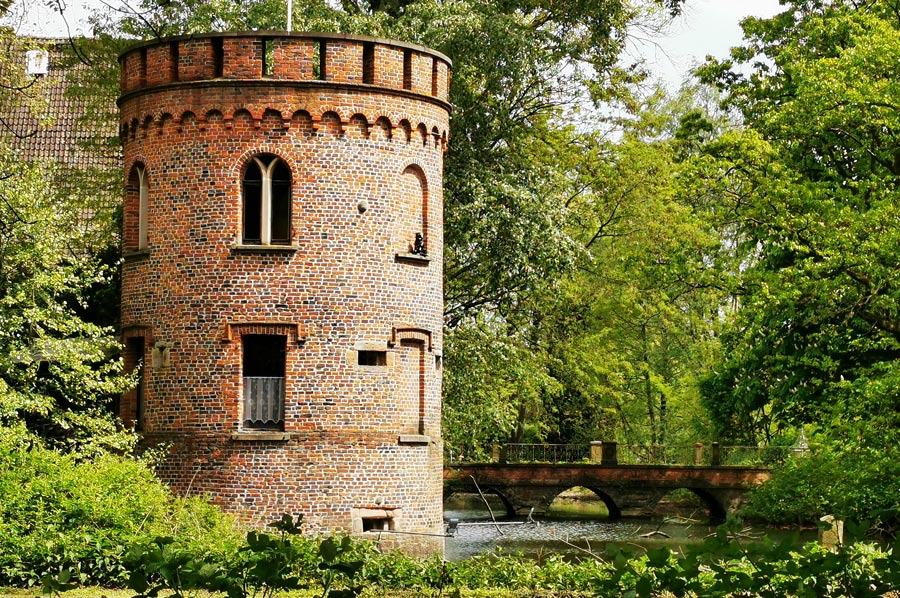
The three-winged castle building is surrounded by a gatehouse to the south, a defensive tower to the southwest, a dovecote to the southeast, and the reconstructed *Graftenhaus* (moat house) to the north.
All these structures lie within the fully preserved moat, creating a classic Westphalian moated castle complex.
The castle grounds are now part of the Bladenhorst Landscape Park and were originally laid out in the style of an English landscape garden.
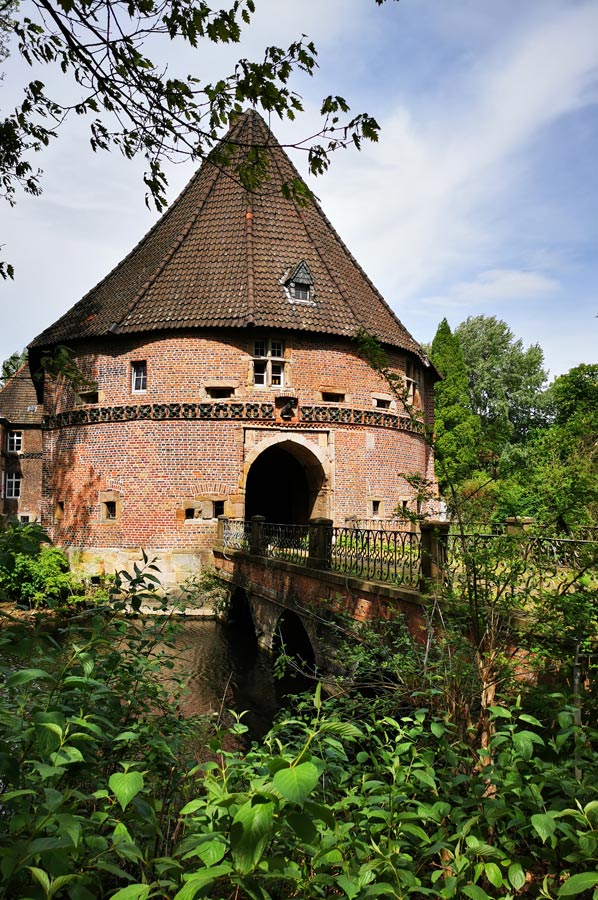 Following the "knights" of Düngelen, the noble lords of Viermundt took over the estate; starting around 1530, they carried out structural modifications that transformed the fortress into the castle complex seen today.
From 1624 to 1881, the noble von Romberg family oversaw the estate's affairs.
The last noble family to reside there was the Barons von Weichs zur Wenne, until the Klöckner-Werke company purchased the castle in 1926.
Upon arriving at Schloss Bladenhorst, we were initially somewhat disappointed;
Schloss Bladenhorst – now a private residential complex
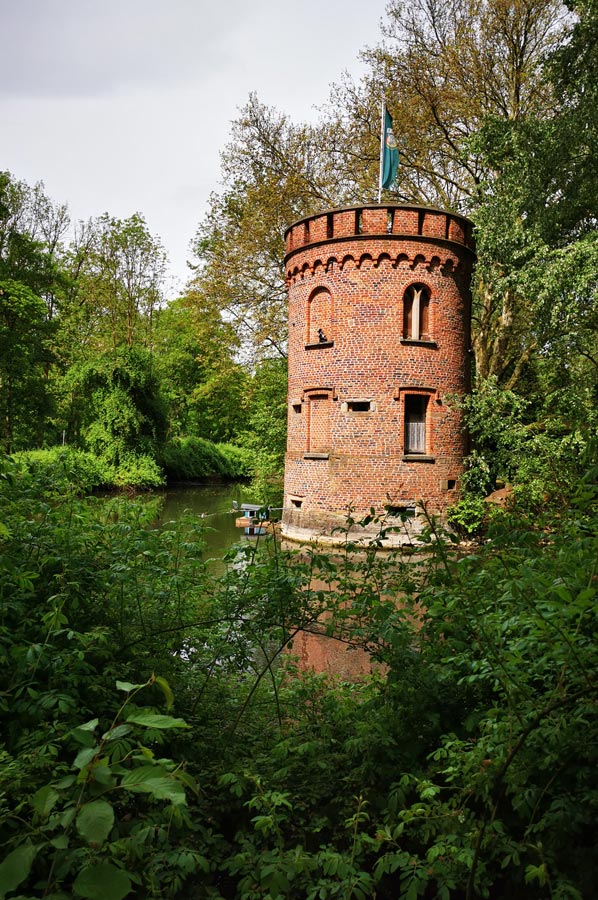 The complex is now entirely closed for visitors, as a large portion of the site is occupied by private tenants for residential purposes.
In 1996, a private investor purchased the property and commissioned extensive renovation and restoration work prior to going bankrupt in 2002. After several years of inactivity under receivership, the castle was auctioned off in 2006.
A new buyer took over the historic Westphalian moated castle featuring an imposing gatehouse in 2007 and is set to continue and complete the restoration work over the coming years.
For readers interested in the history of the moated castle, the following book is worth noting:
 In August 2009, a new edition of the book “Schloss Bladenhorst – Wo sich Vergangenheit, Gegenwart und Zukunft begegnen” (Schloss Bladenhorst – Where Past, Present, and Future Meet) by Wolfram Schmidt was released (25 x 21 cm; 104 pages); it is available from local booksellers.
It is also worth mentioning that readings and exhibitions take place at the castle throughout the year, depending on the season. This offers an opportunity to access at least parts of the premises. Click here for events!
Spooky Reading & Music
Book premiere with Pia Lüddecke & Ernest: The duo presents the new gothic novel *Das Ende der Nacht* (The End of the Night) as an atmospheric audio-drama-style reading accompanied by live music.
Sat., Oct. 3, 2026 | Doors open at 7:00 PM
Onward to the Rhine-Herne Canal
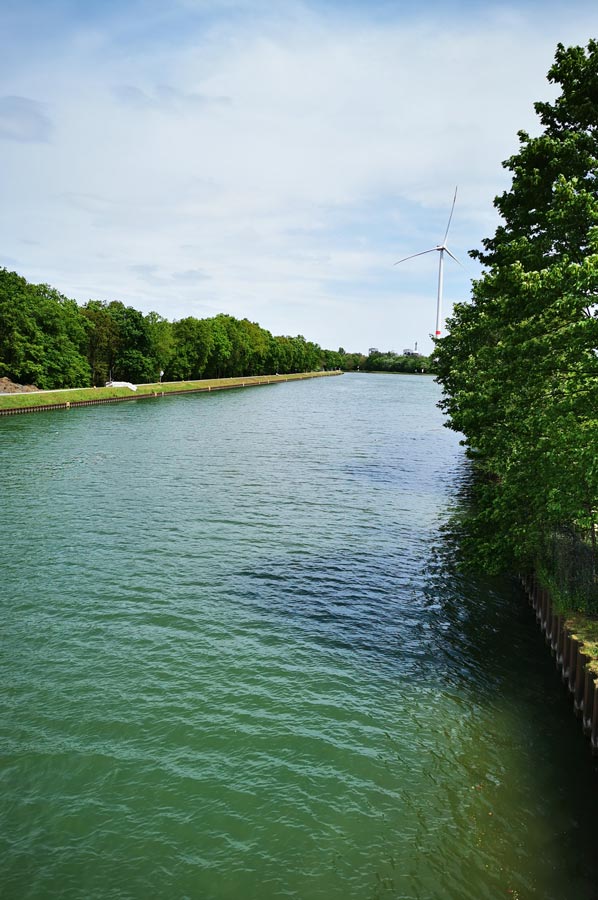 Despite the disappointment of not being able to enter the castle gardens, we headed to the nearby Rhine-Herne Canal to continue our walk along the Pöppinghauser Wald nature reserve, which adjoins the canal.
Construction of the canal lasted from April 5, 1906, to July 17, 1914 a period of eight years and cost around 60 million marks in the currency of the German Empire at the time.
The project largely utilized the existing geomorphological features of the Emscher Valley. In some sections particularly in Herne and Gelsenkirchen the canal was constructed within the former riverbed of the Emscher, the course of which had shifted slightly to the north due to earlier straightening.
Please read as well: