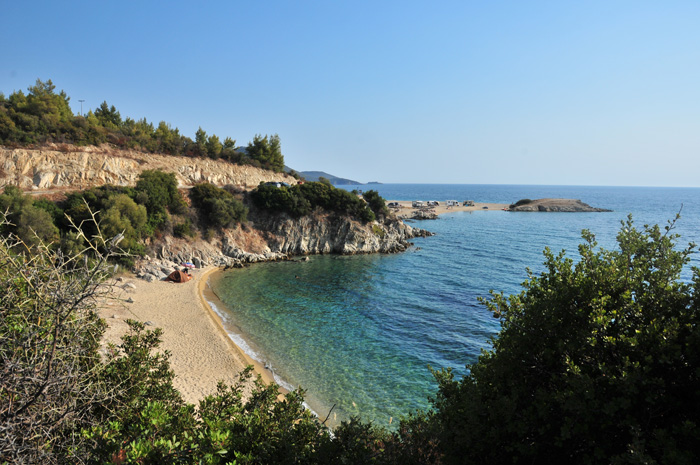
Ionian League on the west coast of Asia Minor
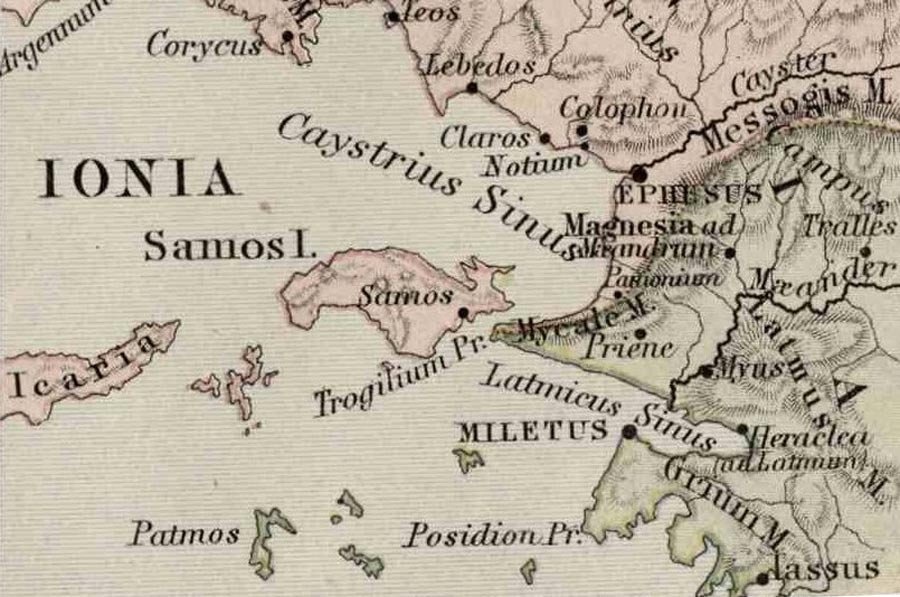
The Ionian League was an association of twelve Ionian cities and islands on the west coast of Asia Minor (modern-day Turkey); even in pre-Christian times, it held political significance that extended beyond shared religious practices.
Apparently founded in the 7th century BC, the league comprised the following twelve cities and islands, according to Herodotus:
- Phocaea • Ephesus
• Priene • Miletus
• Myus • Chios
• Samos • Clazomenae
• Erythrae • Teos
• Lebedos • Colophon
In his list of colonies founded under the leadership of Ion (of mythology), Vitruvius names these same cities, plus a thirteenth Melite which, however, was attacked and expelled due to the arrogance of its citizens. Smyrna was admitted to the league in its place.
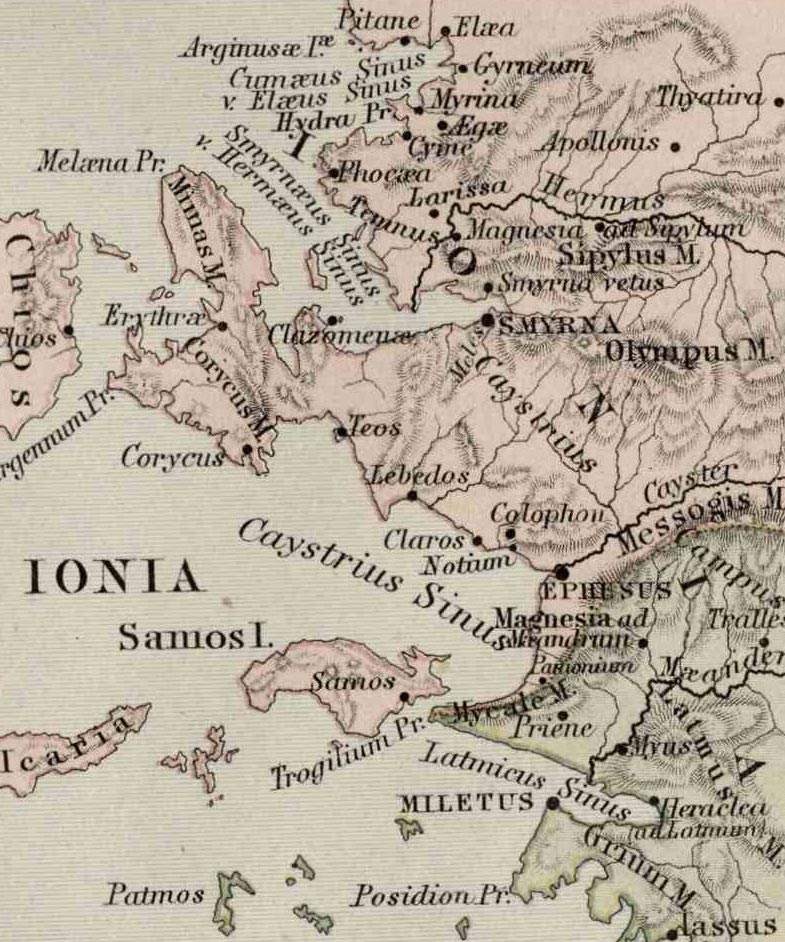 As a religious centre, they established a "Pan-Ionian sanctuary": the Panionion, a cult site dedicated to Poseidon located north of Priene in the mountains of the Mycale promontory. Only members of the Ionian League participated in the assemblies, offered sacrifices there, and shared in political and military decision-making. The Dodecapolis the community of twelve viewed itself as an elite association and admitted no further members.
The Ionians had migrated from Attica on the Greek mainland after 1100 BC as a mixed group of peoples. It was only as colonists that they developed a shared tribal consciousness a collective identity as "Ionians." Pride in their "Ionian" identity and the historical, religious, cultural, economic, military, and political bonds they shared remained significant for centuries. It was only at this stage that their settlement area along the Aegean coast came to be known as "Ionia." As centres of trade and shipping, these cities grew wealthy, and economic primacy took precedence over the significance of shifting overlordships.
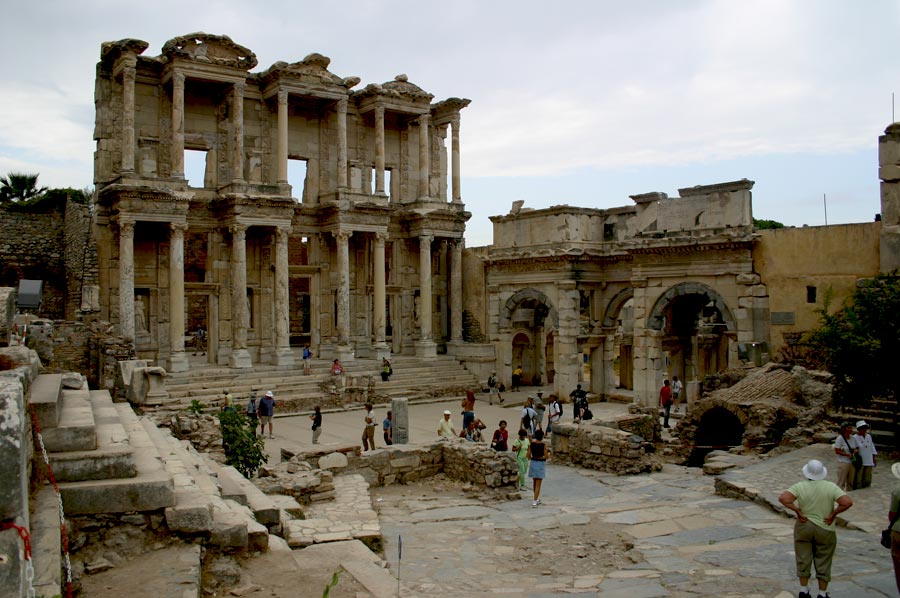
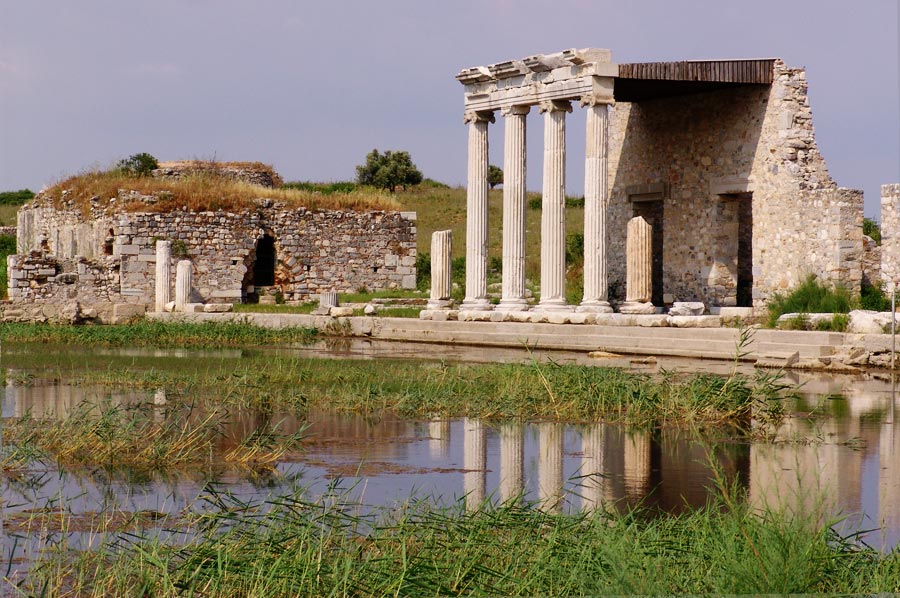 The Ionian League united the most important cities of the region. Among them, Miletus held a position of economic and political dominance for centuries; the city is credited with founding some 80 to 90 colonies, primarily in the Black Sea region. To maintain this standing, Miletus was the first city to voluntarily side with the Persians and conclude a treaty of submission. Ephesus oriented its trade hundreds of kilometres to the east; it took on a strong Oriental character and increasingly detached itself from the cultural sphere that the Greek mainland regarded as "Greek." It was one of the few cities in Asia Minor that never joined the Delian League.
 Autonomy for the polis and free trade connections for every city were in the shared Ionian interest. Consequently, belonging to a multi-ethnic empire like Persia was not inherently contradictory, provided there remained sufficient economic, political, and religious latitude—and that this freedom was protected by the ruling power. "Ionian identity" served as the unifying bond, with the Ionian League acting as its most potent manifestation.
Herodotus (5.109) highlights the special political significance of the twelve Ionian cities with a remarkable turn of phrase: he refers to the assembly of cities as Koinon ton Ionon the "community" or "commonwealth" of the Ionians a term he otherwise applies only to what we would call "states" and their "governments." Unlike amphictyonies communities defined by shared tribal origins and religious practices the probouloi (representatives of the Ionian cities) evidently exercised political, and perhaps even foreign-policy, functions.
 There is no record of how long the Ionian League endured. According to the ancient Greek understanding of law, symmachiai that is, foreign policy alliances came to an end when an agreed-upon term expired, a sworn objective was achieved, or the treaty was formally renounced. This cannot apply to religious and tribal confederations such as the Ionian League. It can therefore be assumed that the League lost its significance or function amidst the political developments in Asia Minor during the 5th century BC (see the Persian Wars) and was superseded or replaced by new structures, such as the Delian League. Evidence for this includes the Delian League’s pan-Ionian aspirations and the significant role played within it by the Ionian islands allied with Athens. This view is supported by archaeological findings and literary references indicating that the Panionion was apparently destroyed by the Persians in 494 BC following the suppression of the Ionian Revolt, and that a replacement structure begun elsewhere was never completed.
Please also read: