A Life in the Shadows: Natterer’s Bat Named Animal of the Year 2027
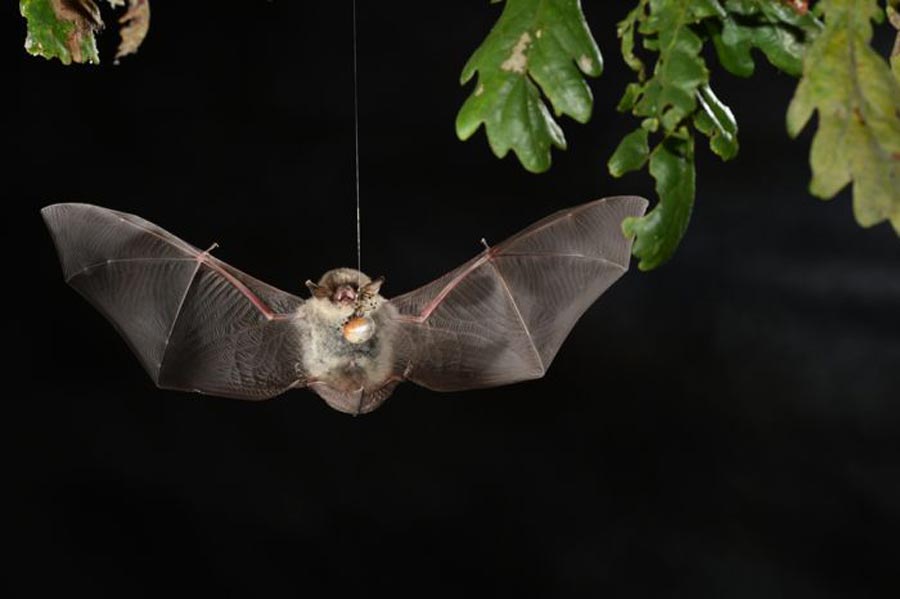
Natterer’s bat (Myotis nattereri) has been named Germany’s "Animal of the Year" for 2027. In a vote organized annually by the German Wildlife Foundation (*Deutsche Wildtier Stiftung*), it prevailed over other nocturnal contenders: the European polecat and the harvest mouse.
Natterer’s bat a swift flier, a skillful forager, and an expert in silent echolocation is one of 25 bat species native to Germany. It serves as a representative for a group of animals whose lives remain largely hidden from human view. Found across almost all of Germany, the species inhabits forests, areas near bodies of water, and landscapes with scattered trees, such as parks and traditional orchards.
"By selecting Natterer’s bat as the Animal of the Year 2027, we want to draw attention to an underestimated and little-known species, and inspire people to take an interest in the fascinating world of bats," says Julia-Marie Battermann, a conservationist at the German Wildlife Foundation.
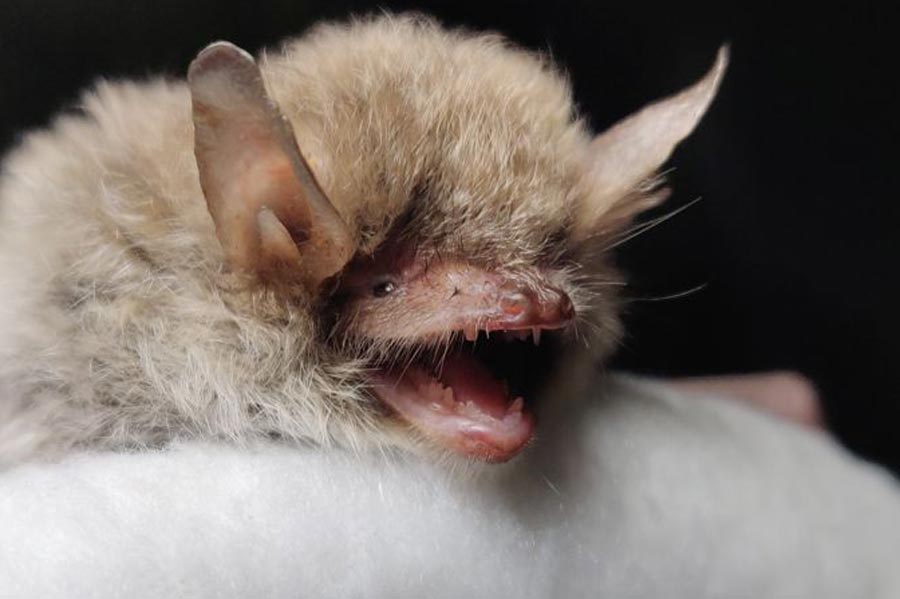 With a head-and-body length of 43 to 48 millimetres, Natterer’s bat is considered a medium-sized bat. It owes its name to the comb-like, inward-curving bristles that line the edge of its tail membrane, resembling a fringe.
The bat uses this fringed membrane like a landing net to capture prey, sweeping spiders, woodlice, and beetles off leaves, branches, or walls. Furthermore, Natterer’s bat is an aerial acrobat; it can hover in place a technique known as "hover-gleaning" to pluck prey from plants or the ground. Its diet also includes flies. "Where there are many flies for instance, in barns housing cows or other livestock you will often also find many Natterer’s bats," says Battermann.
All bats locate their prey through echolocation: they emit high-frequency ultrasonic sounds, which are generally inaudible to humans. When these ultrasonic waves strike a prey animal, they bounce back as an echo. By analysing this echo, the bats can determine the exact position, size, and speed of their prey.
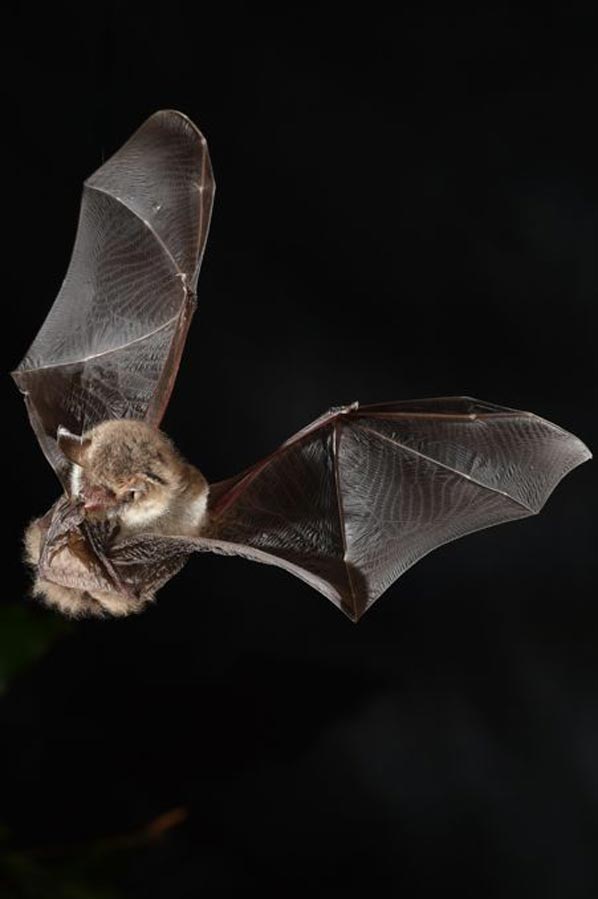 As a nocturnal animal, the Natterer’s bat sleeps during the day, tucked away in tree hollows or crevices, buildings, or bat boxes. In early summer, females gather in large maternity colonies to give birth to and raise their young. Once the young are capable of flight usually after about four weeks these maternity colonies disperse. From late summer onwards, Natterer’s bats congregate near their traditional winter roosts to find mates and breed. Like all native bat species, Natterer’s bats hibernate; starting in October, they seek out frost-free refuges such as caves, rock crevices, or cellars.
Unlike most other native bat species, the Natterer’s bat is not considered threatened, according to the Red List of Mammals in Germany. However, the foundations of its existence are at risk. Pesticides, for example, kill the arachnids and insects that make up the primary diet of the Natterer’s bat. "Furthermore, the loss of habitat caused by land sealing, the fragmentation of landscapes, or the construction of wind turbines in forests poses a threat to this species," Battermann explains. Furthermore, forests are increasingly lacking the deadwood and old trees that provide shelter for the "Animal of the Year 2027."
Since 2017, the German Wildlife Foundation (Deutsche Wildtier Stiftung) has organized the selection of an "Animal of the Year." Each year, a mammal is chosen that is either threatened, faces the loss of its habitat, or comes into conflict with humans. More information on the "Animal of the Year" can be found here: www.DeutscheWildtierStiftung.de/Naturschutz/Tier-des-Jahres
We credit the source of pictures as follows: Florian Gloza-Rausch / Deutsche Wildtier Stiftung
Please read as well: