


Tralles or Tralleis near the provincial capital Aydin
- Written by Portal Editor
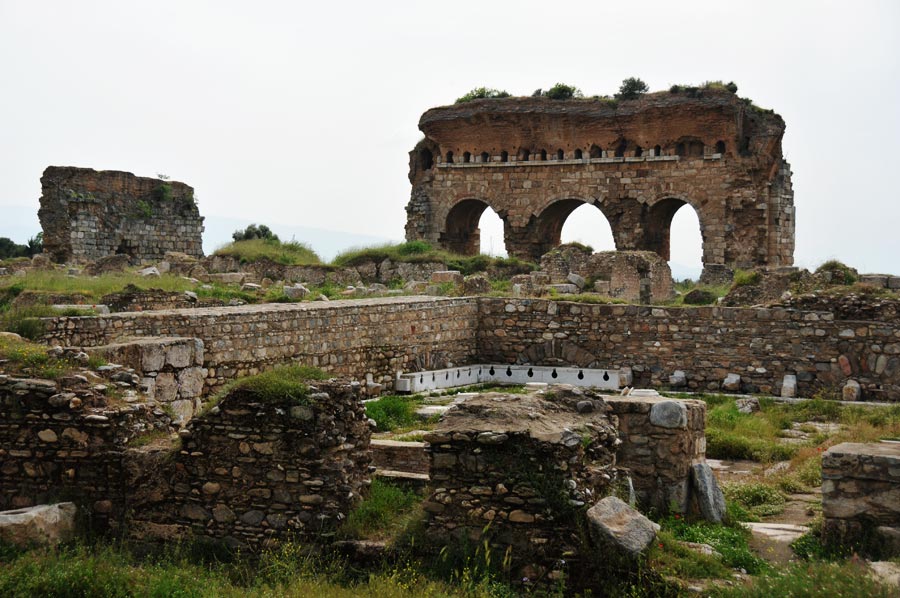
Tralles – The ancient city of Tralleis, located about 2 kilometers north of Aydin in the direction of the mountains that run parallel to the city (well signposted), was an ancient metropolis.
Tralleis could certainly be compared to other opulent cities of antiquity such as Ephesus or Pergamon, in terms of population, political importance, architecturally valuable buildings, and art.
 As is common with many ancient cities, the city's name is likely based on the legend of an Amazon named Tralle.
The city of Tralles was under the control of the Carians for a long period. During excavations, another field of ruins was discovered slightly west of Tralleis near Dedekuyusu Höyük, dating back to around 4500 BC.
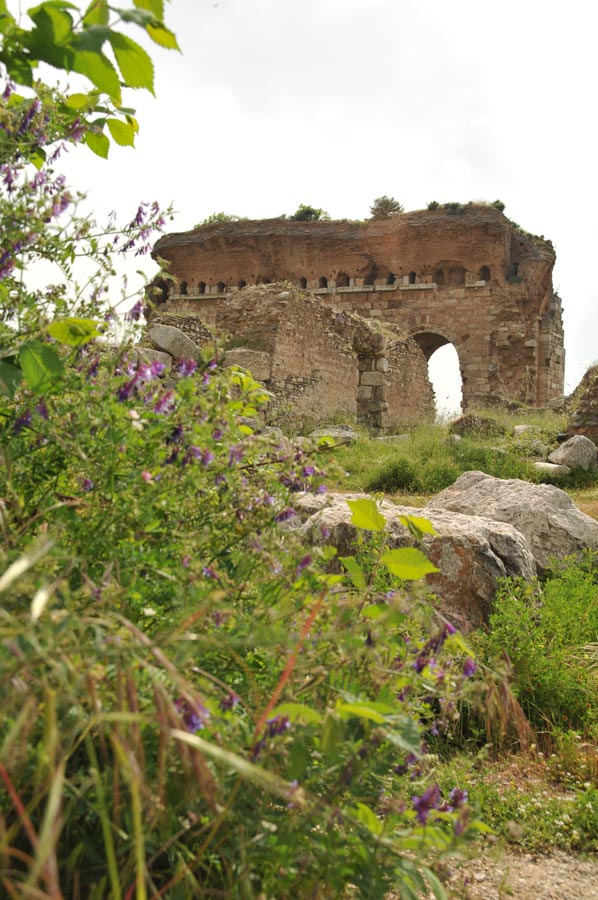
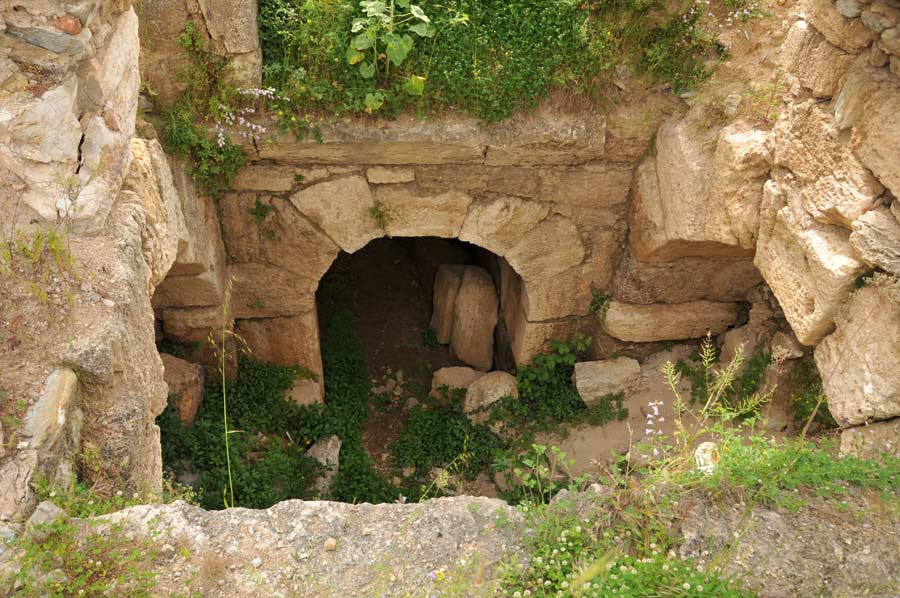
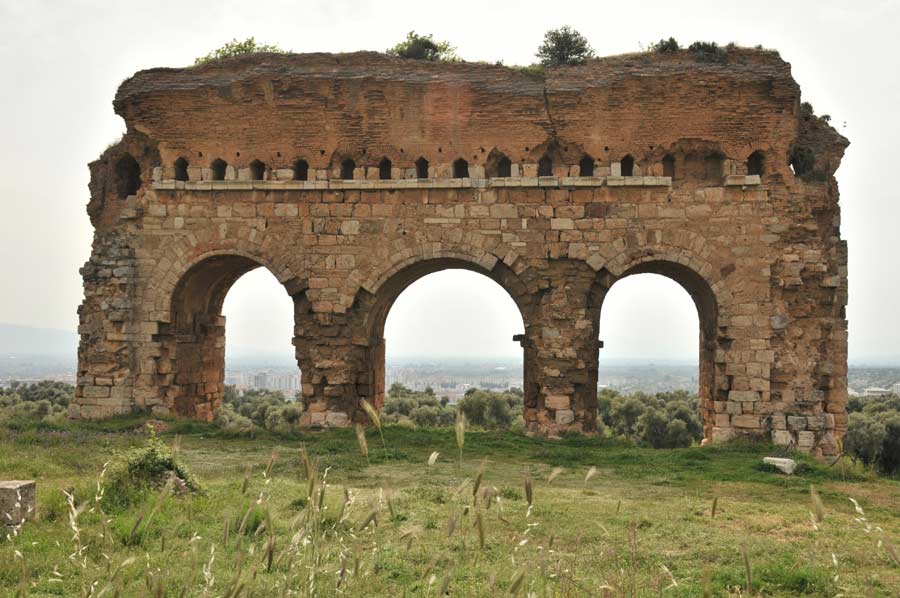
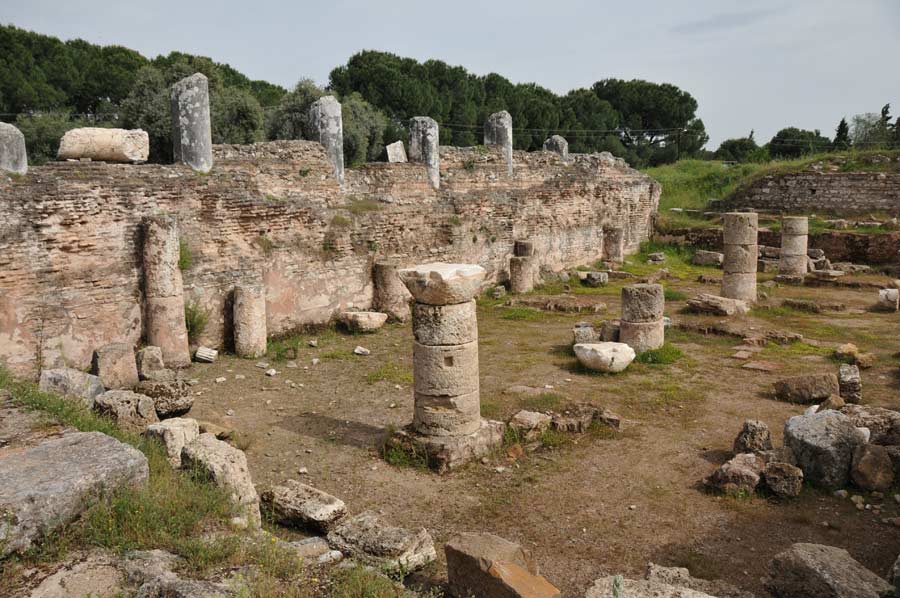
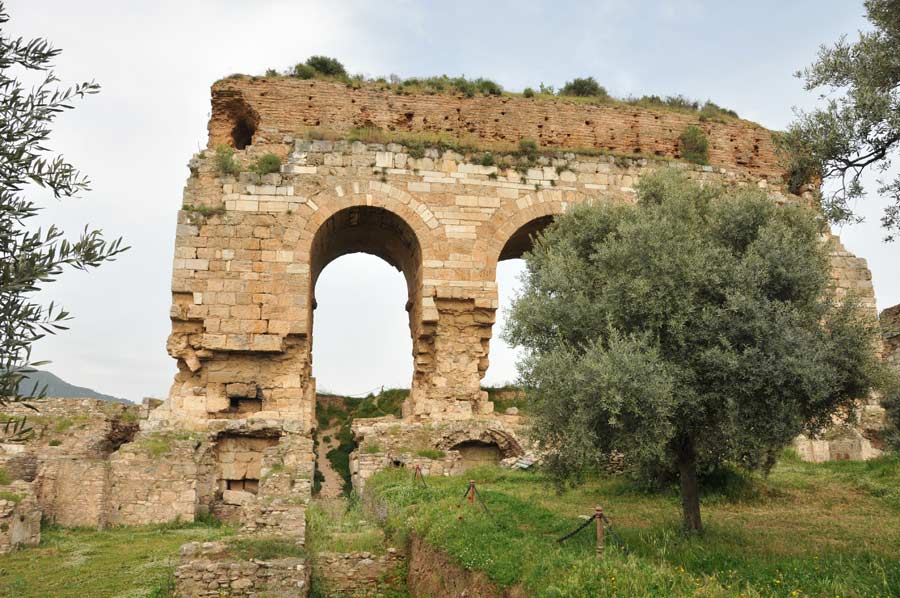
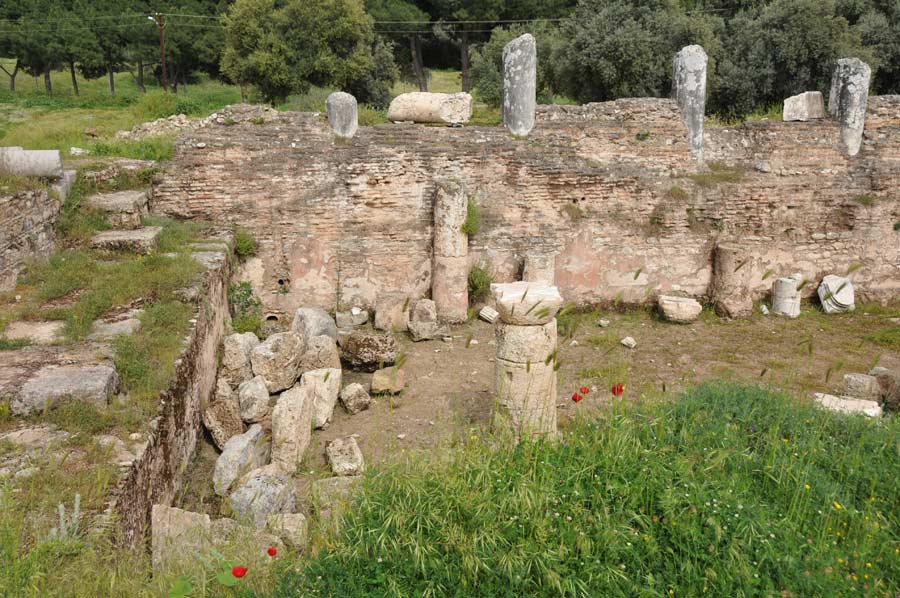
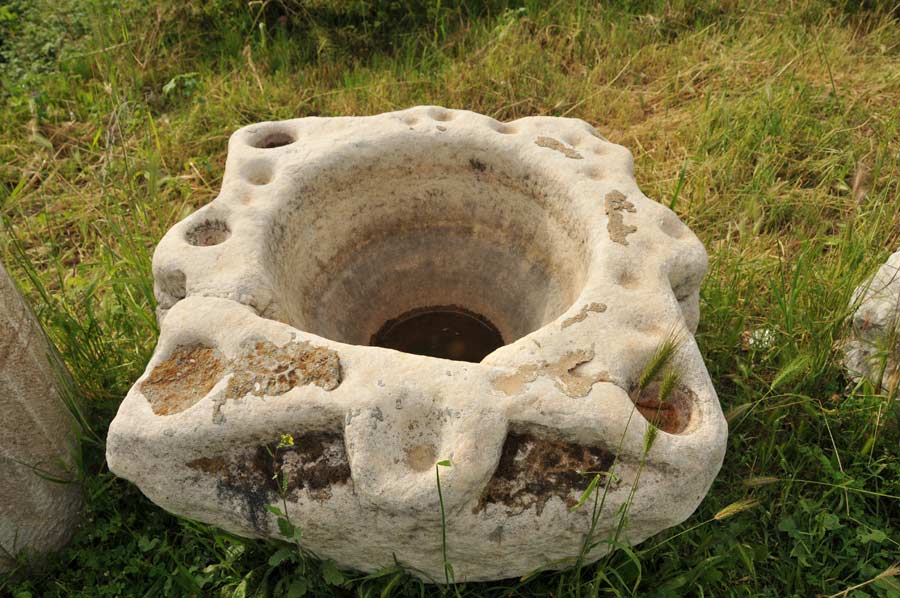
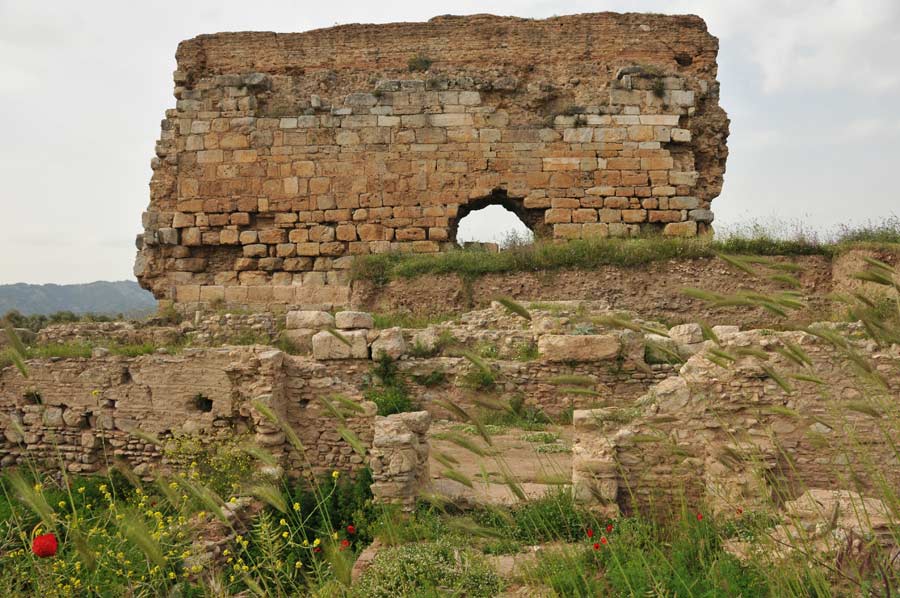
On Topyatağı Hill, above the city of Aydın, are the remains of a Roman gymnasium, an agora, a stadium, a theater, a colonnade, and several temples.
According to Strabo's account, Tralles was founded jointly by Argives and Thracians.
Tralles - after the death of Alexander
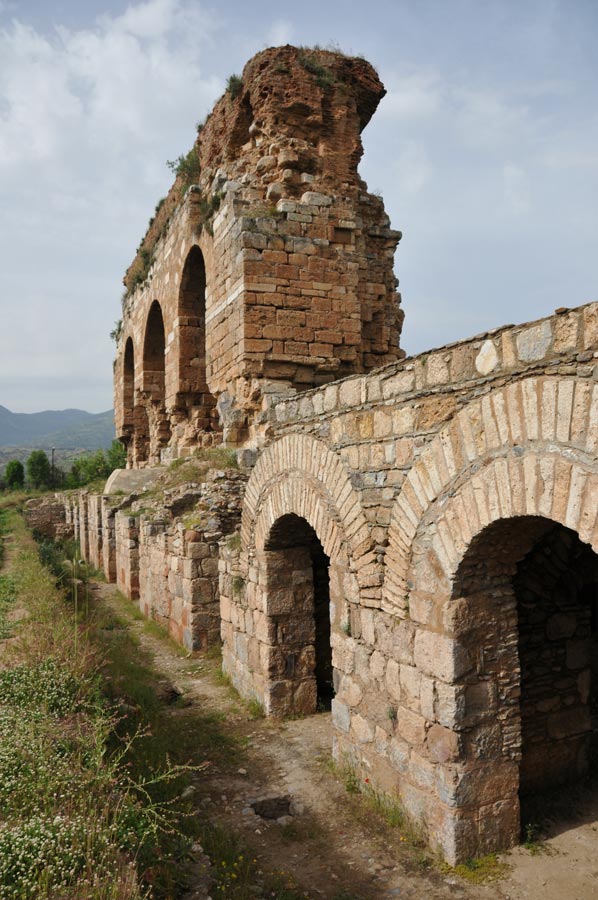 Tralles is first mentioned in historical records in 546 BC in connection with the Persian invasions. In 334 BC, Alexander the Great defeated the Persians and thus also took control of Tralles.
After Alexander's death and the conquest by Antigonus in 313 BC, the Seleucids assumed power in the region and thus also the city itself. Antiochus III granted Tralles various rights, including the status of a polis (city).
Around 188 BC, Tralles was assigned to the Attalid dynasty of Pergamon until 133 BC, when it was taken over by the Romans.
Only now was the city expanded to such an extent that it rose to become a true metropolis.
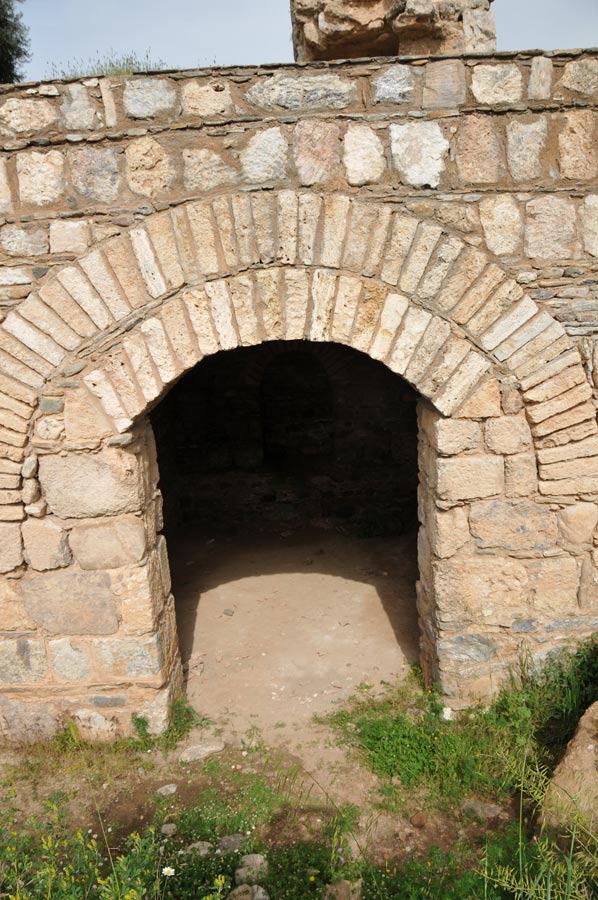
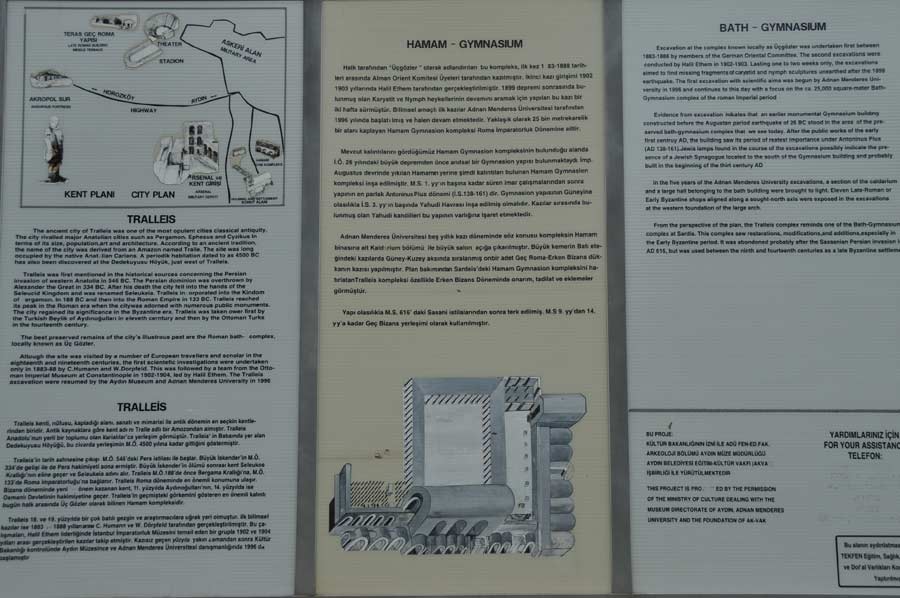
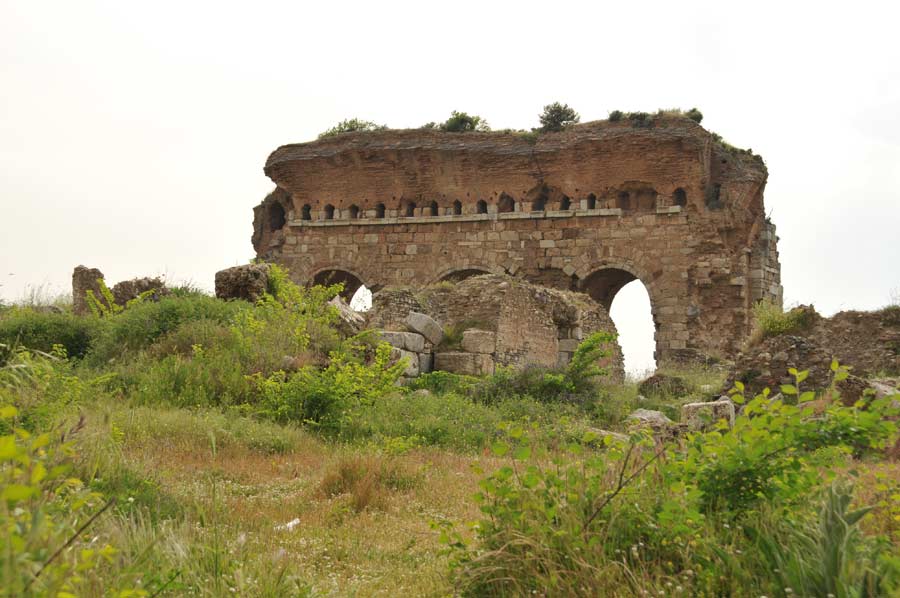
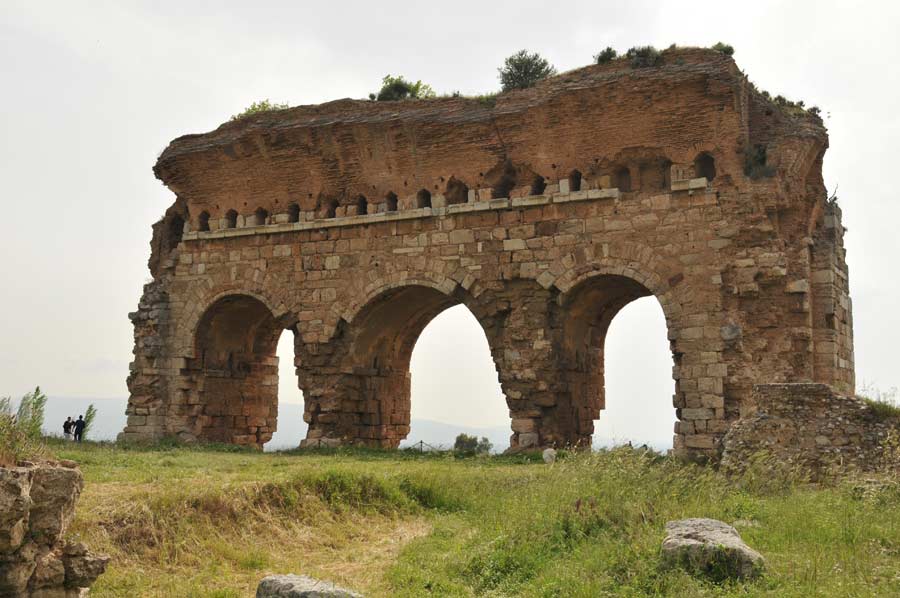
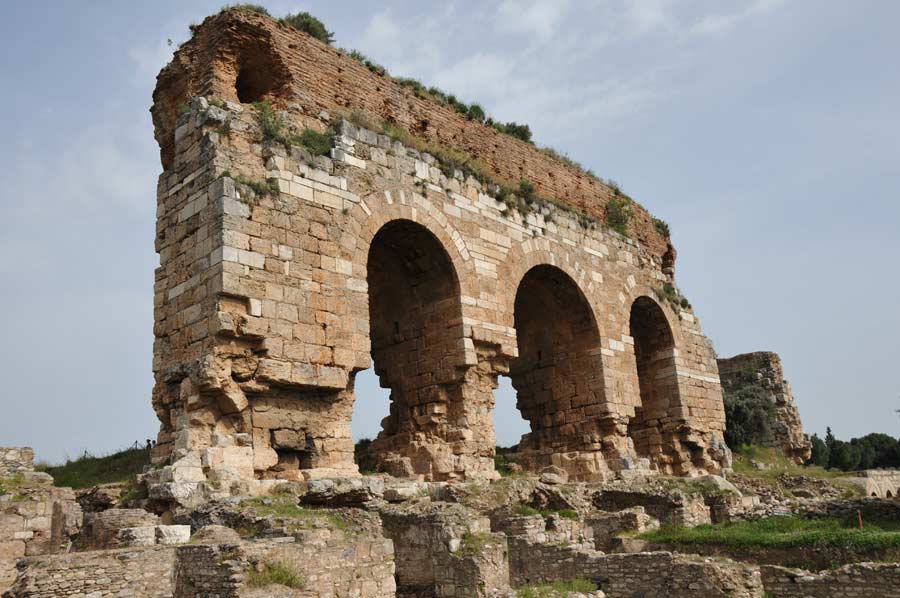
 The thermal baths alone, still clearly recognizable, were of such opulent size that they can be compared to the Imperial Baths in Rome.
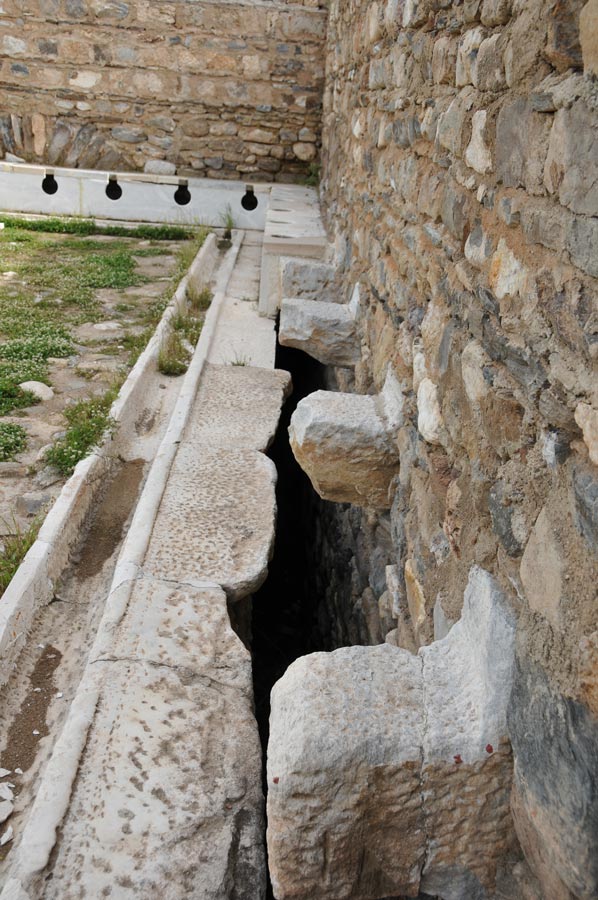
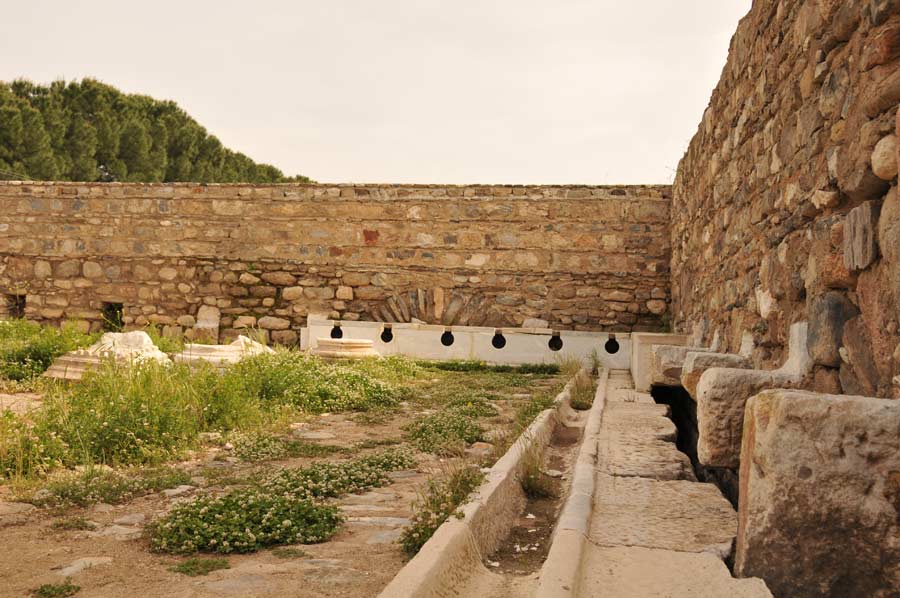
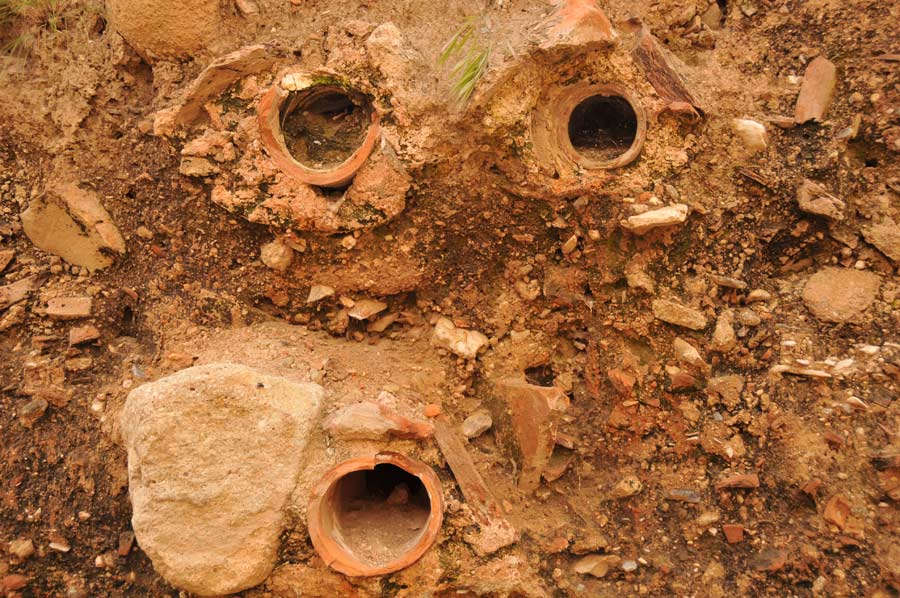
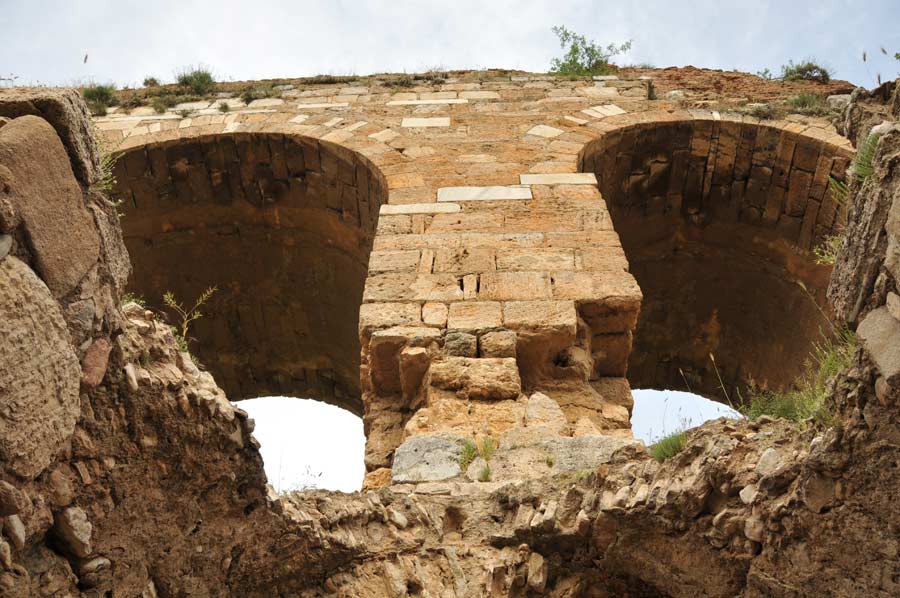
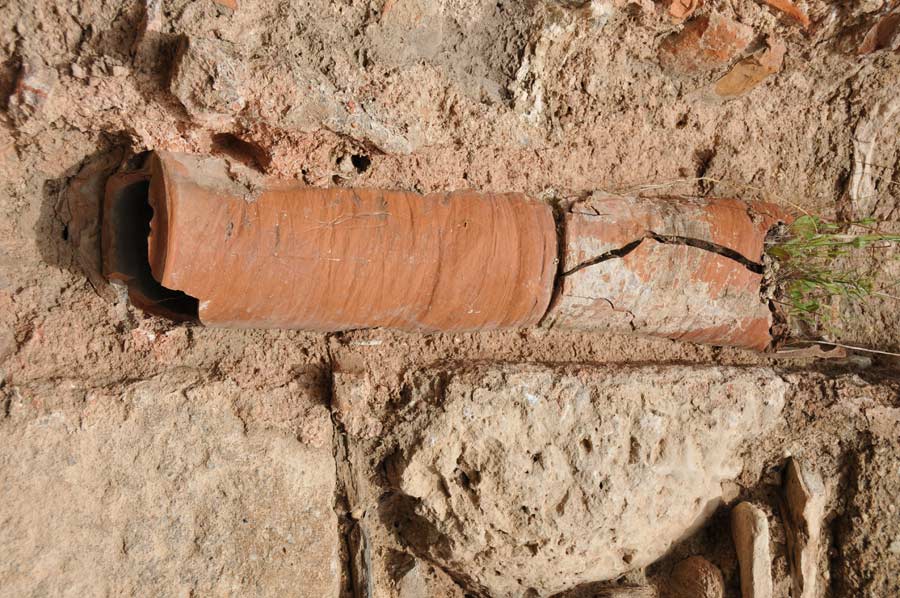
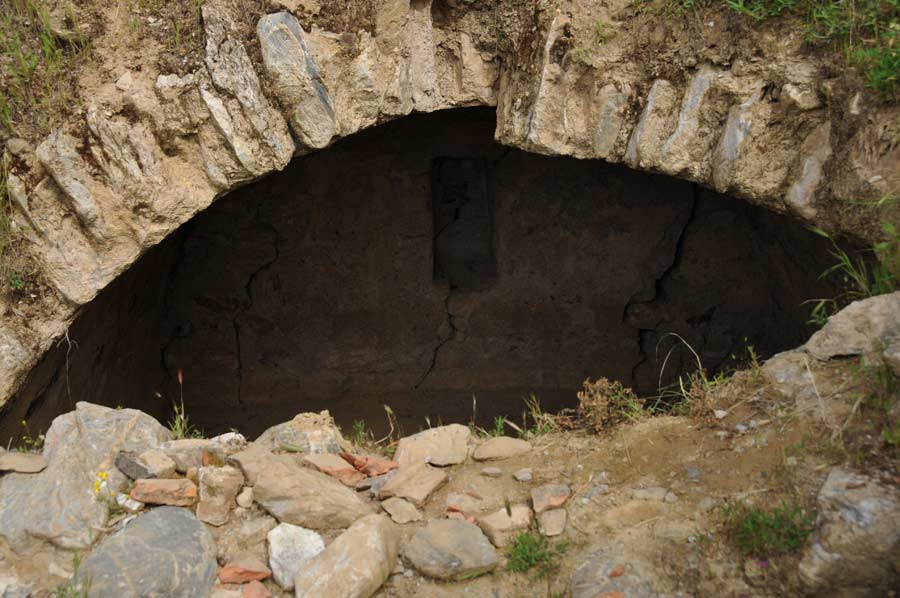
Readers interested in architecture should take a look at the extensive and still clearly visible water supply systems, which are still evident in many places.
An ingenious project, almost a marvel of urban planning, that is unparalleled. The same applies, incidentally, to the hypocaust system for heating the baths, which is still largely visible.
After a devastating earthquake in 26 BC, the city was rebuilt thanks to the active and financial support of Emperor Augustus and, in gratitude, was named Caesarea Tralles.
 During its heyday, Tralles (Tralleis) was also the hometown of several prominent figures. The sculptor Apollonius of Tralleis lived within its walls in the 2nd century BC, the writer Phlegon of Tralleis in the 2nd century AD, the mathematician and architect Anthemius until 534, and the physician Alexandros from 525 to 605.
Although Tralles was a frequent stop for culturally minded visitors, the first scientific excavations were not undertaken until 1883–1888 by the archaeologists Carl Humann and Wilhelm Dörpfeld.
Shortly thereafter, excavations were continued under Halil Ethem of the Ottoman Imperial Museum in Constantinople until around 1902. Further excavations were carried out in 1996 by the Aydin Museum in cooperation with Adnan Menderes University.
Please also read:
Miletos at the Bay of Milet next to Menderes river
Hellenistic Magnesia on the Meander
-
 Tralles - ancient town next to Aydin
Tralles - ancient town next to Aydin
Tralles - ancient town next to Aydin
-
Tralles - ancient town next to Aydin
Tralles - ancient town next to Aydin
-
Tralles - ancient town next to Aydin
Tralles - ancient town next to Aydin
-
Tralles - ancient town next to Aydin
Tralles - ancient town next to Aydin
-
Tralles - ancient town next to Aydin
Tralles - ancient town next to Aydin
-
Tralles - ancient town next to Aydin
Tralles - ancient town next to Aydin
-
Tralles - ancient town next to Aydin
Tralles - ancient town next to Aydin
-
Tralles - ancient town next to Aydin
Tralles - ancient town next to Aydin
-
Tralles - ancient town next to Aydin
Tralles - ancient town next to Aydin
-
Tralles - ancient town next to Aydin
Tralles - ancient town next to Aydin
-
Tralles - ancient town next to Aydin
Tralles - ancient town next to Aydin
-
Tralles - ancient town next to Aydin
Tralles - ancient town next to Aydin
-
Tralles - ancient town next to Aydin
Tralles - ancient town next to Aydin
-
Tralles - ancient town next to Aydin
Tralles - ancient town next to Aydin
-
Tralles - ancient town next to Aydin
Tralles - ancient town next to Aydin
-
Tralles - ancient town next to Aydin
Tralles - ancient town next to Aydin
-
Tralles - ancient town next to Aydin
Tralles - ancient town next to Aydin
-
Tralles - ancient town next to Aydin
Tralles - ancient town next to Aydin
-
Tralles - ancient town next to Aydin
Tralles - ancient town next to Aydin
-
Tralles - ancient town next to Aydin
Tralles - ancient town next to Aydin
-
Tralles - ancient town next to Aydin
Tralles - ancient town next to Aydin
https://www.alaturka.info/en/turkey-country/aegean/7096-tralles-tralleis-aydin#sigProIdf15c6e0fd8