


Meke Gölü - From Karaman to Ereğli and the Lake
- Written by Portal Editor
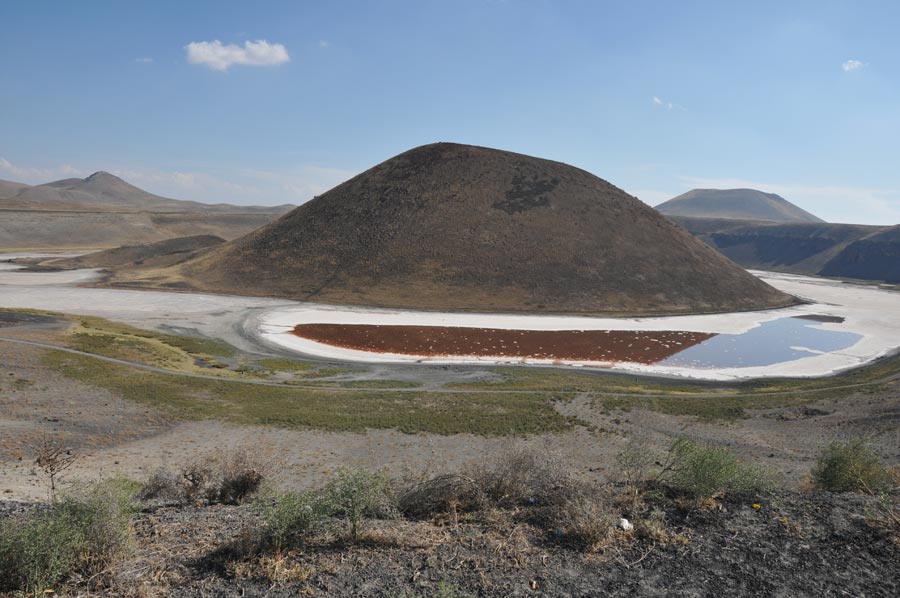
Meke Gölü - The weather is still such that we can drive across the Taurus Mountains towards Konya without the danger of snow and ice. So, we decide on a somewhat longer day trip via Karaman to Ereğli, then on to Lake Meke and back to Konya.
Ereğli is a relatively unknown city of about 90,000 inhabitants on Highway 350, situated at the foot of the Taurus Mountains at an altitude of approximately 1,020 meters, in front of the impressive peaks of Aydos Dağı (3,480 meters) and Mededsiz Tepe (3,524 meters), at the entrance to the Cilician Gates.
 Researchers now suspect that the Hittite city of Hupisna was once located here, but traces are scarce. During the period of Greek-Hellenistic settlement policy, Ereğli, then known as Herakleia Cybistra, played a vital role as a trading and military center, as it provided access to the Mediterranean Sea via the Cilician Gate.
Initially passable only as a caravan route by mule or camel, it was the Romans who gradually widened the gate, allowing carts to travel from the Mediterranean to Central Anatolia for the first time. Naturally, the route was also used militarily on several occasions, particularly in 805 and 832 by Arab invaders who plundered their way through Asia Minor from here. After a brief period as part of Cappadocia, and then the Kingdom of Cilicia, Ereğli was conquered by the Seljuks in the 11th century. An agreement with Byzantium allowed the Crusader army of the First Crusade to use the Cilician Gates in August 1097 to cross towards Antioch, leading to skirmishes near Heraclea with the Danishmendids and the Emir of Cappadocia. Mongol rulers held sway in the 13th century until the region's annexation by the Ottoman Empire in 1466.
 Besides the magnificent mountain panorama, it is primarily the Hittite rock relief located near Ivriz, about 17 kilometers southeast of Ereğli, that attracts many travelers to the region. The monumental Hittite relief is situated on a steep rock face in the headwaters of the Ivriz Suyu, which has since been transformed into a pond and reservoir. Dating from the second half of the eighth century BC, the Ivriz relief is among the best-preserved rock reliefs from the period of the Late Hittite-Aramaic principalities. Measuring 4.2 x 2.4 meters, it depicts King Warpalawas of Tuwanuwa before the god Tarhunzas. Tarhunzas, the benevolent god of vegetation, was always easily recognizable by the ears of grain and grapes. As the giver of the region's lush vegetation, the relief here heralds the harvest time, as Tarhunzas holds vines and stalks in his hands and carries a sickle.
 This Hittite relief is very likely also a spring sanctuary, since fertile soil alone could not provide sustenance. Water was always of particular importance, which is why the Hittites frequently built sacred structures at springs. We admired the detailed rendering of the figures, which, even after more than 2,800 years, still clearly revealed many fine details.
We drove back to Ereğli to reach the crater lakes of Meke Gölü and Aci Gölü via Highway 330 towards Karapinar and Konya. After about 30 kilometers, we first reached Aci Gölü, an elliptical crater lake belonging to the Karacadağ volcanic massif, a volcanic area in Central Anatolia measuring 30 kilometers long and 15 kilometers wide. A short while later, we arrived at another wonder of the world: the Meke volcanic crater.
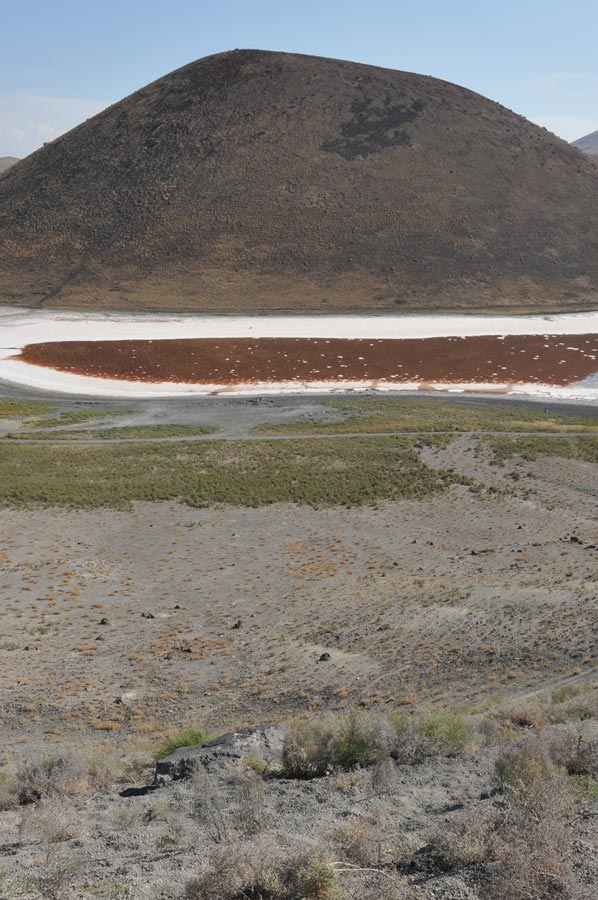
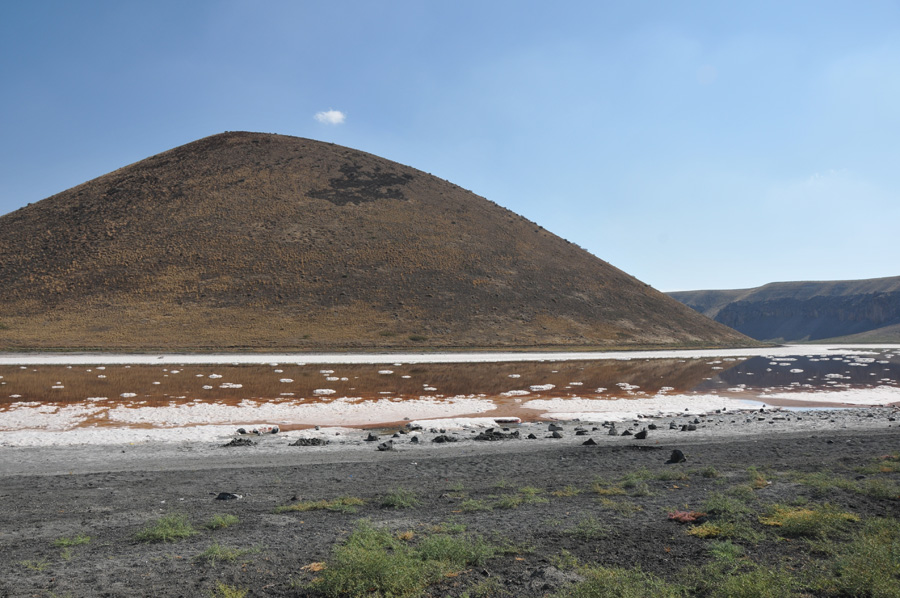
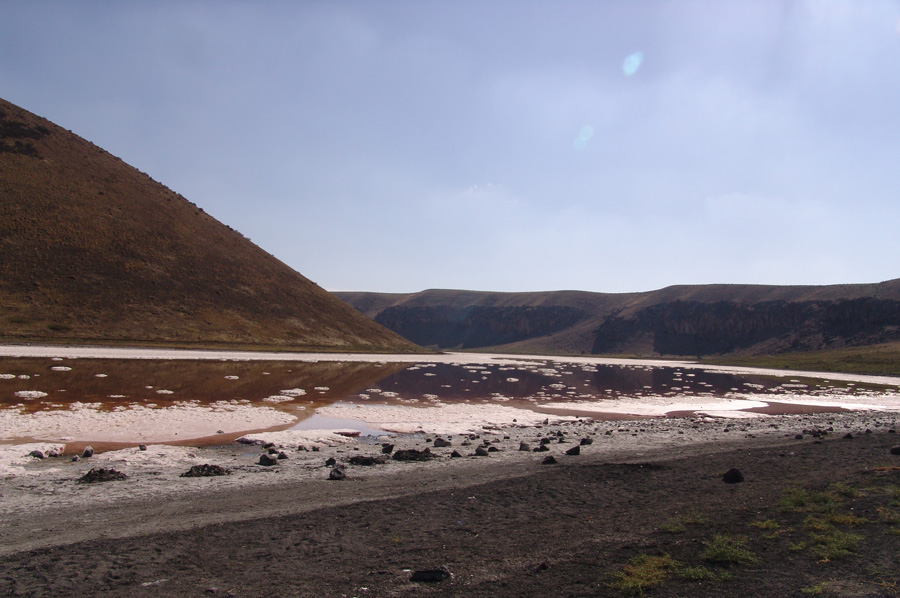
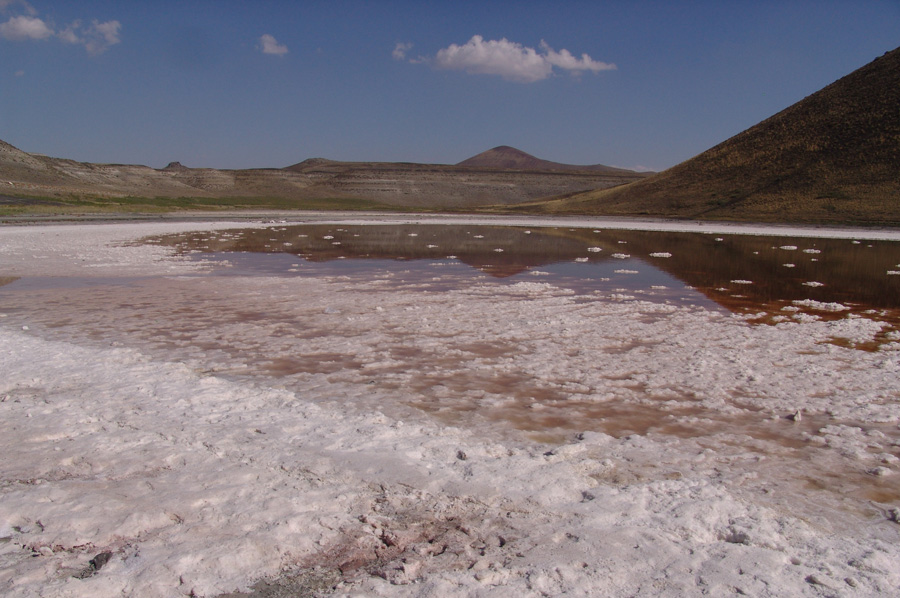
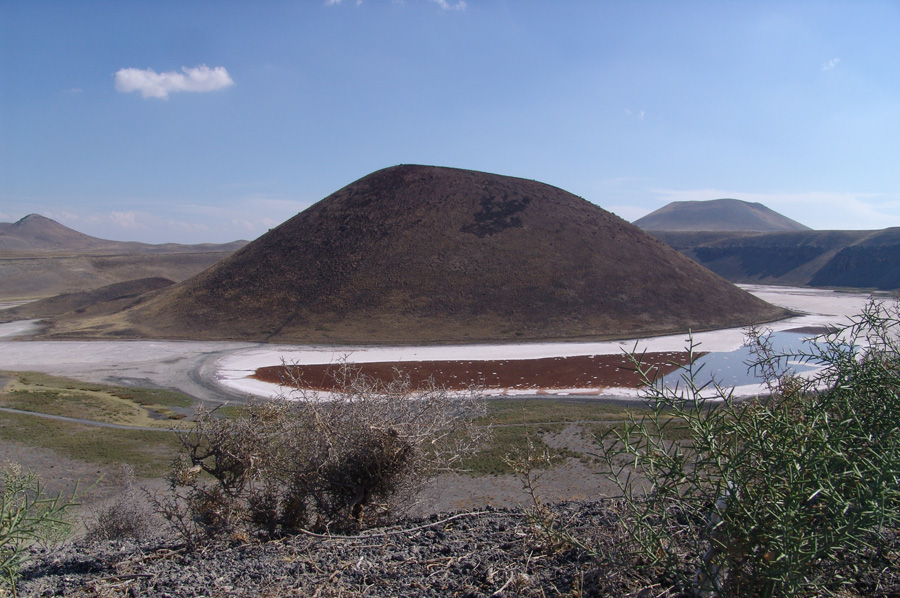
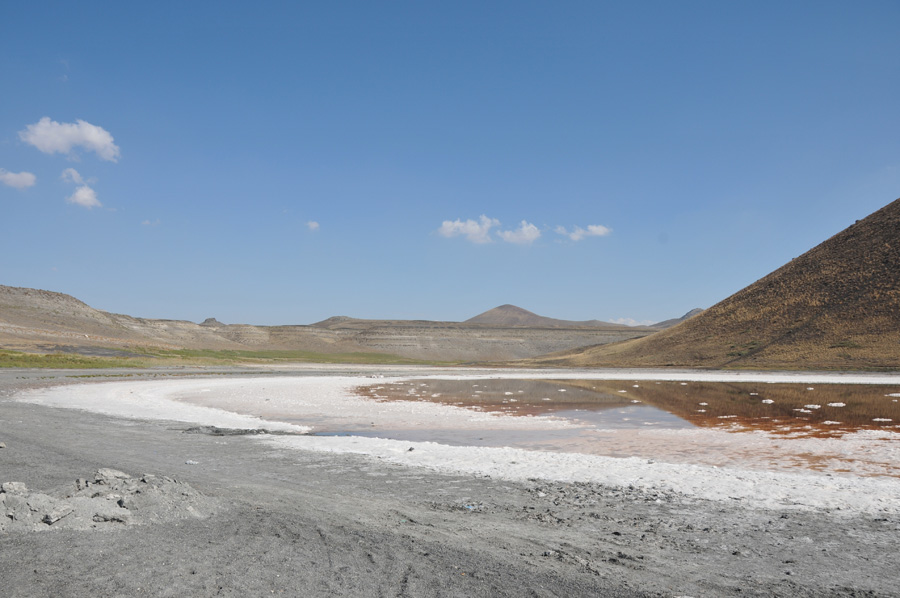
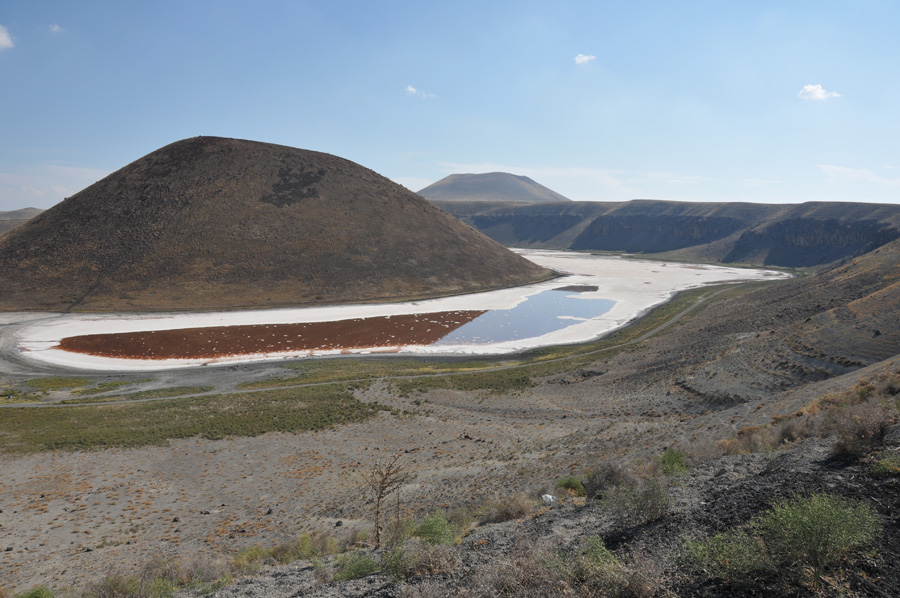
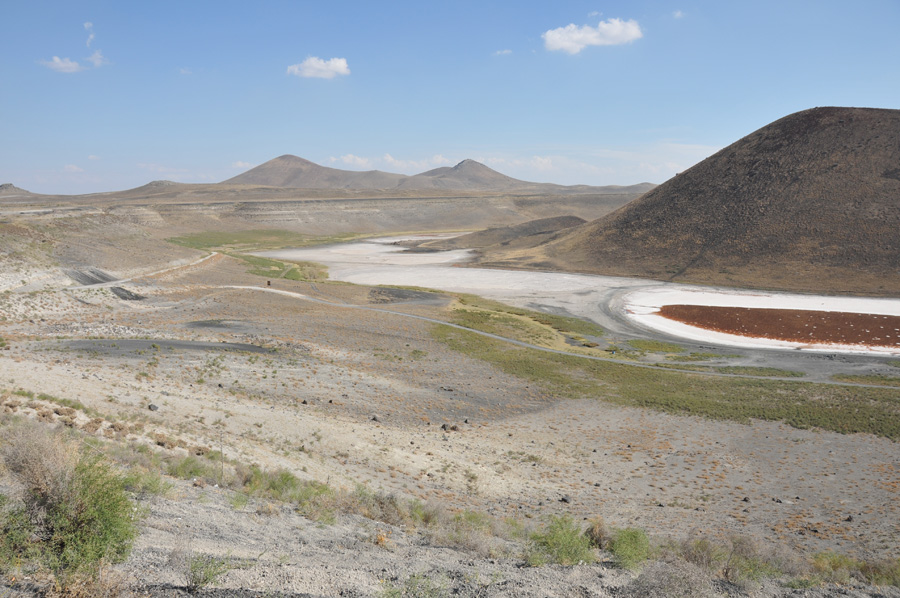
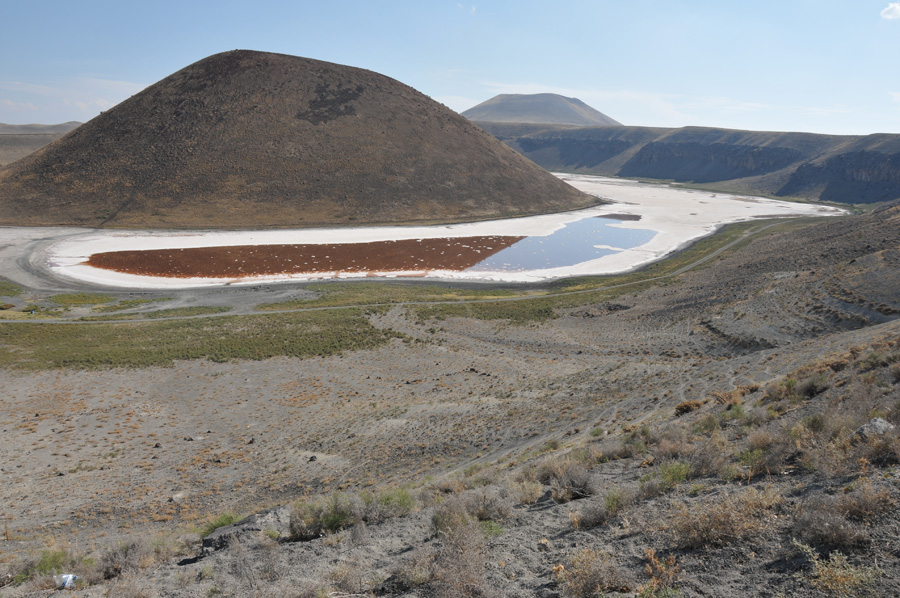
The view that unfolded before us as we left the main road and drove along a narrow track to the crater lake of Meke Gölü was probably unique in the world. During the eruption of the volcano here, a huge crater approximately 1,500 meters in diameter had formed. Over the years, this created a vast crater lake.
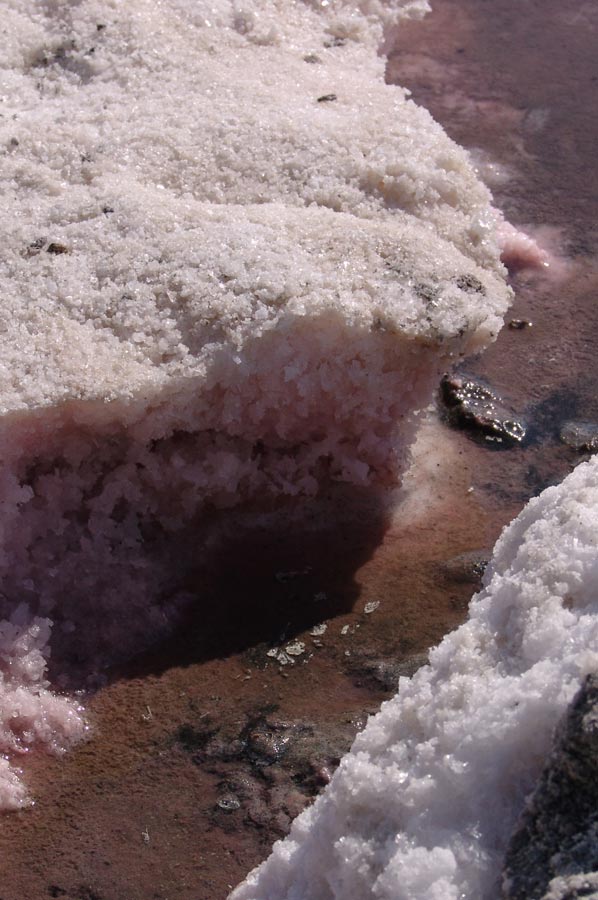
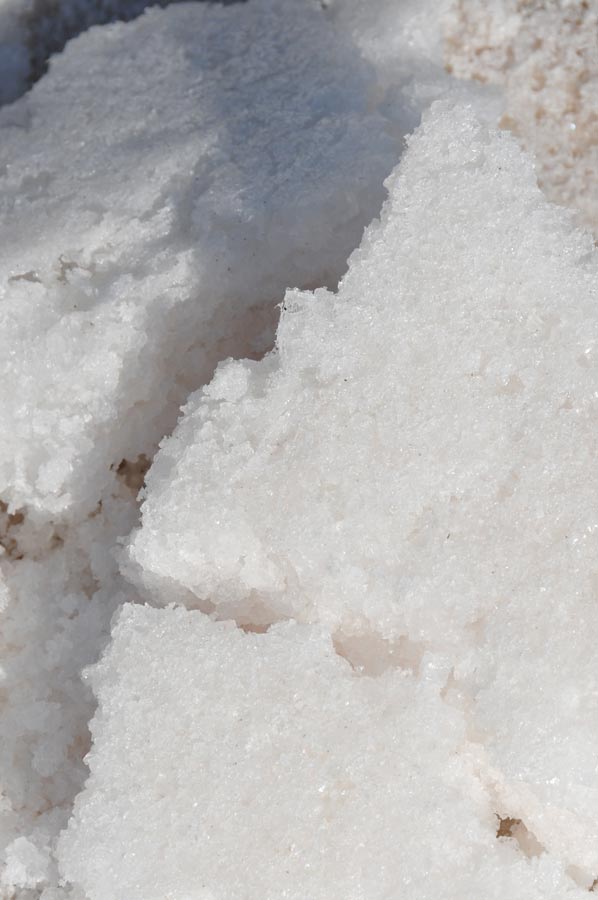
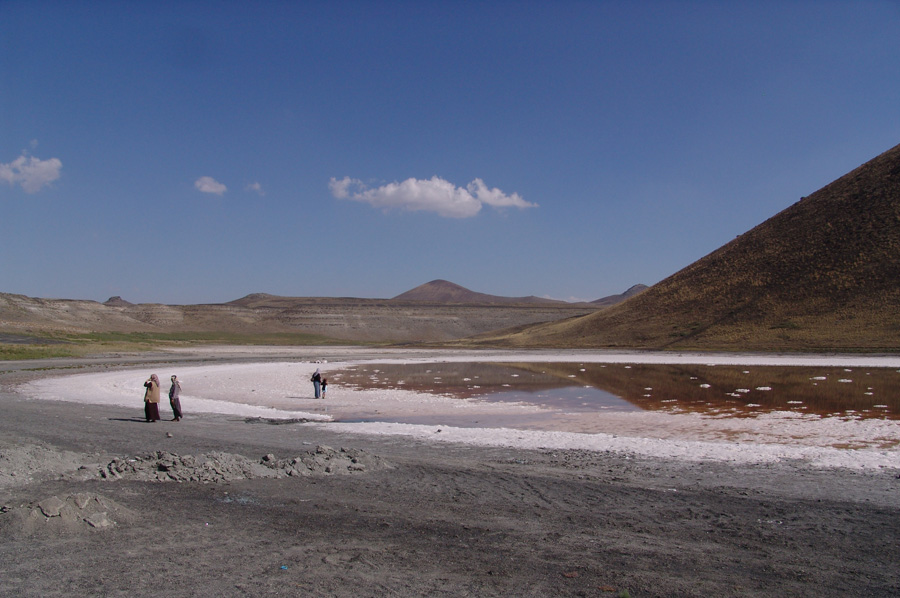
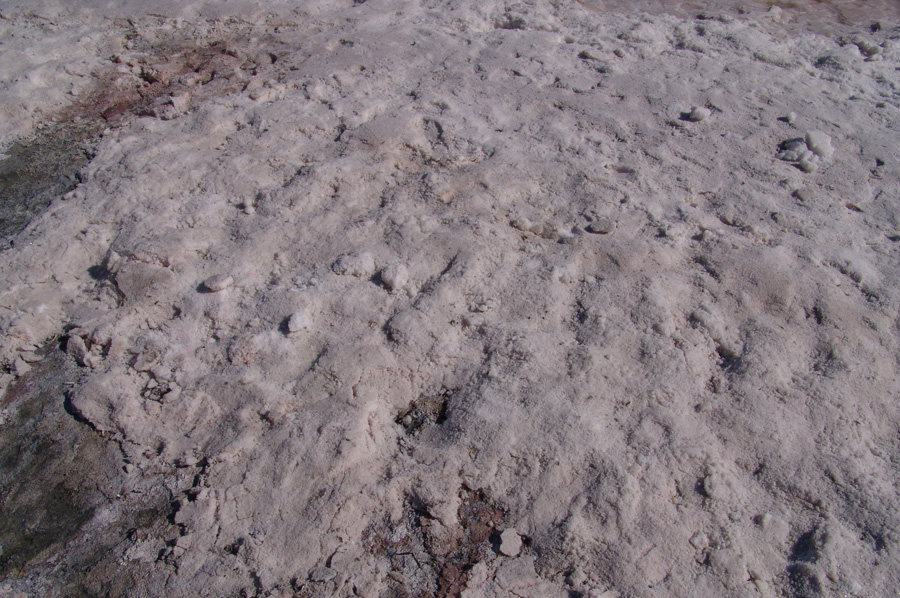
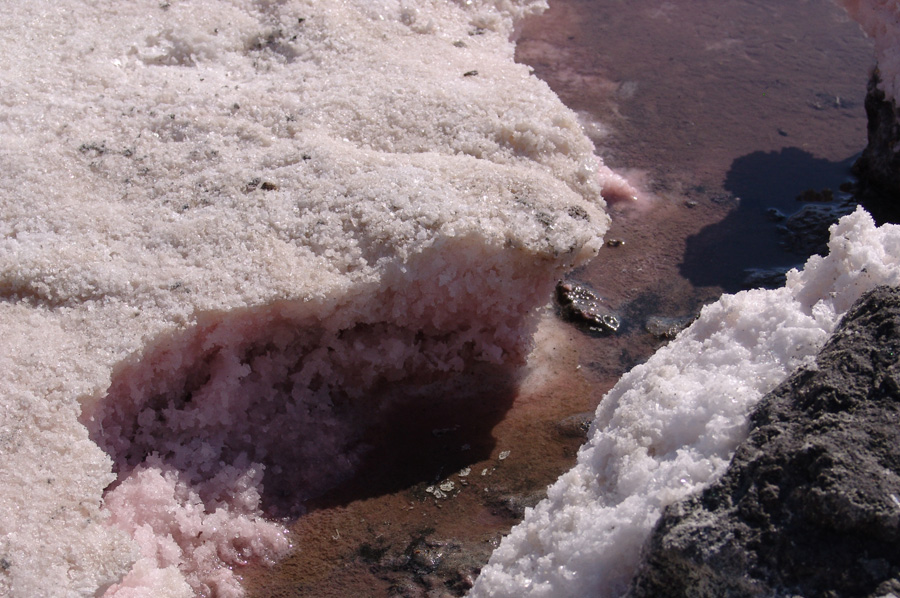
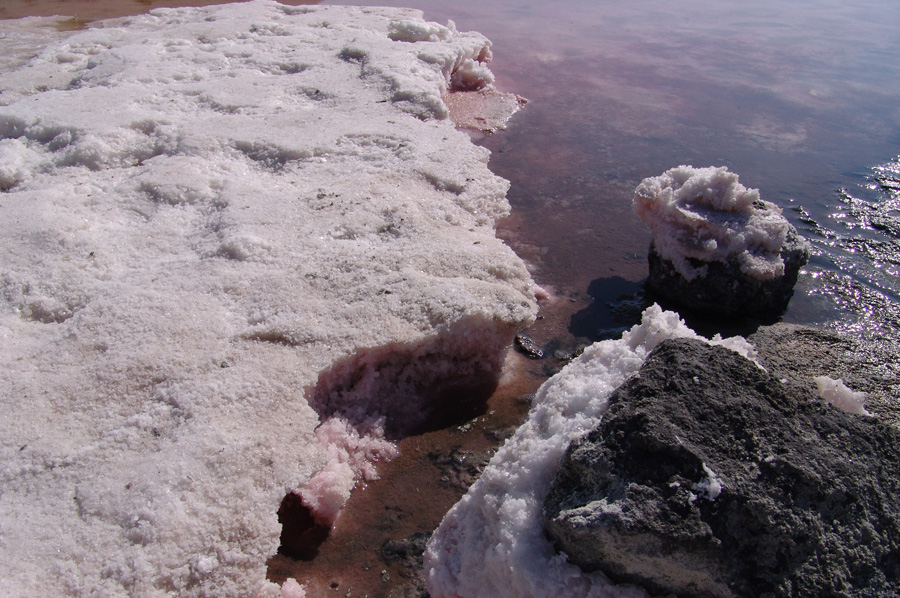
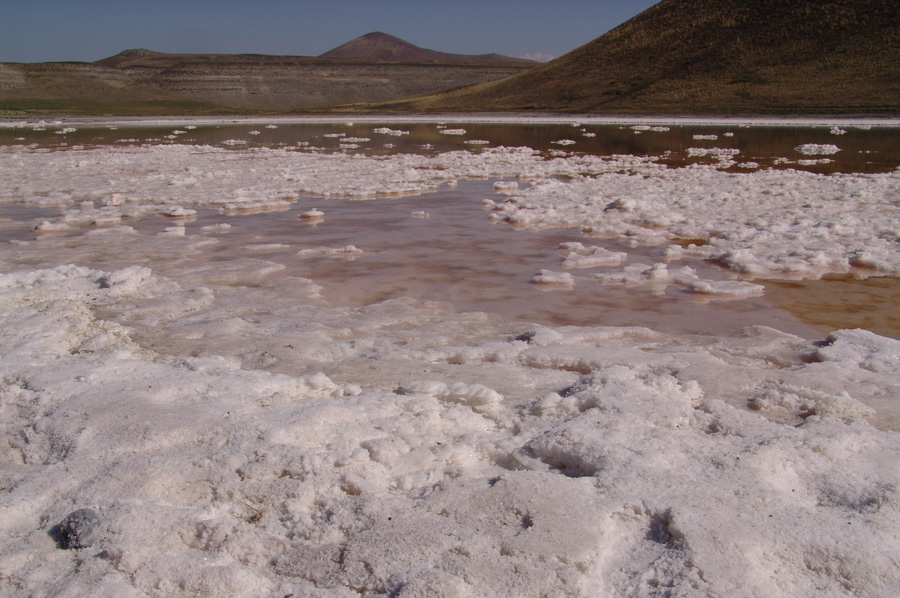
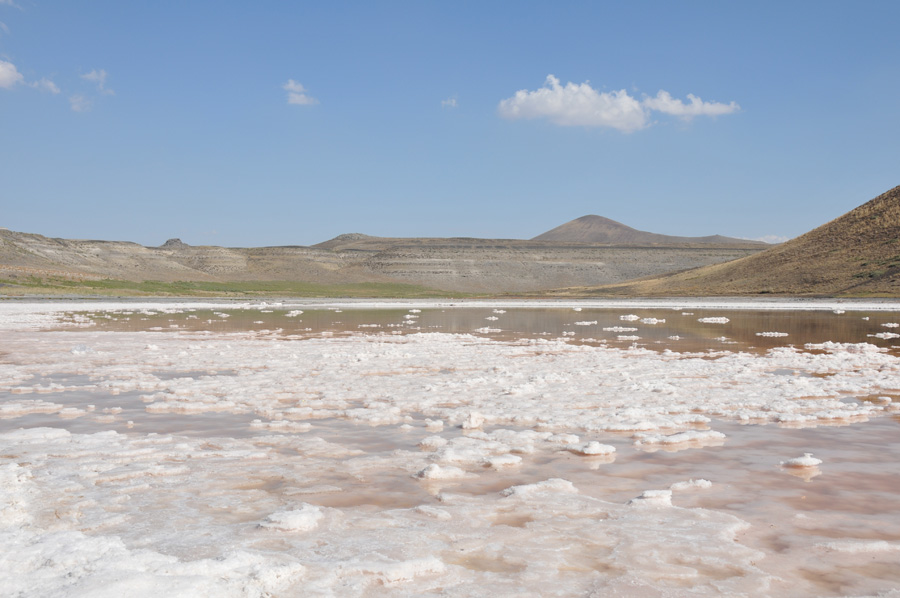
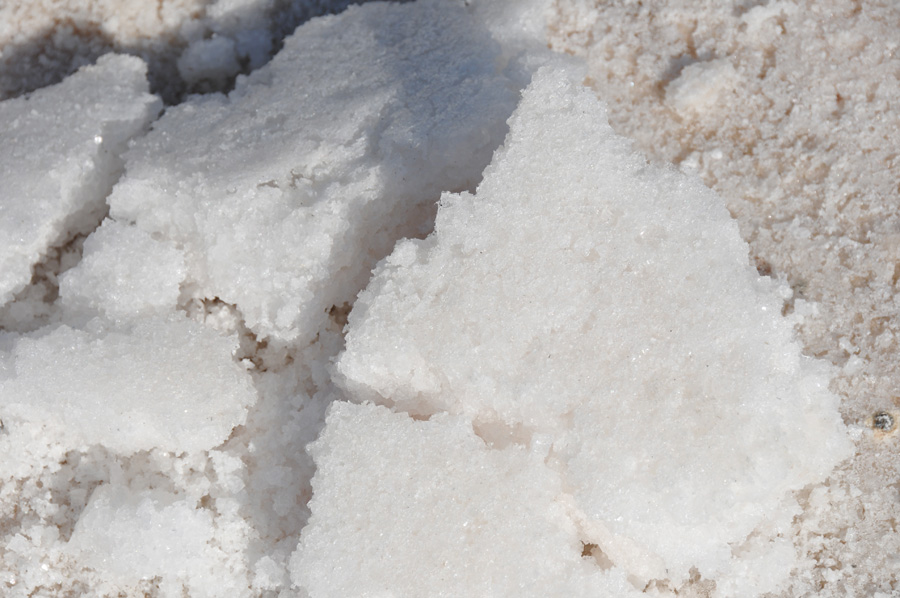
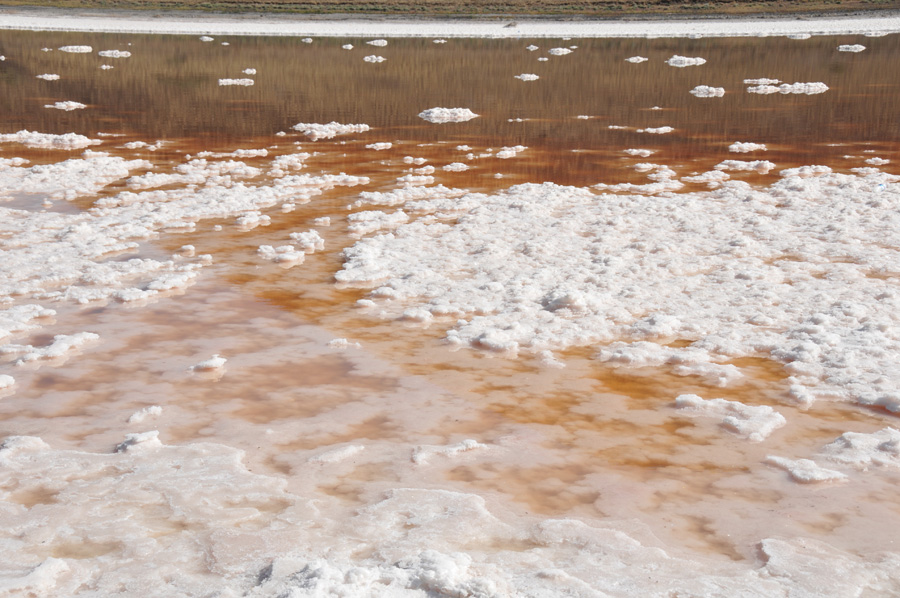
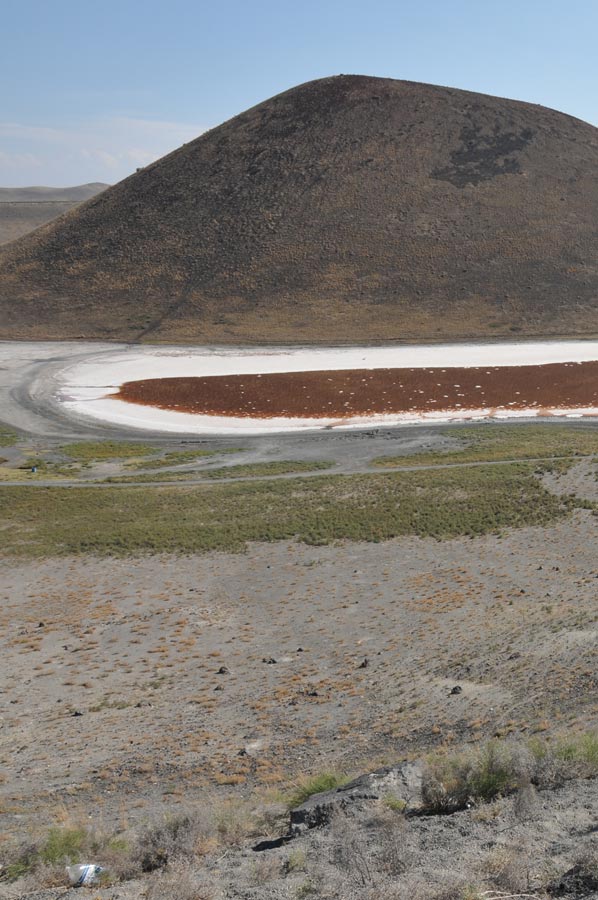 A second volcanic eruption then created a new volcanic cone in the center of the lake, its height rising far above the rim of the crater lake and visible from afar. A volcanic cone of basaltic lava and rhyolite volcanic rock sits atop a crater lake, its waters shimmering green in the sun. A unique natural wonder that compels us to descend to the lake's edge. Intriguingly shaped salt crystal deposits crunch underfoot as we approach the lake's shore. Grayish-black volcanic ash contrasts sharply with the almost brilliantly white, shimmering salt crystals composed of sodium, potassium, magnesium, and chlorine.
We lingered by the lake for a while and then met a group of young Turkish visitors who also wanted to see this extraordinary place and had even prepared a small picnic, to which we were warmly invited. It wasn't until late afternoon that we finally headed home via Konya.
Trip to Burdur, Beysehir, Eflatun Pinari and Kovada National Park
Cendere Köprüsü - the bridge over the Chabinas River
-
 Meke Gölü next to Eregli - Karaman
Meke Gölü next to Eregli - Karaman
Meke Gölü next to Eregli - Karaman
-
Meke Gölü next to Eregli - Karaman
Meke Gölü next to Eregli - Karaman
-
Meke Gölü next to Eregli - Karaman
Meke Gölü next to Eregli - Karaman
-
Meke Gölü next to Eregli - Karaman
Meke Gölü next to Eregli - Karaman
-
Meke Gölü next to Eregli - Karaman
Meke Gölü next to Eregli - Karaman
-
Meke Gölü next to Eregli - Karaman
Meke Gölü next to Eregli - Karaman
-
Meke Gölü next to Eregli - Karaman
Meke Gölü next to Eregli - Karaman
-
Meke Gölü next to Eregli - Karaman
Meke Gölü next to Eregli - Karaman
-
Meke Gölü next to Eregli - Karaman
Meke Gölü next to Eregli - Karaman
-
Meke Gölü next to Eregli - Karaman
Meke Gölü next to Eregli - Karaman
-
Meke Gölü next to Eregli - Karaman
Meke Gölü next to Eregli - Karaman
-
Meke Gölü next to Eregli - Karaman
Meke Gölü next to Eregli - Karaman
-
Meke Gölü next to Eregli - Karaman
Meke Gölü next to Eregli - Karaman
-
Meke Gölü next to Eregli - Karaman
Meke Gölü next to Eregli - Karaman
-
Meke Gölü next to Eregli - Karaman
Meke Gölü next to Eregli - Karaman
-
Meke Gölü next to Eregli - Karaman
Meke Gölü next to Eregli - Karaman
-
Meke Gölü next to Eregli - Karaman
Meke Gölü next to Eregli - Karaman
-
Meke Gölü next to Eregli - Karaman
Meke Gölü next to Eregli - Karaman
https://www.alaturka.info/en/turkey-country/centralanatolia/7094-meke-goelue-from-karaman#sigProId66557d3eac