Struga – a town increasingly shaped by tourism
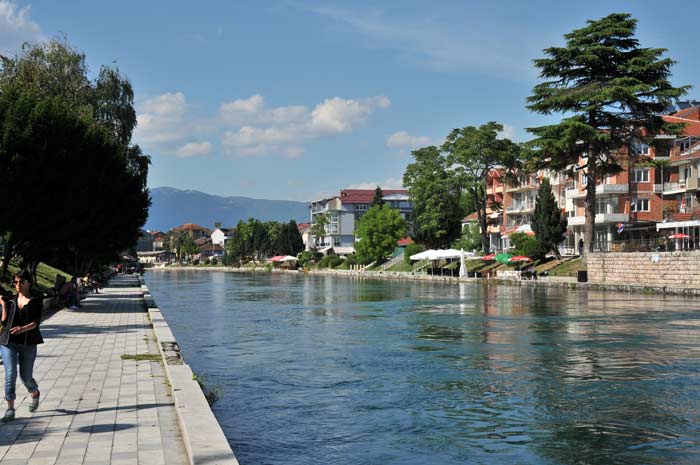
Struga – After making ourselves "at home" at the Rino Campsite for a few days and exploring the surrounding area by bike, we set off today to cycle into the centre of Struga.
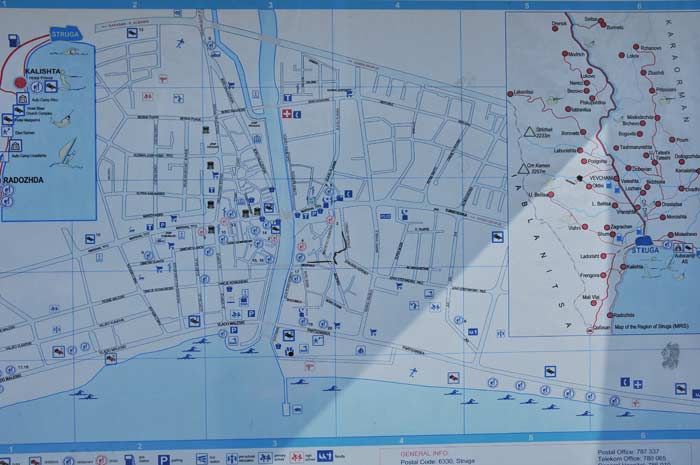
We once again used the cycle path right along the shore of Lake Ohrid and parked our bikes near the weir between the lake and the Black Drin River, continuing into the town centre on foot.
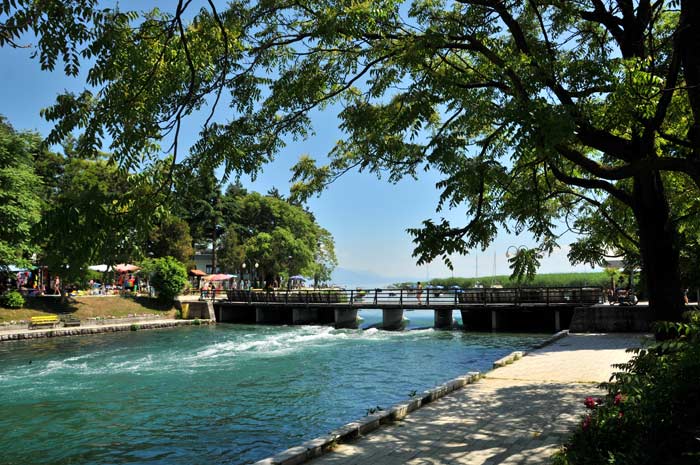
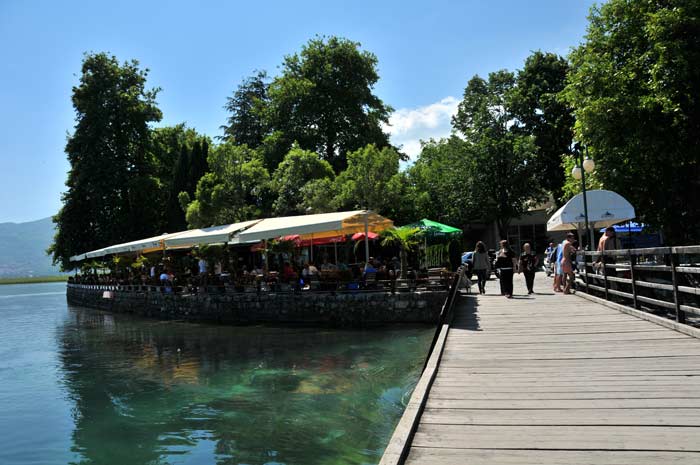
First, we crossed the wooden bridge structure towards the public swimming beach located in the town centre. We passed one of the popular beach cafés situated right by the Drin Bridge.
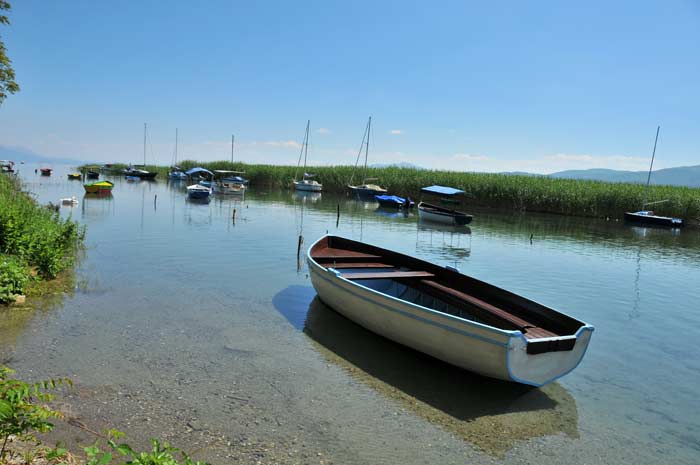
A view of the small, natural harbour at the point where Lake Ohrid flows into the Black Drin. Nowhere else had we seen such a large number of fish right near the shore.
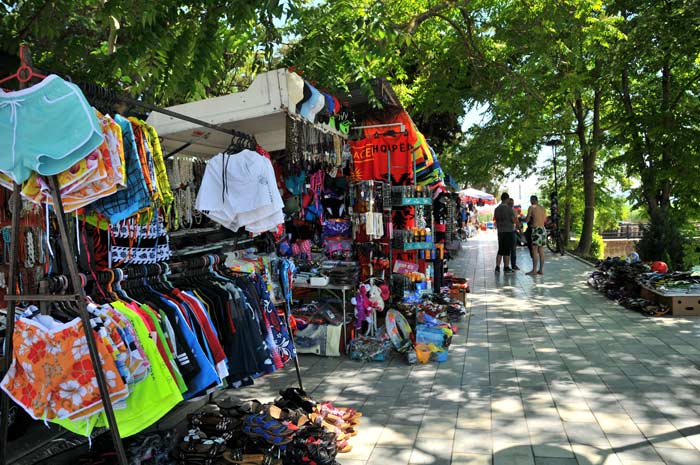
Several stalls offer essential swimming gear at low prices, allowing even those who decide on the spur of the moment to enjoy a swim in the lake's clean water.
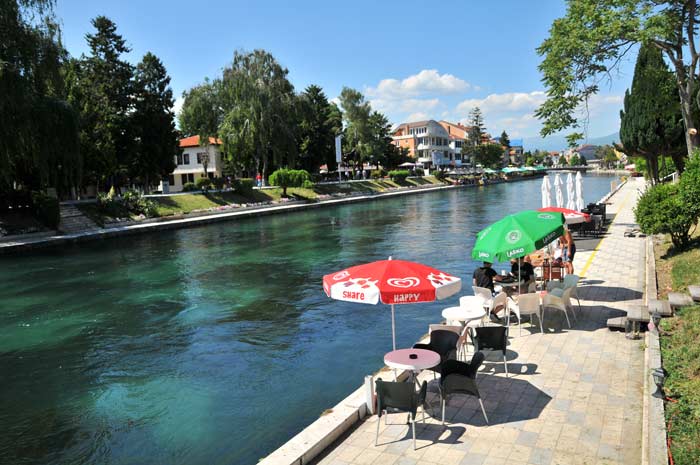
The entire waterfront area is lined with terraced paths on two levels; the upper path on the right side was just being fitted with new stone paving.
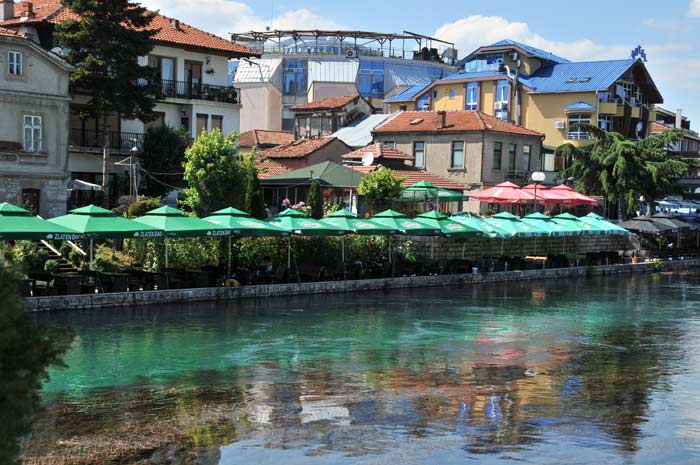
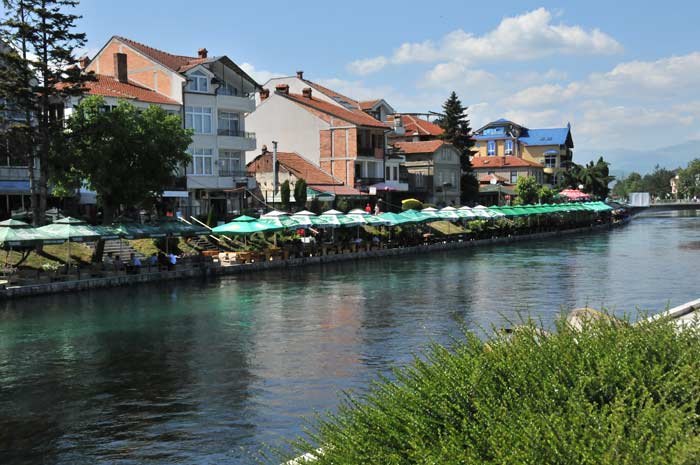
On the left bank of the Black Drin, the shore is lined with a wide variety of cafés and restaurants surprisingly bustling places, even at this early hour.
For now, Struga is visited predominantly by holidaymakers from the Balkans, mainly from the former Yugoslavia. Among visitors from Western Europe, we mostly encountered Dutch tourists who have discovered the lake as a holiday destination.
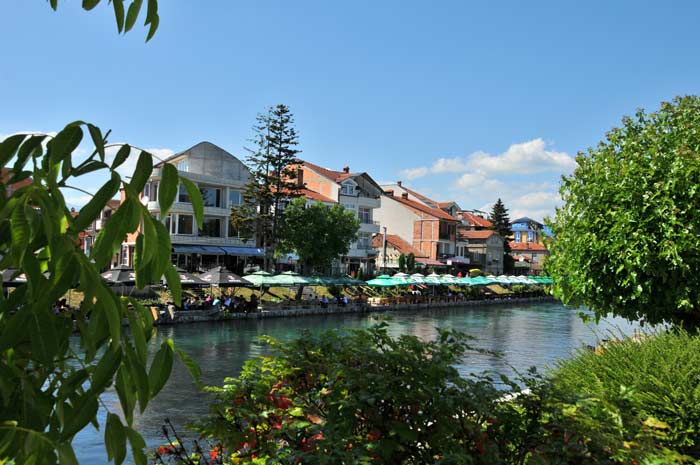
Tourism is also stimulating the local economy a trend clearly visible in the development of infrastructure and the construction of new buildings. Struga has long been the economic hub of the region north of Lake Ohrid. Interactions among Albanians, Macedonians, Turks, Serbs, Bosniaks, Aromanians, and Roma have fostered a diverse culture.
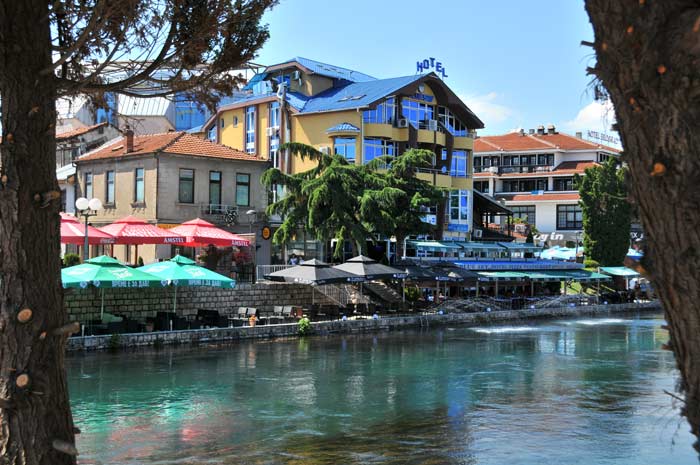
Traditional craftsmanship represents one of the city's key cultural legacies. Goldsmithing, jewellery making, knitting, pottery, and woodcarving are all part of Struga’s heritage. Thanks to the growth of tourism, many house facades have been renovated, plastered, and painted, creating a harmonious, organic-looking waterfront. It is also excellent that the trees along the shore have been preserved and or so it appears are well maintained.
Although Struga is often overshadowed by its sister city, Ohrid, in terms of the volume and calibre of cultural events, the small town offers a relatively popular and, above all, traditional range of activities. Things really come alive in spring and summer, when tourism peaks and visitors particularly from Albanian regions flock to Struga for their holidays.
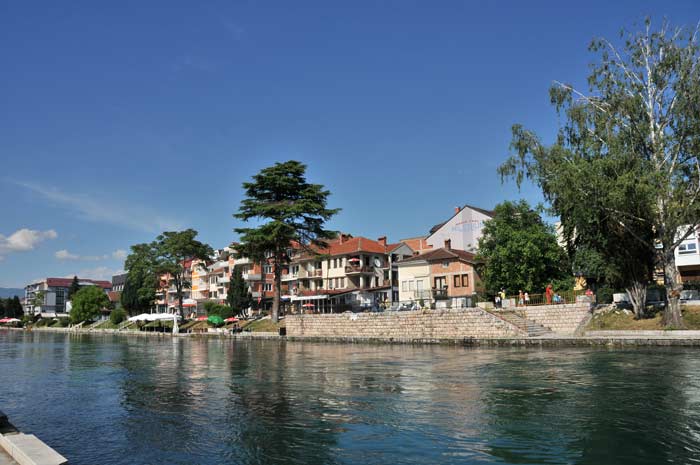
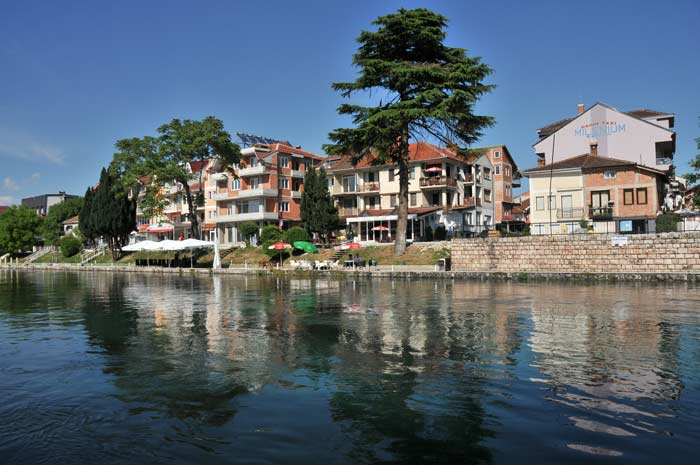
Along the banks of the Black Drin, modern, newly designed buildings alternate with the region's traditional houses, creating a colourful waterfront scene.
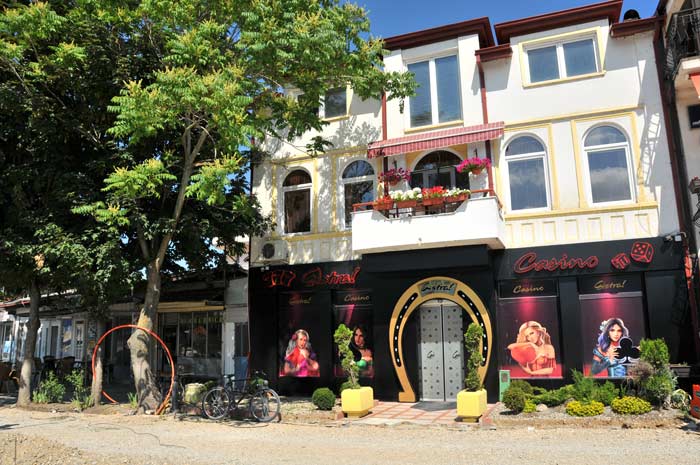
A little further along, the casino marks the end of the urban renewal projects completed so far. Immediately adjacent lies the older part of town, featuring a small, unassuming barbershop and a currency exchange office.
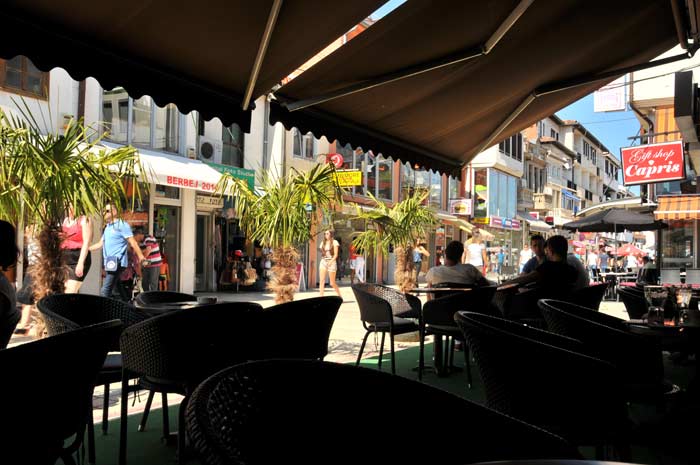
Struga’s main shopping street is lined with small shops and sidewalk cafes; the selection of food—including some exceptional offerings made the visit particularly interesting.
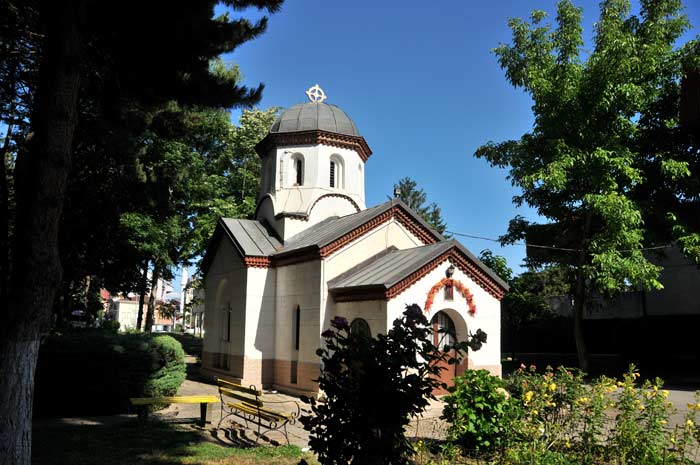
We stumbled upon this church in Struga’s small city park; indeed, there are countless religious buildings in the area. The Church of St. Nicholas Drimeni is worth mentioning first. The Church of St. George home to a fresco from 1267 depicting the church's patron saint also deserves a mention. The building was erected on the site of an older church.
Other significant churches in the region can be found in Kališta (located about 5 kilometres southwest on Lake Ohrid) and in Vraništa (located approximately 4.5 kilometres to the north).
The basilicas in the neighbouring villages of Zagračani and Oktisi, as well as south of the village of Podmolje, likely date back to the 3rd and 6th centuries, respectively. Today, they are partially in ruins.
Please also read: