


Grado – A Walking Tour of the Lagoon Seaside Resort
- Written by Portal Editor
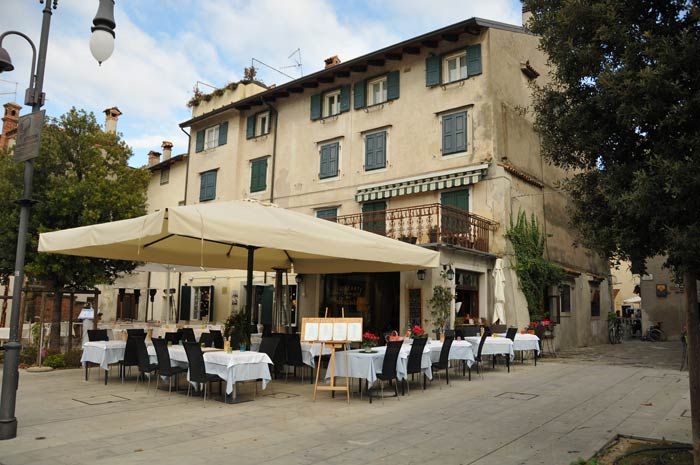
Grado – We paused our cycling tour which took us between the lagoon and the Gulf of Venice on the Grado peninsula, affectionately known as the "Island of the Sun" or the "Golden Island."
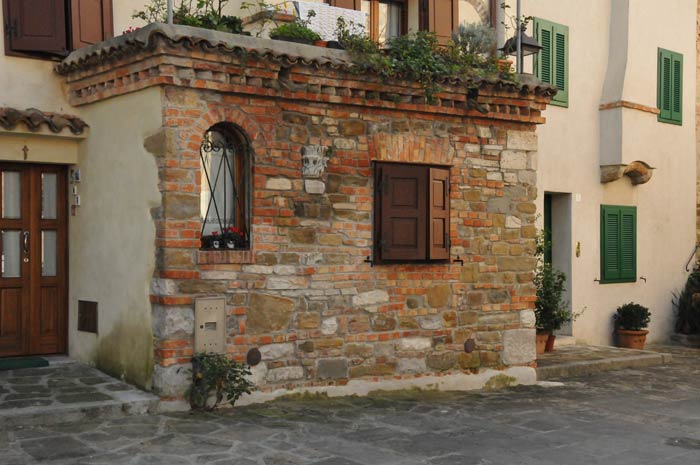
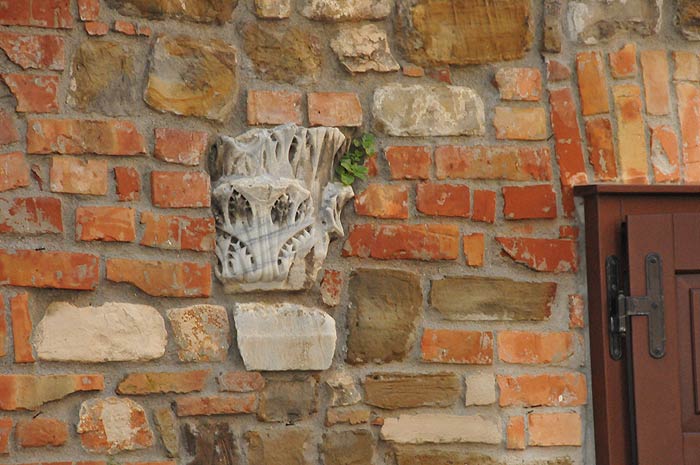
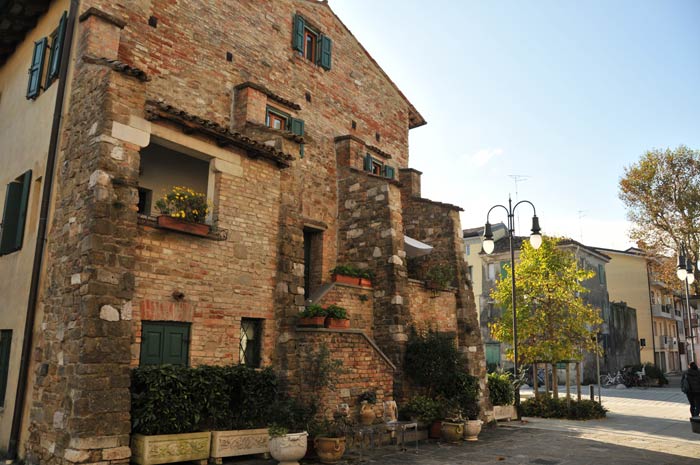
Even a glance at the very first building façade made it clear that Grado possesses an ancient history. Artifacts such as a marble column capital have been incorporated directly into the brickwork.
Archaeologists date Grado’s founding as a seaport for the city of Aquileia to the 2nd century BC; at that time, it was known as *Ad Aquas Gradatas*. The military port was under the command of the Roman naval base (*Classis*) in Ravenna. It is hardly surprising, then, that ancient remnants can be found throughout the town.
Around 180 AD, the port was fortified with a stronghold (*castrum*); traces of this structure can still be seen on many building façades, appearing either as entire sections of wall or simply through the reuse of the original building materials.
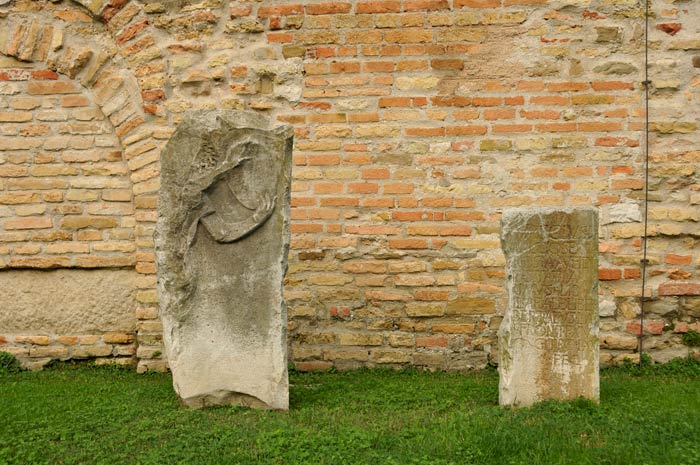
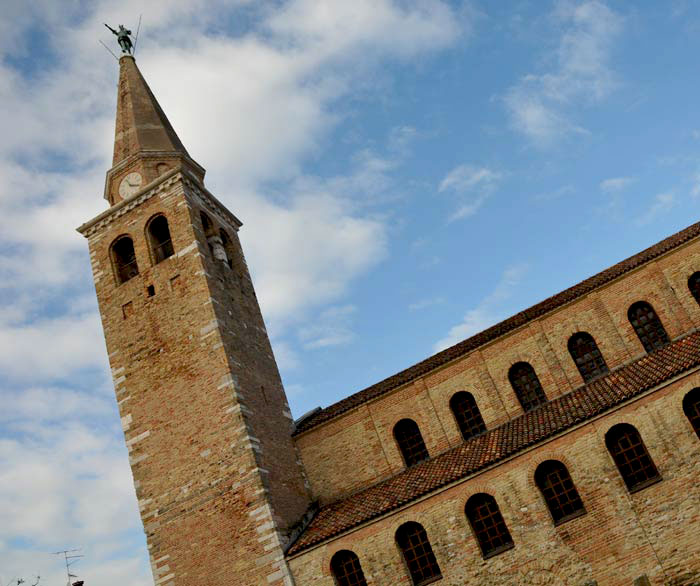
Artifacts from the early Roman period can also be found on the exterior façade of the Church of Santa Maria delle Grazie.
The first Christian churches in Grado Sant'Eufemia, Santa Maria delle Grazie, and the church on Piazza Biagio Marin were built starting in the 4th century. The Cathedral of Santa Eufemia was constructed in 456 under the authority of Patriarch Nicetas of Aquileia.
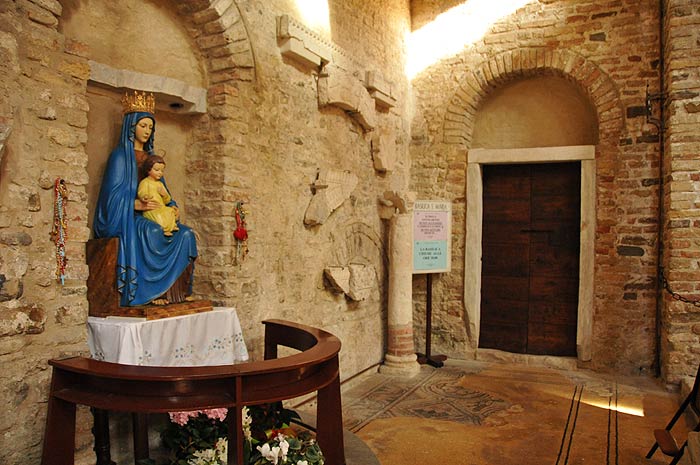
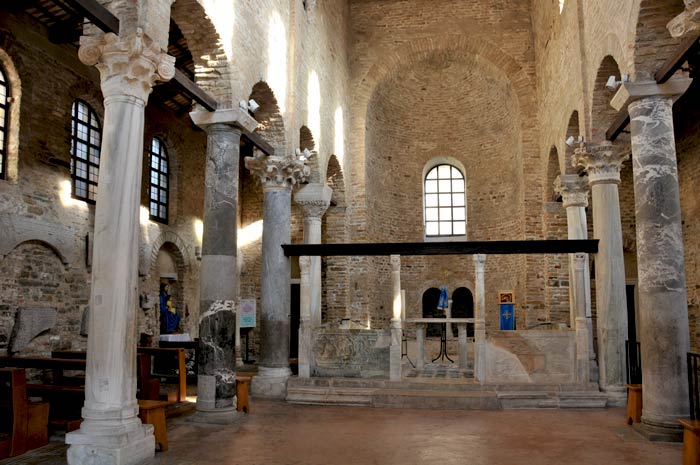
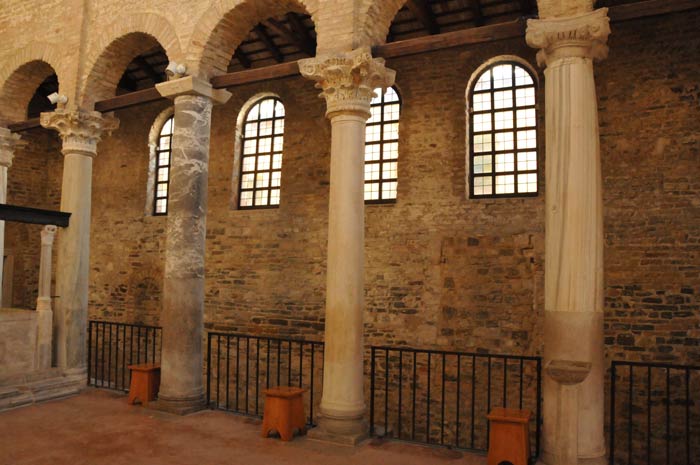
Inside the Church of Santa Maria delle Grazie, which is open to visitors, columns and capitals from older Grado buildings have clearly been reused in the construction. For instance, column bases of varying heights were employed to ensure the columns themselves reached a uniform height.
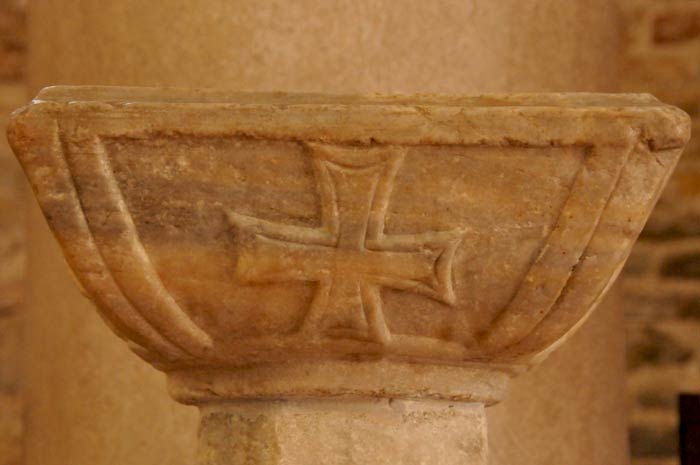
Columns assembled from different sections to serve as structural supports reflect this reuse of older materials, and the capitals atop them originate from various architectural eras. However, the execution of the stonework sometimes suggests the work of less professional craftsmen. The precision typically associated with Roman craftsmanship is missing in places as is clearly evident on this cross.
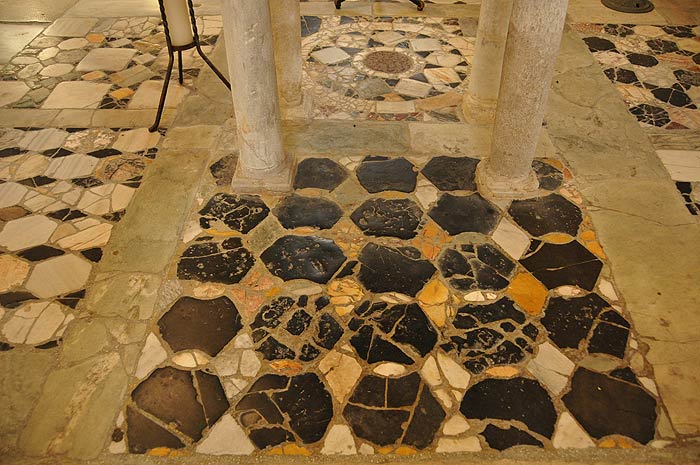
The floor mosaics also point to hasty, imprecise work by non-professional craftsmen, reminiscent of the rapid construction methods of more modern times.
The original Roman mosaic has survived only in the basilica’s side aisles, though it receives little protection from visitors. Here, too, one encounters repurposed building materials from older structures.
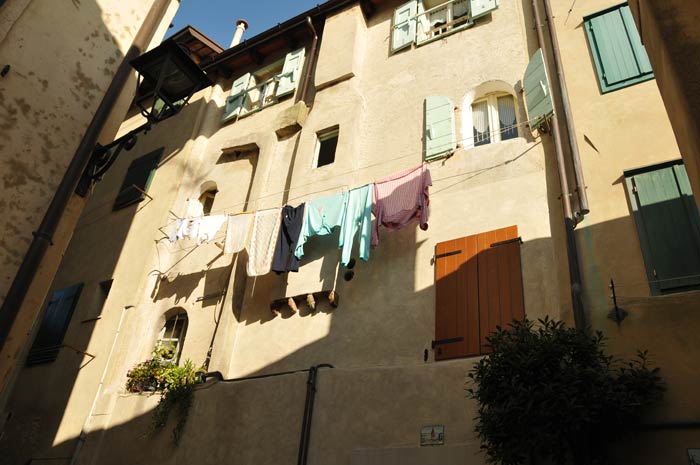
Leaving the church, we come across an interesting method of drying laundry on a house façade.
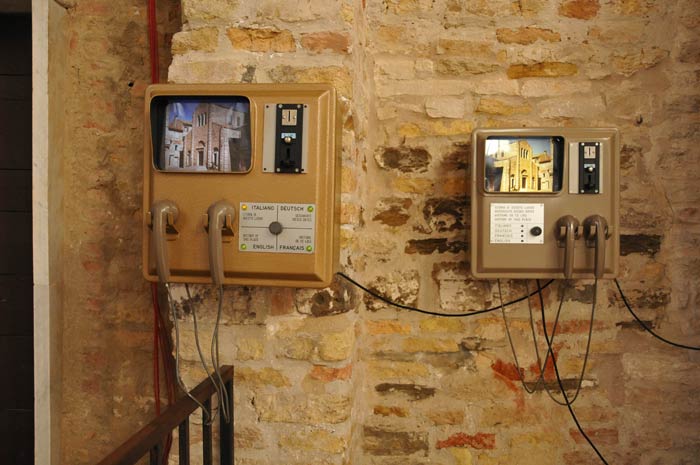
Tourist information kiosks. Despite offering multilingual support, their design and construction could perhaps be updated to be more contemporary.
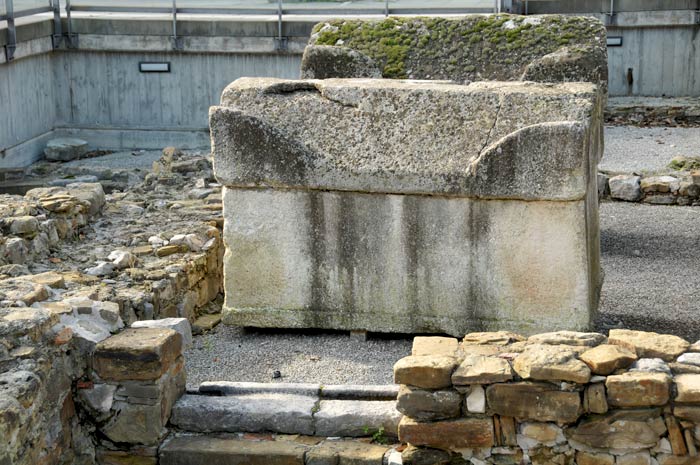
In the town centre, visitors encounter several sarcophagi that are, unfortunately, left exposed to the elements without protection. The same applies to the excavated foundations and mosaics of a cathedral that once stood here.
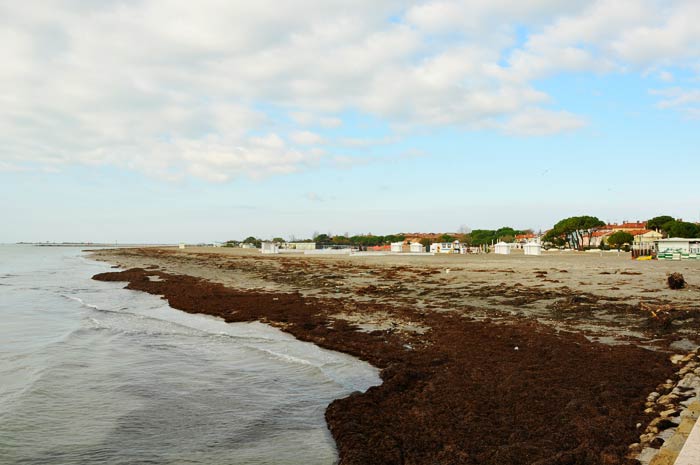
The pedestrian zone is quiet at this time of year; however, in summer, Grado is a popular seaside resort favoured by many vacationers from Italy, Austria, and Germany for its family-friendly beaches and shallow waters.
The three beaches Spiaggia Principale (Main Beach), Costa Azzurra, and Pineta are linked by a seaside promenade. Grado is the only town on the Italian Adriatic coast where all the beaches face south, ensuring they enjoy sunshine throughout the day. While the beach is less inviting at this time of year, the harbour is always bustling with activity.
Please also read: