Asterix – And what about Paris during the time of the Romans?

Who isn’t familiar with them? The main characters from the comic books the titular hero Asterix, his friend Obelix, and the other inhabitants of a small village in Gaul around 50 BC.
With the help of a phenomenal magic potion brewed by their druid, Getafix a potion that grants superhuman strength they successfully resist the Roman occupiers.
As part of our project work, we also included a brief stop in Paris, intended to serve as an introduction to the city’s history.
 According to the introduction in the comics, the stories of Asterix and Obelix take place around 50 BC in Gaul modern-day France. The villagers live in a small, fictional coastal village in Armorica, in the northwest of Gaul, near Condate (present-day Rennes). In antiquity, "Armorica" was a geographical term for the northwestern coast of what is now France, situated between the rivers Sequana (Seine) and Liger (Loire) an area corresponding to the modern-day regions of Normandy and Brittany.
From the Iron Age until the Roman conquest, this region was inhabited by various Gallic tribes, such as the Aulerci, Curiosoliti, Eburovices, Lexovii, Namnetes, Osismii, Redones, Veneti, and Venelli. During the Gallo-Roman period, it was administered first as part of the Roman province of Gaul, and later as part of the province of Gallia Lugdunensis.
Are the stories of Asterix entirely fictional?
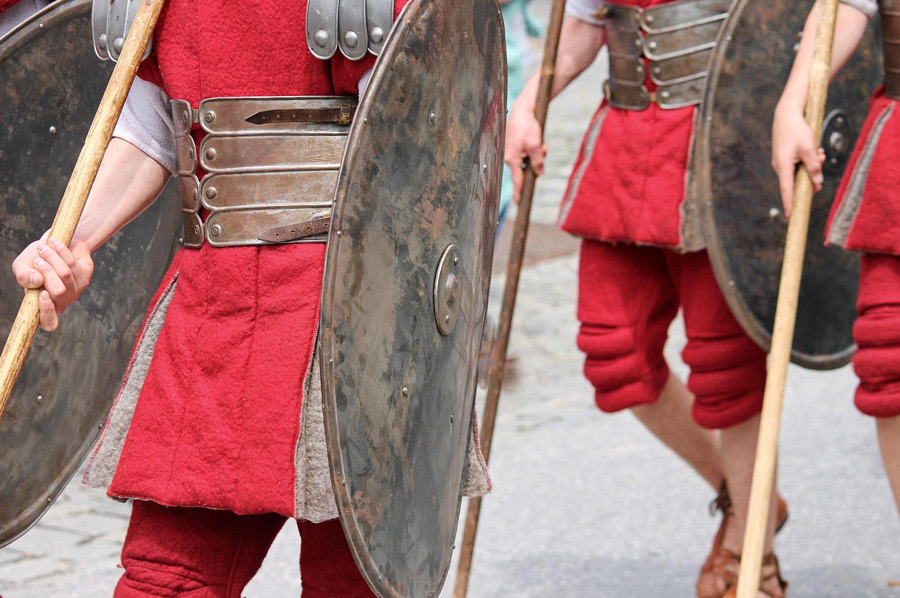 Thanks to the druid’s magic potion, the villagers gain superhuman strength, allowing them to withstand the overwhelming might of the Roman army. This makes the village the only place in Gaul that could not be conquered and occupied by the Romans led by Julius Caesar during the Gallic Wars; even Paris had been occupied.
Shortly before this, in 52 BC, the Gauls, under their leader Vercingetorix, suffered a painful defeat against Caesar at Alesia an event that became a taboo subject among the Gauls.
Roman Conquests in Gaul
 In 58 BC, the Romans invaded the southern territories inhabited by the Gauls. For the commander of the Roman army, Gaius Julius Caesar, this presented an opportunity to advance his political career through military success. Roman military victories followed very quickly, and in the years that ensued, the Romans pushed as far as Britain. It was not until 52 BC that Caesar and his troops encountered serious resistance. The Gauls who had long been thought to be completely subjugated united under Vercingetorix and rose up against Rome. In the early days of the conflict, Roman merchants in Cenabum fell victim to the Gauls, and the insurgents posed a threat to Gallia Narbonensis.
Gallia Narbonensis was the new name given in 27 BC to the province previously known as Gallia Transalpina, which had been established as a Roman province between 125 and 118 BC. Gallia Narbonensis is located in what is now southern France. Its designation as a province is the origin of the name "Provence," which is still used for a part of the region today. Consequently, the whole of France was under Roman occupation well, except for that one fictional exception in the *Asterix* stories!
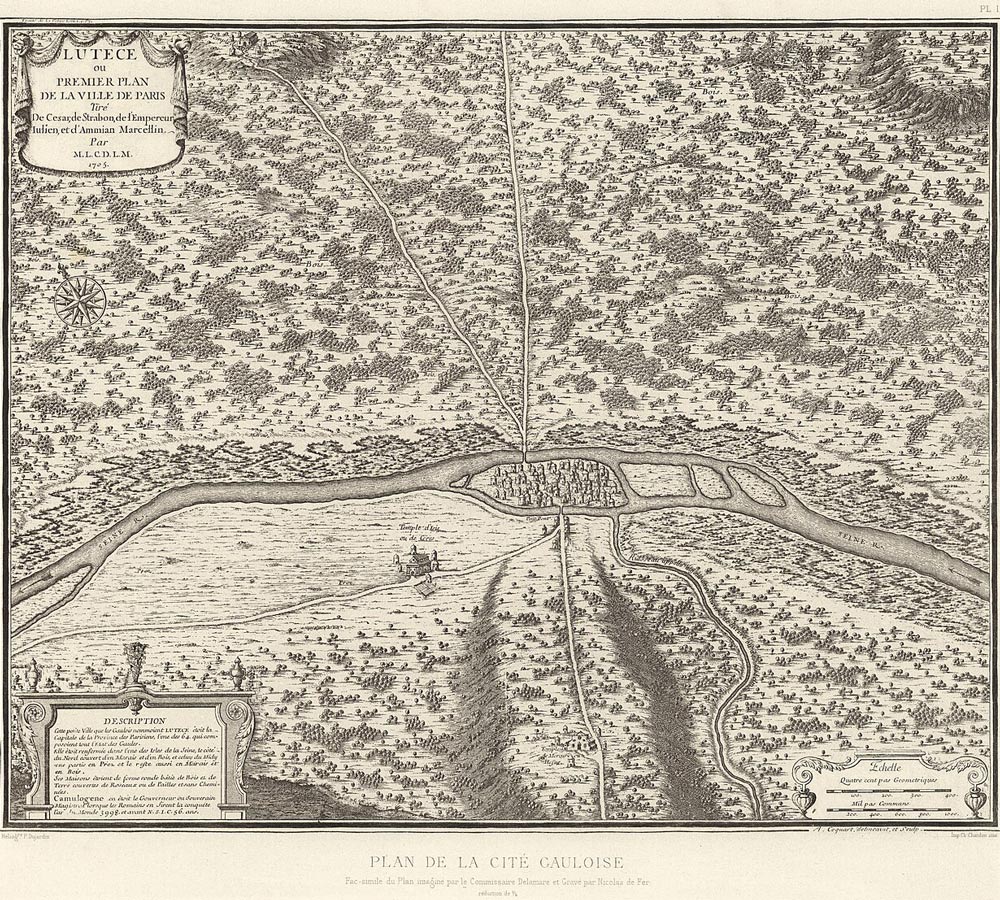
Lutetia the Celtic settlement that became Paris
 At the time of the Roman conquests in Gaul, the city was known by its ancient name: Lutetia. From the middle of the 3rd century BC, Lutetia developed out of a Celtic settlement belonging to the Parisii tribe, located on an island in the Seine known today as the Île de la Cité. The name "Lutetia" was first mentioned in writing in 53 BC, in the sixth book of Julius Caesar’s account of the Gallic Wars, *De Bello Gallico*.
 When the Romans approached the city for a second time in 52 BC following an initial, unsuccessful attempt the Parisii set fire to their main settlement, Lutetia, and destroyed the bridges before taking up their defensive positions. The Romans, who ultimately emerged victorious, left the island to the Parisii and established a new Roman city on the left bank of the Seine, occupying a commanding position on a hill later known as the Montagne Sainte-Geneviève. There, they constructed public baths, a forum, and an amphitheater. Within the Roman Empire, the city became known as *Civitas Parisiorum* or *Parisia*, though it remained relatively insignificant throughout Roman-occupied Gaul. By the 4th century, the city’s modern name Paris had become firmly established.
Please read as well: