Owls – Fascinating Creatures of the Night / Our Ten Native Owl Species
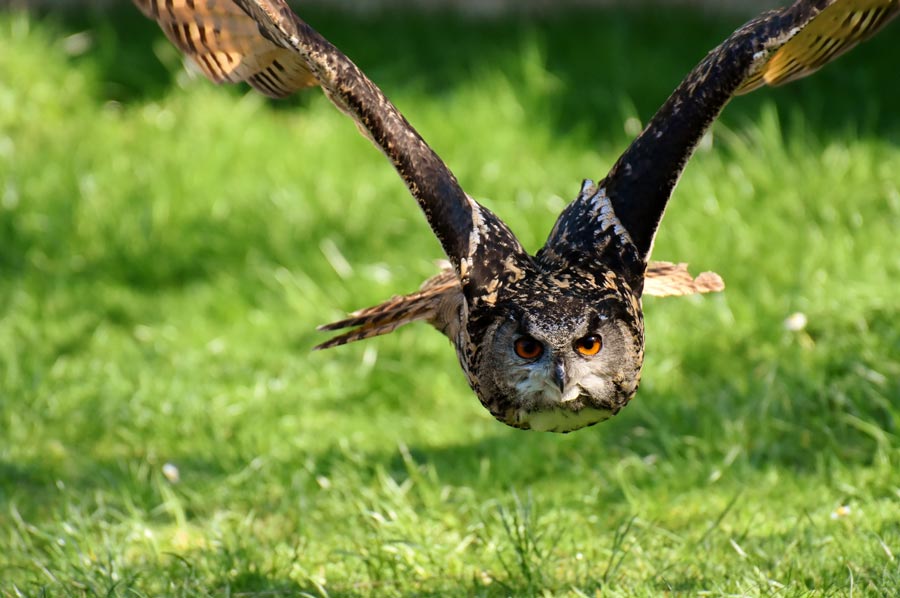
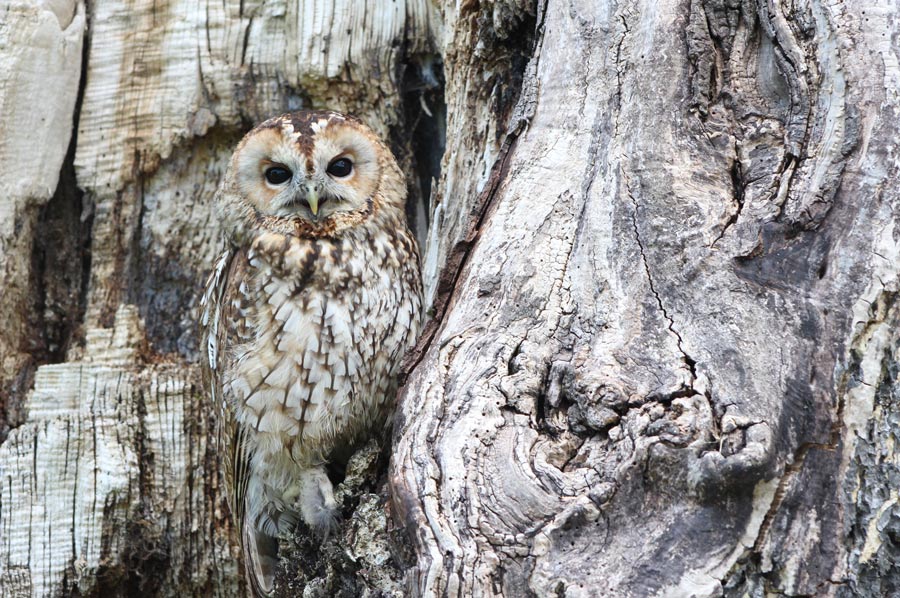
Silent flight, eerie calls, and astonishing abilities owls have long been regarded as mysterious creatures. Especially during the mating season in autumn and late winter, the haunting song of the male tawny owl can be heard.
Thanks to its dense, velvety plumage and comb-like wing tips, it can hunt for mice almost entirely in silence. Dr. Manuela Merling de Chapa, an expert on birds of prey at the German Wildlife Foundation (Deutsche Wildtier Stiftung), explains the most fascinating characteristics of our native owls:
Many owl species approach their prey almost noiselessly.
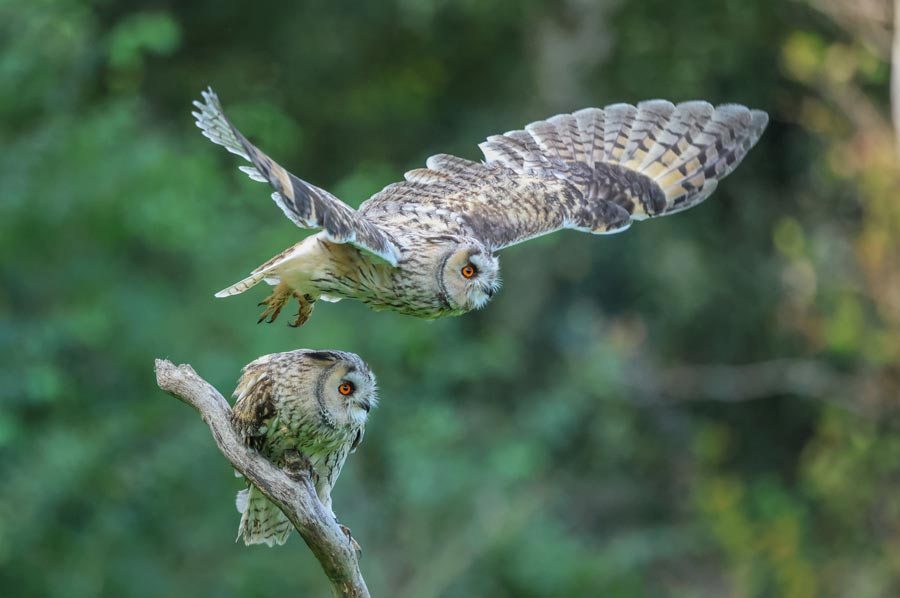 This is made possible by the unique plumage of many owl species: comb-like structures on the leading edges of their wings, velvety feather surfaces, and soft feather fringes reduce flight noise to a minimum.
This near-silent flight not only allows the birds to approach undetected, but also enables them to hear even the faintest rustle made by their prey.
The diet of an owl consists primarily of mice, though it also includes birds and insects.
Their calls serve as a means of communication with others of their kind.
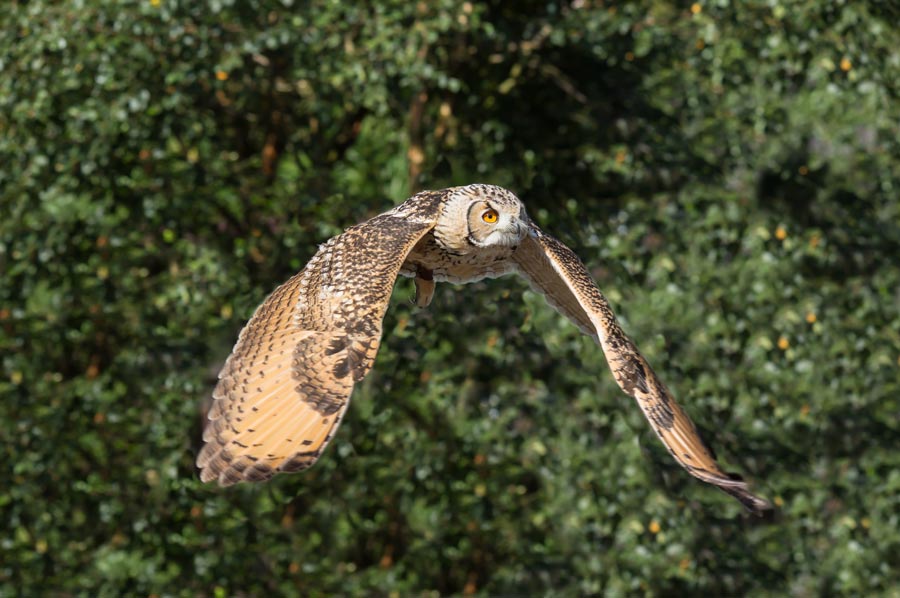 From the end of October and throughout November, the calls of tawny owls are heard particularly often. Through these, they mark their territories and attempt to attract mates. Many people find the typical, drawn-out call of the male tawny owl a "hoo-hoo-hoohuhuhuu" to be eerie.
The "ku-witt" call of the female tawny owl sounds somewhat like the German phrase "komm mit!" ("come along!"), which gave rise to a superstition that it foretells an approaching death.
Owls have also been associated with plagues and conflagrations superstitions that led to them being persecuted and killed for a long time. In reality, their calls are simply a means of communicating with other members of their species.
Owls are acrobats when it comes to their heads.
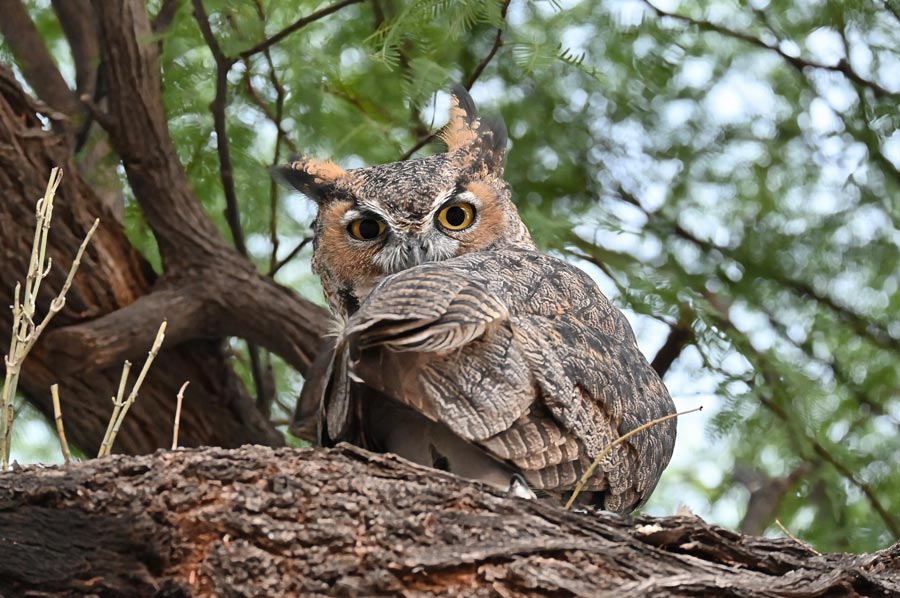 Owls can rotate their heads by up to 270 degrees. This is because their eyes are firmly anchored in their sockets and are therefore almost entirely immobile.
An exceptionally flexible cervical spine and adaptable blood vessels perfectly compensate for this limitation.
This head-turning ability allows the birds to detect both threats and prey in the blink of an eye. However, the notion that owls can rotate their heads a full 360 degrees is nothing more than a myth.
Pellets provide clues about an owl’s prey.
Owls often swallow smaller prey such as songbirds or field mice whole. Indigestible parts, including bones, skulls, and fur, are later regurgitated in the form of "pellets." For scientists, these offer valuable insights into an owl’s diet and the biodiversity of its habitat.
Not every owl is a creature of the night.
 Most of the ten native owl species are active at night or during twilight, but this is not true for all of them.
The short-eared owl a rare species in Germany can frequently be seen hunting during the day, not just at dusk.
It flies low over open landscapes, such as wet meadows and moors, in search of prey.
The Eurasian pygmy owl, Germany’s smallest native owl, is also active during daylight hours. Ten Native Owl Species:
From Ominous Specter to Species of Concern: Owl Conservation
 While owls were once frequently persecuted due to superstition, the threats they face today are human-made: habitat loss, a lack of nesting cavities, food shortages caused by intensive agriculture, road traffic, and disturbances at breeding sites all take a toll on these birds. Ten species of owl breed in Germany, and their population trends vary significantly. While some species are already benefiting from conservation measures, others remain in need of targeted support.
- Eurasian Eagle-Owl – A Successful Comeback: Once nearly wiped out due to intense persecution, Germany’s largest owl species has seen its populations recover in many regions, thanks to legal protection and successful reintroduction projects a prime example of effective species conservation.
- Little Owl – Dependent on Cultivated Landscapes: In addition to hollow trees and old traditional orchards, the Little Owl requires short-grass, extensively managed foraging grounds. Preserving and maintaining these habitats, along with providing specialized nesting aids, is crucial for its survival.
- Barn Owl – A Typical Cavity-Nester in Buildings: This species uses nooks and crannies in barns and church towers as nesting sites. Such spaces are often lost during building renovations; however, maintaining access points and installing proper nesting boxes can help the species.
- Ural Owl – A Promising Return: Having long since disappeared from Germany, the Ural Owl is making a comeback, with reintroduction projects (such as those in the Bavarian Forest) showing initial success. The species requires old, structurally diverse forests that offer suitable nesting opportunities.
- Tawny Owl – An Adaptable Forest Dweller: As Germany’s most common owl species, the Tawny Owl inhabits forests, parks, and gardens. It primarily nests in large tree hollows and benefits significantly from the preservation of old, cavity-rich stands of trees. Being relatively adaptable and currently not considered threatened, it requires fewer targeted conservation measures than many other owl species.
- Long-eared Owl – Between Forest and Open Land: Contrary to what its name might suggest, the Long-eared Owl primarily hunts for mice in open meadows, pastures, and fields. For breeding, it typically repurposes old crow or magpie nests found in small copses, clusters of trees, or along the edges of forests. Structurally diverse open landscapes that offer an ample supply of small mammals and suitable woody vegetation for nesting are particularly important for their protection.
- Boreal Owl – A specialist of old-growth forests: The Boreal Owl primarily uses abandoned Black Woodpecker cavities as nesting sites and favors structurally diverse coniferous and mixed forests. Preserving woodpecker cavities, suitable forest stands, and open hunting grounds with a sufficient population of small mammals is crucial for its conservation.
- Eurasian Pygmy Owl – Small but fearless: Germany’s smallest owl preys on small birds as well as mice, and is even capable of overpowering prey nearly its own size. The Eurasian Pygmy Owl requires structurally diverse coniferous and mixed forests that provide ample cover, suitable hunting grounds, and small woodpecker cavities. Near-natural forest management helps to preserve its habitats.
- Short-eared Owl – An endangered ground-nester: As one of Germany’s rarest breeding birds, the Short-eared Owl nests directly on the ground, primarily in open moorlands, wet meadows, and coastal habitats. Rewetting, adapted grassland management, and protection against disturbances and the loss of clutches are vital for its survival.
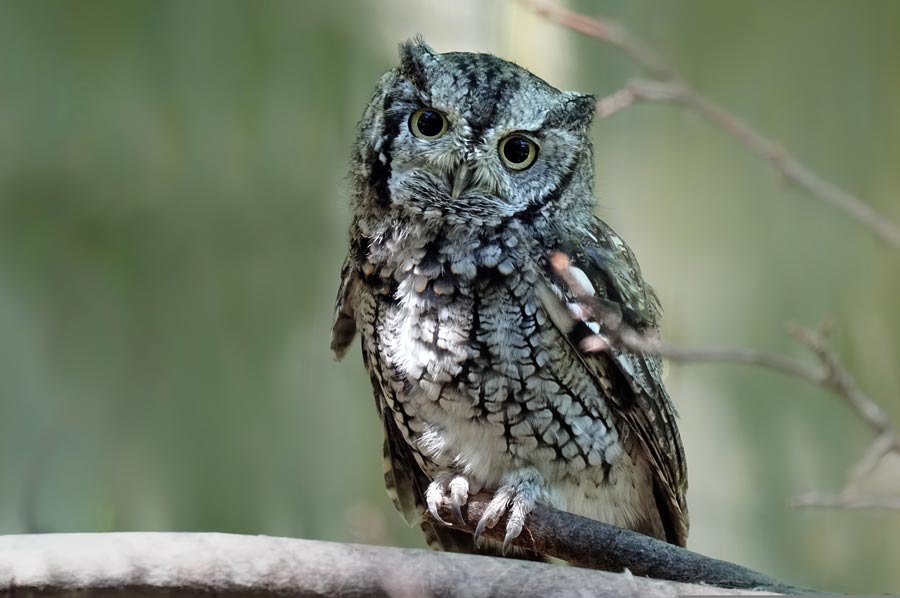
- Eurasian Scops Owl – A warmth-loving newcomer: The Eurasian Scops Owl is a rare breeding bird in Germany. It feeds predominantly on larger insects. Preserving old traditional orchards, trees with plenty of cavities, and extensively managed landscapes rich in insects can encourage its settlement. Jenifer Calvi / Press Officer
German Wildlife Foundation (Deutsche Wildtier Stiftung)
Lucy-Borchardt-Straße 2
20457 Hamburg
Phone: +49 40 970 78 69-14
Please read as well:
Adventurous camping trips or a slower pace of life just around the corner
Antoni Gaudí – Spanish Architect and Exponent of Modernism