Recreational Vehicles – Lightweight Construction as a Design Principle
Every camper is familiar with the issue of excessive payload, and there is a corresponding level of concern regarding potential roadside inspections. But what are manufacturers doing to make their vehicles lighter, more efficient, and thus better prepared for the future?
Factors such as the dramatic rise in fuel prices and the growing demand for battery-powered drivetrains are particularly relevant here. To address this, we must first clarify some terminology, as the subject matter is highly multifaceted.
Lightweight Construction and Zero Emissions as Development Goals
 If we define lightweight construction as a design principle aimed at significantly reducing the weight of components and products through the strategic use of lightweight materials and clever structural design, does this also inherently lead to lower emissions? Is the goal of "zero emissions" even achievable?
- Manufacturers utilize materials with a low inherent weight, such as wood, aluminum, or specialized plastics.
- The geometry of components is designed to channel loads optimally toward support points, requiring less material overall.
- Components often serve multiple functions for instance, providing both structural stability and thermal insulation.
 Depending on the context, the term "emissions" is sometimes used to refer only to specific substances. Regulations concerning air quality typically cover toxic pollutants and harmful compounds such as carbon monoxide, nitrogen oxides, or unburned hydrocarbons resulting from internal combustion engines while often excluding water vapor and greenhouse gases like carbon dioxide.
Furthermore, other types of emissions such as noise and particulate matter generated by brake and tire wear are not yet sufficiently addressed. This is in addition to the release of lubricants into the environment, as well as emissions generated during primary energy production and the manufacturing process itself.
 Given all this, is the goal of "zero emissions" truly attainable? Cars are becoming increasingly heavy these days one need only look at the unabated trend toward SUVs. Yet, there was a time when a vehicle’s drag coefficient (Cd value) was a key factor in its market appeal. In the realm of electromobility, every kilogram counts; reducing weight has a positive impact on both energy consumption and range. Driving dynamics also benefit significantly: the lighter a vehicle is, the lower its rolling and acceleration resistance. More importantly, lightweight construction allows manufacturers to reduce the size of the batteries, which account for 30 to 50 percent of a vehicle's total cost.
 On the path toward emission-free production, the focus is not just on the materials used, but also on the production processes themselves. Technologies such as selective laser melting and sintering, 3D printing, stereolithography, and fused deposition modelling enable entirely new approaches for instance, by incorporating natural design principles like honeycomb or lattice structures. These require significantly less material, making them more resource-efficient.
The "Light Cocoon" and "Soulmate" concept vehicles from EDAG, for example, feature a skeletal, bionically optimized structure. These sports cars are encased in a weather-resistant outer skin made from a three-layer polyester jersey fabric, developed in collaboration with outdoor specialist Jack Wolfskin. Beyond its potential for significant weight reduction, this material can also cover moving components such as a spoiler as the textile is flexible enough to accommodate such movement.
 Meanwhile, the German Aerospace Centre (DLR) has developed the "Safe Light Regional Vehicle," a 400-kilogram two-seater with a body based on sandwich construction. While this technique is not yet used in mass production, it serves as a prime example of the trend toward downsizing. At the moment, work is underway on many different solutions, though it is impossible to say for certain what the future of lightweight construction will ultimately look like. Yet, this experimentation is vital ensuring that innovations in this crucial field do not remain mere theoretical exercises, but instead provide a significant boost to the mobility of the future.
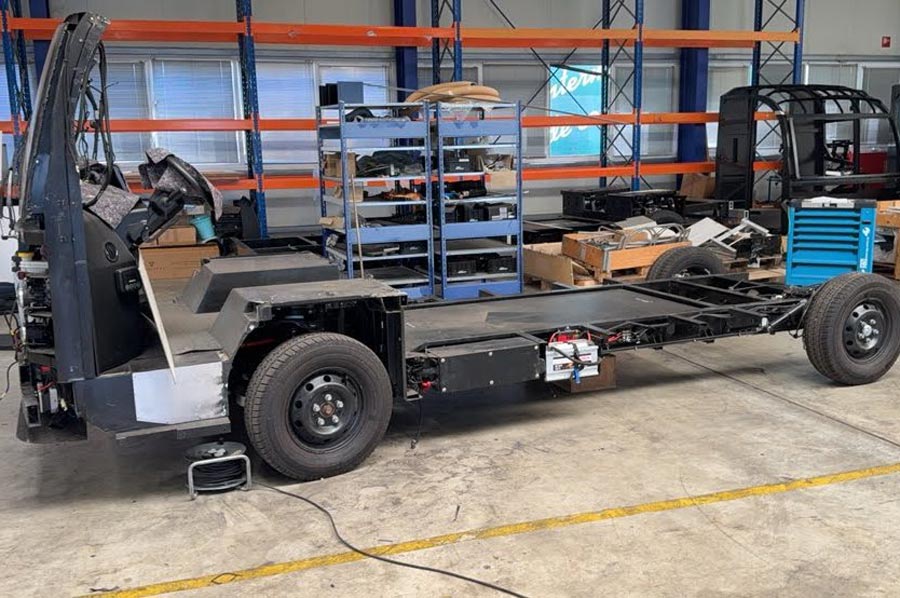
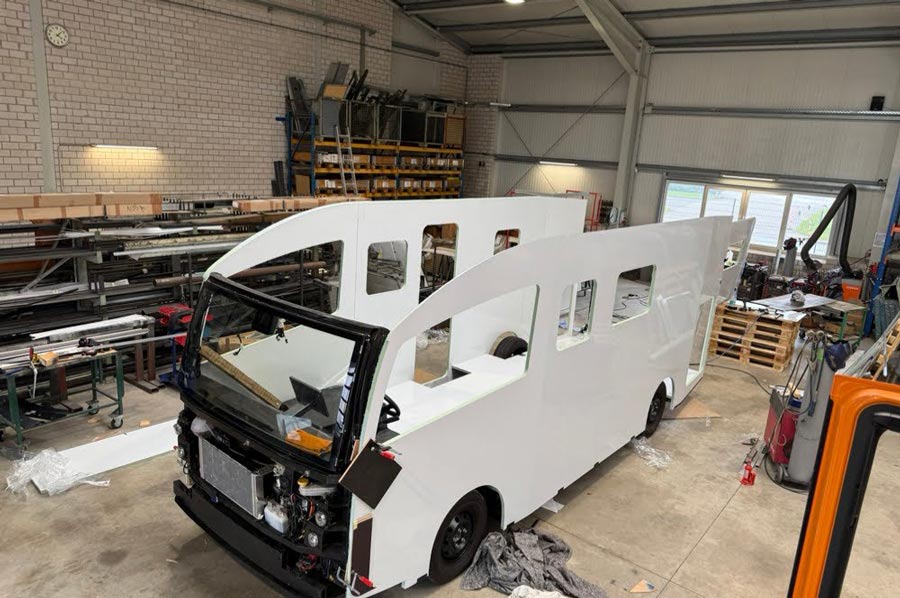
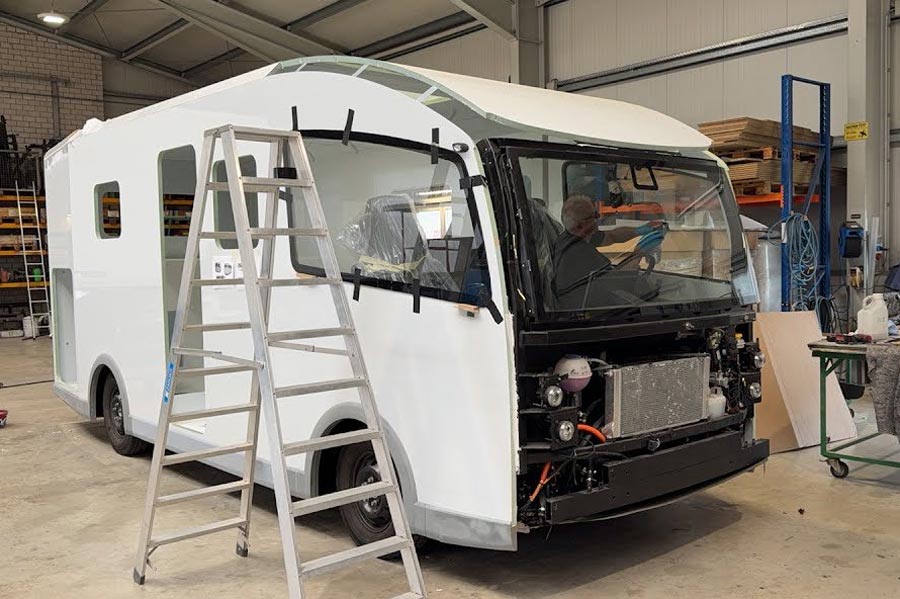
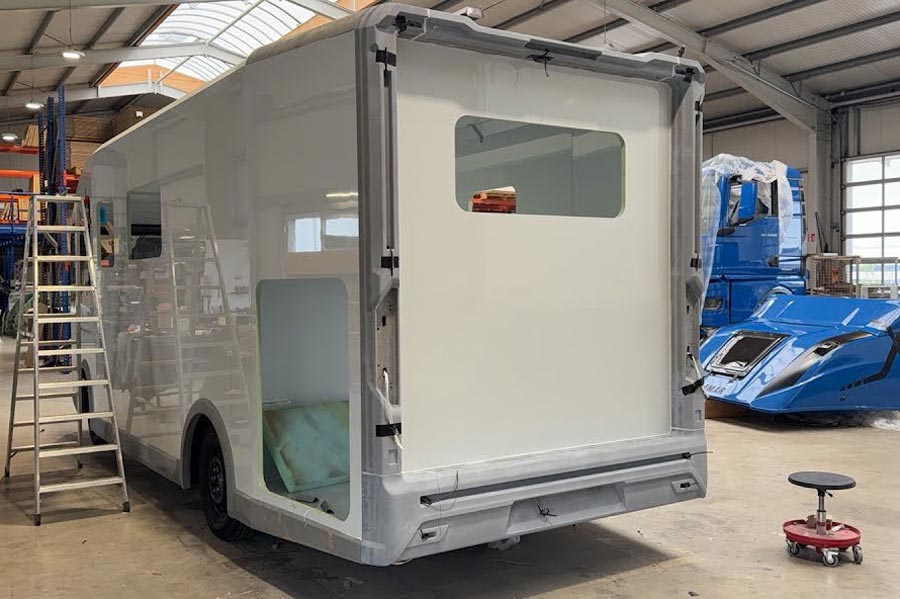
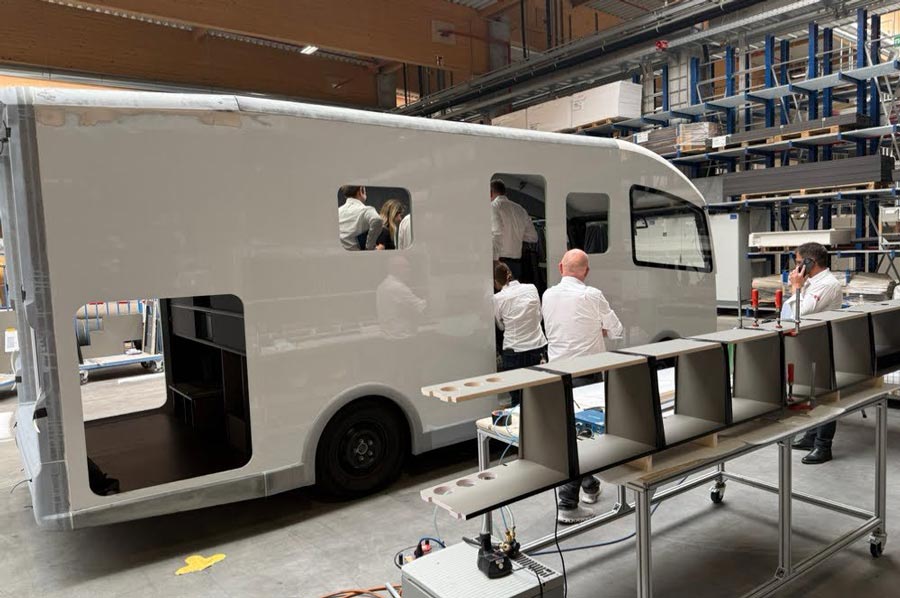
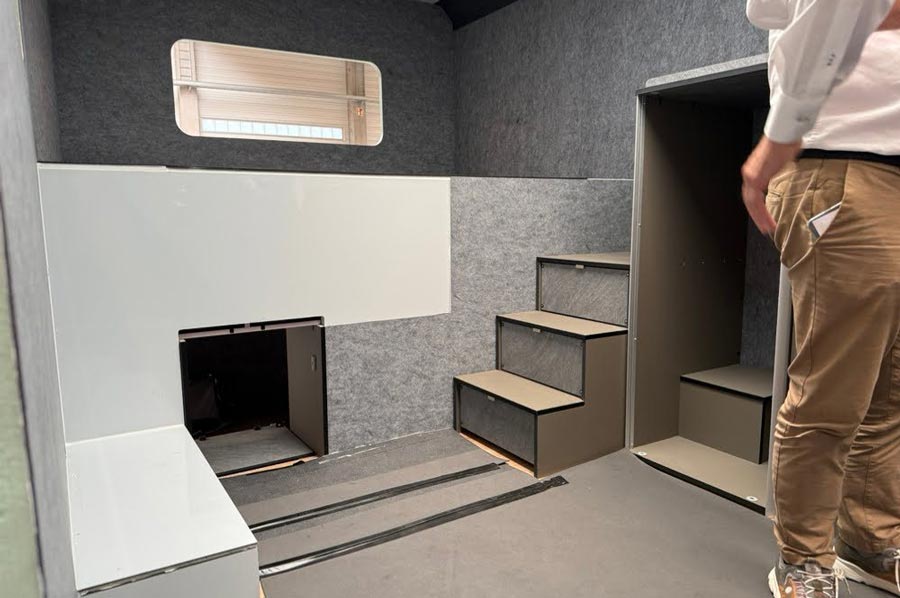
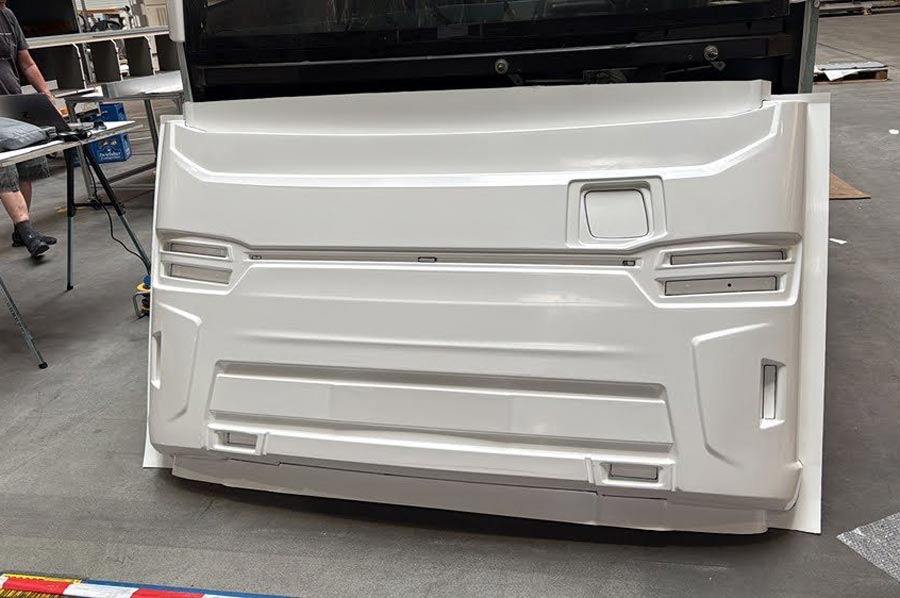
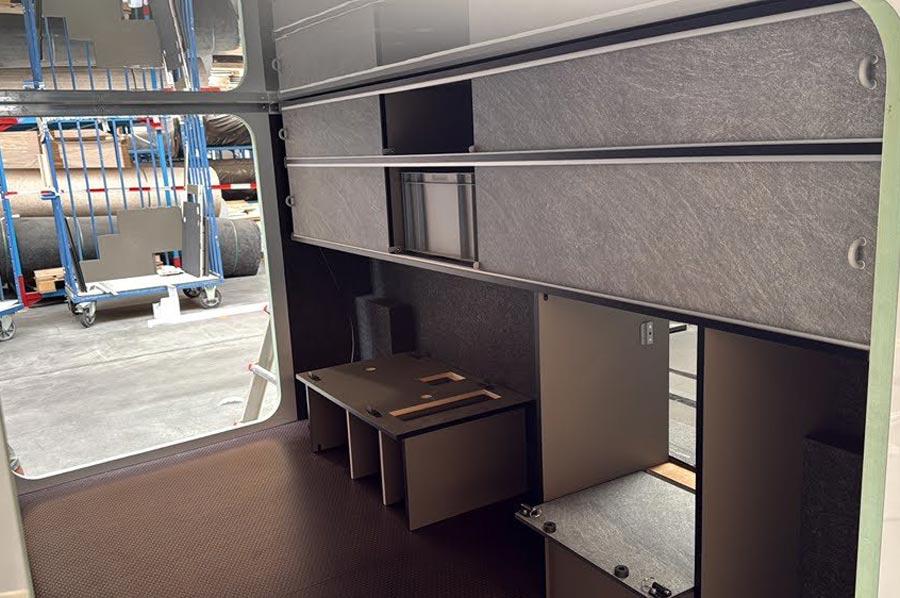
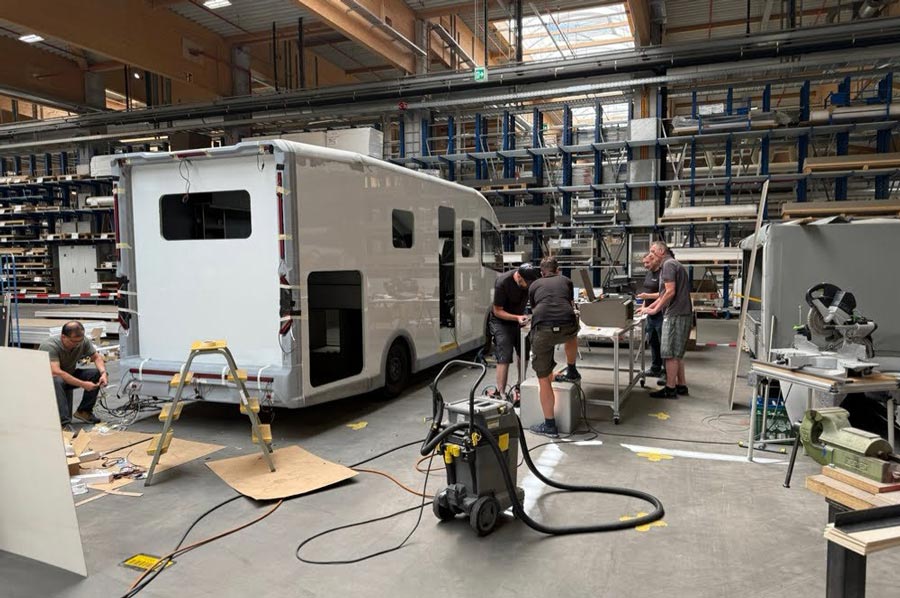
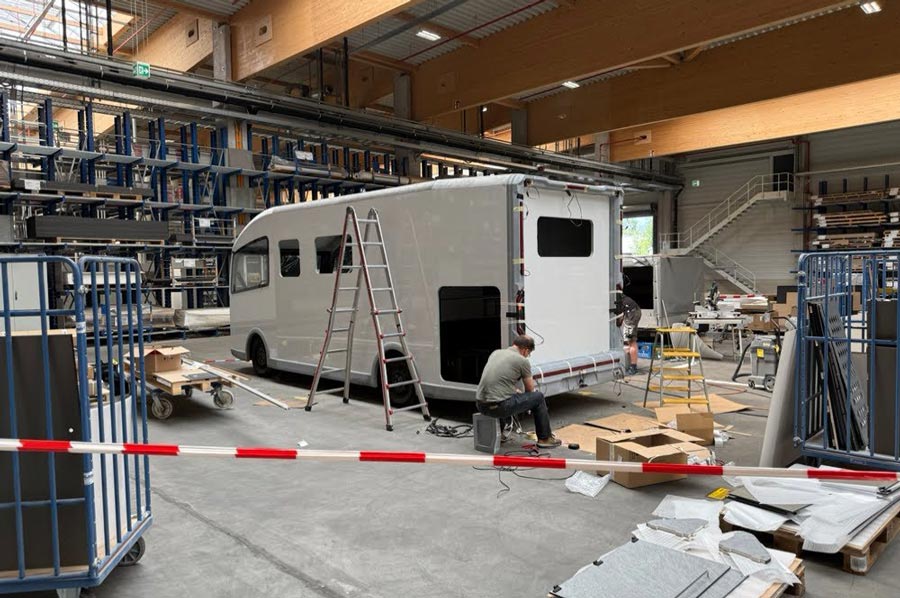
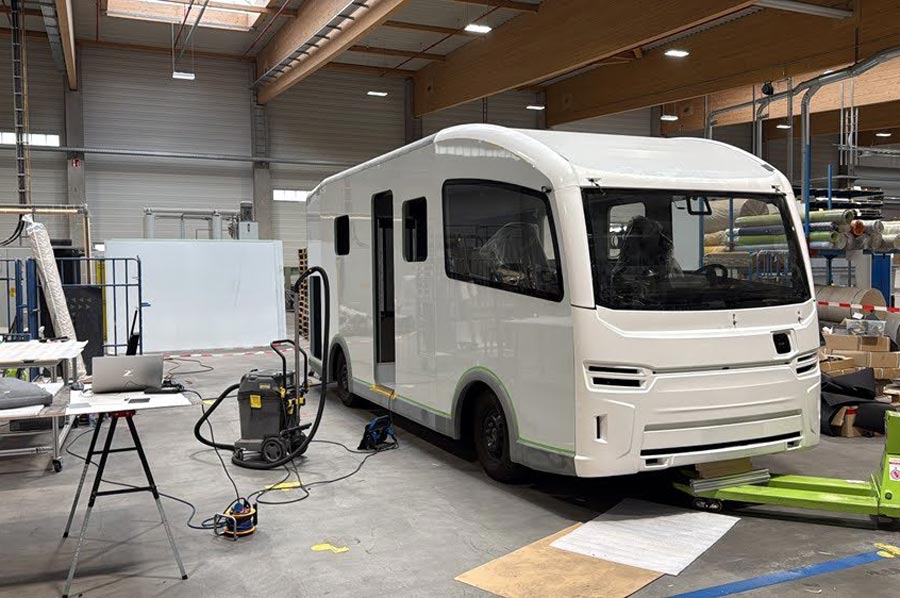
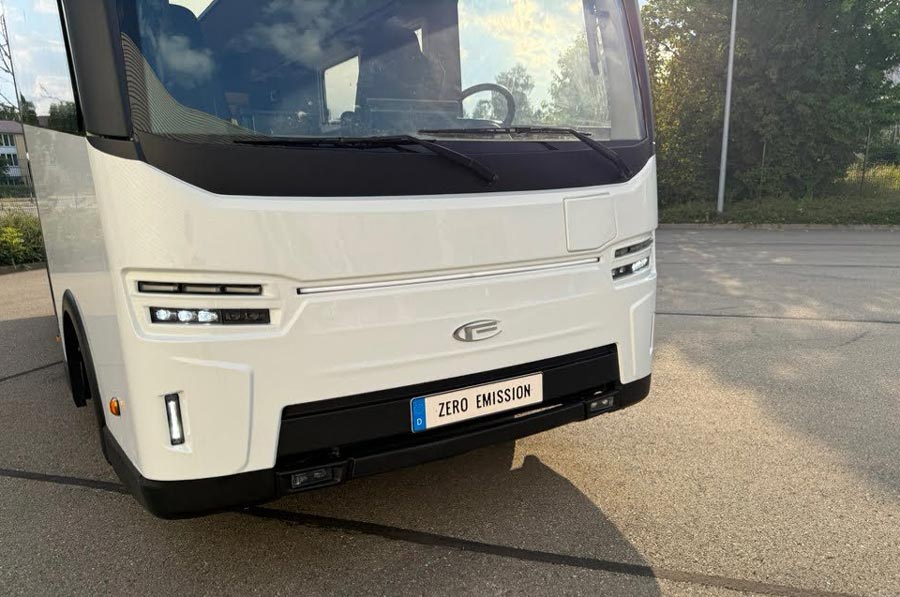
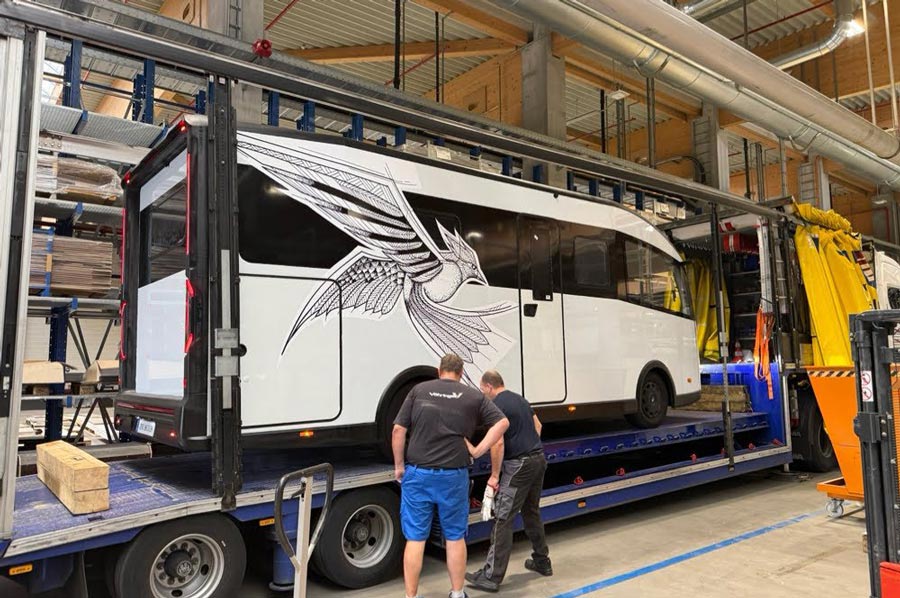
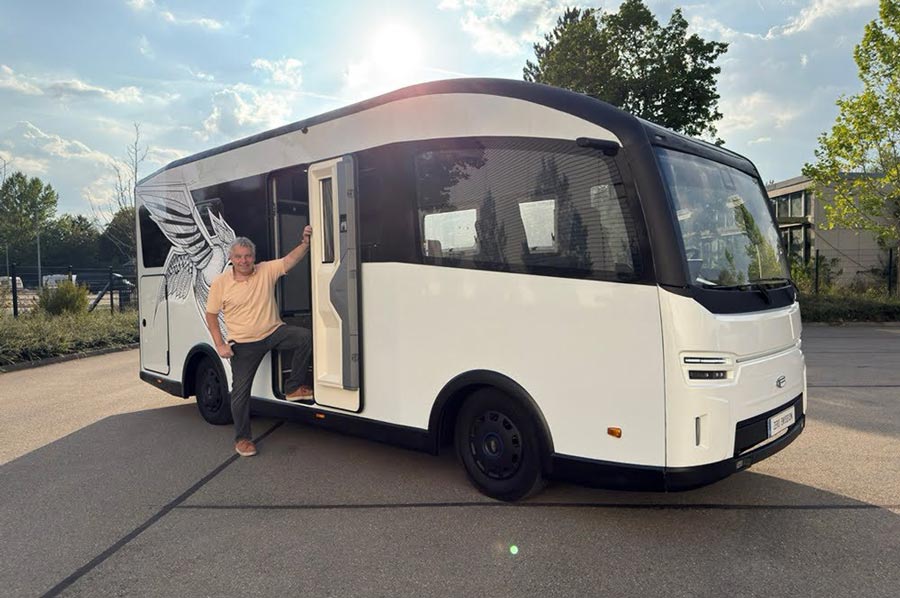
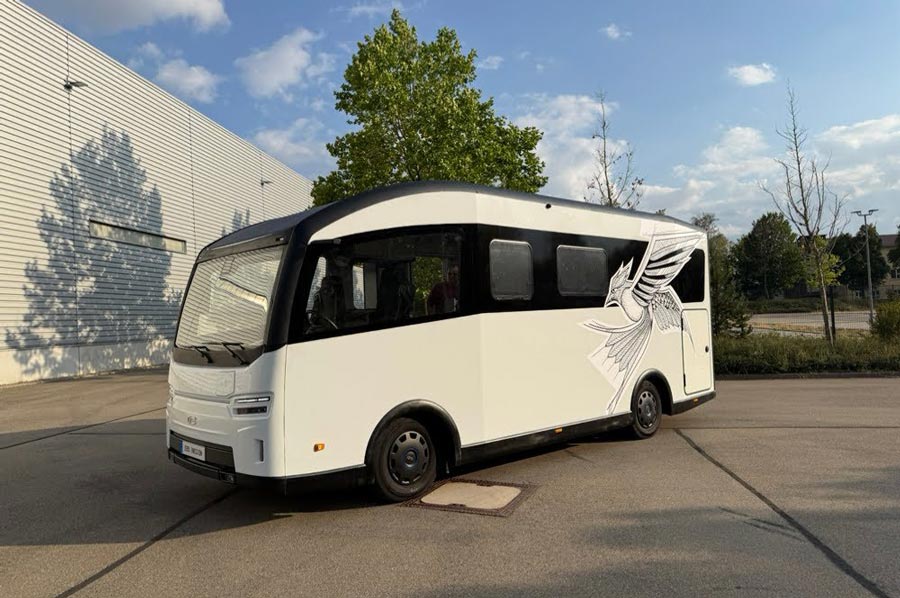
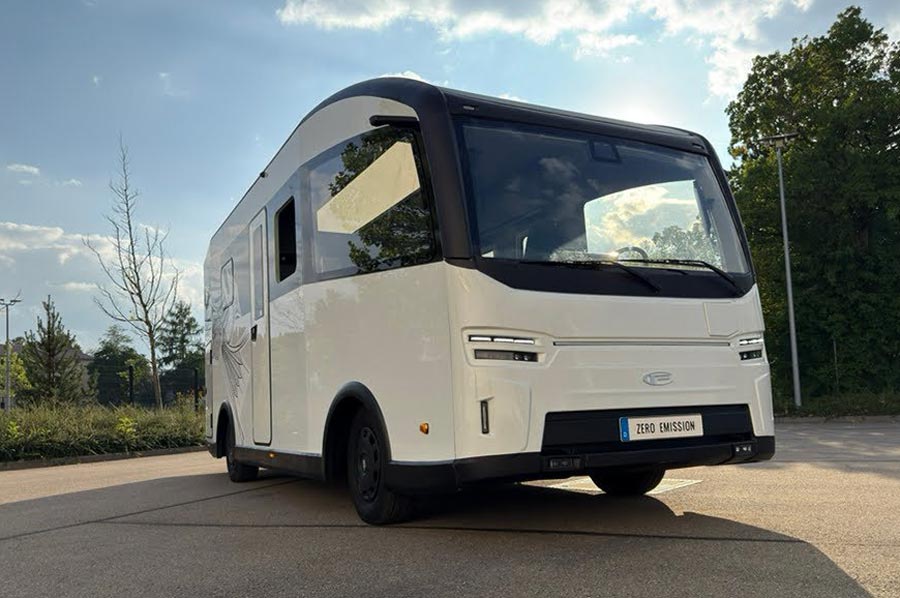
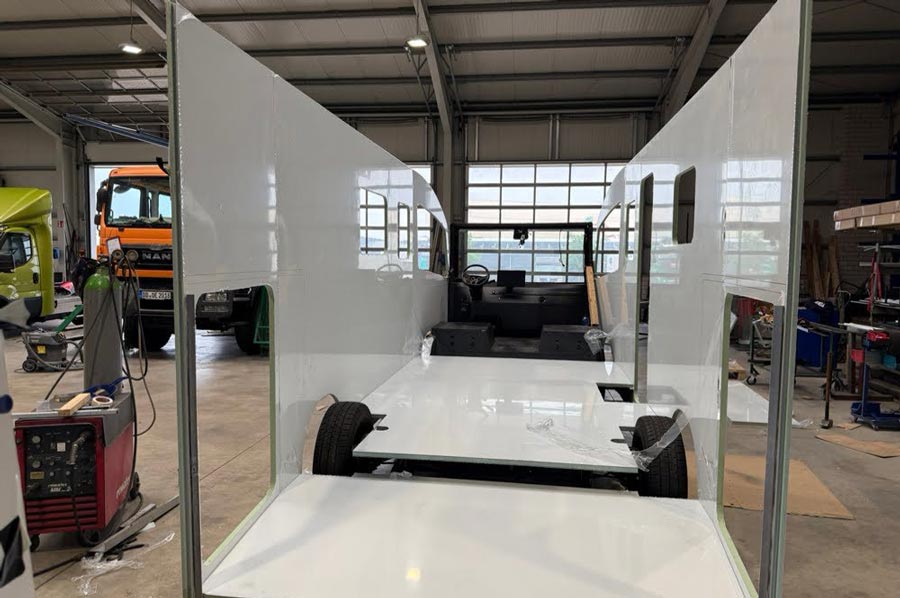
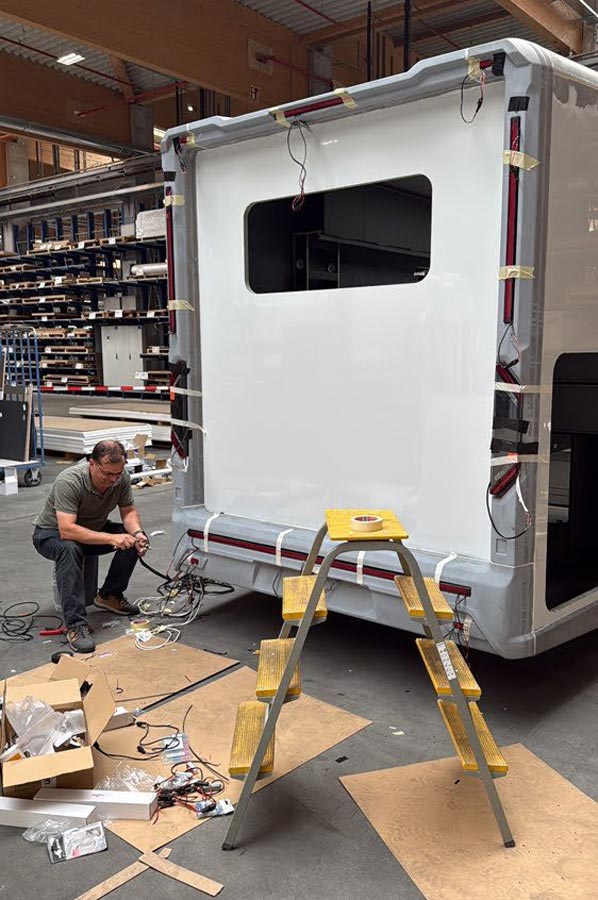
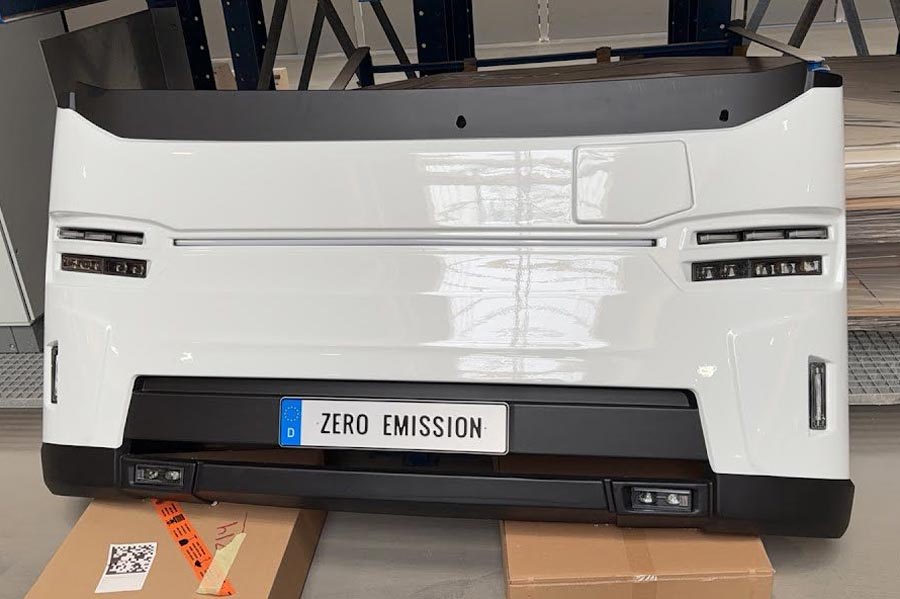
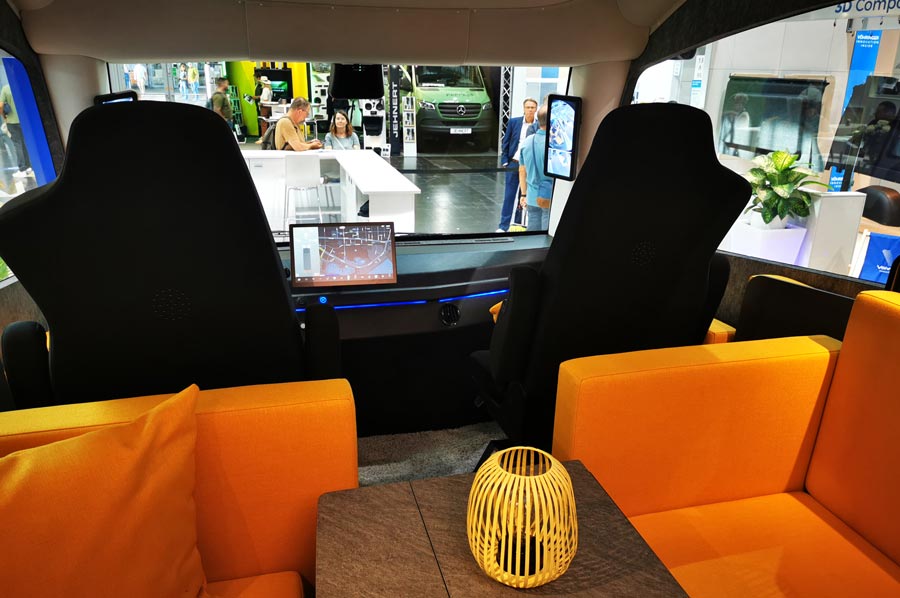 In our article "Caravan Salon – Lightweight Construction and Electric Vehicles?", we briefly touched upon the EVOLVE project CityFreighter’s electric "skateboard" platform and the vehicle body developed by Vöhringer. By utilizing the AIRPLY® construction method, the weight of all installed fixtures and furniture was reduced by approximately 45%.
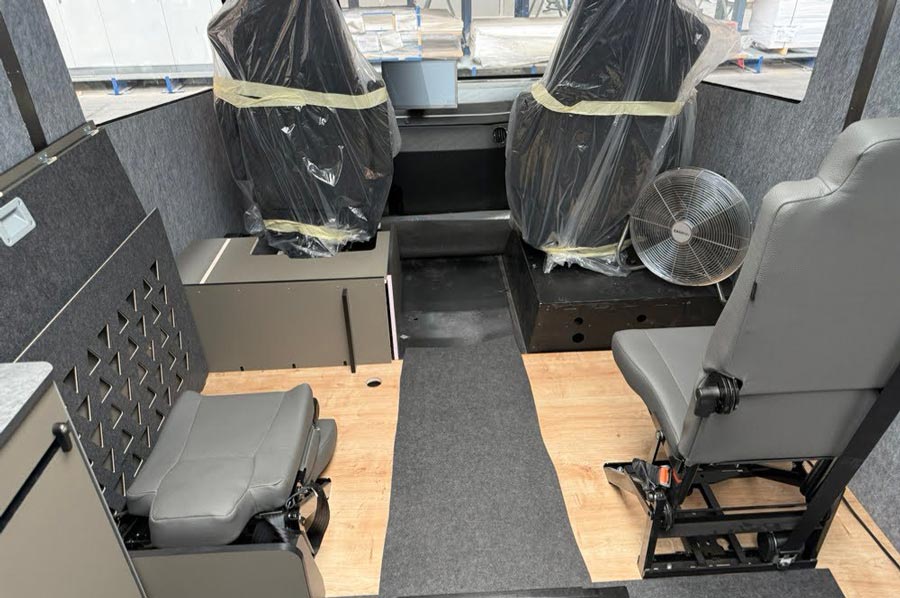
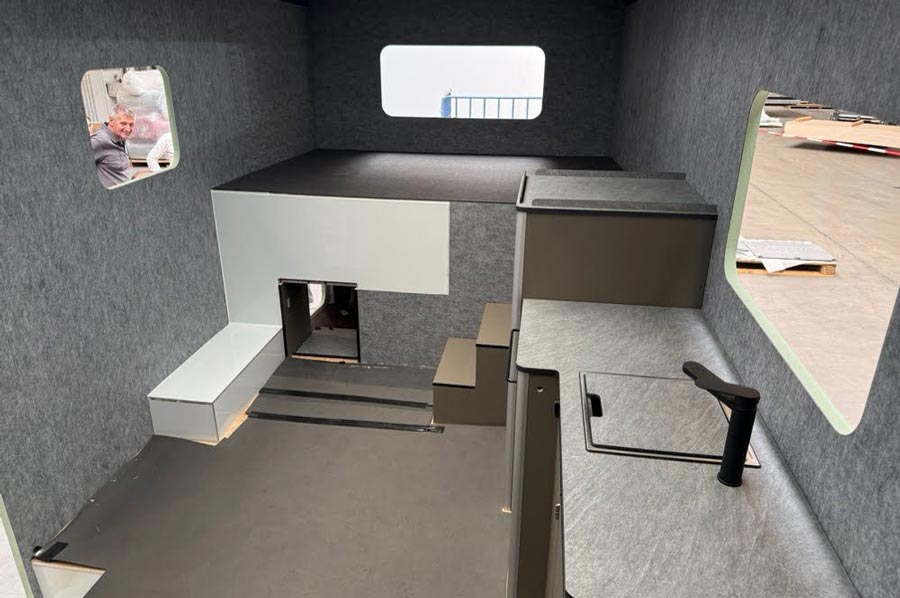
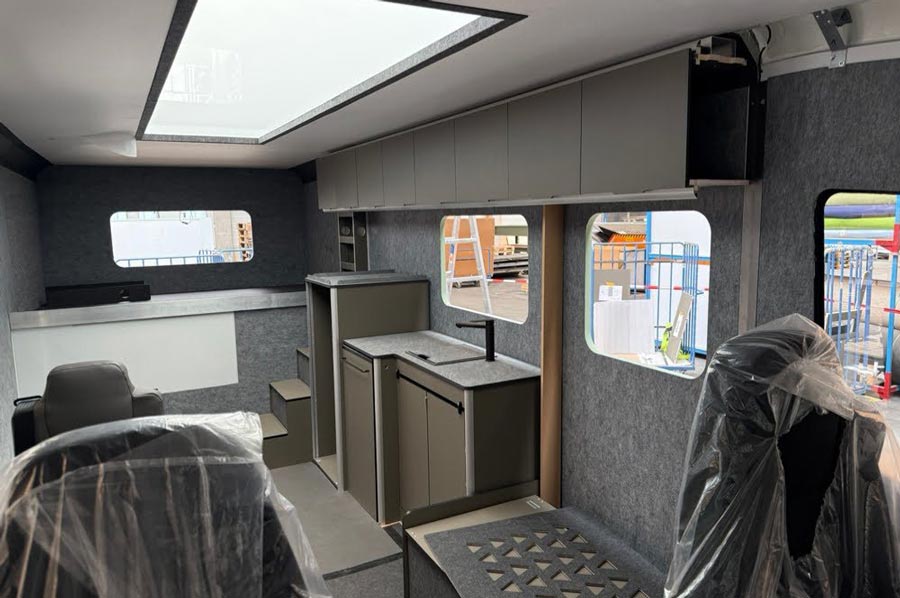
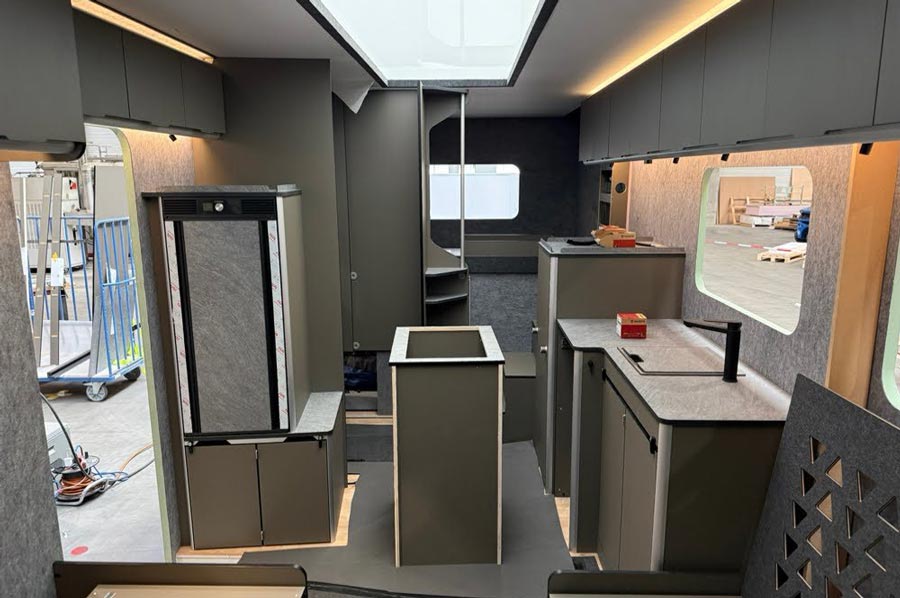
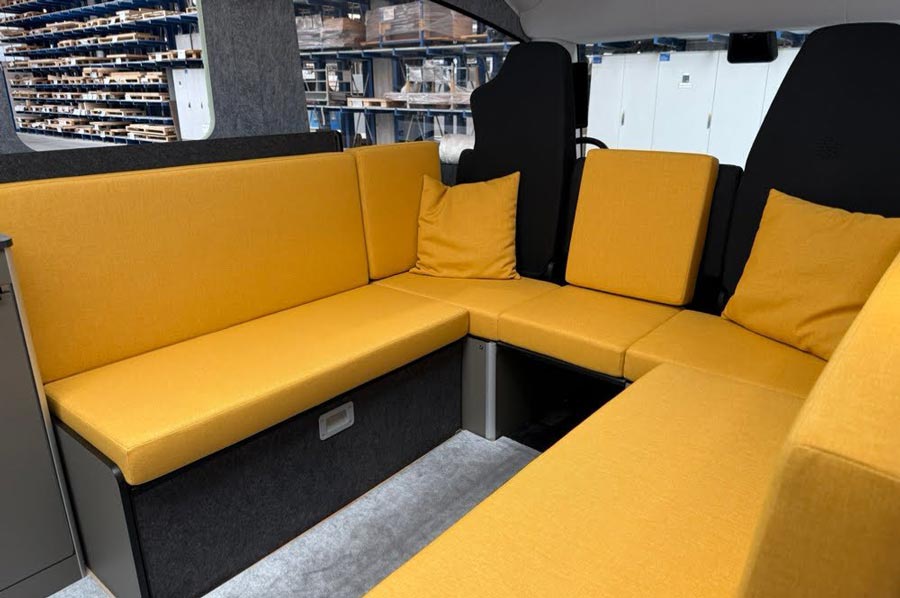
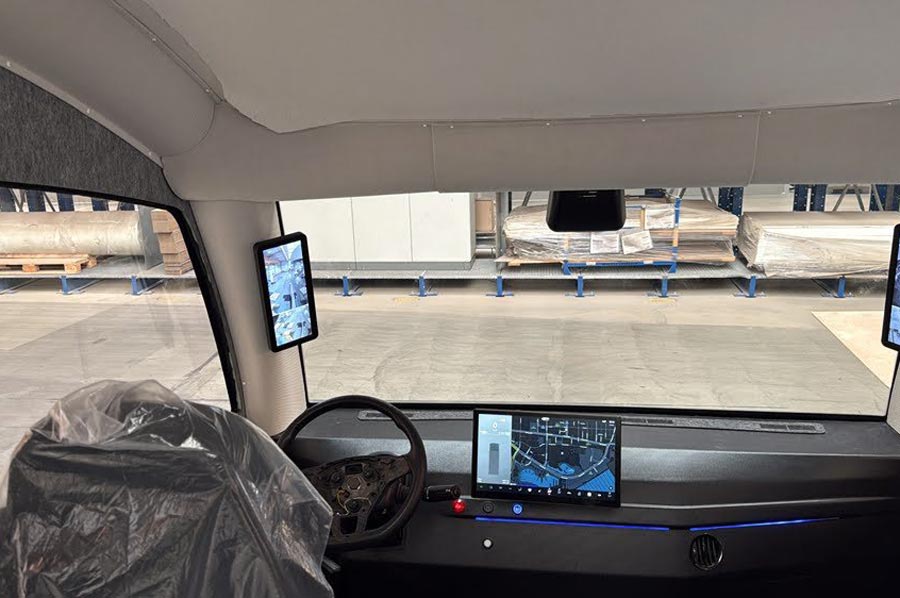
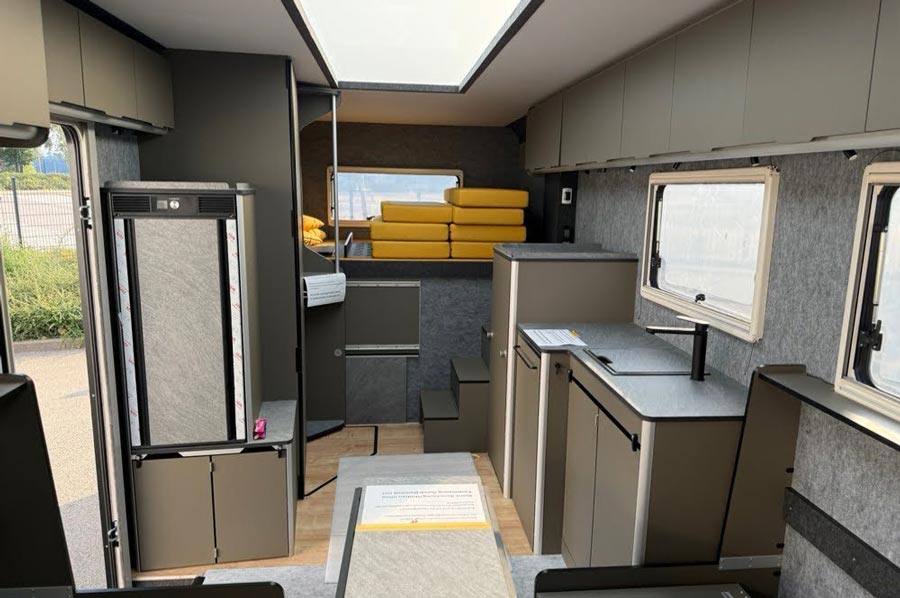
The result of this development is a motorhome with a completely flat floor throughout, based on a modular system that allows for flexible length adjustments (similar to a bus). It features a lower entry point and provides about 70 cm more usable interior length compared to a conventional chassis-based motorhome with the same footprint all while maintaining a total weight of under 3.5 tonnes, despite including a 128 kWh battery, a full-featured kitchen, a bathroom, and a heat pump.
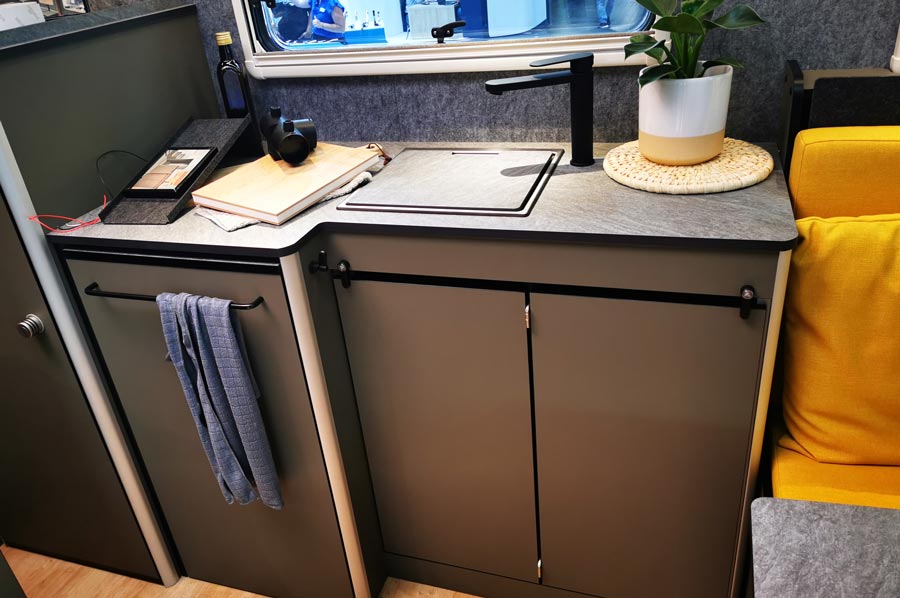 With a length of 6.95 m, a width of 2.35 m, and a height of 2.72 m, the vehicle offers 12.2 m² of living space with full standing height across a body length of 5.20 m completely free of steps or transmission tunnels that would otherwise obstruct the path from the cab to the rear.
Designed for the new 4.25-tonne limit for Class B driver’s licenses.
Developed with European special regulations for electric vehicles in mind, ensuring it can be driven with a standard passenger car driver’s license.
200 kW DC fast charging.
Charges from 10% to 80% in approximately 20 minutes ensuring that a charging stop barely interrupts the journey. Extending range through solar energy
Integrated photovoltaic modules from OPES Solar Mobility generate electricity both while driving and when the vehicle is stationary.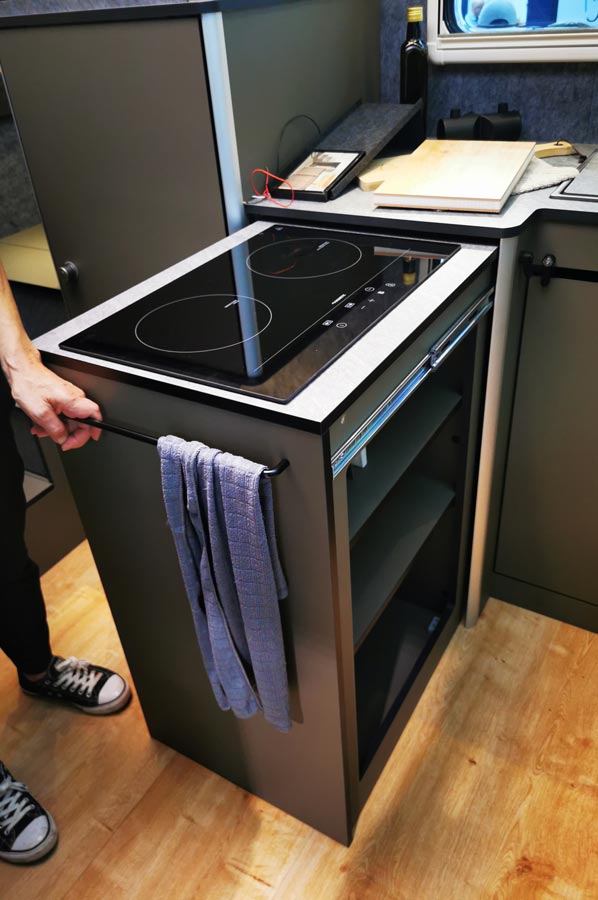 Electric travel, electric living
Thanks to "vehicle-to-load" technology, appliances such as an induction cooktop, air conditioning, a refrigerator, and a mobile office setup can be powered directly from the vehicle's drive battery.
A battery with its own lifecycle
The vehicle and the battery are not inextricably linked; the battery can be serviced, replaced, or upgraded independently.
This demonstration vehicle takes a different approach: EVOLVE an electric "skateboard" platform by CityFreighter integrates the battery, powertrain, chassis, and power electronics into an ultra-low-profile frame. This frees the living space built on top from the structural constraints typical of conventional base vehicles.
On this foundation, Vöhringer has implemented an uncompromisingly lightweight interior, reducing weight by up to 45% compared to conventional plywood furniture. The result is a motorhome featuring a completely flat floor, a lower entry point, and approximately 70 cm more usable interior length than a traditional chassis-based motorhome with the same footprint.
Extremely exciting, innovative, and forward-looking. Keep it up!
Please read as well:
Paddling, bathing areas and drinking water production on the Ruhr
St. Nicholas Church Rostock - Rostock Bosai Days 2024