Baden-Baden: A Popular Spa Town with a Long History

With a population of just under 55,000, Baden-Baden is not the largest city in Germany or even in the state of Baden-Württemberg. For centuries, however, it has been renowned primarily as a spa and thermal resort, a reputation that dates back to the Romans, who made use of the thermal springs found here in the Black Forest.
In this article, we examine the city’s development, its current significance to the region, and its future prospects. Visitors planning a trip to Baden-Baden will quickly gain a sense of the history of this small town in Baden; the travel recommendations are remarkably consistent: palaces and thermal baths as far as the eye can see, each one more worth visiting than the last.
How did Baden-Baden become such a popular destination?
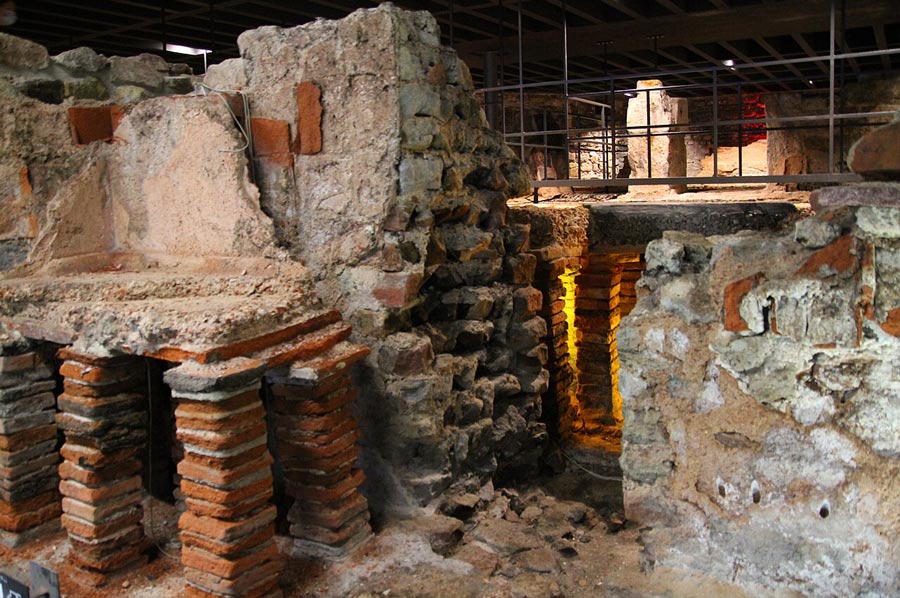 Baden-Baden first gained significant importance when the Romans discovered the area, which is distinguished by its thermal springs comparable to those found in Eleftheres, Greece, near Kavala. What began as a military camp, complete with extensive bathing facilities, eventually evolved into an administrative district that grew in scope. The Roman bath ruins in the old town of Baden-Baden remnants of the ancient thermal baths of the city of *Aquae* are located beneath the market square and near the Friedrichsbad (Gerd Eichmann – Own work, CC BY-SA 4.0).
The imperial baths, which were expanded into a luxurious complex between 213 and 217 AD by order of the Roman Emperor Caracalla, are situated on the terraced southern slope of the Schlossberg, beneath today’s market square, between the Collegiate Church (*Stiftskirche*) and the Old Steam Bath (*Altes Dampfbad*). They were discovered in 1847 during construction work at the Collegiate Church. The magnificent complex included two pools possibly used for cooling the thermal water as well as two bathing pools and a hot-air room. Its shape and extent are marked out on the market square using black cobblestones.
 At the foot of the Schlossberg (Castle Hill) lay a more modestly appointed bathhouse for soldiers a *balineum* likely constructed as early as the 70s AD. It comprised a hot bath, a warm-air bath, a dry-heat (sweat) bath, and several swimming pools. The facility featured an underfloor heating system (*hypocaustum*) and wall heating provided by hollow bricks (*tubuli*). Excavated and preserved between 1846 and 1900, the site is now housed within a museum located beneath the Friedrichsbad Terrace situated between the Friedrichsbad and the Klosterschule vom Heiligen Grab and can be viewed from the outside through a glass partition.
In 260 AD, the region was ultimately conquered by the Alamanni. Around 1250, Baden was granted town charter status; its thermal springs remained a key asset, having been made available for public use by Margrave Frederick II and later utilized, more than 200 years after that, by Emperor Frederick III.
The spa operations suffered a major setback in the summer of 1689, when French troops attacked the town during the War of the Grand Alliance (War of the Palatine Succession). By the end of the 18th century, the town’s renowned reputation returned, transforming it back into a glamorous spa resort a summer counterpart to Paris, which served as the "winter capital." In keeping with this status, numerous luxury amenities emerged around the town centre, including hotels, a *Kurhaus* (spa house), a casino, and even a horse-racing track. The patron Edouard Bénazet organized races there, financing them through the proceeds generated by the casino. In 1845, Baden-Baden took a significant step toward improving its accessibility. The town gained its own railway connection to ensure accessibility for people from all over Germany, many of whom travelled there specifically to attend classical concerts. Until 1912, spa concerts were held in the Baden-Baden music pavilion; this was later replaced by the so-called "Kurmuschel" (a shell-shaped bandstand), which still stands today. French influence remained evident for a long time, with 11% of the featured composers being of French origin.
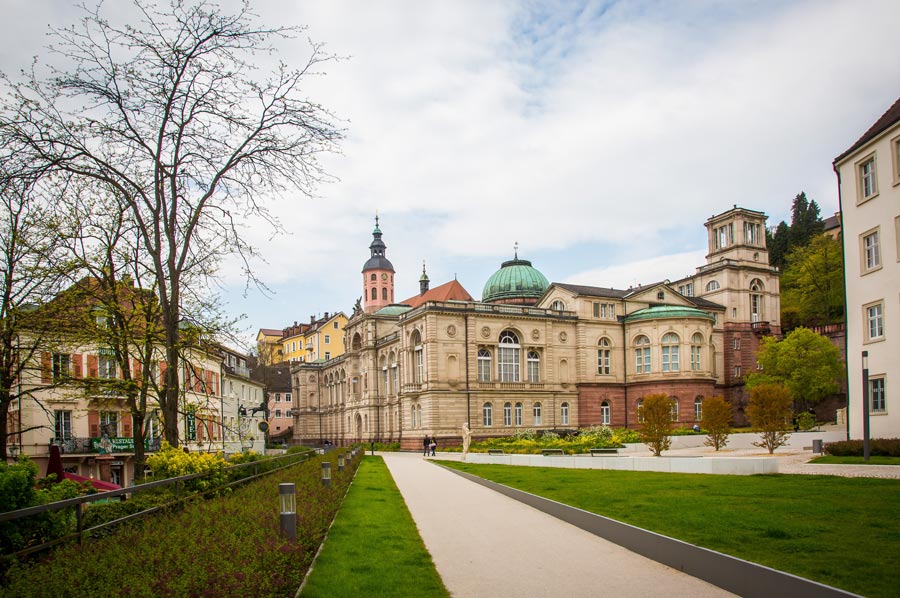 Nevertheless, many people were disappointed by the structure that replaced the original pavilion following its voluntary demolition it proved inferior, particularly in terms of acoustics, as the sound had previously carried much more effectively. Fortunately, the Second World War had little impact on Baden-Baden or the architectural fabric that had developed over the decades. Only slightly more than 3% of the town was officially classified as destroyed, allowing the casino to resume operations as early as 1950, under the administration of the French occupation zone. Another period of global significance occurred in 1963 and 1981, when the spa town hosted an IOC Session and an Olympic Congress both of which were of great importance to the Olympic Games and their continued existence.
What does Baden-Baden offer today?
The Kurhaus (spa house) of Baden-Baden serves as a venue for a wide range of events, from political gatherings to casino gaming.
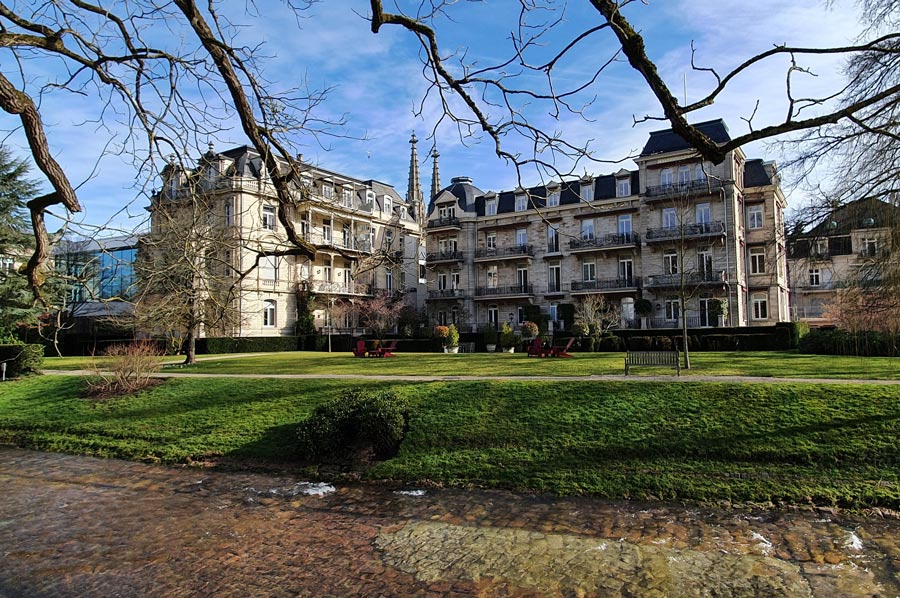 While Baden-Baden had a population of 1,900 in 1790, that number has grown steadily reaching approximately 15,700 by 1900 and climbing to nearly 55,000 today. A visit to the city’s official website reveals that luxury remains the primary draw for visitors. It is no coincidence that the city’s motto is "The good-good life." Centuries of eventful history including remnants from the Roman era now blend with modernity and a distinct cultural atmosphere, making the destination well worth a visit. With its unique blend of relaxation and diverse entertainment, it offers an enjoyable experience for all age groups.
The Kurhaus remains the heart of the area, providing entertainment almost around the clock. During the day, visitors can enjoy everything from classical concerts to fine dining, while the evening brings the opening of the Casino Baden-Baden, housed within one of the Kurhaus’s grand halls. It is an excellent place to play a round of blackjack or try your hand at the poker table, before perhaps heading to one of the many thermal springs the following day. In games like blackjack, the right strategy is not overly complicated once you understand the basic concepts and the concept of the "house edge." For many, these doors have led to a stroke of great fortune. Although its significance has diminished somewhat with the rise of online casinos, the venue remains a popular destination for visitors looking to test their luck or relive a bygone era of glamour.
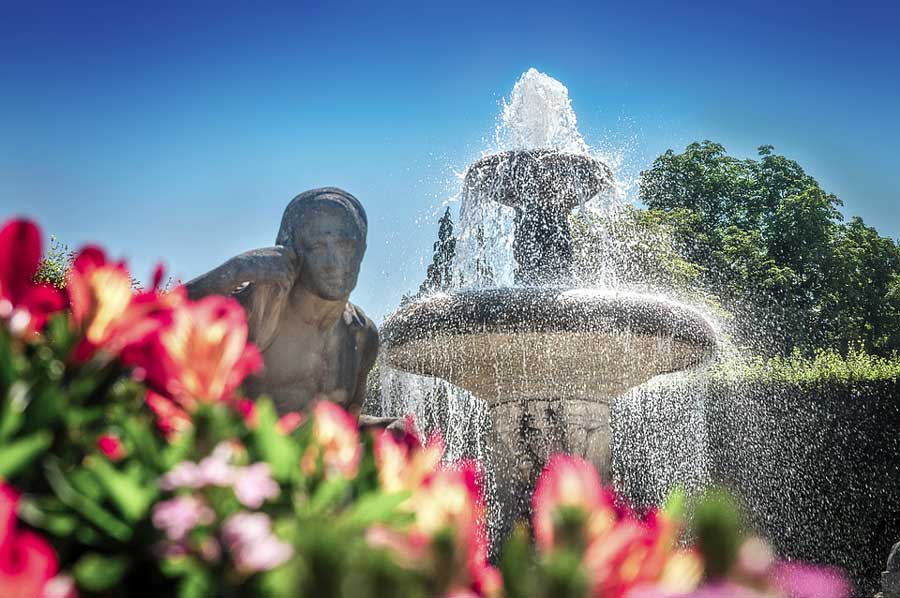 A look at the annual visitor numbers reveals that the appeal of Baden-Baden is by no means fading; rather, it is becoming even more pronounced. Official statistics from the state of Baden-Württemberg provide data for three specific years that illustrate this trend. In 1980, approximately 9 million people visited Baden-Baden for tourism-related reasons. By the year 2000, this figure had risen to roughly 13.4 million, and 15 years later, it saw another significant increase, reaching nearly 20.4 million. The majority of visitors come from within Germany, though this share declined from 81.5% in 1980 to 76.1% by 2015. Notably, the number of visitors from Asia has grown significantly, while the number of tourists from the United States has remained almost constant over the decades.
In what direction will Baden-Baden develop in the future?
A completed hotel room at the Europäischer Hof Baden-Baden, which is scheduled to open in 2019.
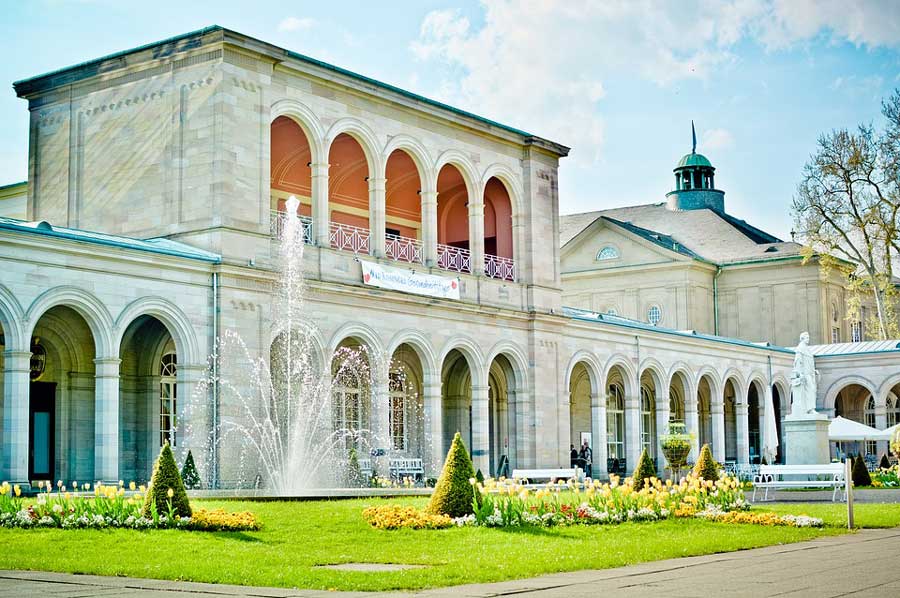 Having examined the past and the present, it is only natural to ask how Baden-Baden will evolve in the future. The city’s recurring significance on the international and supranational stage has consistently proven relevant, and it is likely to continue making a notable impact in the years to come. When Barack Obama visited Germany for the first time during his first term on April 3, 2009 organizers chose the market square in Baden-Baden as the venue. At the same time, the city hosted the NATO summit marking the alliance’s 60th anniversary, an event attended by numerous heads of state and government. The fact that Obama returned in 2017 to accept the German Media Prize is a testament to his positive experience and suggests that he felt quite at home there. As long as well-known figures continue to find their way to this small town in Baden, its popularity will undoubtedly not wane on the contrary, it will likely attract even more people.
Forum Zukunft, Baden-Baden e.V. is a non-profit association dedicated to exploring issues concerning the future of the town, as well as that of Germany and Europe a focus that makes it particularly relevant to this section. The association frequently hosts events in the city, with the primary objective of promoting public education. In addition to lectures and panel discussions, it also regularly screens films to engage the younger generation. To highlight the city’s unique character, Baden-Baden applied for inclusion in the "Great Spas of Europe" designation and has been on the UNESCO World Heritage tentative list since 2014. A key goal for the future is to transition from this tentative list to the official UNESCO World Heritage list.
For those who, after reading this, might consider living in Baden-Baden, be prepared for property prices that are quite substantial. According to statistics, a mid-terrace house is the most affordable option, with an average price of €369,000. At the other end of the spectrum, a villa will cost significantly more averaging €3.65 million. If, given this information, you would prefer a hotel room instead, you can look forward to the fully renovated Europäischer Hof. Following the long-standing absence of the building’s "Luisenflügel" (Luisen wing), the foundation stone for its reconstruction was laid in 2017. Featuring 122 rooms and suites, a glass pavilion, and an elegant shopping arcade, the hotel which opened its doors in 2019 is designed to attract new visitors. Naturally, the property also includes a spa area, situated alongside a variety of restaurants. Whether in the past, the present, or the future: Baden-Baden is well worth a visit offering a level of relaxation few other cities in Germany can match.
Please also read:
Owls – fascinating creatures of the night / Our ten native owl species