Rostock – A Stroll Through the City Center
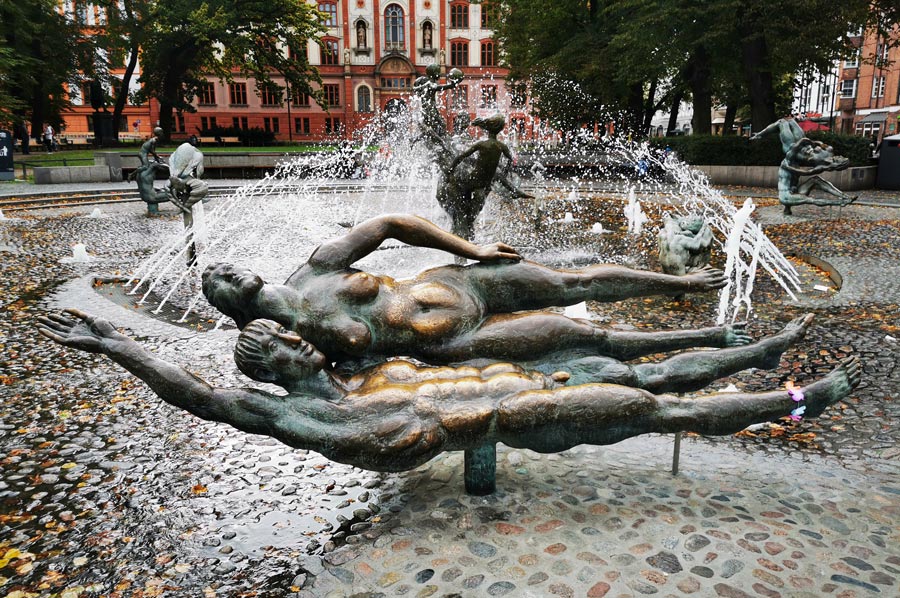
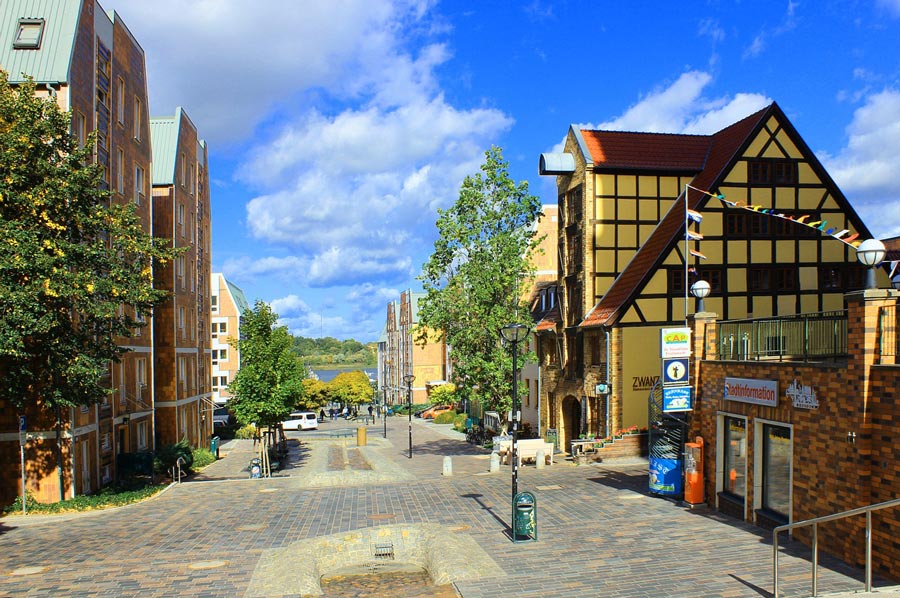
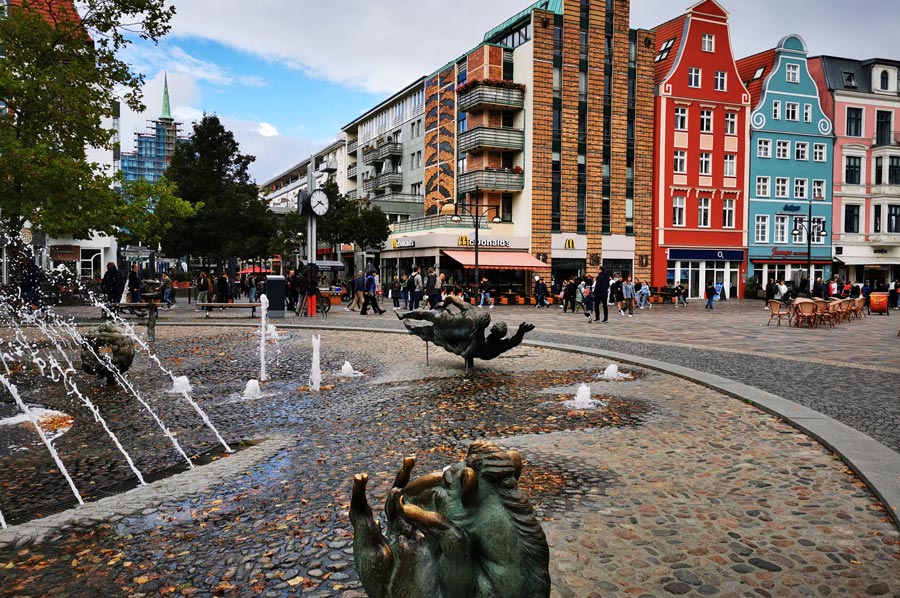
Almost the entire city centre of Rostock is designed as a pedestrian-only zone, making it exceptionally visitor-friendly. It stretches from the Kröpeliner Tor (Kröpelin Gate) in the west to the Neuer Markt (New Market) in the east of the historic old town.
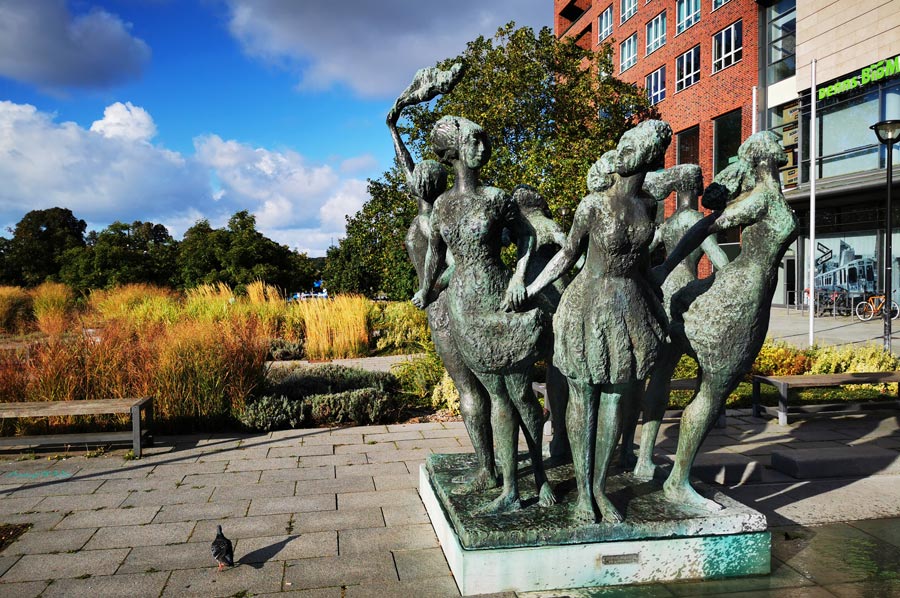
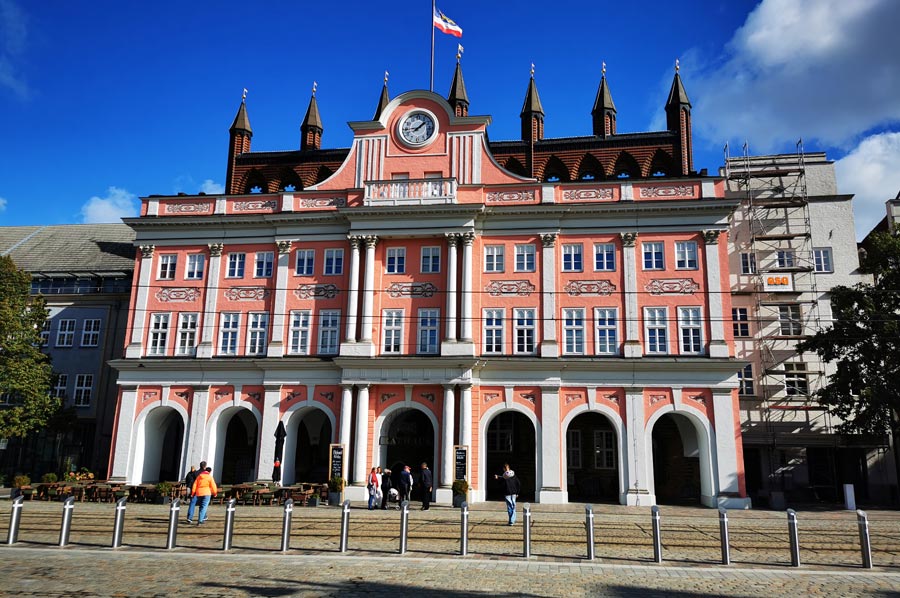
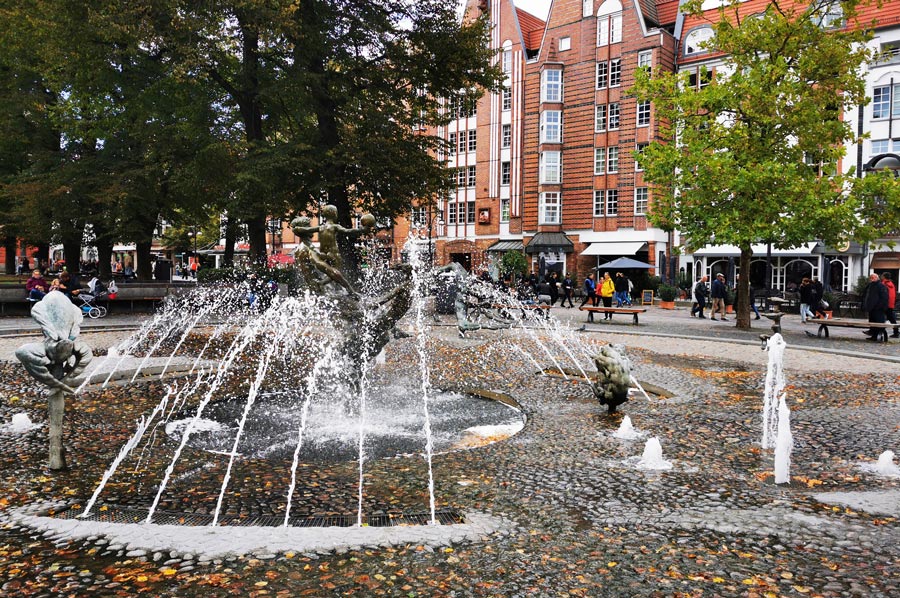
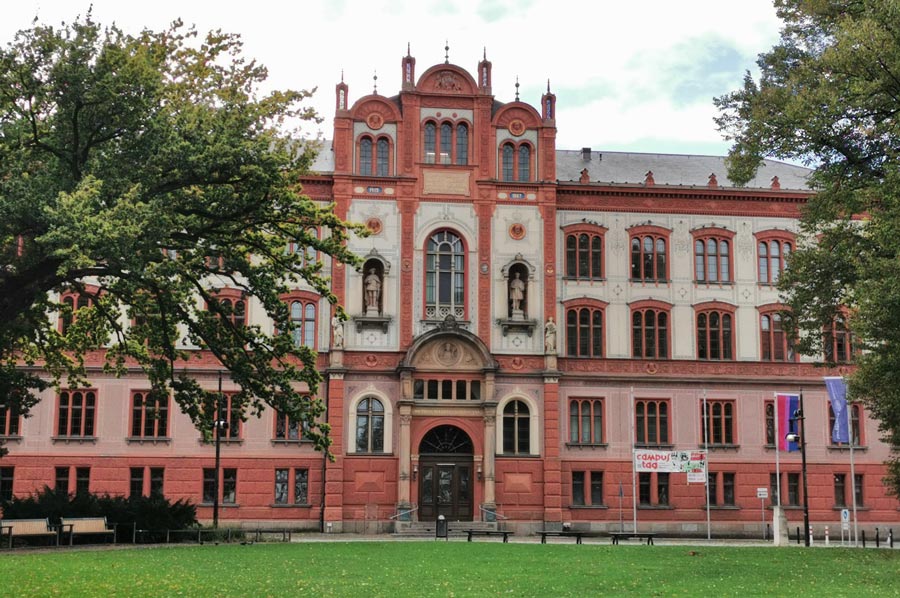
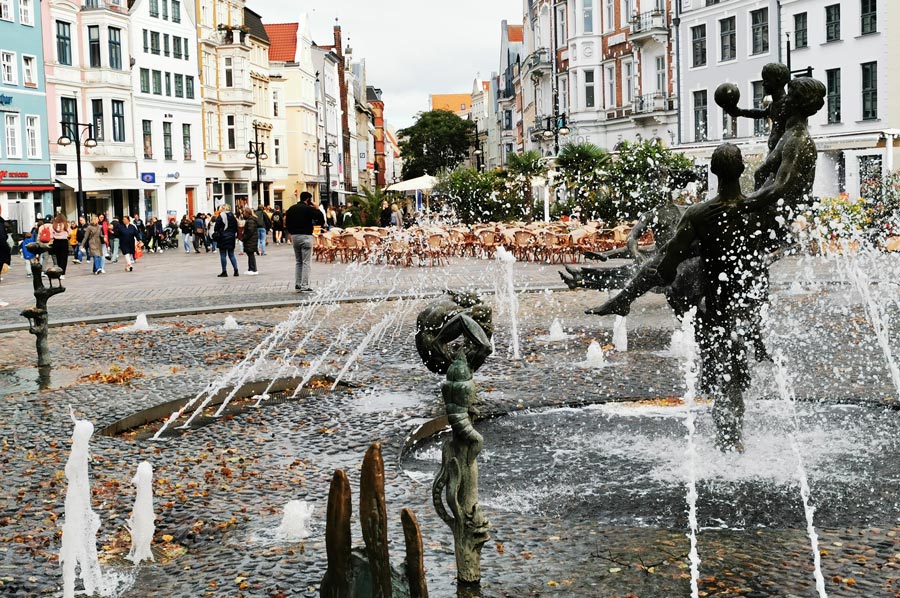
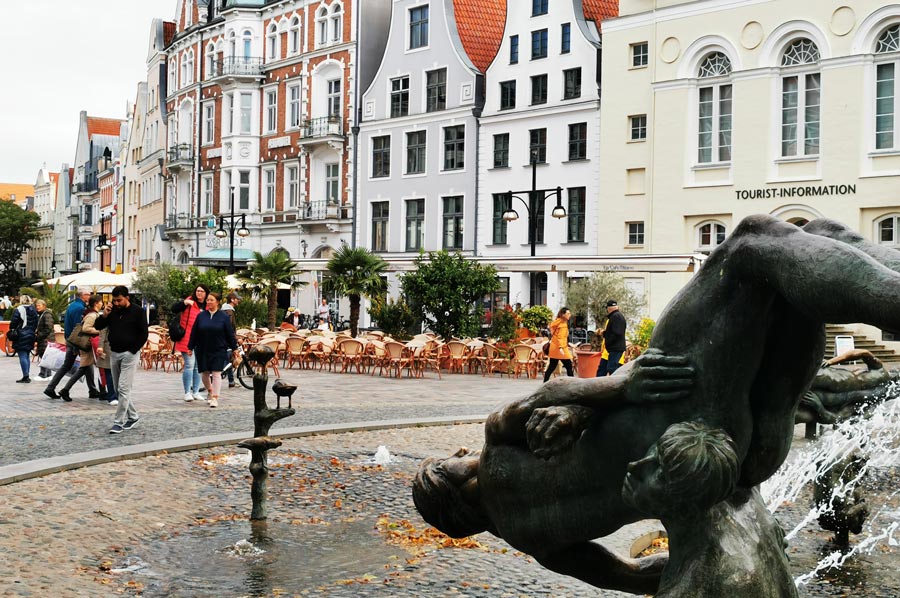
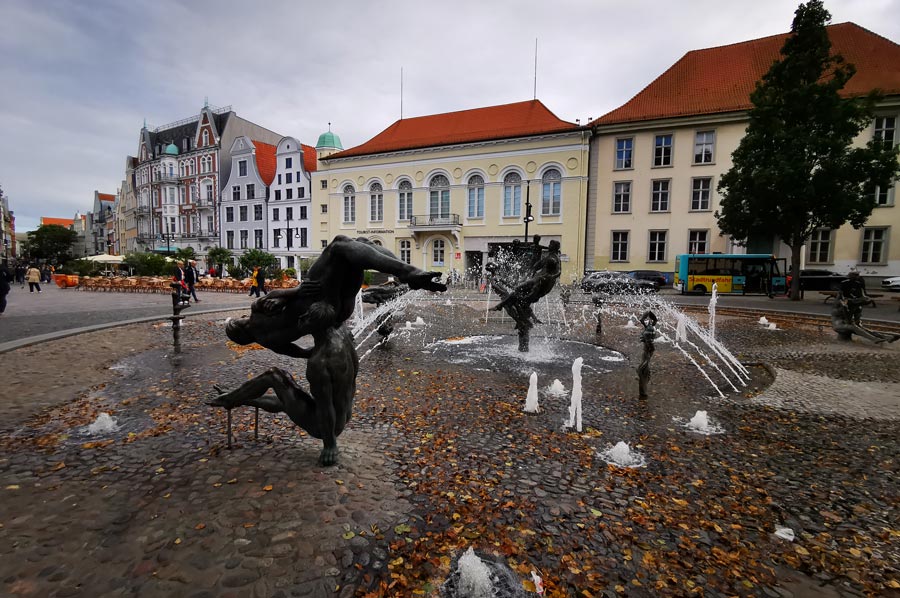
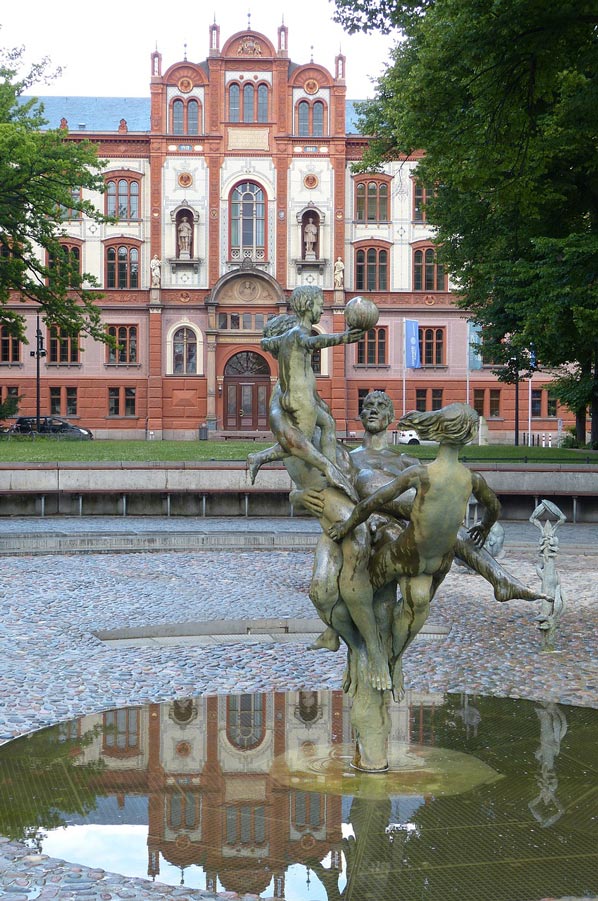
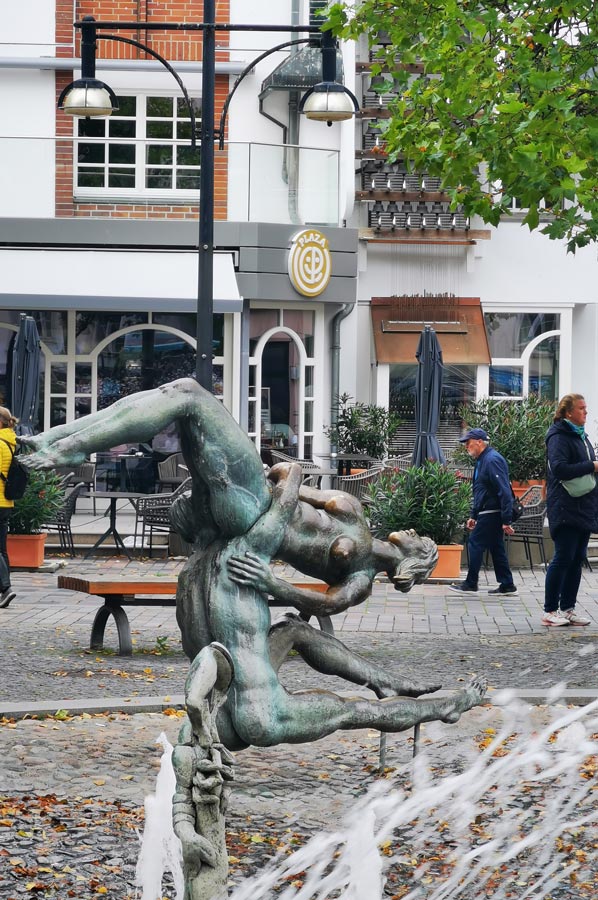
In addition to numerous shops, cafés, and restaurants, this area encompasses the historic heart of the city featuring a town hall with Baroque-style modifications and other magnificent gabled houses as well as Universitätsplatz (University Square) and the "Fountain of the Joy of Life" (Brunnen der Lebensfreude). The latter, colloquially known as the "porno fountain," is located directly in front of the main building of the University of Rostock. Lange Straße and Breite Straße serve as the primary historic thoroughfares, home to the striking "Five-Gabled House" (Fünfgiebelhaus).
Brick Gothic Architecture in Rostock
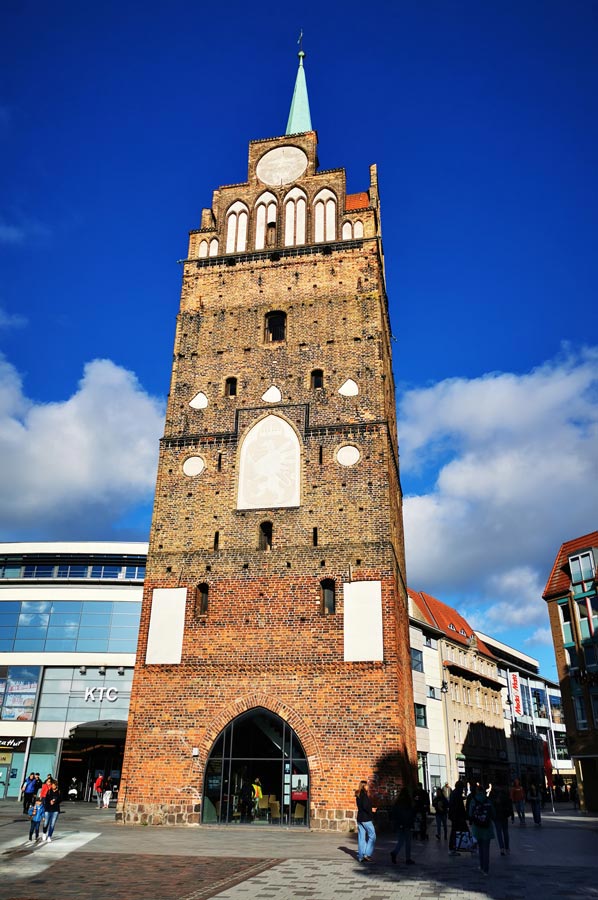 Rostock boasts a wealth of historic buildings and a remarkably intact, cohesive old town centre. Of particular note are the structures built in the Brick Gothic style, dating back to the era of the Hanseatic League.
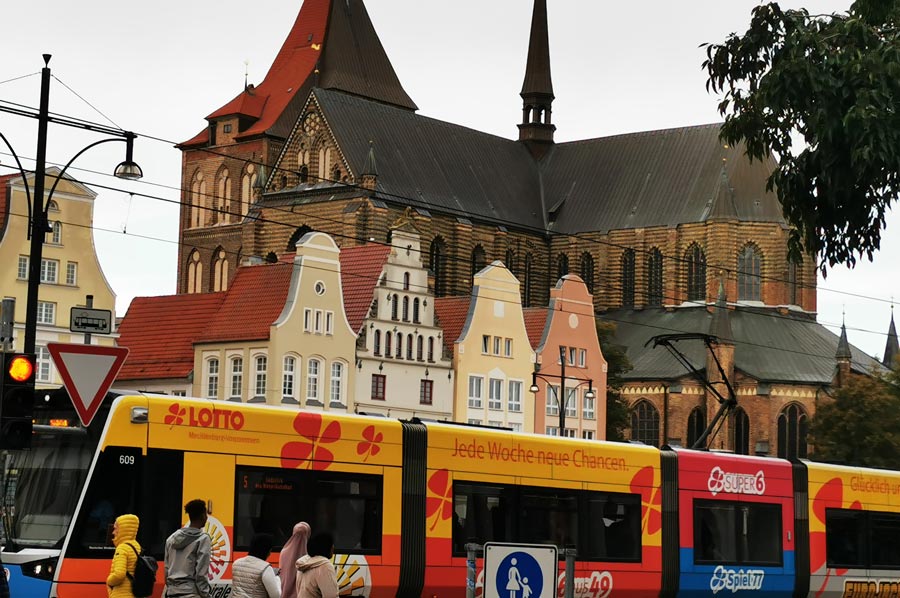
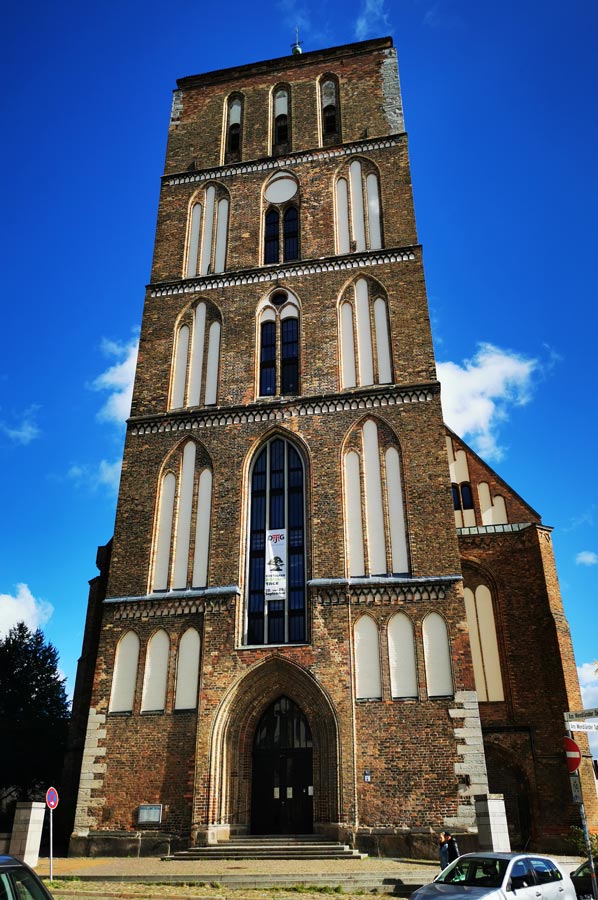
This includes the city’s largest church, St. Mary’s (St. Marien), located in the city centre.
A masterpiece of North German Brick Gothic architecture, it is defined by a massive western structure anchored by a substantial tower.
Construction of this three-aisled basilica which nonetheless possesses the character of a centralized structure began around 1290 and was completed by the mid-15th century.
 St. Mary’s features an exceptionally rich interior and is renowned for its famous astronomical clock and its Gothic architecture.
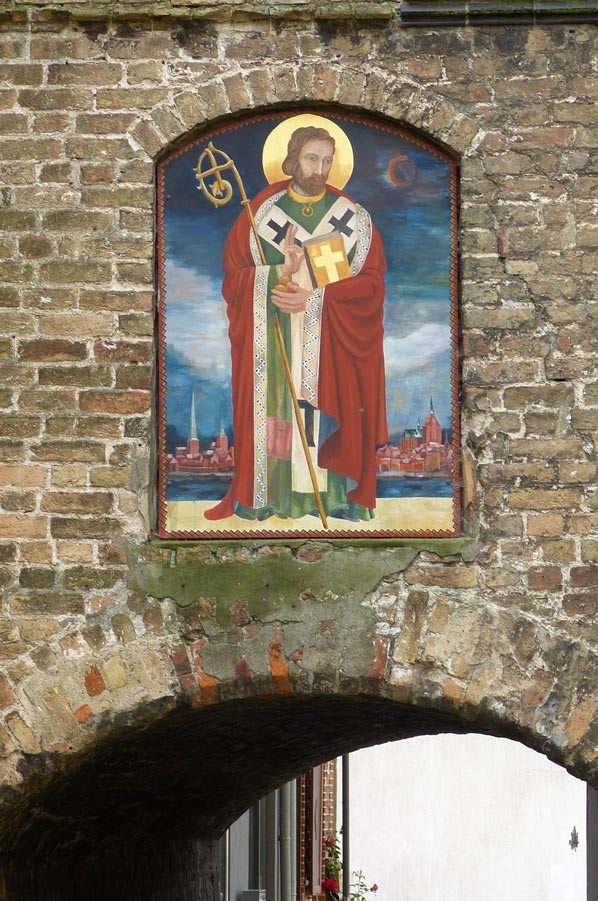
In the eastern part of the old town, one finds St. Peter’s Church (St.-Petri-Kirche) at the Alter Markt (Old Market) an area that marks the original nucleus of Rostock as well as the Early Gothic St. Nicholas’ Church (Nikolaikirche).
The church of the Convent of the Holy Cross (Kloster zum Heiligen Kreuz) is situated in the western part of the city center.
Outside the city walls lie the Church of the Holy Spirit (Heiligen-Geist-Kirche) in the Kröpeliner-Tor-Vorstadt district and the Warnemünde Church; both were built in the Neo-Gothic style during the 19th and early 20th centuries.
 The Gothic town hall, dating from the 13th and 14th centuries, was given a Baroque façade in 1727. Examples of magnificent Gothic merchant houses include the Hausbaumhaus, the Kerkhoffhaus, the Ratschow-Haus, and the Krahnstöverhaus, all located on the street known as Große Wasserstraße.
Many townhouses medieval in their core were later remodeled in the Baroque or Neoclassical style, particularly in prominent locations such as the Neuer Markt, the present-day Kröpeliner Straße, and the current Universitätsplatz (formerly known as the Hopfenmarkt).
City fortifications, including the Steintor, Kuhtor, and Kröpeliner Tor
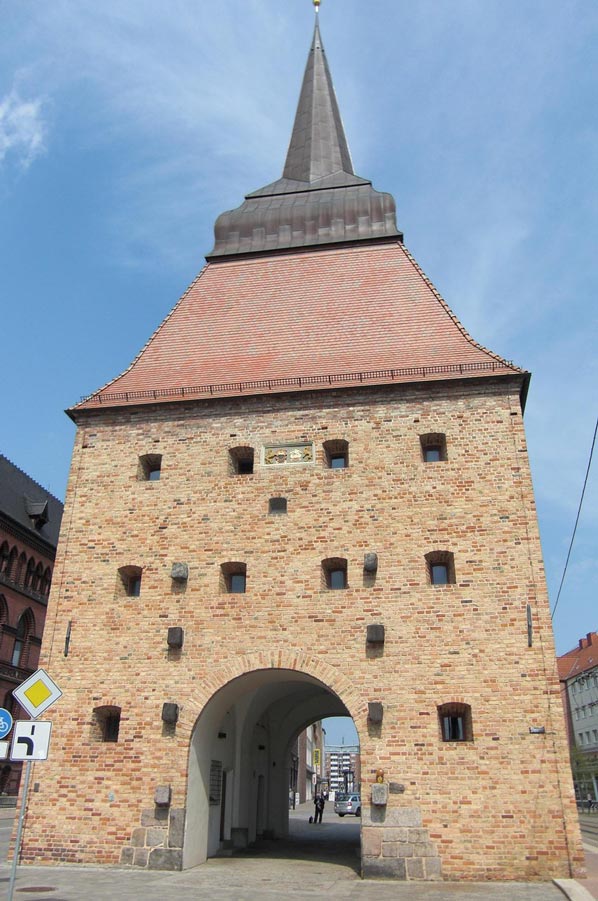
 Of Rostock’s historical city fortifications, several structures remain today: three medieval brick city gates (the Steintor, Kuhtor, and Kröpeliner Tor) and one from the Neoclassical period (the Mönchentor); a defensive tower (the Lagebuschturm); significant sections of the city wall totaling approximately 1,300 meters in length and featuring some *Wieckhäuser* (small defensive wall chambers) as well as parts of the fortress ramparts.
Notable 19th-century buildings include the Neo-Gothic Ständehaus (Assembly House) and the main university building on Universitätsplatz, which is designed in the Neo-Renaissance style.
During the early 20th century, the city underwent major expansion, leading to the development of a villa district in the Bahnhofsvorstadt area featuring the Zeecksche Villa, a landmark structure of that era as well as the working-class quarter of Kröpeliner-Tor-Vorstadt.
 Among the many structures dating from the era of industrialization is the water tower, built in 1903.
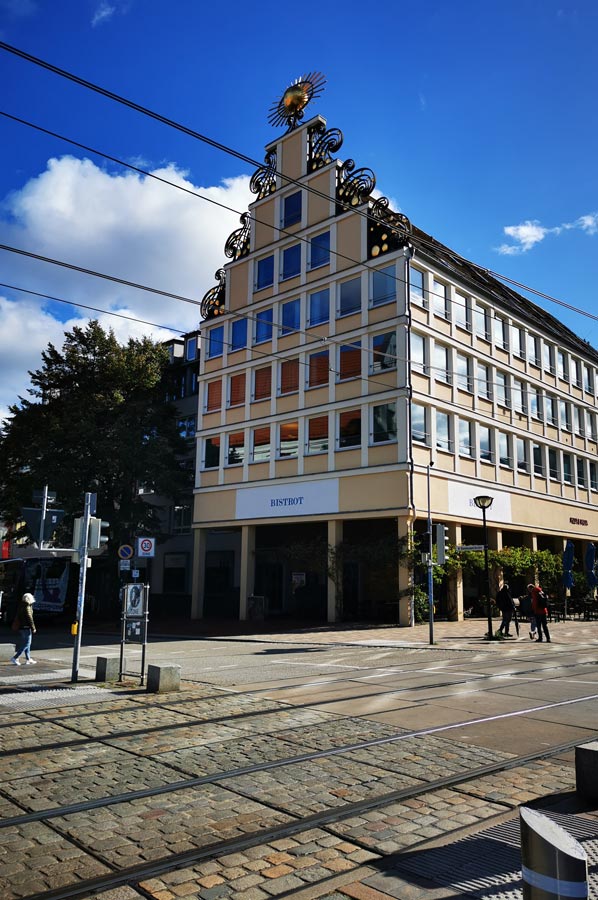
In the 1950s, "Lange Straße" (Long Street) was developed as a grand thoroughfare in the style of Socialist Classicism, incorporating elements of brick architecture.
Large residential areas were constructed during the 1960s and 1970s in the south and, most notably, in the northwest of the city.
Further housing developments consisting of prefabricated concrete buildings followed in the 1980s in the northeast of Rostock.
Cycling in Rostock – a remarkably high volume of bicycle traffic
 As avid cyclists ourselves we prefer to make as many of our trips as possible by bike our visit to Rostock was also centred around cycling.
We had already learned that Rostock is connected to numerous national and international long-distance cycling routes, including the Baltic Sea Coast Cycle Route (part of EuroVelo Route 10, which circles the Baltic Sea and passes through cities such as Kiel, Stralsund, and Gdańsk).
Another existing connection is the Berlin–Copenhagen Cycle Route (passing through places like Güstrow and Gedser), and the Iron Curtain Trail (which runs through 14 countries along the former Iron Curtain, stretching from Norway to the Black Sea).
 In May 2019, construction began at the "Südstadt-Campus" (South City Campus) on a 28-kilometer network of high-speed cycle paths, connecting the main railway station to Warnemünde, as well as Evershagen to Dierkow.
Significant sections have been open for use since 2024.
The first segment, extending as far as Erich-Schlesinger-Straße, was opened one year after construction began.
Please read as well:
Gjirokastër – A Journey Inland to a World Heritage Site
Freshwater Mussels – Vital Filters for Our Rivers and Lakes