Lifting Equipment Museum Witten – A Stroll Along
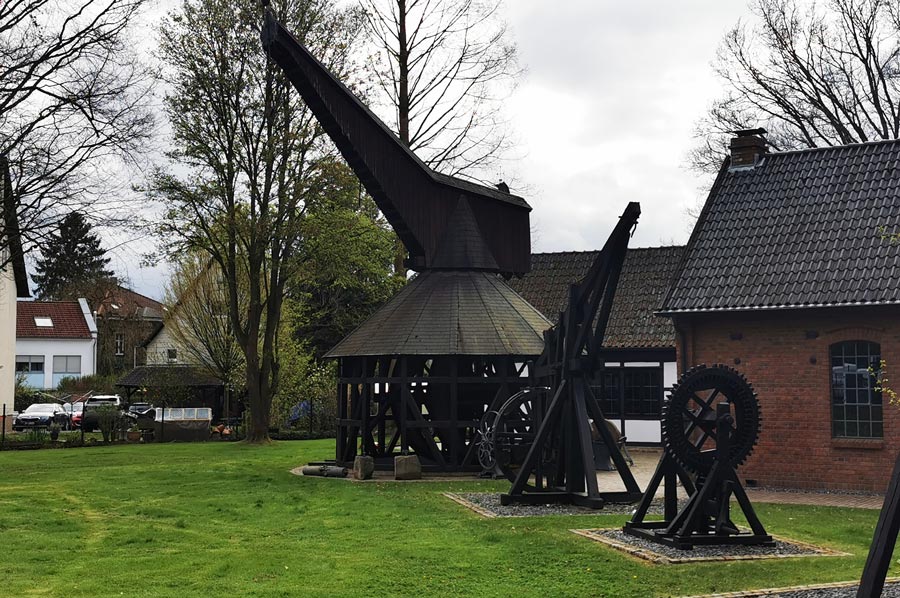
Lifting Equipment Museum – A walk to Lake Kemnade led us to discover the Lifting Equipment Museum in Witten, almost inconspicuously located on a side street behind an industrial complex.
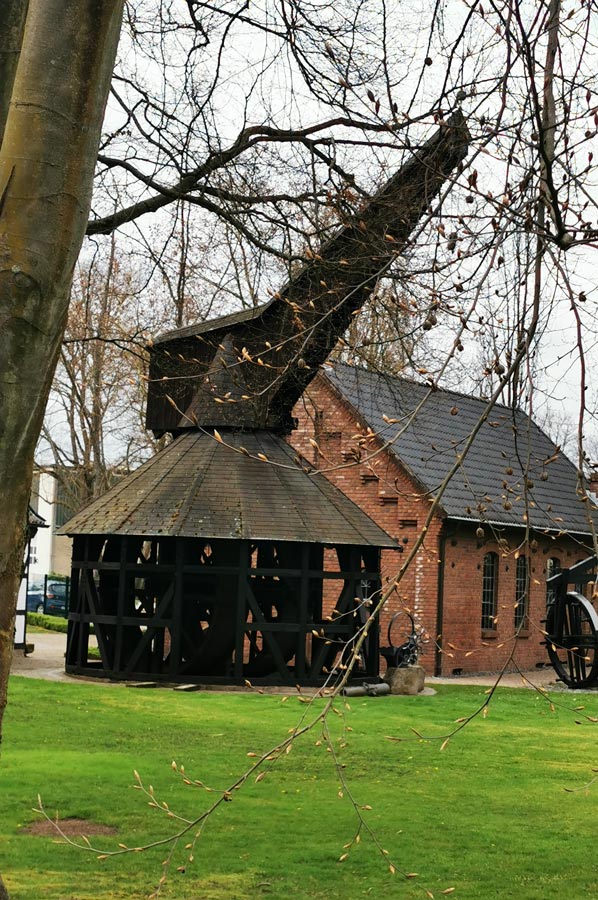
Our gaze across the manicured lawn fell upon a round, wooden structure with a crane-like boom, similar to one we had already noticed in Trier, right on the Moselle River: there, a crane for unloading ships.
 Our interest was piqued, and once again, we began our research.
We had often discussed the technological capabilities of past cultures during our excursions, cultures that could move enormous loads without electricity, whether during the time of the pyramid construction in Egypt or in Mexico.
We had marveled at how perfectly massive stone blocks were stacked on top of one another, whether in Delphi or at the famous Lion Gate of Mycenae.
What lifting devices had been capable of moving these masses?
But one thing at a time, because the history of development stretches back to the Stone Age, as Stonehenge in England clearly demonstrates.
Lifting Equipment Museum – Production Site in Witten
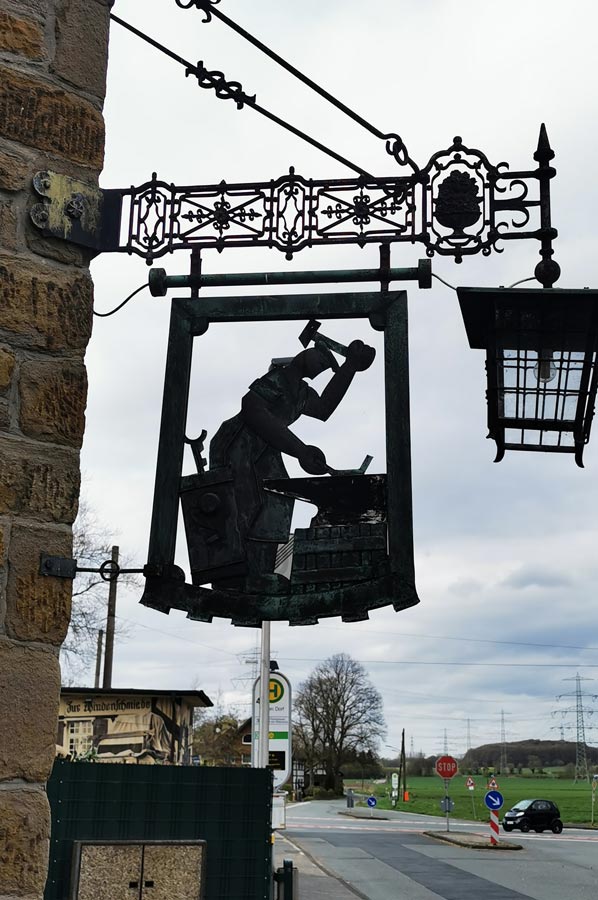 On the way to Lake Kemnade, we passed through Herbede, the largest district of Witten at 24 km², located about 5 kilometers southwest of Witten's city center on the left bank of the Ruhr River near Lake Kemnade.
Directly on Universitätsstraße is the factory site of one of the oldest manufacturers of lifting equipment, J.D. Neuhaus, which has been producing lifting equipment since 1745.
The company initially manufactured wooden-shaft winches for the locks on the nearby Ruhr River. Later, similar winches were also used for loading goods, coal mining, and even lifting railway cars.
 As early as 1880, loads of up to 7,500 kg could be moved in this way.
Since 1952, J. D. Neuhaus has been manufacturing pneumatically powered lifting equipment, initially used primarily in mining due to its exceptional efficiency and safety. A visit to the German Mining Museum in Bochum is highly recommended.
To clarify the term: Lifting equipment refers to technical devices and machines used for lifting, lowering, and moving loads, usually suspended in mid-air.
It includes manual (e.g., chain hoists, ratchet hoists) as well as electric versions and is essential for internal material handling.
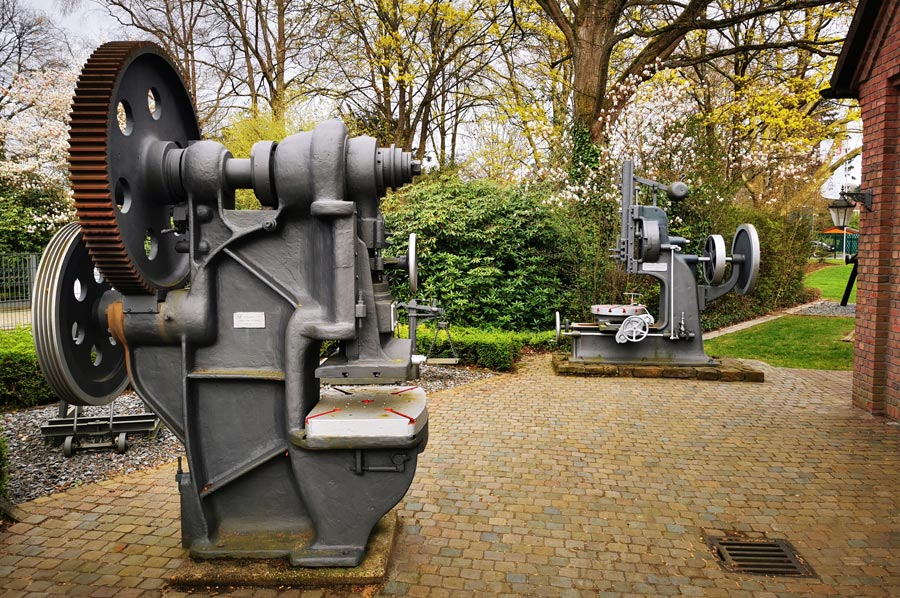 Types of Lifting Equipment
- Chain hoists (electric/manual): For vertical lifting.
- Rope hoists & winches: For longer distances.
- Lever hoists / ratchet hoists: For lifting, pulling, and tensioning.
- Trolleys: For horizontal movement on beams.
- Cranes: Complex systems for moving loads in multiple directions.
- Other: Tirfor winch, lever hoist, winches.
Function & Use
Lifting devices often use mechanical transmissions (gears, pulleys) to move heavy loads with minimal effort. They are still used in industry, construction, and workshops.
Visits are by appointment only.
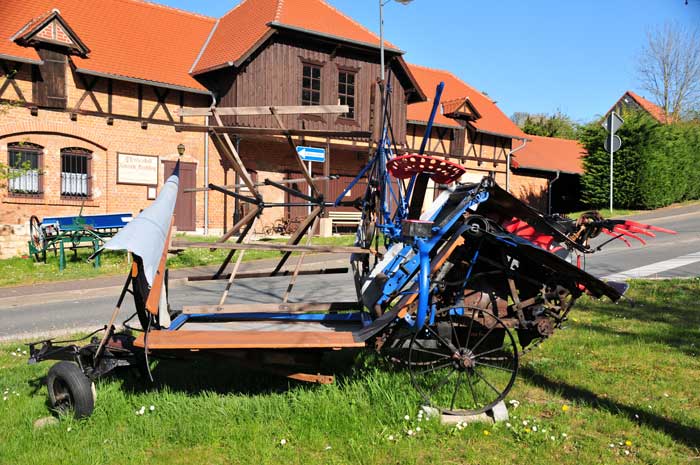
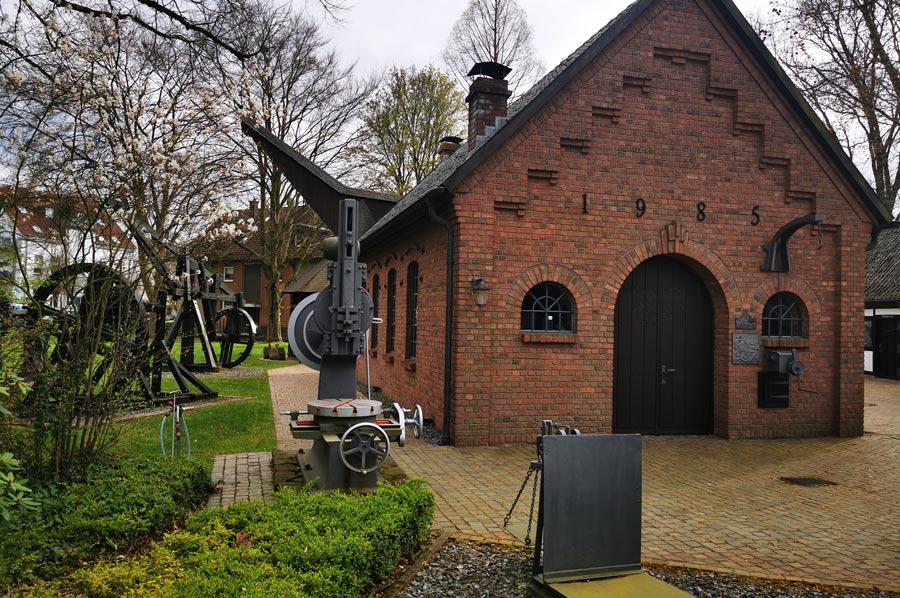 Here, behind the company premises, is what is probably the world's only lifting device museum. Conceived and implemented by J.D. Neuhaus in 1977, it showcases exhibits on the history of leverage in historic buildings and outdoors: models of historical lifting devices, the reconstructed winch forge of the company founder, a true-to-life replica of the Lüneburg department store crane from 1797, a transmission system from around 1900, treadmills, horse-powered winches, winches, and numerous other exhibits.
Lifting Equipment Museum
Windenstraße 2-4
DE-58455 Witten
02302-208-0
info(at)jdngroup.com
www.jdngroup.com
Lifting Equipment Museum - Open year-round, but by appointment only!
Please read as well:
Vosvos - VW Beetle Fan Club - A visit in Antalya
Ernst E. Hirsch – A German Legal Scholar in the Land of Atatürk