Bochum – Headframe and Mining Museum
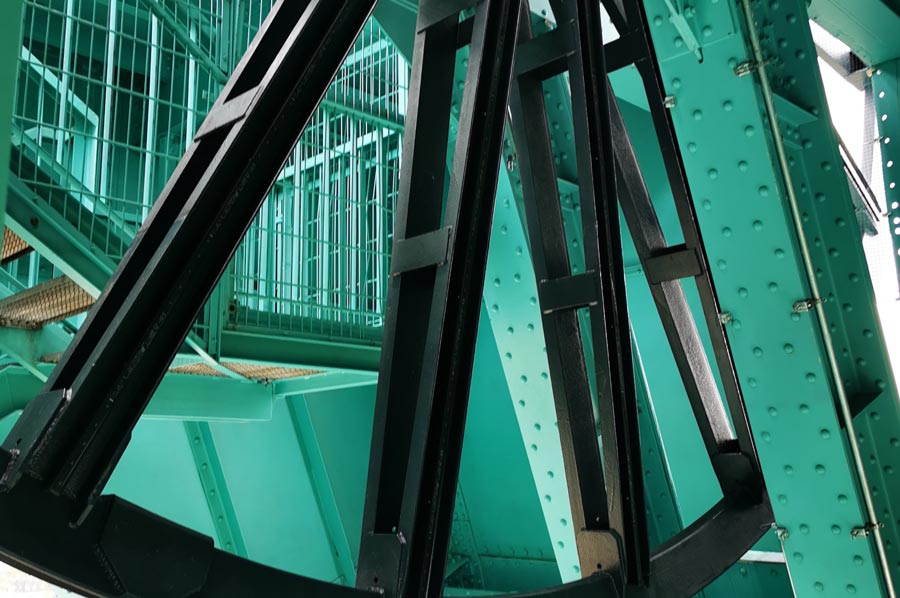
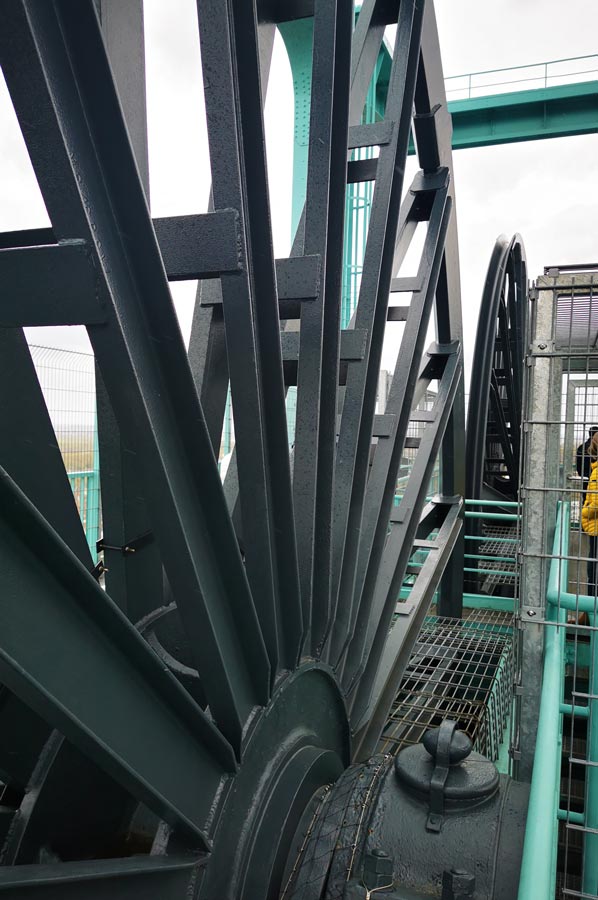
After visiting the mine gallery a choice prompted not only by the poor weather, but also by the hope that conditions might clear up a bit our next stop was the headframe (often referred to in Bochum as a "winding tower").
Unfortunately, things didn’t quite go as planned; strong winds and intermittent short rain showers made the ascent unpleasant, and there was a constant risk that the structure might be closed for safety reasons. Still, we decided to head up anyway.
In good weather, you get a magnificent, sweeping view over Bochum and the surrounding Ruhr region; for us, however, there was nothing to see but thick, low-hanging clouds.
The Mining Museum’s headframe, visible from afar
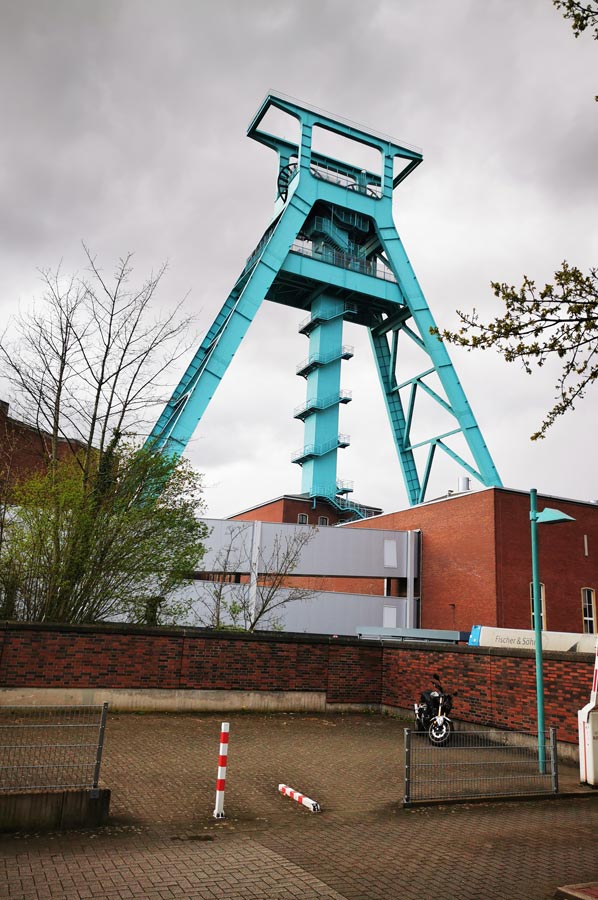 The headframe dates back to 1944 and was designed and erected by architects Fritz Schupp and Martin Kremmer for the now-defunct Germania colliery in the Marten district of Dortmund.
It stands 71.4 meters tall and weighs 650 metric tons. The head sheaves alone measure 8 meters in diameter.
In 1973–1974, the structure was dismantled in Marten and relocated to Bochum.
The first observation platform accessible by elevator is located at a height of 50 meters, while a second platform can be reached by climbing further stairs, which lead up to 62 meters.
Naturally, we took the stairs all the way in the spirit of staying healthy through physical activity!
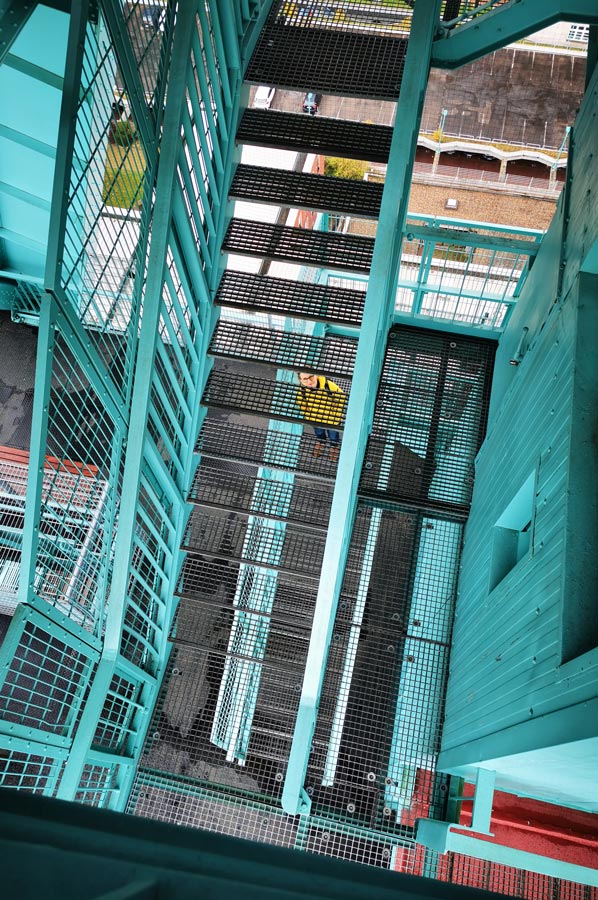 To make room for the elevator and the first platform, the two lower head sheaves were not reinstalled. Both platforms are truly impressive, not least because the stairs consist of open metal grating, allowing you to see straight down to the ground below.
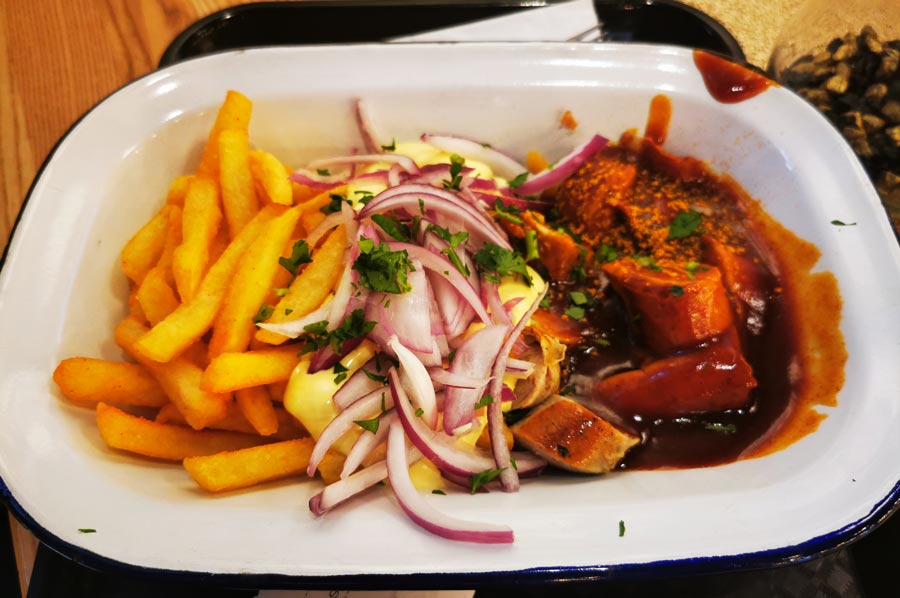
In any case, the weather made it difficult to truly enjoy the view, so we quickly headed toward the museum though not without first taking a peek into the restaurant, which offered a hearty, miner-style serving of the obligatory *Currywurst* with fries, presented in an enamelled metal dish. It was certainly delicious.
Moving on, we explored the various sections of the Mining Museum.
It is worth noting that the site includes a scientific department dedicated to an in-depth study of the history and technology of the mining industry.
A Leibniz Research Institution at the Mining Museum
 We learned during our visit that the museum which is supported by the DMT-Gesellschaft für Lehre und Bildung mbH and the City of Bochum is a research institution and a member of the Leibniz Association.
As early as 1977, the German Mining Museum was recognized as a research museum by the Federal-State Commission for Educational Planning and Research Promotion (BLK) and was subsequently included in the joint federal-state research funding program.
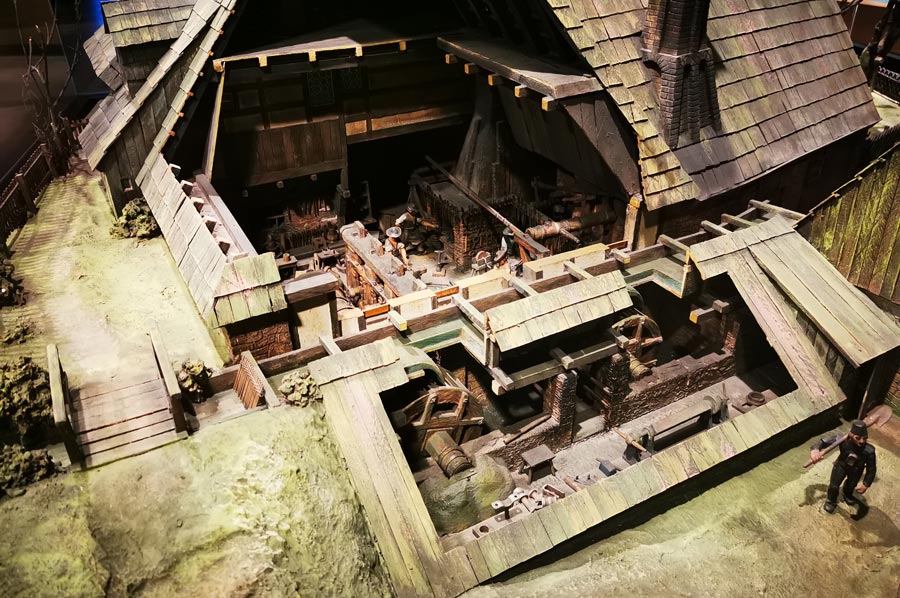
 As a Leibniz Research Museum for Geo-resources, the German Mining Museum Bochum conducts research across a wide range of disciplines, centred on the history and technology of the mining and metallurgical industries, as well as the documentation and preservation of cultural heritage. Research activities within these core areas are organized into specific research fields (such as mining archaeology and archaeometallurgy) and key themes, categorized by chronological, regional, or thematic criteria.
Research into prehistoric and early historic mining is based on archaeological investigations combined with scientific analytical methods. The study of medieval mineral resource extraction including processing, smelting, and trade complements this archaeological fieldwork through intensive analysis of historical sources. The history of modern mining and metallurgy is examined in terms of its technical, economic, and social implications. Another key area of focus is the research and study of cultural heritage sites specifically, industrial and technical monuments.
 The museum is supported by a registered association, the “Vereinigung der Freunde von Kunst und Kultur” (VFKK Association of Friends of Art and Culture), which also publishes the journal Der Anschnitt.
The German Mining Museum Bochum (Deutsches Bergbau-Museum Bochum) is part of the "Route of Industrial Heritage" (Route der Industriekultur). It housed the largest of the five visitor centers that served as cultural-tourism hubs for the Ruhr metropolitan region during its year as a European Capital of Culture in 2010; these centres have since remained key starting points for exploring the entire Ruhr area.
Please also read: