Oxi Day – The "No" National Holiday in Thessaloniki

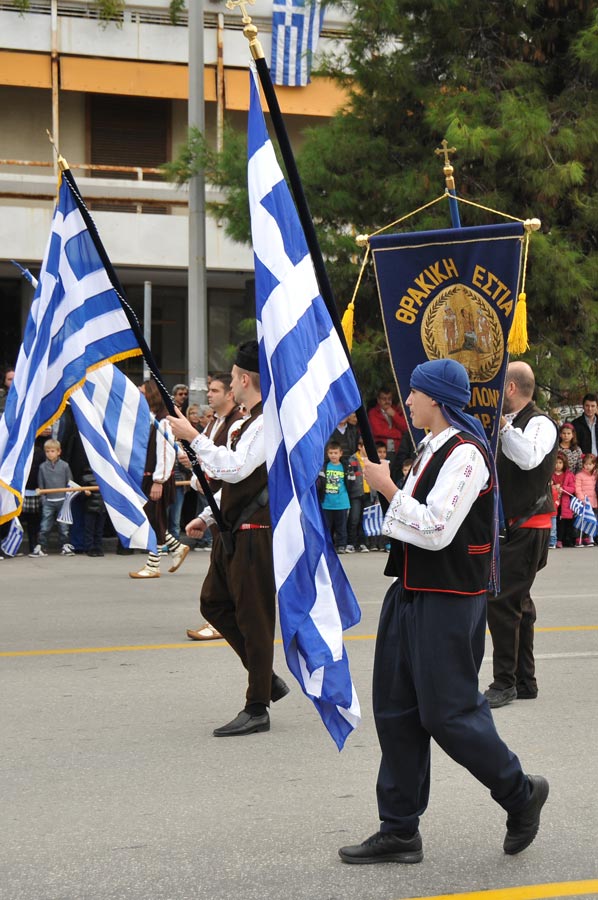
Today, October 28, 2015, we headed into the city centre of Thessaloniki for a special occasion: it is the second most significant national holiday in Greece, known as "Oxi Day."
The Greek word "oxi" (pronounced *ochi*) means "no." This date is commemorated annually by many Greeks with patriotic reverence for their society and state, marked by a grand parade held in Thessaloniki.
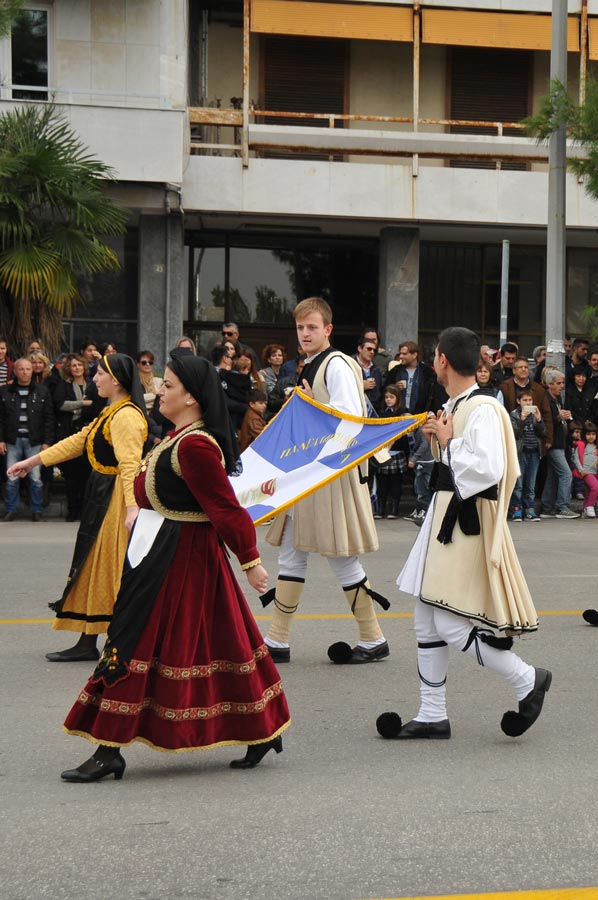
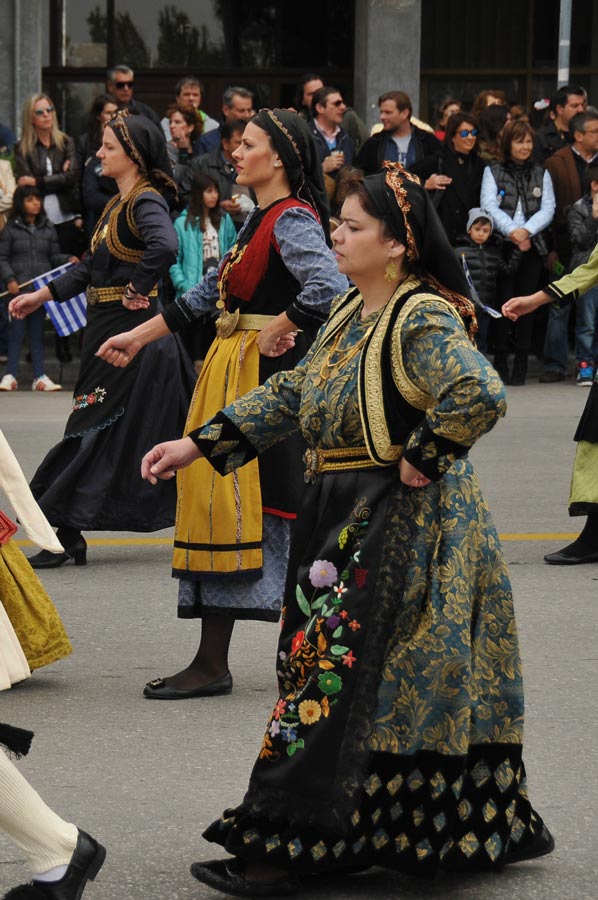
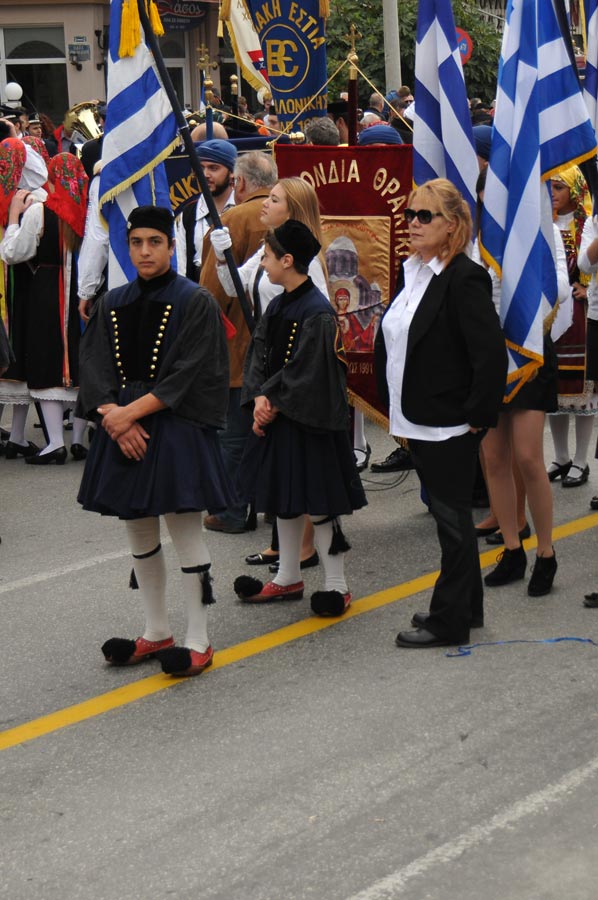 The massive, elaborate parade features the military including various units and veterans along with historical reenactment groups, security forces (police, fire department, and emergency services), various associations and organizations, and many school classes.
A brief historical background: On April 7, 1939, Albania was occupied by the Italians a warning from the Italian dictator, Benito Mussolini, directed at Greece.
To ensure the Greek people had grasped this message, Mussolini ordered the torpedoing of the light cruiser *Elli* on August 15, 1940, in the harbour of the island of Tinos, where the ship was anchored for the Feast of the Assumption (the Dormition of the Mother of God).
 On October 28, 1940, shortly after 3:00 a.m., the Italian ambassador, Emanuele Grazzi, delivered an ultimatum to the Greek general and head of state, Metaxas, at his home in the Athenian suburb of Kifissia.
The ultimatum demanded that Greece allow the Axis powers to enter its territory and occupy unspecified "strategically important points." It further stated that any rejection of these demands would be met with war, effective from 6:00 a.m.
Metaxas’ response was: “I view both the matter itself and the manner in which it was presented as a declaration of war by Italy.”
As Grazzi writes in his memoirs, Metaxas’ exact words spoken in French were: “Alors, c’est la guerre” (“Well, then it is war”).
 Grazzi replied, “Pas nécessaire, mon excellence” (“Not necessarily, Excellency”), to which Metaxas countered, “Non, c’est nécessaire” (“Yes, it is necessary”). In retrospect, this exchange is often simplified to a single, stark “No.”
Following Metaxas’ rejection, Italian troops advancing from Albania, which was then an Italian “protectorate” invaded northern Greece at 5:30 a.m.
With this, Greece entered the Second World War as a belligerent. On the morning of October 28, 1940, large segments of the Greek population regardless of their individual political leanings took to the streets to protest the Italian invasion.
 The headline in the daily newspaper *Elliniko Mellon* on October 30, 1940, referred to these events simply as “Ochi” (“No”); this played a significant role in establishing this shorthand term to describe the event.
Today, this “No!” from Ioannis Metaxas serves during the national holiday as a symbol of maintaining a principled stance in one’s dealings with neighbouring states. Historical records indicate that General Ioannis Metaxas had intended to keep his country neutral during the Second World War.
On November 14, 1940, the Greeks launched a counterattack, forcing the Italians into a retreat in the Pindus Mountains. From that moment on, Metaxas was hailed as a liberator and marched as far as Northern Epirus (southern Albania).
Consequently, Hitler was forced to come to the aid of his beleaguered ally, Mussolini, in order to bring the situation in the Balkans under control in the interest of the Axis powers.
 The German army’s occupation of Greece began in the north of the country in April 1941 as part of the Balkan campaign and concluded in May 1941 with the conquest of Crete. This delayed the planned invasion of the Soviet Union (“Operation Barbarossa”) and placed it in a less favourable position in terms of the time of year a turning point that marked the beginning of the end for both dictatorships. So much for the historical background.
In Greece, the anniversary was designated a public holiday following the Second World War. It stands as the second most important national holiday, surpassed only by March 25th, which commemorates Greece’s liberation from Ottoman rule.
The day is typically marked by military parades and processions involving schoolchildren and university students, while buildings and monuments are adorned with Greek flags. Until 1974, it was even a mandatory requirement for every citizen to decorate their home.
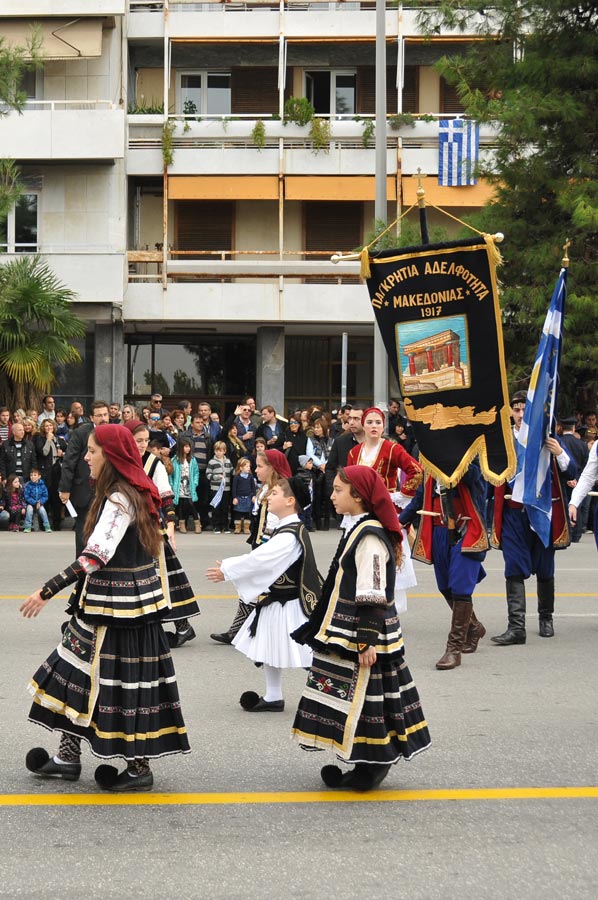
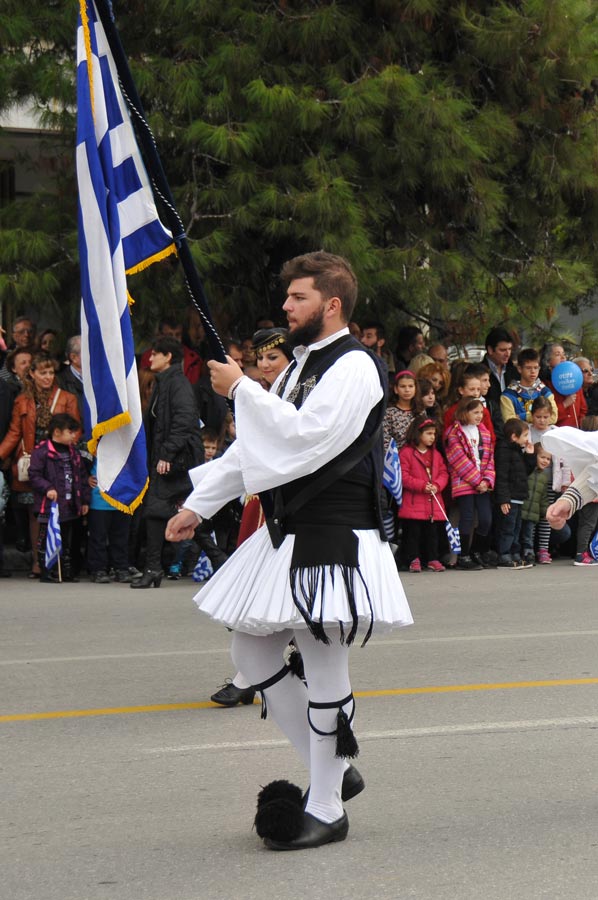 On this day, thousands of people gathered along the parade route Leoforos Megalou Alexandrou and Georgiou Papandreou streets to witness the spectacle. It is impossible to even estimate how many thousands took part in the parade itself.
The event, however, felt more like a massive public festival; even before the parade began, the public was free to get a close look at emergency response vehicles, as well as military tanks and equipment a source of great delight, especially for the children.
One can only hope that the latter the military vehicles are never put to use again, though, given the many flashpoints of conflict across the globe, that is likely to remain nothing more than a pipe dream.
 The conclusion of the parade was marked by a squadron of Air Force jet fighters and a diverse group of helicopters flying over the procession along the coast. An aircraft from the military aerobatic team performed a variety of spectacular manoeuvres though, for safety reasons, these mostly took place out over the sea.
We decided to wrap up the day with a short stroll through the city centre before heading back to the Zampetas camper stop.
Please also read:
Tsiknopempti – celebrating Carnival, family-style, at Zampetas
Camping vehicles – lightweight construction as a design principle