


Box - The Old Turkish House in Antalya
- Written by Portal Editor
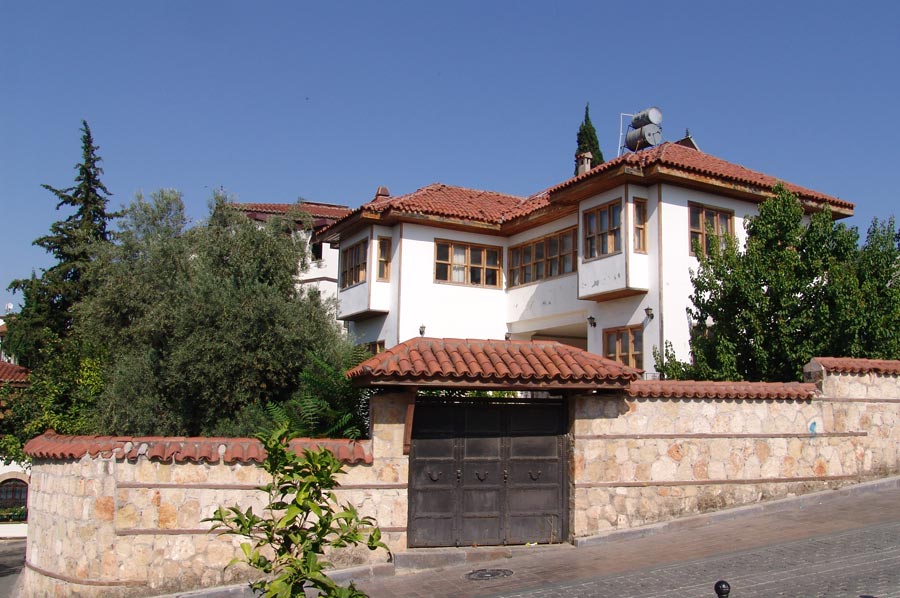
Box - If you stroll through Antalya's old town, or even better, visit the "museum town" of Safranbolu in northern Turkey, you'll notice the sheer number and variety of old Turkish houses that define the streetscape.
After the houses in Antalya's old town had fallen into complete disrepair and were threatened with demolition until the 1970s, the old building fabric has been carefully preserved and restored in recent years, thus reviving the character of an old Turkish city.
Box - Separated into "Harem" and "Selamlik"
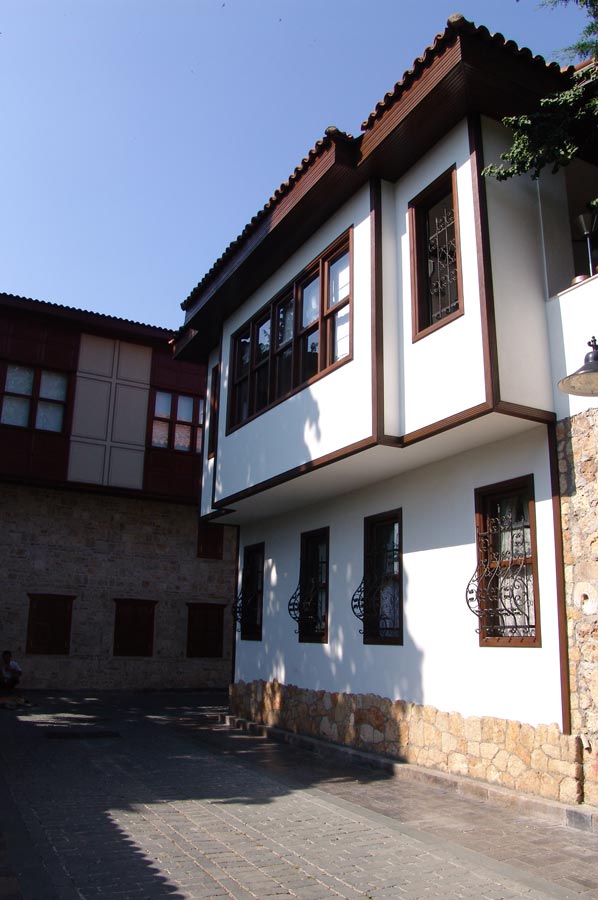 Influenced on the one hand by nomadic traditions, and on the other by the Islamic spirit, old Turkish house construction developed specific characteristics that make it unique.
Although different climatic conditions and landscape/vegetation patterns have led to different forms, the basic caste structures are the same everywhere. A key feature was the separation of women's and men's quarters.
This applied without exception and regardless of social standing. Even the smaller houses, consisting of only two rooms, were divided into "harem" and "selamlik," that is, into women's and men's quarters. The master of the house only entered the harem to sleep, while meals and receptions always took place separately in their respective rooms.
 The rooms, which represented separately planned and designed living units, were connected by the sofa, a common area between the rooms.
Over time, this room developed into the preferred living space and soon became the most important place in the house.
The sofa opened onto the garden, was airy, sometimes designed as a loggia, and was primarily the place for the women, who spent most of their time in the house and its adjoining garden, to connect with nature.
Due to its open location, it was usually also the coolest room in the house, but its function was always the common space that connected the rooms, i.e., a passageway and living room in one.
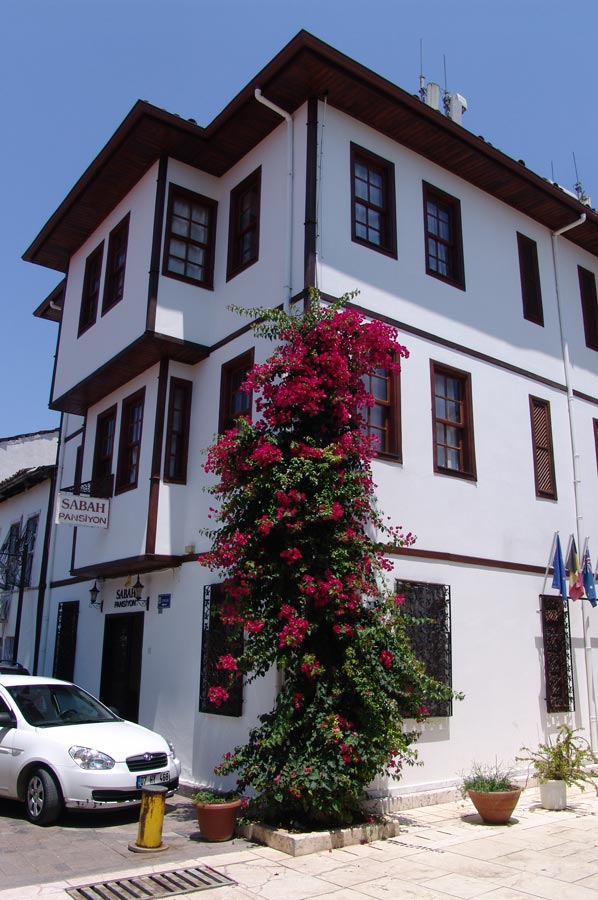 Turkish houses were typically single-story. Larger complexes were built later, but the top floor was always the most important. The ground floor served only for storage, utility rooms, and the kitchen.
The ground floor acted as a "connecting element" between the outside world and the upper floor, the so-called "living floor."
The stark contrast between inside and outside, evident in the almost abrupt reversal of the ground floor's street-facing facade, makes it difficult to immediately assess the social status of the inhabitants. The room as a self-contained living unit differs considerably in its function and design from what a Western visitor might expect. There was no division into different functions (living room, bedroom, or dining room).
Rooms as Multipurpose Spaces and Always Transformable
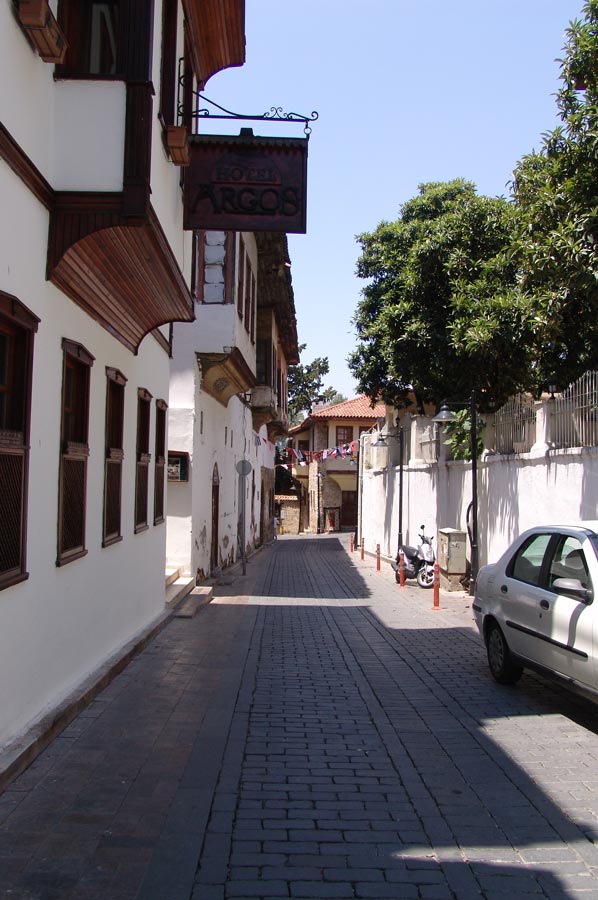 The rooms were multipurpose spaces and always transformable. Even tables and chairs were not part of the permanent furnishings of a Turkish room, but the sedir was. This bench, usually L-shaped, ran beneath the row of windows and was upholstered with soft cushions and carpets. Built-in wardrobes and open shelves or niches were constructed in front of the other, generally windowless, walls.
Beds and pillows for the night were stored in these wardrobes, and the room was transformed into a dining room by placing a large brass or copper tray on a stand, around which people sat on the floor. Due to the climate, there were summer rooms with airy, large windows and winter rooms with small windows and thicker walls, some of which could be heated by a fireplace. In summer, the townhouses were sometimes deserted. People then moved to their summer residences in the surrounding area.
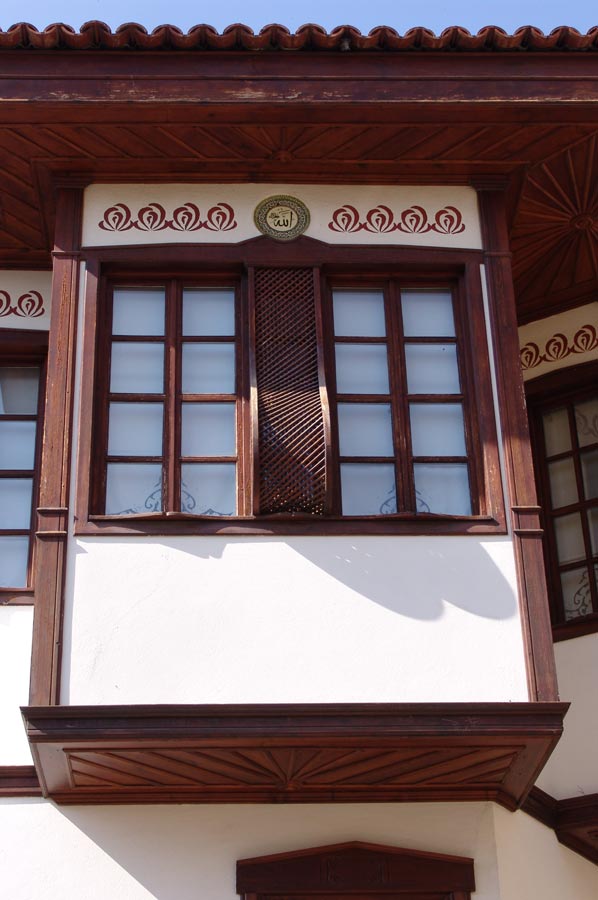
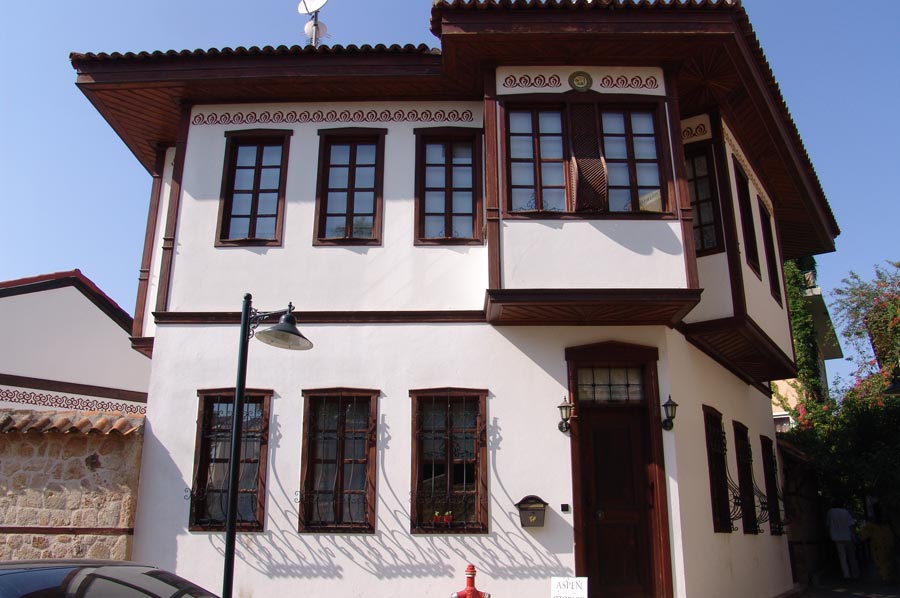 A characteristic feature of the Turkish house is the bay window. The streetscape of many residential areas is dominated by the projecting upper floors. The reasons for their extension above the mostly windowless ground floors lie, firstly, in the angled street layout, which precludes rectangular footprints, thus requiring a rectangular upper floor to be built over an irregular ground plan. Secondly, it offered the advantages of a larger window front. This space also allowed the women of the house to observe the street life. The almost obligatory wooden lattice prevented views into the interior but did not obstruct the view out.
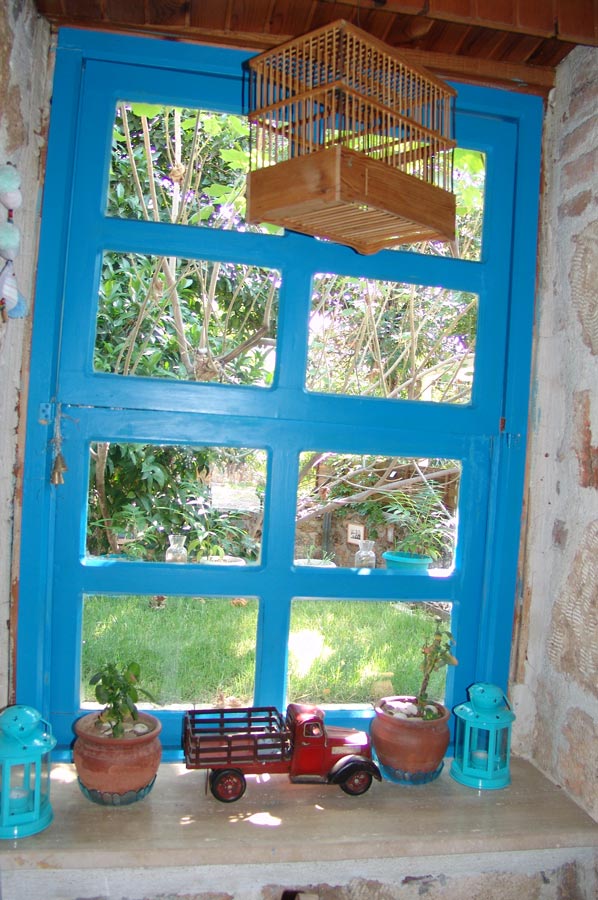 The simplicity of the exterior contrasts with the meticulous attention to detail in the interior design. Ceiling designs, skylights, chimneys, and the sometimes-intricate arrangement of inlaid wall cabinets and niches are among the treasures of Turkish timber construction. The primary building material was wood, which is particularly characteristic of northern Anatolia. In Central Anatolia, houses were built of stone, mud bricks, and sometimes a combination of both materials.
Please also read:
Osman – The Caliphate's House, which continues to shape Turkey today