Vienna - Some facts about the contemporary history
Vienna is one of the most visited cities in Europe
In the 1st century AD the Romans built a military camp (castrum) on the site of today's Vienna city center near the Danube and the connected civil city Vindobona (today 3rd district) as border security of the province of Pannonia. Still today you can see from the streets of the 1st district (Inner City), the course of the wall and the streets of the camp. The Romans remained until the 5th century. The Roman legionary camp lay far to the east of the Western Roman Empire and therefore rapidly was victim the turmoil of the Germanic barbarian invasions.
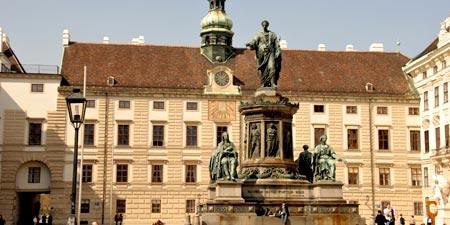
Architecturally, Vienna is still characterized primarily by the buildings around the Vienna Ringstrasse from the Wilhelminian era, but also by Baroque and Art Nouveau. Through its role as the imperial capital and residential city of the Austrian Empire from 1804 onwards, Vienna became a cultural and political centre of Europe.
Around 1910, when Vienna was still the capital of the Habsburg Monarchy, the city had over two million inhabitants. The historic centre of Vienna and Schönbrunn Palace are now UNESCO World Heritage Sites. With around 7.5 million tourists and around 16.5 million overnight stays every year, Vienna is one of the most visited cities in Europe.
Within continuing of our project work on the development of camping tourism on the Balkans as well as the creation of intermediate stations (camper-route.de) on the way to the south, our tour planning first integrated the locations of Vienna and Budapest before moving on to Belgrade.
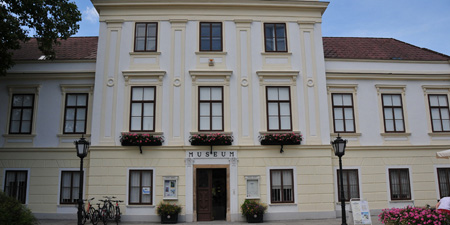
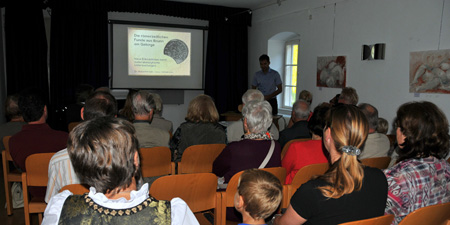
At the end of our tour through Mödling, Robert introduced us to the local museum, which gives an insight view into the history of the town as well as into the surroundings places and into the past too, when the area was connected to an ocean.
Robert's name has long been a synonym for our readers, often we have reported on his activities in Vienna and its surroundings, be it his Roman festival with the legendary Egyptian blue or his salt crystal model, which is now part of a UNESCO exhibition and within this will travel to India.
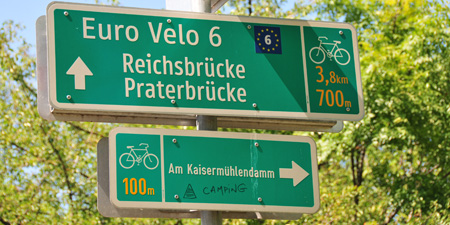
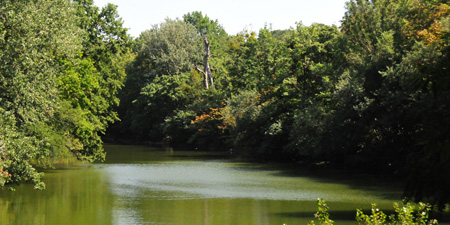
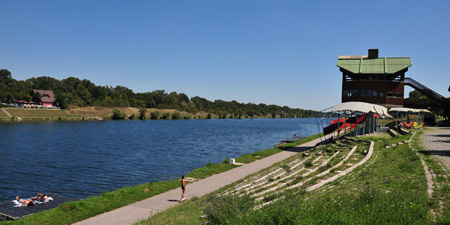
Many travelers may think it is too far hiking into the inner city of Vienna from the New Danube campsite, but we have managed the hike to the Viennese Prater through the green belt of the city, which was, even very hot that day, really enjoyable.
Like in Bremen (we have reported) and many other cities, cycling in Vienna has become quite popular too. The bicycle has conquered an important place in urban transport in the area of Vienna, but also in the surrounding regions.
In our first blog reports we had already written about the coin findings from the Roman period in Brunn am Gebirge, which are today located in the exhibition at the Heritage House.
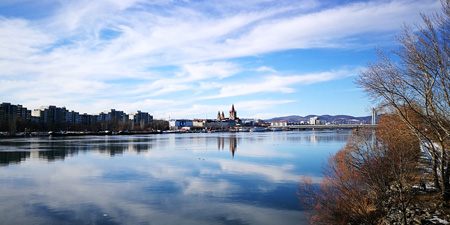
During our tour through Vienna, we have chosen the subway to the station on the Danube Island to take advantage of the rare sunshine of the mostly dull days in February.
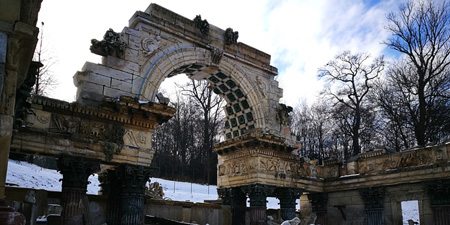
After the hike through the Palace Park of Schönbrunn we had gone to the subway station in Hietzing and had taken a day ticket for subway and buses, since we wanted to go into the city center for some more tourist destinations.
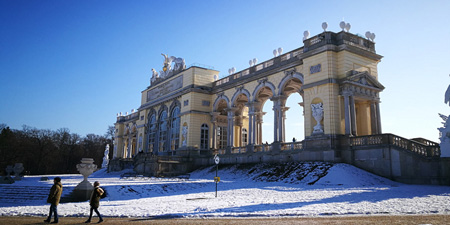
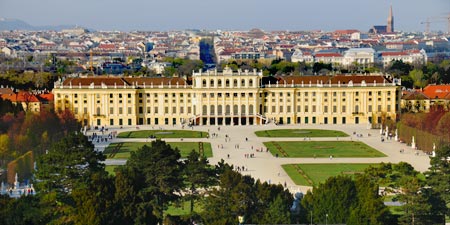
The palace and its park form an inseparable ensemble. The center of the park is the Great Parterre, which stretches on the main axis to the Gloriette Hill since about 1780.
Once again, we were meeting to discuss the setting up of a camper stop and its advantages with regard to the further development of local culture and travel tourism to Brunn am Gebirge, which we could later use to visit the Palace of Schönbrunn and the city of Vienna.
Vienna is a city that has become the settlement location of the Habsburg Dynasty for centuries. It is one of the most visited and must-see cities among the Europe routes. Vienna is not only the capital of Austria, but also the capital of art that has hosted to Habsburg Dynasty for centuries.
Austria’s capital, Vienna is famous for its cultural events, magnificent imperial palaces, coffeehouses, classical music and its charm that dazzles the visitors. Located in today’s city center of Vienna, the Romans constructed a military camp called Vindobona in B.C. 1st century and this gave a start to the history of Vienna.
 In the 1st century AD the Romans built a military camp (castrum) on the site of today's Vienna city center near the Danube and the connected civil city Vindobona (today 3rd district) as border security of the province of Pannonia. Still today you can see from the streets of the 1st district (Inner City), the course of the wall and the streets of the camp. The Romans remained until the 5th century. The Roman legionary camp lay far to the east of the Western Roman Empire and therefore rapidly was victim the turmoil of the Germanic barbarian invasions.