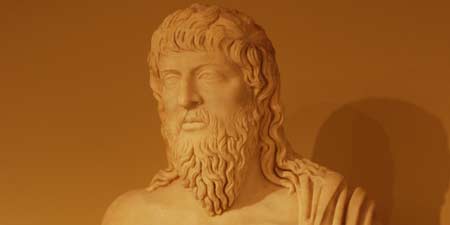
Greece, Hellenism and the Roman Empire

Classical antiquity differs from previous and subsequent epochs through common and consistent cultural traditions, the influence of which continues to be influential in many subject areas right up to modern times. It covers the history of ancient Greece, Hellenism and the Roman Empire. The Roman Empire politically unified the Mediterranean from the 1st century AD. Rome's cultural influence was primarily felt in the western part of the empire, while in the east the Greek-Hellenistic tradition (Byzantium) continued alongside oriental traditions until it was pushed back in the course of Islamic expansion (from 632 AD).
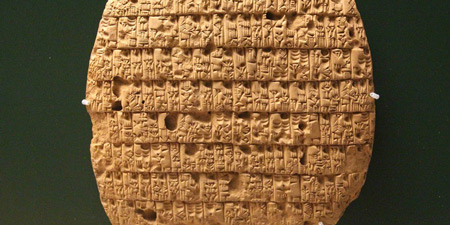
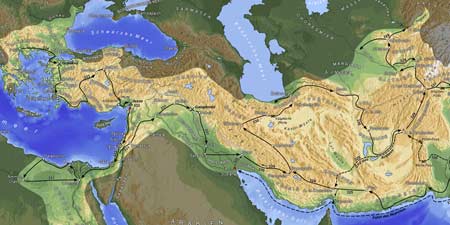
In a broader sense, antiquity also includes the history of the ancient Near Eastern civilizations of Egypt, Mesopotamia (Sumer, Akkad, Babylonia, Assyria), the Iranian region (Elam, Media, Persia) and Asia Minor (Phoenicia, Israel, Aram-Damascus). around the beginning of writing around 3500 BC. BC began. This larger period of about 3500 B.C. BC to the end of antiquity is preferably referred to as antiquity to distinguish it from the narrower concept of antiquity limited to the Greco-Roman world, or it is used in relation to the Middle East until its incorporation into the Macedonian-Greek sphere of influence under Alexander the Great ( around 330 BC) spoken by the Ancient Near East.