Caravan Salon – Lightweight Construction and Electric Vehicles?
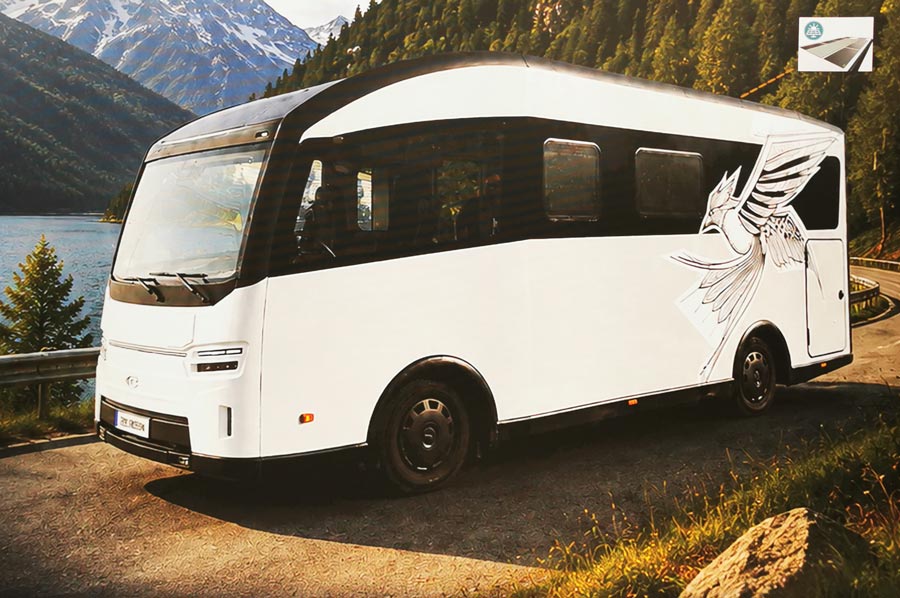
Caravan Salon Düsseldorf – and the search for alternative powertrains for motorhomes and camper vans, as well as genuine lightweight construction it turns out to be not quite as simple as one might think.
During this year’s visit to the Caravan Salon, we set out to specifically look for motorhomes and camper vans featuring battery-electric powertrains and/or lightweight construction. We wanted to see if the German recreational vehicle industry much like the automotive industry might be missing the boat on this major trend.
 The international market is currently being flooded with a wide variety of high-quality Chinese vehicle brands; even VW (once known as "Volkswagen" for its quality and price) seems willing to offer a mid-range electric vehicle a true "people's car" only in China, at a price point that unfortunately remains a pipe dream for us Europeans. Does this trend signal the final demise of the European automotive industry? Once the Chinese market for electric cars reaches a certain level of saturation, the industry will almost certainly pivot directly toward modular-based camper vehicles. Why is the industry waiting, or are there already initial steps being taken?
Practices that have long been commonplace in the Asian automotive industry could prove effective for camper vehicles, too. There is still time. What we are referring to here beyond the use of lightweight materials is the so-called "skateboard" chassis architecture (an EV-specific design) that has long been the standard for battery-electric cars.
 This chassis consists of a base structure or platform housing the components essential to an electric vehicle such as batteries, electric motors, and other electronics. A skateboard chassis significantly reduces costs and minimizes complexity in the development and manufacturing of electric vehicles. Given that the number of parts required to manufacture internal combustion engines is significantly higher than for electric vehicles, the use of "skateboard platforms" ought to have a substantial impact on pricing. In theory, at least!
The skateboard platform (an EV architecture) is a self-contained unit with all necessary powertrain and electronic components already integrated; it is scalable and compatible with a wide variety of body styles. This enables manufacturers to design and produce vehicles across different categories and segments without having to develop each model from scratch.
Key components of the skateboard platform
A modern electric chassis consists of several integrated components:
- Battery pack: Usually positioned flat within the underbody.
- Electric motors: Provide direct propulsion.
- Power electronics: Manage power flow and charging.
- Chassis/Running gear: Includes suspension, steering, and brakes.
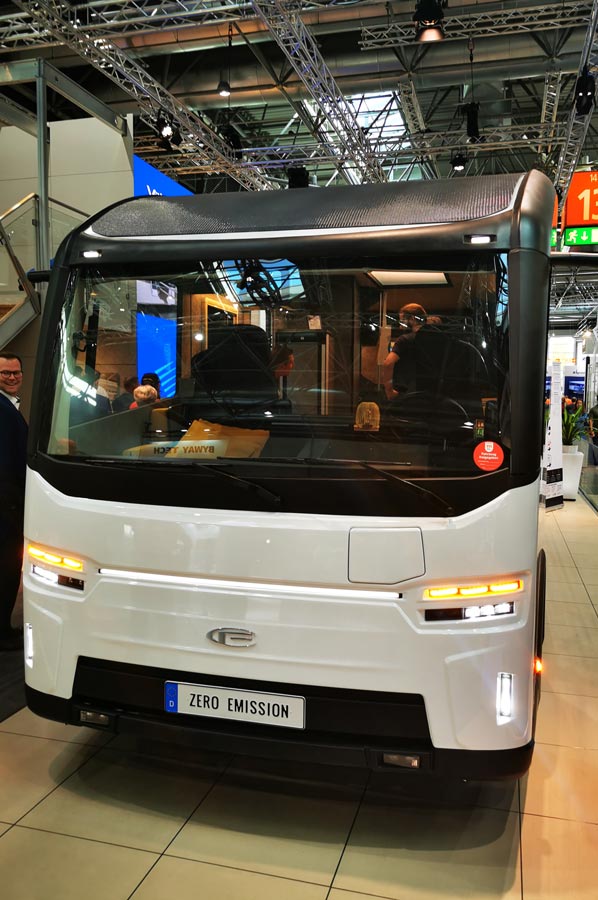 If such a platform were mass-produced, future development could focus more heavily on zero-emission capabilities. Almost every manufacturer talks about zero emissions, but is it truly zero?
After all, "zero emission" refers to a building, vehicle, production process, service, or other infrastructure or activity that generates no environmentally harmful emissions during its construction, operation, use, or disposal.
The term is not legally protected and can therefore refer to various pollutants as well as specific stages of the production or usage cycle.
Examples of zero-emission systems include emission-free vehicles or plus-energy houses but does this account for manufacturing and eventual recycling?
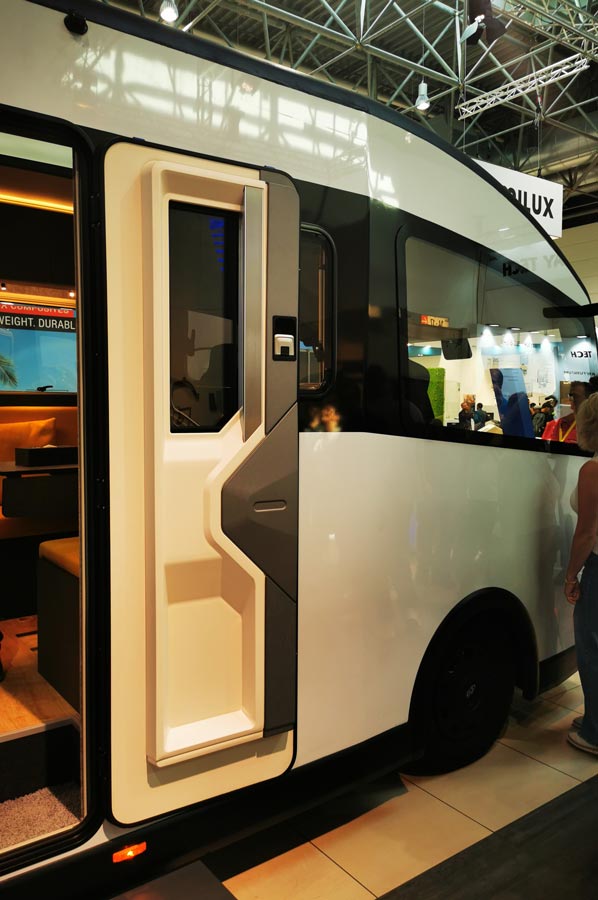 A comprehensive view of the term "zero emission" would require encompassing the entire lifecycle and thus a complete life-cycle assessment of all relevant environmental pollutants. However, often only specific components are considered. For instance, in the context of global warming, "zero emission" might refer solely to emitted greenhouse gases like carbon dioxide or methane, whereas labeling a bicycle a "zero-emission vehicle" ignores the emissions associated with its production and disposal. The same applies to wind turbines or photovoltaic systems: while their operation is emission-free, their manufacture and recycling certainly generate various types of emissions.
Climate scientist Kevin Anderson is sharply critical of the use of the term "net zero":
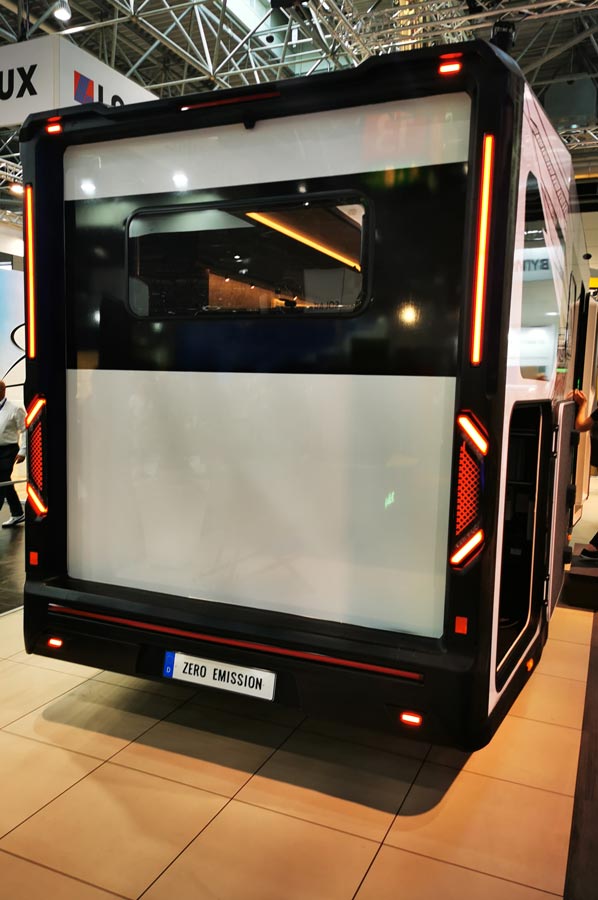 "Everyone uses the term 'net zero' these days. You can be a net-zero oil company. You can be net-zero Saudi Arabia, Qatar, Norway, the UK, or the USA. Anyone can become net zero any county, any company. It is devoid of meaning. It is completely meaningless. When analyzing what lies behind 'net zero,' I often say it is simply Latin for kicking a can down the road. It passes the burden on to the next generation."
– Kevin Anderson, 2021
There is still a long way to go but the Caravan Salon offers some promising approaches.
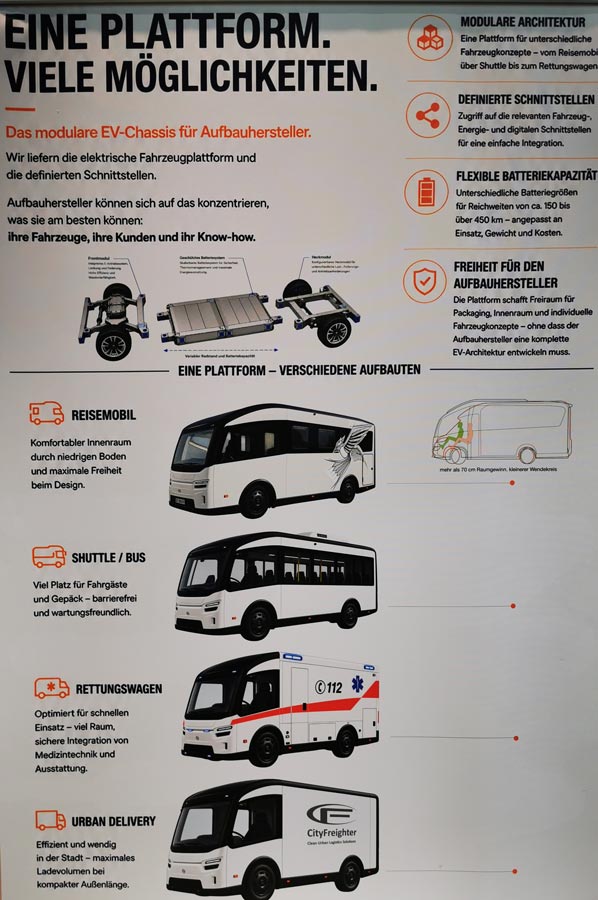
After all that preliminary theory, we found what we were looking for in Düsseldorf. Under the motto "One platform – many possibilities," we discovered a modular EV chassis designed for body manufacturers in Hall 13. Such a platform allows body manufacturers to focus on what they do best:
Designing vehicle bodies, satisfying customers, and applying their expertise!
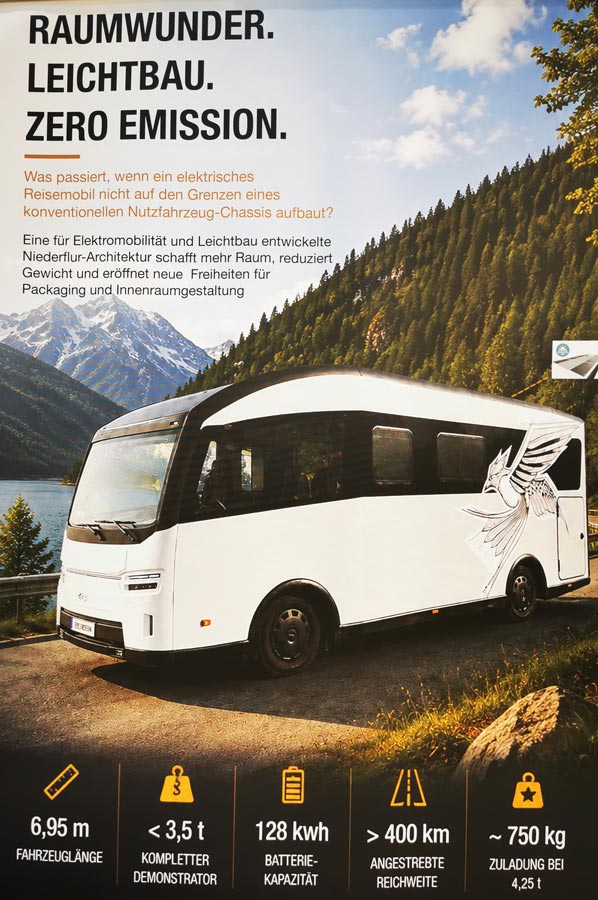
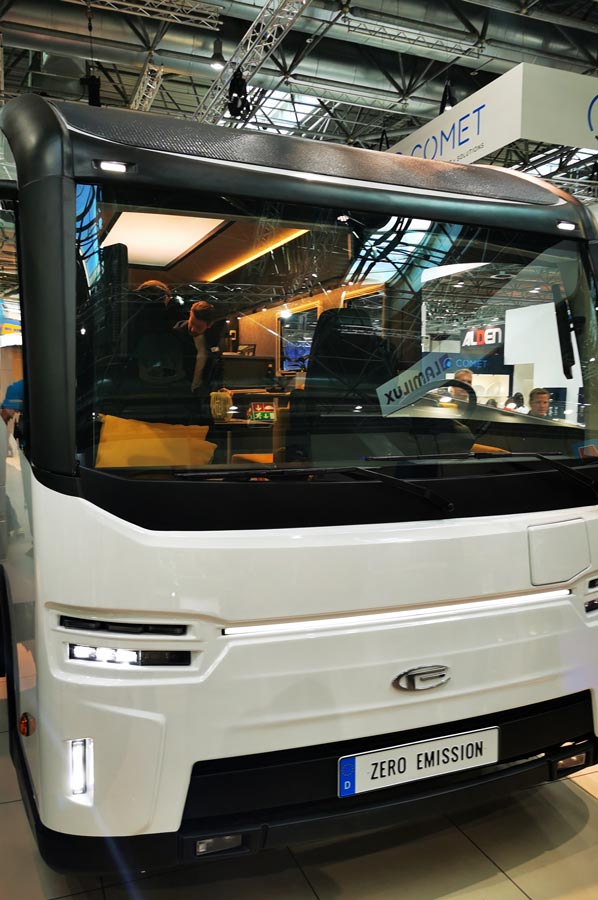 If lightweight materials are also consistently utilized, at least the first step toward "net zero" has been achieved. Showcased in Düsseldorf under the motto "Space Efficiency, Lightweight Construction, Zero Emission," this vehicle is still a prototype yet it is already packed with numerous innovative ideas that one would certainly love to see in a production model.
Manufacturers asked themselves, among other things: what happens when an electric motorhome isn't constrained by the limitations of a conventional commercial vehicle chassis?
The low-floor architecture displayed at the Caravan Salon developed specifically for electric mobility and lightweight construction creates more space, reduces weight, and opens up new possibilities for vehicle packaging and interior design.
Stay tuned for the upcoming article on lightweight, battery-powered campers. Coming soon!
Please also read:
Skydancer – an interesting concept motorhome at the CMT
Also designed for mobile work – Alpine Cross Cabin Signature