Turkish Riviera with Antalya, Alanya, Side and Cleopatra
The Turkish Riviera is the southern coastal strip of Turkey and one of the most popular summer holiday destinations. The region is particularly popular among all-inclusive vacationers. Between sun, sea and beach, the region between Antalya and Alanya also has numerous ancient sights and natural spectacles to offer.
While the Turkish Riviera is flat and has long sandy beaches, the Aegean coast is characterized by mountainous landscapes and romantic bays.
The city of Antalya also has a beautiful old town to offer - this is called Kaleiçi. The clock tower is located on the edge of the old town, which is why we started our exploration tour from there. Near the clock tower is another attraction, the Yivli Minare - a mosque, which the locals often refer to as the city's landmark. The best views of this impressive structure are from nearby Republic Square. Other sights in the city include Hadrian's Gate, the marina and the Archaeological Museum.
If you are looking for peace and relaxation, Belek is ideal for it, it is also wonderful to hike in the pine forests around Belek. If you want to experience something more than Side has a lot more to offer.
Antalya, on the other hand, is known for its historical and cultural wealth, its magnificent beaches and its luxurious resorts.
Alanya is the epitome of a relaxed and carefree tourist attraction. The choice between Side and Alanya ultimately depends on your personal preferences. If you are interested in history and archaeology, Side might be a better choice. On the other hand, if you prefer a livelier holiday with beautiful beaches, Alanya might suit you better.
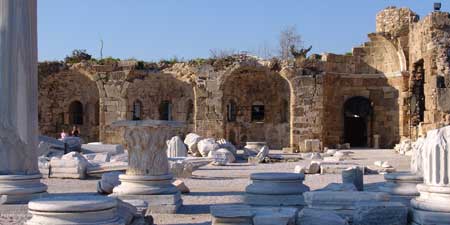
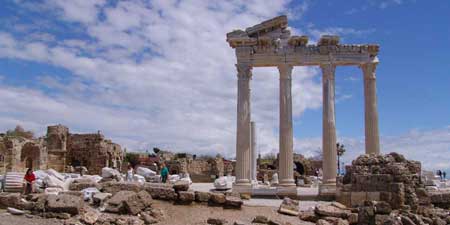
In Side, which is characterized by tourism, there are numerous restaurants and cafés as well as many colourful shops and souvenir shops that invite you to stroll around. In particular, the pretty old town and its ancient ruins, along with the picturesque beaches, are among the city's best-known and most popular sights.
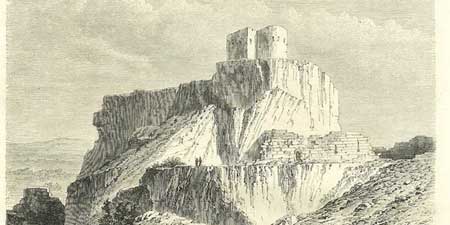
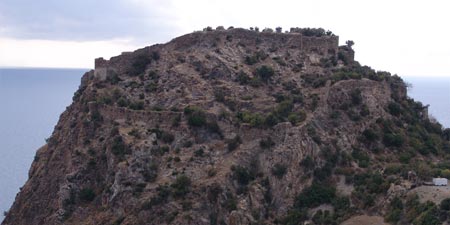
After visiting Yilan Kalesi fortress near Ceyhan and some very interesting days in Sanliurfa and Göbekli Tepe, we arrived in Tarsus on the way back towards Alanya.
We accepted the invitation to participate in the event "Human Landscapes - Six Author Portraits of Turkey" at Akdeniz University (AKVAM) in cooperation with the Goethe Institute Izmir, which included the seminar on the presentation of 6 well-known writers (Nazim Hikmet, Yasar Kemal, Orhan Pamuk , Elif Safak, Murathan Mungan, Asli Erdogan) by the documentary filmmaker Osman Okkan in his own facility in Adrasan.
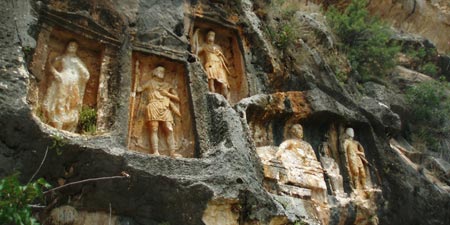
Another sight of Roman antiquity awaits the traveller of the Kizkalesi area at the end of a river bed, which the locals call Devil's Valley. Almost always dry as a bone in summer, you can use the Teufelstal river bed for a hike to the ancient stone sculptures of people – let’s go to Adamkayalar.
Excavations in the extremely fertile region of the Göksu Delta show a number of prehistoric relics, so that the settlement history at Silifke can be traced back to at least the Bronze Age.
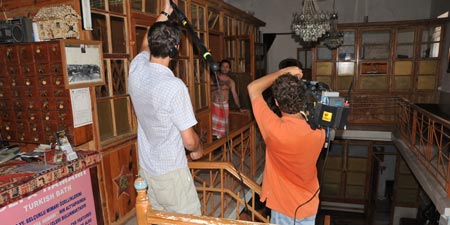
In March of this year we received a call from Germany, which came about through contacts at the Goethe Institute. On behalf of the Pro 7 series Galileo, Maximus Film GmbH was looking for places for the non-typical tourist documentation of travel destinations or tourist offers that the majority of German tourists might not find right away.
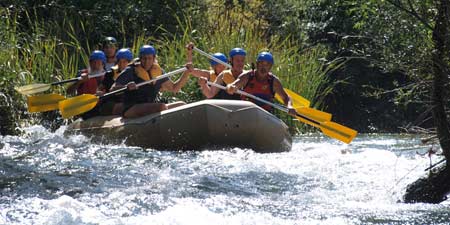
Our friend Martin had already invited to an event that required strength last year, but we couldn't do it due to time constraints. We were only able to talk our way out of it at the time because of the promise of participation this year: an insider rafting tour on the Alara River.
When our co-author Wolfgang Dorn travels to Turkey, it usually comes to a short get-together for a short trip to one of the many possible destinations along the Turkish Riviera.
About 3 kilometres northwest of the city centre of Kumluca you will find the ancient city of Rhodiapolis on a hill that overlooks the entire valley to the sea and thus also Kumluca and Finike.
After leaving Antalya on highway 400, passing Kemer, Phaselis and Olympos, the road rises briefly to more then 500 meters above sea level. Reaching the other side, the view falls down to the valley and plain of Kumluca in Finike Bay, well known for its fruit and vegetable growing.
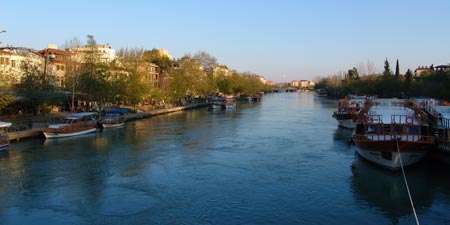
The final section, where the Manavgat River flows into the Mediterranean, is called the Manavgat Channel. This is probably because here the river runs for several kilometers parallel to the sea, giving the impression of a man-made artificial watercourse.
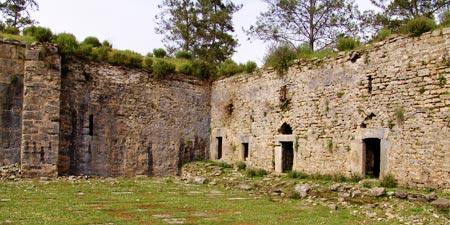
What a coincidence – while arriving at Kargıhan Caravansary from ancient city of Etenna together with Author Wolfgang Dorn we met Kaimakam Mr Hacı İbrahim Türkoglu from Manavgat together with his staff and couple of mayors from neighbouring towns to inspect Kargıhan Caravansary for later restoration and for small picnic at the complex.
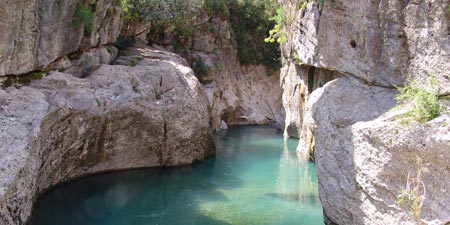
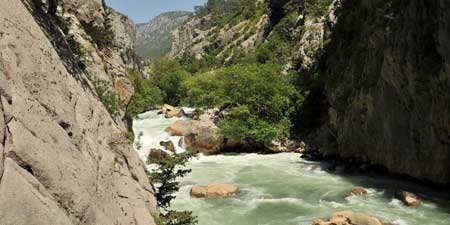
Emerging from the Taurus Mountains and running through a number of amazing canyons, Köprüçay flows into the Mediterranean to the South of Serik, Antalya.
The Manavgat River, which originated in Taurus and was called Melas in antiquity, also formed the eastern boundary of ancient Pamphylia. Today it flows through the large Oymapınar Reservoir, one more smaller reservoir before it reaches Manavgat and flows into the sea a little later.
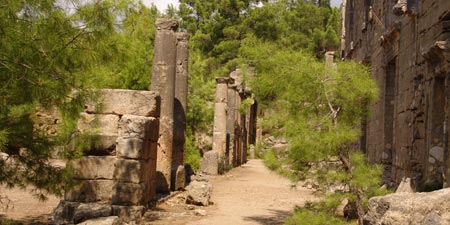
The museum where the finds from the excavations are exhibited is situated in the Agora thermae, a restored Byzantine bathhouse on the columned street opposite the agora. The entrance was from the north west towards the water where there also was a columned sportsground, now a garden.
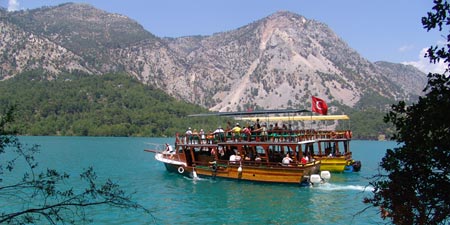
Oymapinar Dam, located approximately 18 kilometers from downtown Manavgat, is the third largest dam in Turkey and is now used as a recreational destination for locals and guests, too.
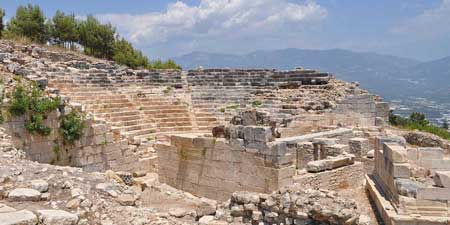
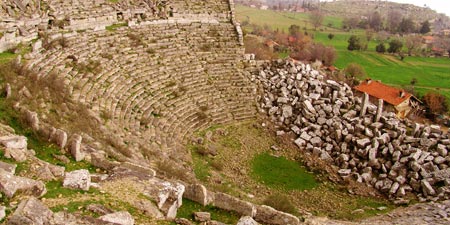
Side’s ruins outside Selimiye are best reached by using the parking area by the Roman theatre, which is the minimum you should visit. The theatre was erected in the 2nd century BC on top of a former Greek theatre.
The ancient Seleukeia City which is also known as Lybre, even it is not proved is located in the borders of Bucakşeyhler (Şıhlar) village, which is 12 km away and north-westward, towards the Taurus Mountains, from Manavgat center.
Selge as being an old mountainous city in the vicinity of Köprüçay, about 35 km north of Serik and on the southern slopes of the Taurus Mountains, is reached by following the 14 km stabilized road with sharp bends after the Köprülü Canyon National Park. It is supposed that Selge was built by Kalishes.