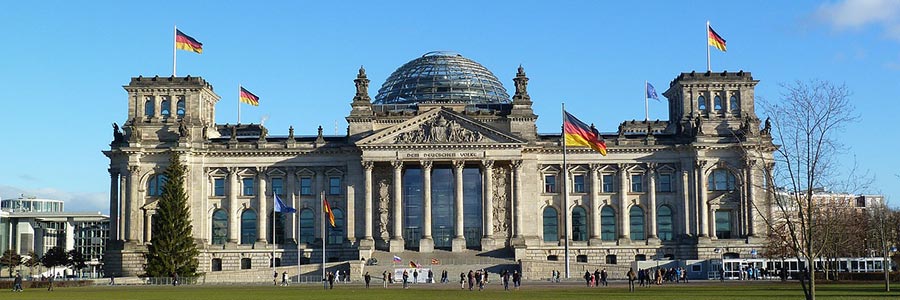
With almost 40 million foreign overnight guests every year, Germany is one of the seven most visited countries in the world. There are 6,135 museums, 366 theatres, 34 leisure and adventure parks, 45,000 tennis courts, 648 golf courses, 190,000 km of hiking trails, 40,000 kilometres of long-distance cycle paths as well as holiday and theme routes available for use in tourism.
Business and congress tourism is of outstanding importance; Germany is the most important international trade fair location with several world-leading trade fairs: Caravan Salon Düsseldorf, CMT Stuttgart, etc. The Internationale Tourism-Börse Berlin is the world's leading tourism trade fair. Germany also has the highest density of festivals like Wacken, Rock am Ring,
Outstanding sights: Sanssouci Castle - Brandenburg Gate - Cologne Cathedral - Saxon Switzerland National Park - Wadden Sea - Hamburg Harbor - Brocken - Old Town of Hameln - Externsteine - Wartburg - Neuschwanstein Castle - Zugspitze near Garmisch-Partenkirchen - Rothenburg ob der Tauber - Königsee in Berchtesgadener Land - Old town of Bamberg - Imperial castle in Nuremberg - Mainau Island in Lake Constance - Lichtenstein Castle - Meersburg - Ulm Minster - etc.
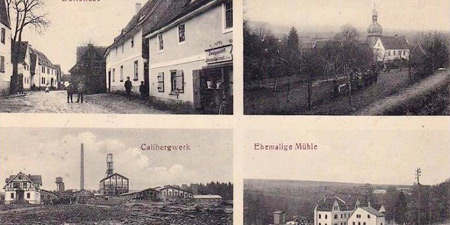
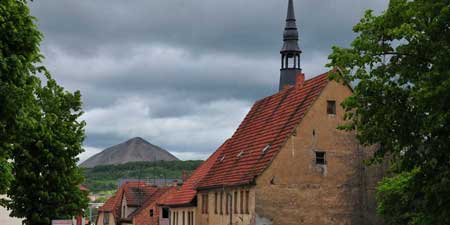
Billroda was first mentioned in a document on May 30, 1148 - at least there is the first mention of a place as "Bilrieht", which would correspond in the description to both the time and the area of Billroda.
In addition to hiking and cycling trails, the Harz also offers a large number of stalactite caves that are worth visiting when the weather is not exactly inviting for hiking or cycling.
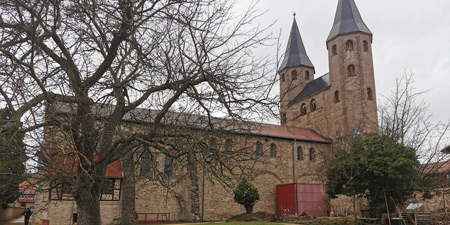
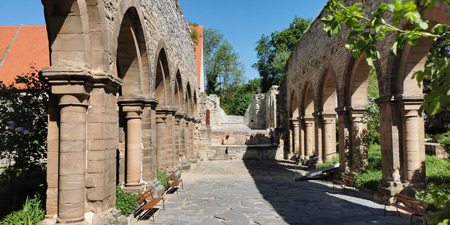
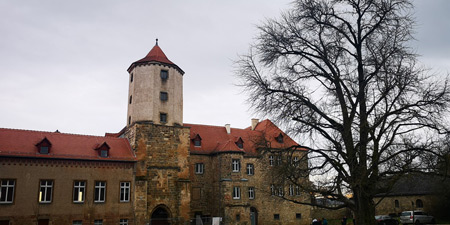
It was once again an intuitive stopover following a sign that brought us to the former Benedictine abbey, Kloster Drübeck, in the district of Drübeck near Ilsenburg on the northern edge of the Harz Mountains in Saxony-Anhalt.
Three centuries of mining have had a lasting impact on the region between Braunsbedra, Müchel, Oechlitz and Merseburg. Coal mining created work for many generations until 1993 when the last coal train left the mine.
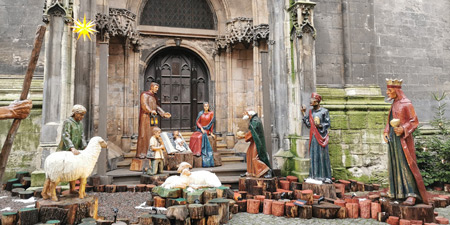
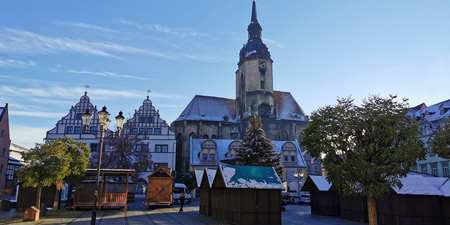
In a local Sunday news-paper we had read about local events in connection with the upcoming Christmas markets, including the larger-than-life nativity figures carved from solid wood in Naumburg.
The symbol of the city of Naumburg and clearly visible from all sides is the late Romanesque-early Gothic cathedral of St. Peter and Paul in the episcopal suburb.
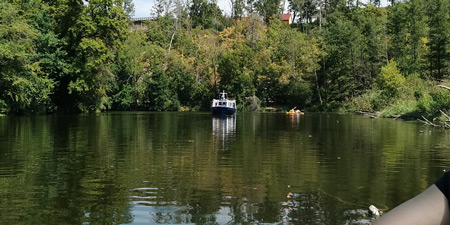
On our hikes along the Saale, we often noticed the paddlers, canoeists and boat tourists on the Saale, who particularly frequented the route from Saaleck Castle and the Rudelsburg near Bad Kösen to Freyburg, a type of leisure activity that we had wanted to do for a long time.
The small town of Memleben on the Unstrut gained great importance during the Ottonian period in the 10th and 11th centuries during the development of the East Franconian Empire into the German Empire.
Sometimes it's the noises, disturbing but then so interesting and impressive that you inevitably look up in the direction of the "noise". This is what happened to us at the end of our bike tour from Memleben along the Unstrut back to Wiehe, where a small but fine ice cream café lured us.
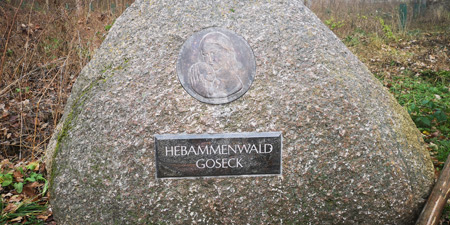
The Midwives' Association of Saxony-Anhalt has had a forest planted near Goseck. Two beautifully designed commemorative plaques complete the small grove and convey the message of the midwives:
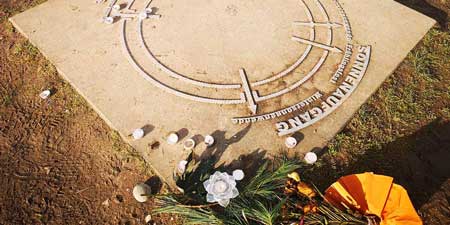
We had already been told several times about the circular moat not far from Goseck Castle, now the ancient building, better known as the “solar observatory”, should be hiked.
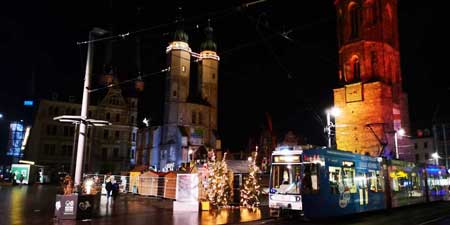
The four decentralized “Halle Christmas Markets” on the market square, Domplatz, in front of the Ulrichskirche and on Hansering had to close due to the currently new 15th SARS-CoV-2 containment ordinance of the state of Saxony-Anhalt, which has been in force since November 24th, 2021.
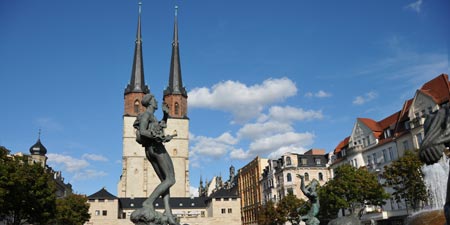
As already mentioned, our accommodation in Halle - Saale was so centrally located in the city centre that we made several spontaneous decisions on our way to the city centre.
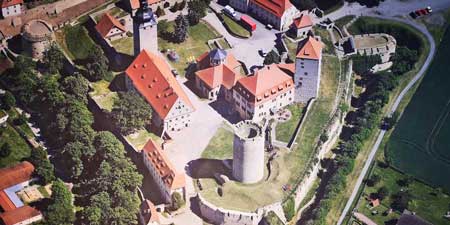
We were already on the way back from the Rosarium Sangershausen on the BAB 38 in the direction of Halle when Detlef remarked that we should also make a short detour to the castle in Querfurt.
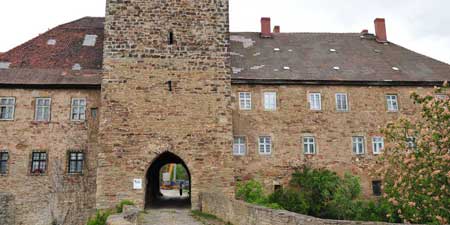
We were on our way back from Sangerhausen when, after about 12 kilometers, we came across the town of Allstedt, which is overlooked by a magnificent castle complex.
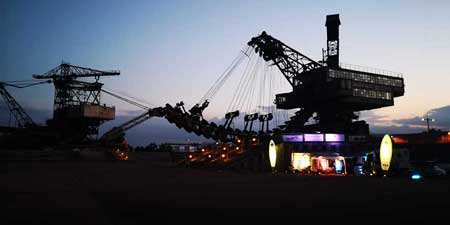
In a first blog we had already reported about the first Vanlife Festival in Ferropolis, so-called Eisenstadt in the former open-cast mining area in Golpa Nord near Leipzig.
Anyone who passes the motorway junction near Sangerhausen on the A 38 motorway in the direction of Berlin will be amazed at the huge rock cones in the landscape, which after many years of storage are only partially greened and can therefore still be recognized as "man-made".
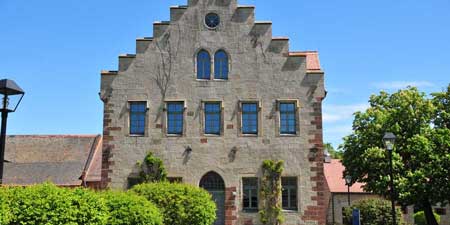
The historical imposing buildings of the "village" Schulpforte had already struck us several times when we were on the road 87 between Bad Kösen and Naumburg.
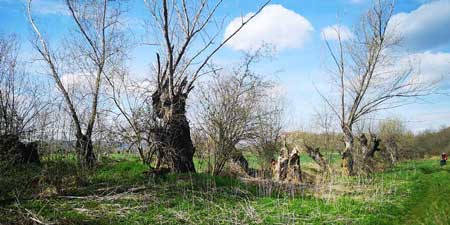
Every hike, at least if you walk through nature with your eyes open, always brings new perspectives or even new insights, which you have already encountered many times, but little or not at all explored.