




























Roman construction - insights into technology
- Written by Portal Editor
The technical and organizational concerns in the Roman building technique during the Roman Empire are also based on Hellenistic values. In his work De architectura libri decem (22 BC) the Roman officer Vitruvius describes the techniques and mathematical foundations adopted from the Greeks.
Also the principle of separation in planning (ratiocinatio) and the executing part (fabrica) is described. He stressed that the execution of the work can only be carried out by specially trained technicians, while the conception is accessible to "all scientifically educated". This division is probably the basis for today's usual separation into architect and builder / engineers.
The first "building code" is handed down from 150 AD. At that time regulations were laid down which, among other things, regulated the minimum thickness of walls and the permissible amount of residential buildings. Many technical and static elements have been adopted by the Greeks in structural engineering, such as the arched construction of bridge arches and domes. In order to obtain increasingly larger and more stable forms, these have been refined, for example, by the invention of the cross-crest vault or by using particularly light hollow bricks in the upper region of domes.
Various types of mortar were used to join the stone components, which were supported by the use of anchors. Later (probably from the 1st century AD), concrete was also used as a supporting element. From the year 79 BC, there are proofs of the first fired bricks, but this technique was again adopted from the Greeks. The floor was covered with opus signinum, which was usually mixed with brick.
In addition, there were also wooden structures, especially in the north (Germania, Gaul), which today are no longer preserved. A large Rhine bridge (probably between Andernach and Koblenz) in the time of the invasion of Germany under Caesar (55 BC) has been found.
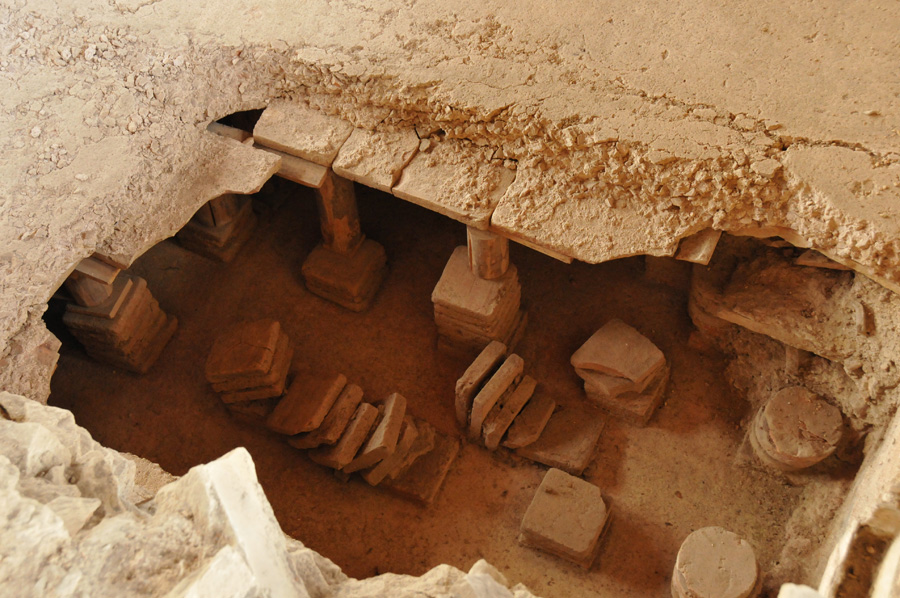
In residential construction, Gaius Sergius Orata succeeded in creating a significant improvement in comfort, for the first time, he succeeded in implementing an idea adopted by the Cretans: the underfloor heating system (Hypokaustum). For this, warm air was conducted into cavities below the floor and later also into the walls. This technique was later also used in Roman baths and in the great imperial baths.
The water purge in toilets was also known to the Roman; in public facilities and in the villas of the wealthy patricians, it was widespread.
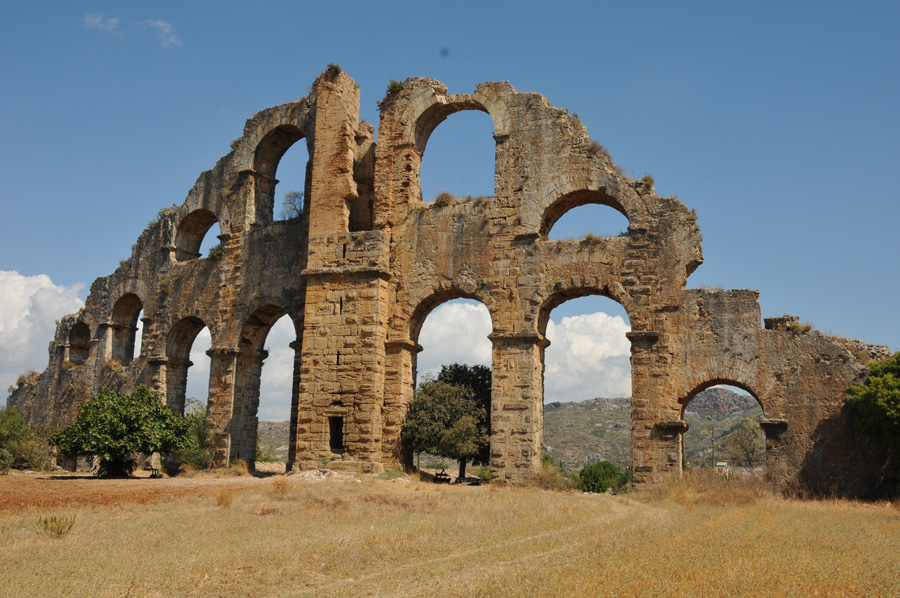
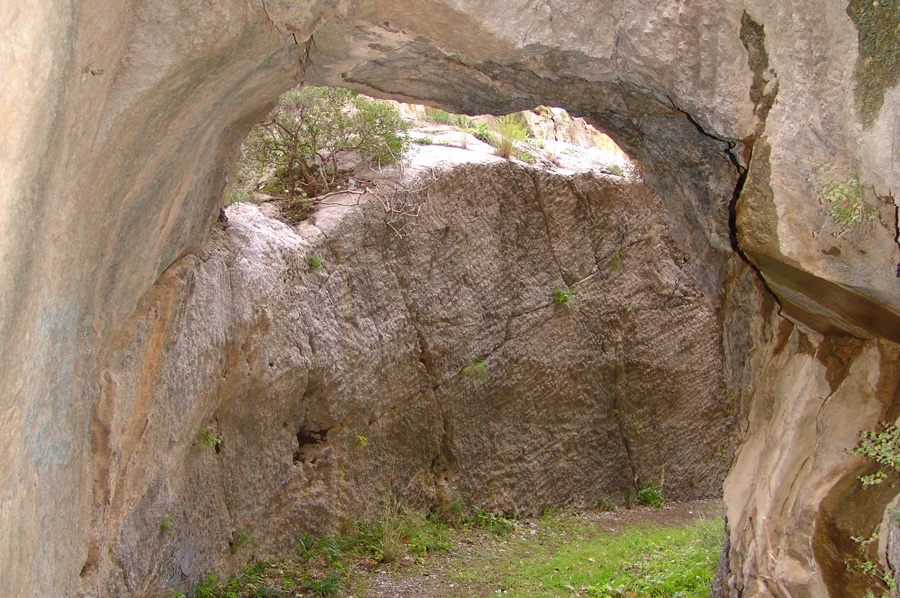
The water pipelines, which often transported spring water over several kilometers into the populated areas, were partially carried out in the form of trenches, but sometimes also through very large aqueducts and tunnels. Trenches were either lined with stone and with concrete (also wood moldings were already used) or they were wallowed with hewn stones to prevent the water from leaking.
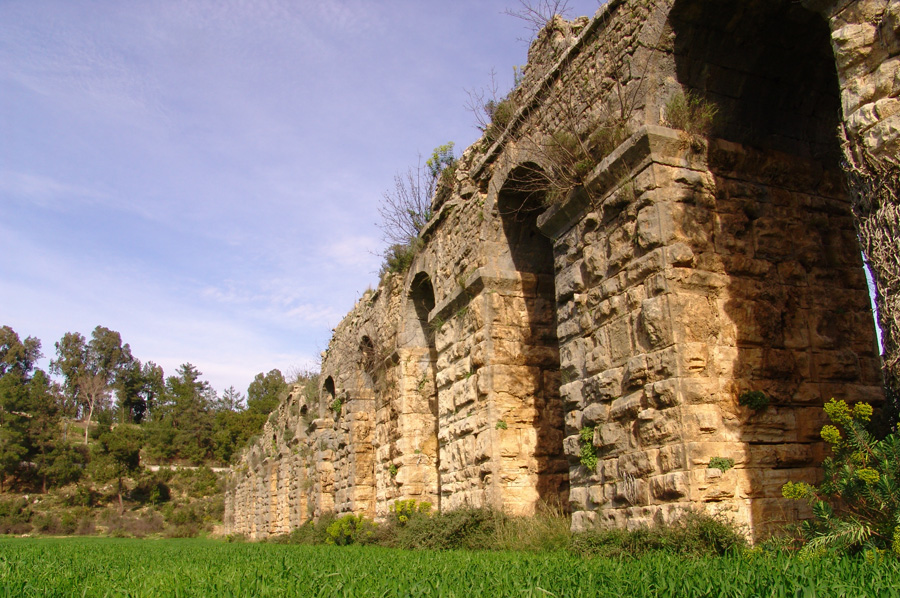
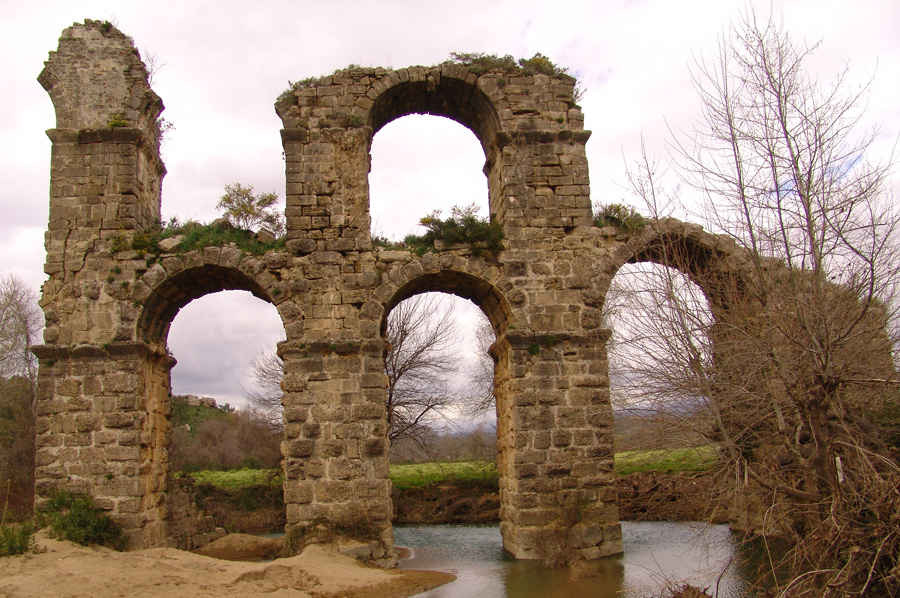
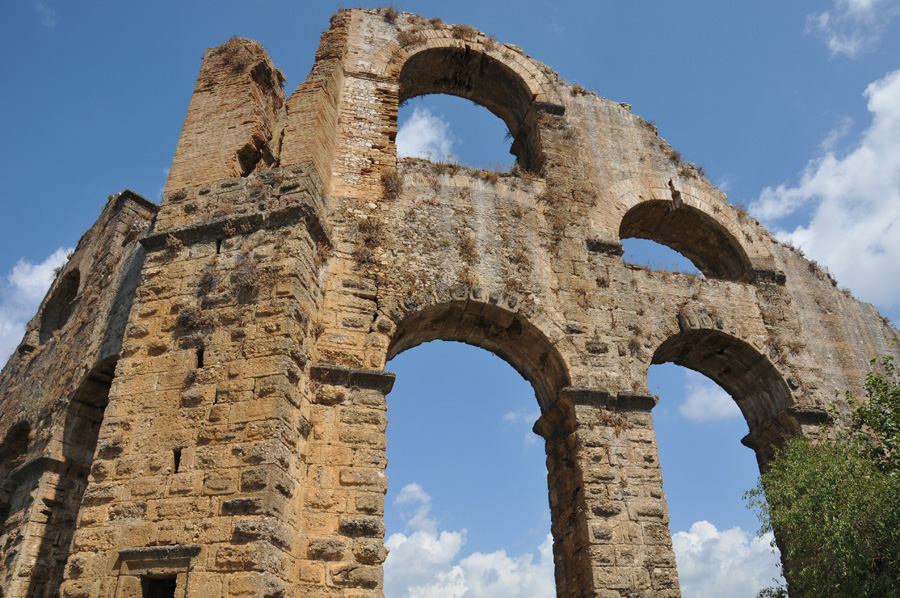
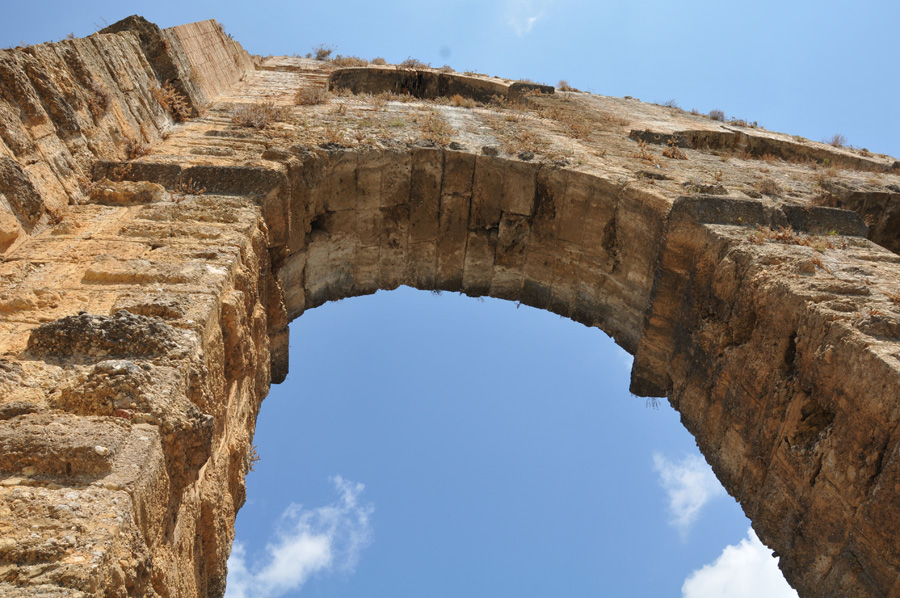
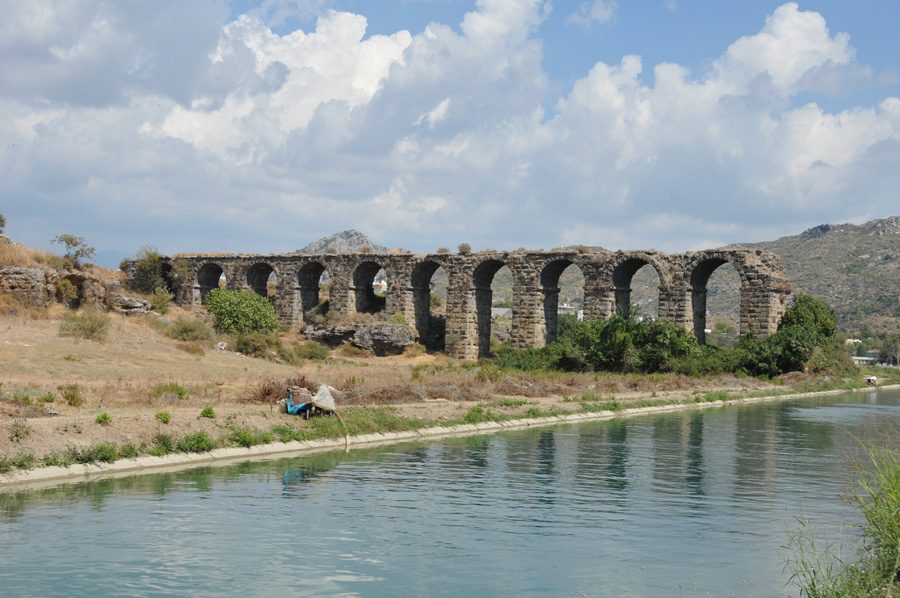
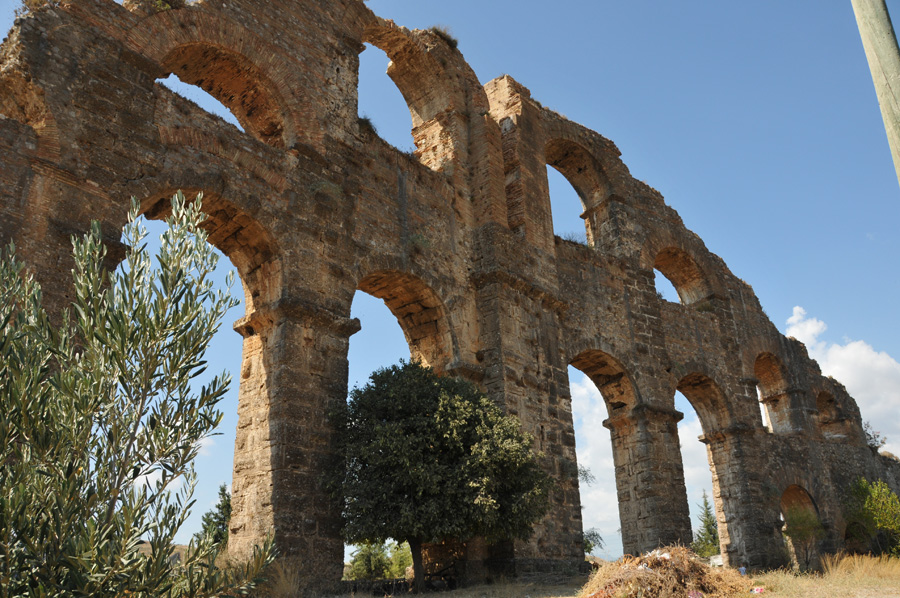
In addition, the water-bearing canal was covered with large stone slabs to minimize evaporation and dusting. Since the Romans knew no pumps for their water pipes, a steady, as evenly as possible gradient had to be maintained. Therefore, these water conduits have many turns to follow the terrain; but they also need bridges to overcome the valleys and ditches. A prerequisite for the successful construction of a water pipe was an exact height measurement of the terrain along the planned route. Above all, for the overcoming of valleys, it was also possible to erect pressure pipes which functioned according to the principle of communicating vessels. A well-known example is the water pipeline in Aspendos (Turkey).
In road construction, in the 5th and 4th century BC, first gravel roads were built (Via Appia, Via Latina). Just from about 295 BC it was started to pave the streets, taking over the technique essentially from the Etruscans. Also the Via Appia got its present appearance in this time and became the model for the road construction for the coming centuries. It was not until the 1st century AD that the gravel roads were again increased, which offered more comfort to the travelers through the greater running of the wagons. At this time, it was also begun to build road bridges, dams, incisions and even tunnels, in order to achieve as direct connections between the places as possible.
It is also worth mentioning that the Romans, especially in the big cities like Rome or Pompeii, had a kind of "zebras", so that one could get better from one side of the road to the other as a pedestrian. This was realized by elevated paving stones in step length.
The foundation of Roman roads consisted of several layers of clay, stones, gravel and sand. The final surface was the actual surface, which consisted of basalt or lava, about 50 × 50 cm in size. The road was often accompanied by a "bourgeoisie" made of clay, an earth wall for defense purposes and a moat for drainage. In addition, there were posts at a distance of one Roman mile (about 1.48 km), indicating the distance to the nearest town and the name of the builder.
Sextus Julius Frontinus is probably the first mathematically founded documentary about the course of water pipes. In his book, De aquaeductu urbis Romae, he describes the preparation of plans for the pipelines, which show the position of aqueducts, their spans, and the traversed slopes. Maps were also made for the streets in order to preserve the overview and simplify administration.
The surveyor used the surveying instruments Groma (for setting right angles) and chorobates (for leveling).
Please read as well:
Roman Thermal Bath and Bath in Antiquity
Aulus Cornelius Celsus - Roman Doctor
-
 Roman Constructions and important Buildings
Roman Constructions and important Buildings
Roman Constructions and important Buildings
-
Roman Constructions and important Buildings
Roman Constructions and important Buildings
-
Roman Constructions and important Buildings
Roman Constructions and important Buildings
-
Roman Constructions and important Buildings
Roman Constructions and important Buildings
-
Roman Constructions and important Buildings
Roman Constructions and important Buildings
-
Roman Constructions and important Buildings
Roman Constructions and important Buildings
-
Roman Constructions and important Buildings
Roman Constructions and important Buildings
-
Roman Constructions and important Buildings
Roman Constructions and important Buildings
-
Roman Constructions and important Buildings
Roman Constructions and important Buildings
-
Roman Constructions and important Buildings
Roman Constructions and important Buildings
-
Roman Constructions and important Buildings
Roman Constructions and important Buildings
-
Roman Constructions and important Buildings
Roman Constructions and important Buildings
-
Roman Constructions and important Buildings
Roman Constructions and important Buildings
-
Roman Constructions and important Buildings
Roman Constructions and important Buildings
-
Roman Constructions and important Buildings
Roman Constructions and important Buildings
-
Roman Constructions and important Buildings
Roman Constructions and important Buildings
-
Roman Constructions and important Buildings
Roman Constructions and important Buildings
-
Roman Constructions and important Buildings
Roman Constructions and important Buildings
-
Roman Constructions and important Buildings
Roman Constructions and important Buildings
-
Roman Constructions and important Buildings
Roman Constructions and important Buildings
-
Roman Constructions and important Buildings
Roman Constructions and important Buildings



https://www.alaturka.info/en/90-general-content/4125-roman-construction-technology-insights-into-technology#sigProId63685ae4ea