































Aulus Cornelius Celsus - Roman Doctor?
- Written by Portal Editor
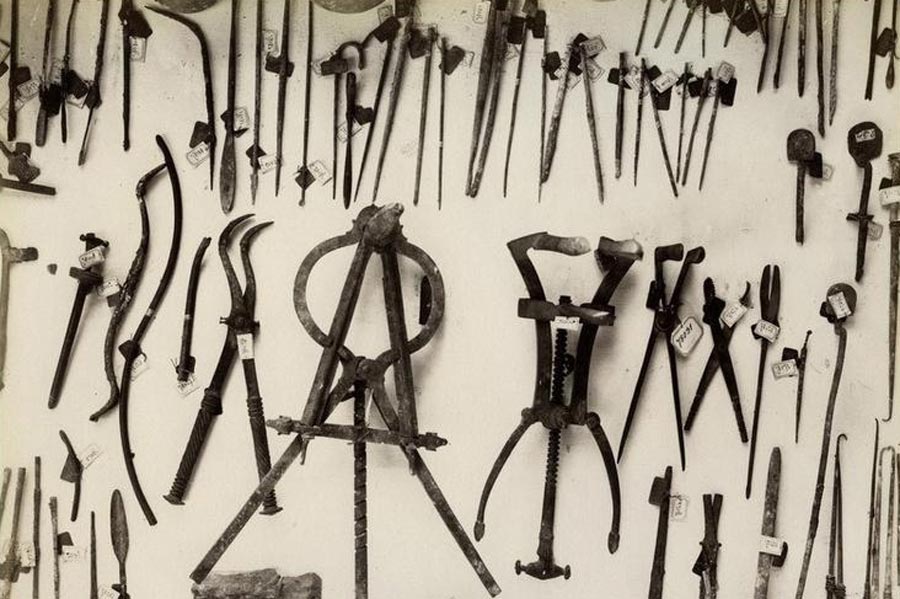
Aulus Cornelius Celsus - Always people tried to work in the field of medical treatment to help others when injured or helpless. Some big steps could be done in Greek and Roman period because of development in research and for the first time experiences were written down.
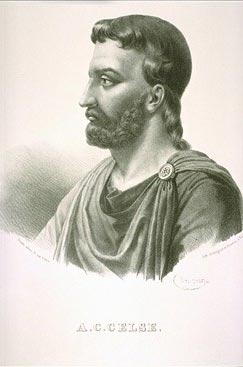
Aulus Cornelius Celsus is considered one of the most important contributors to medicine and scientific thought during the Roman Empire, and the most important source of present-day knowledge of Alexandrian medicine. Although apparently not a physician himself, Celsus gathered extensive writings from the Greek Empire, translated them into Roman, and compiled their vast knowledge into an Encyclopedia entitled De artibus (A.D. 25-35). Originally, this great work contained five books on agriculture, and other books of unknown length on military science, government, history, law, philosophy, rhetoric, and medicine. The only books to survive, however, were The Eight Books of Medicine, or De medicina octo libri, the most comprehensive medical history and detailed description of medical and surgical procedures ever produced by a Roman writer. They were also the first translation of Greek medical terms into Latin--terms that have remained standard in medicine for 2000 years.
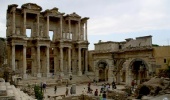
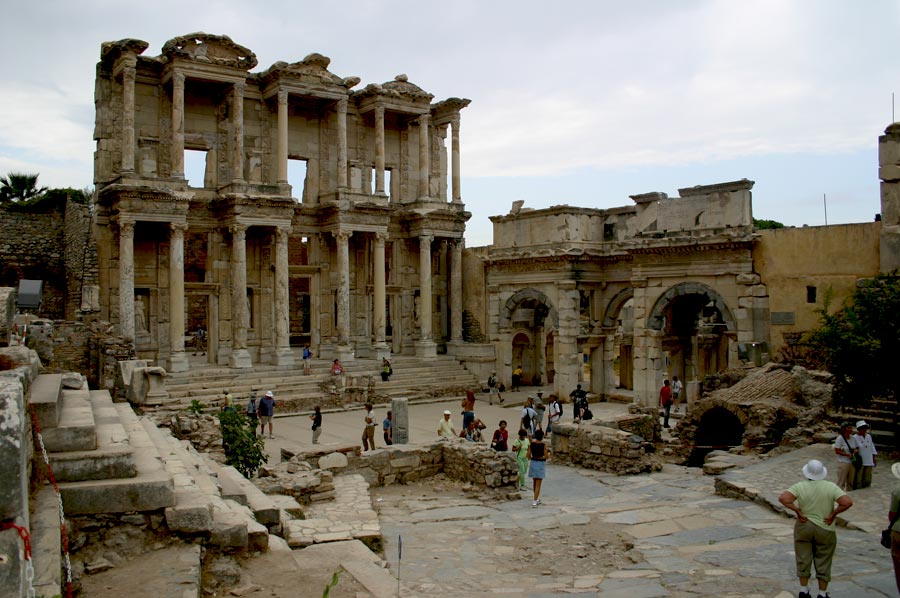 Virtually nothing is known of Celsus' life and work apart from these books. He is thought to have been born on the Mediterranean coast of France around 25B.C. in the Augustan Age during the rein of Tiberius. It is also believed he came from a wealthy and influential noble family of the ruling class. Although some historians think Celsus may have been a doctor, nowhere in ancient literature is he referred to as such. Also, while the professional practice of medicine was considered beneath the dignity of noble families of the era, knowledge of medicine was usual among educated men, many of whom as head of the household practiced medicine on ill family members, slaves, and livestock. Celsus may have been such a person. Regardless, he read extensively and knew both Greek and Roman. Columella, Quintilian, and Pliny the Elder-great scholars of the first century-wrote with praise of Celsus' work which modern scholars call brilliant and outstanding (The image above shows the library named after Celsus in Ephesus).
Celsus was a strict adherent to the teachings of the great Greek physician, Hippocrates (460-377 B.C.), and some historians believe much De medicina's contents came from a vast collection of writings of the school of Hippocrates. In fact, in De medicina, Celsus references some 80 Greek medical writers and he has been called both the Roman Hippocrates andthe Cicero of Medicine. His medical philosophy was also influenced by Asclepiades, who established Greek medicine in Rome, and by the famous medical school of Alexandria.
Aulus Cornelius Celsus - Book I of De medicina
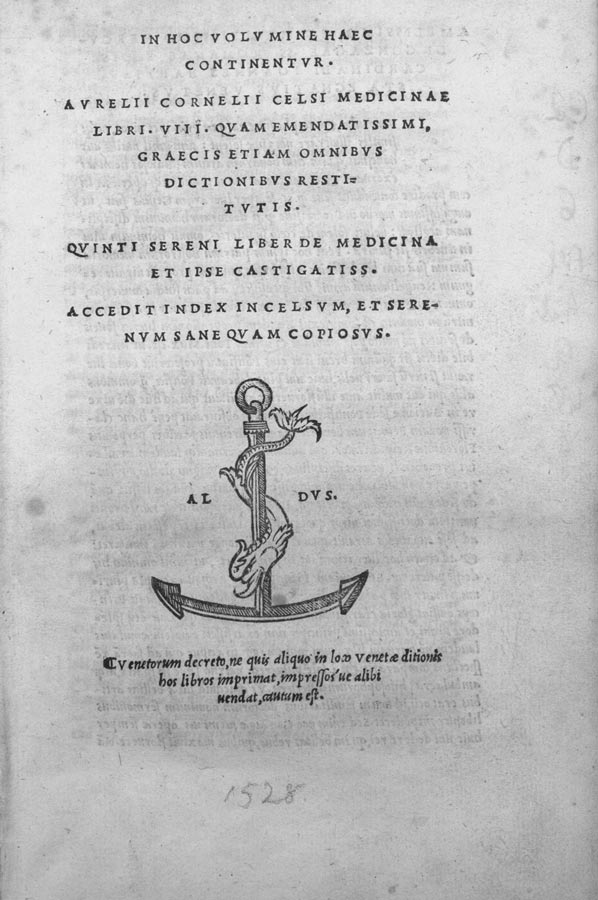 Book I of De medicina contained a historical overview of medicine; book II dealt with the course and general treatment of diseases; books III and IV with special therapy; books V and VI with pharmacology (drugs and medication); book VII with surgery; and book VIII with bone diseases. In his volumes, Celsus was the first to accurately report symptoms of a number of diseases including epilepsy, mental illnesses such as paranoia, heart attacks, and malaria (which he described with extreme accuracy); to name the four major signs of inflammation: heat, pain, swelling, and redness; to describe how flesh reacted (became inflamed) by microbes, recommending cleanliness and washing wounds with solutions such as vinegar; to describe in detail rabies, ulcers, tumors, amputation, removal of part of the skull (which he said should be performed as a last resort), and surgical techniques for circumcision; to use the term "hydrophobia" (fear of water); and to recommend for snake bites sucking thepoison from the wound, stating (correctly) that the poison is only harmful when absorbed by the wound but not if swallowed.
Also, rather than simply analyzing symptoms, Celsus considered many factors important in diagnosis, such as the patients age, the influence of the seasons, and weather changes. He believed in "critical days," days at which certain diseases peak and the patient begins to recover. He was highly aware of the deadly effect of gangrene and therefore concerned with methods for treating wounds. He reported on plastic surgery for repair to the nose, lips, and ears; and on dental surgery (suggesting that a badly decayed tooth be filled with lint to prevent it from breaking off as it was extracted) and wiring of the teeth. He recommended a type of surgery (lithotomy) for crushing bladder stones, ligature for tying off arteries to prevent bleeding to death, and various methods to stop hemorrhages (bleeding).
 He detailed excellent methods of treating fractures and dislocations, recommending wooden splints held in place by wax or heavily starched bandages; and advocated exercise after the fracture healed, thus becoming the forerunner to modern physical therapy. He described the use of painkillers (opium) and anesthesia (soaking the root of the mandragora plant in wine as a drink to produce sleep); paid much attention to headaches, believing they came from many different sources; and recommended hot oil massage to help insomnia--for which he gave credit to Asclepiades.
For an understanding of the anatomy, Celsus advocated the value of dissection of the human cadaver (dead body)-a practice prohibited by both Greek and Roman religions. (Celsus is credited with reporting rumors of malicious acts of vivisection (dissection and dismemberment) having been performed on living criminals for medical research at Alexandria during the reigns of Ptolemy II and III, 285-221 B.C.) He firmly believed that diagnosis (finding the cause) and prognosis (evaluating the outcome) was essential before effective treatment could be given. Although his treatment recommendations often included drugs, he was a firm advocate of baths, massage, personal hygiene, diet, and sports.
Perhaps an intellectual whose opinions and recommendations were long before his time, Celsus gained little recognized in his own era and it appears that his works were generally snubbed. They were totally lost until the Middle Ages when the medical portion-the only portion ever found--was discovered in the Vatican Library by Pope Nicholas V in 1426. The Pope arranged for its publication in 1478, a time of medical revival during the Renaissance, and Celsus suddenly gained a reputation as "a physician of extraordinary merit."
Celsus is believed to have died in Rome somewhere around AD 50 but not until fourteen hundred years after his death did he gain recognition and praise for both his medical techniques and masterful literary ability.
Please read as well: