






































Opus caementitium - the Roman concrete
- Written by Portal Editor
How could imposing buildings like the Pantheon in Rome or even the aqueducts to supply water to the Roman cities like in Aspendos or Side ever be constructed?
There are, on one side mighty religious buildings, on the other side partially until today functioning water systems, ensuring seamless water transport for large cities. These and similar questions arise when visiting ancient Roman cities and discover the existing building stock somewhat more closely.
Again and again you will come across on a material that offers at least a partial explanation: Opus caementitium, also called cast masonry! Opus caementitium is the Latin name for a concrete-like mixture with pozzolans, the Romans used for building foundations, domes or even aqueducts.
What then over the time fell into oblivion and was rediscovered in the 19th century by the Western world, for Roman engineers it was of daily usage: early prehistoric concrete! In the Middle Ages you partially had to depart from the use of opus caementitium because the knowledge by the effect of pozzolans had gone lost or they were not at all available. Nevertheless, locally degraded Trass was often used as an additive.
In particular, water pipes and piers were formed with the opus caementitium to achieve a certain resistance to water. Large parts of the Colosseum in Rome consist of opus caementitium, but also the Roman dome of the Pantheon with its huge wingspan of 43 meters in diameter from the year 120 BC. Only by the usage of opus caementitium it was possible at all to create those buildings.
The Phoenicians around 1300 BC already mixed their mortars with pozzolans to achieve the solidification of the cast masonry under water.
Opus caementitium was a mixure of stone, sand and calcined limestone, were the mentioned pozzolans were added. Just by the addition of pozzolans the opus caementitium received those hydraulic properties, this mixture, after the addition of water, cured to a pressure-resistant stone - similar to the modern concrete or cement. Opus caementitium therefore hardens underwater. By adding water to the burnt lime, it reacts under intense heat and the resulting opus caementitium was hot or warm worked with and the lime ingredients processed were highly corrosive and could result to blindness in contact with the eyes.
The usage of opus caementitium made mankind independent of the shape of boulders and the laborious carving of stone, for the first time the necessary forms could be poured into molds. Here the space between an outer and inner, clean brick ashlars dish was filled with opus caementitium. This cast masonry or shell masonry called opus implectum. Frequently as compensation layers bricks are included to improve stability of the shells which is referred to until today.
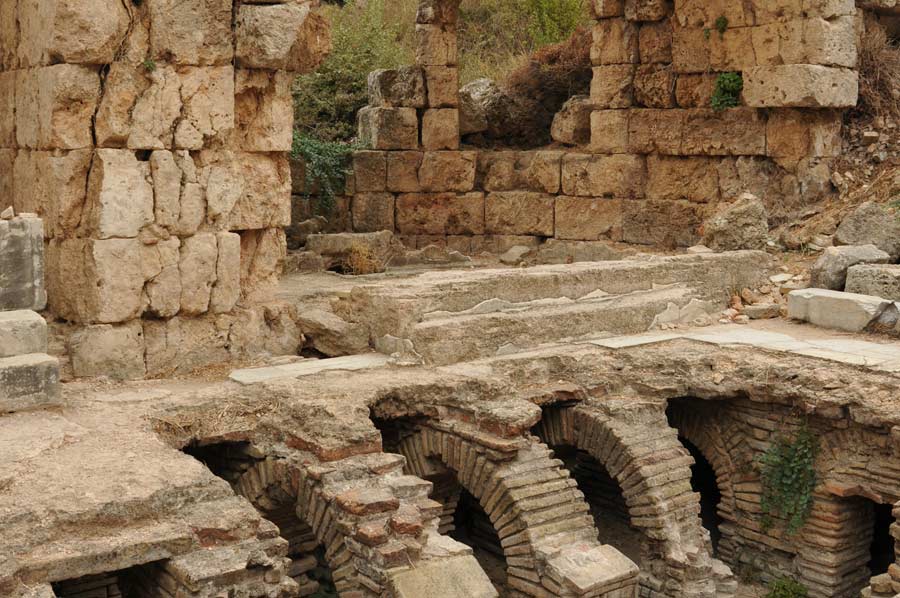
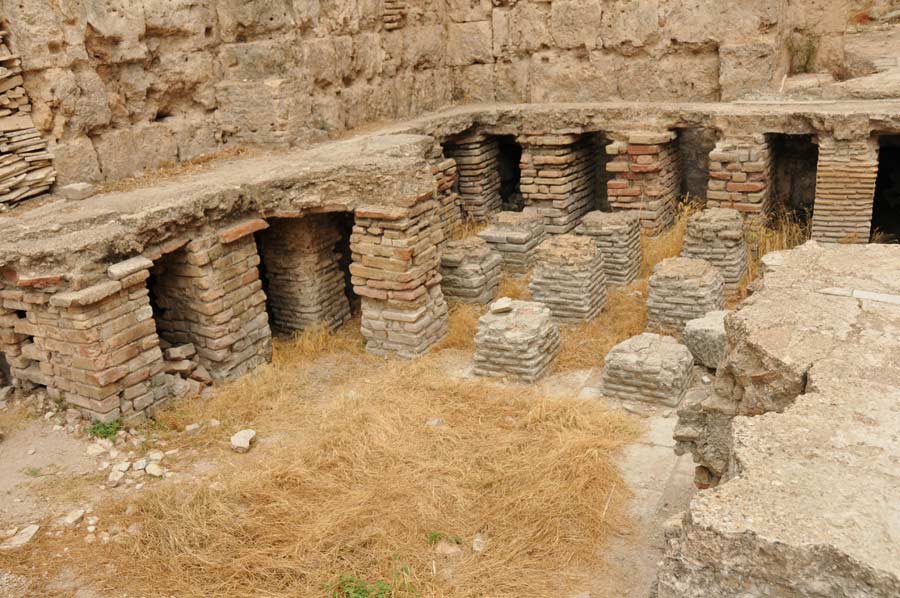
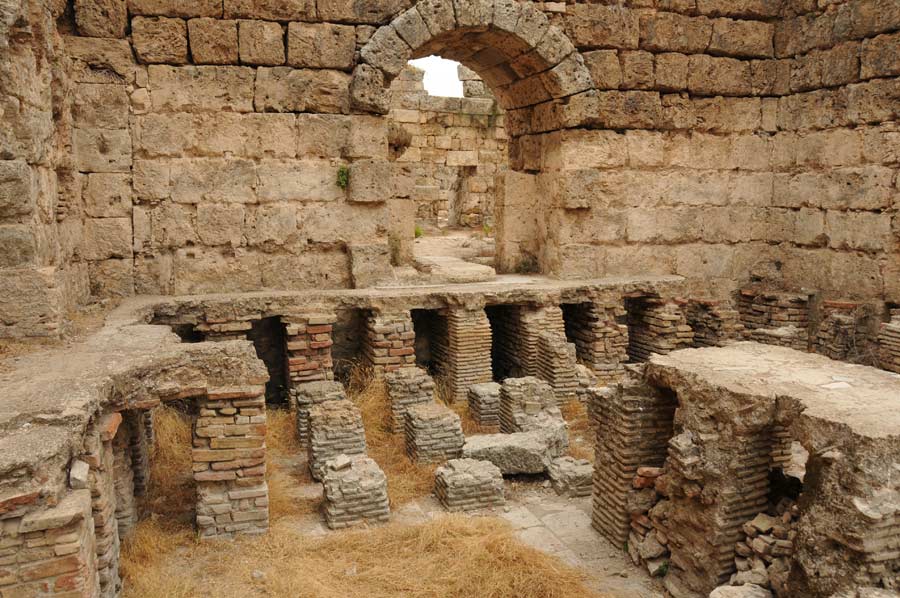
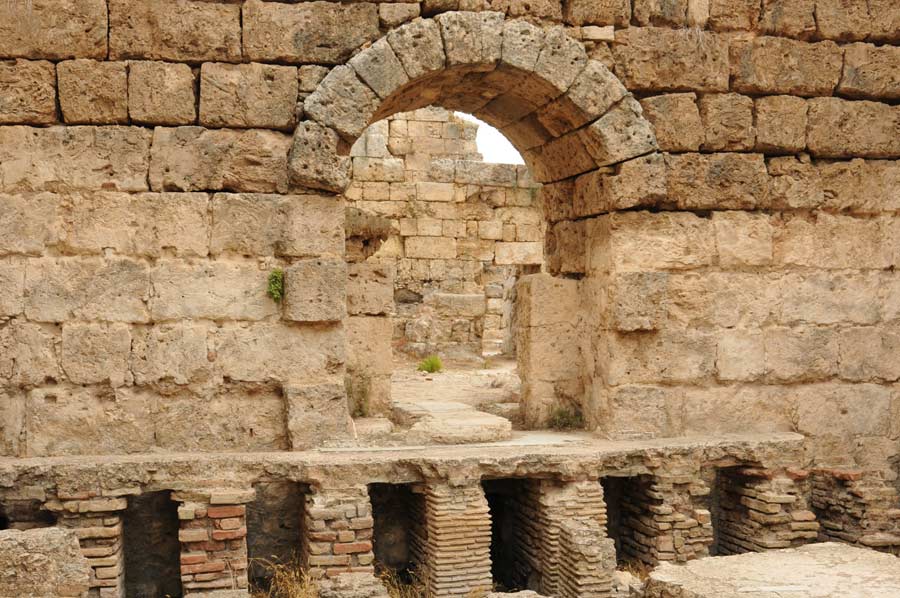
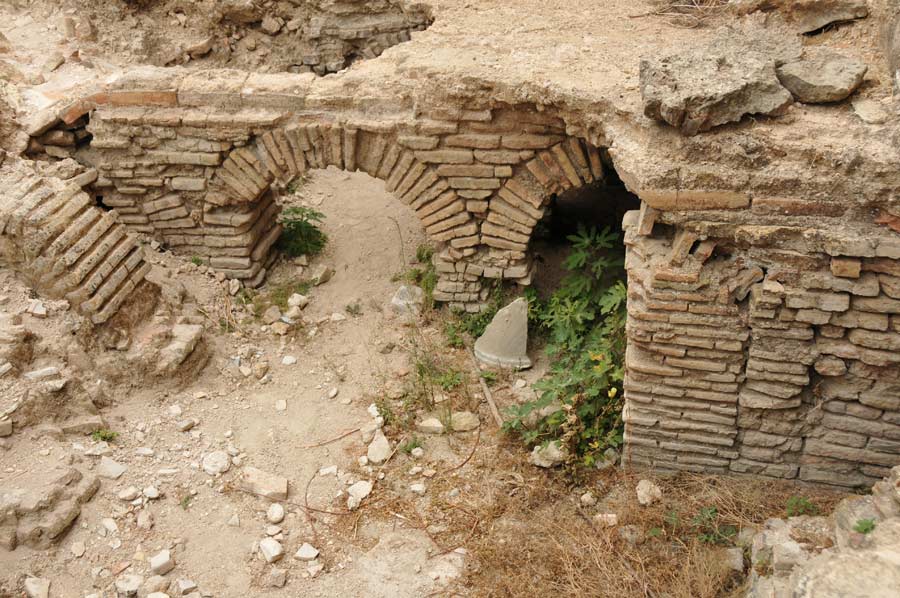
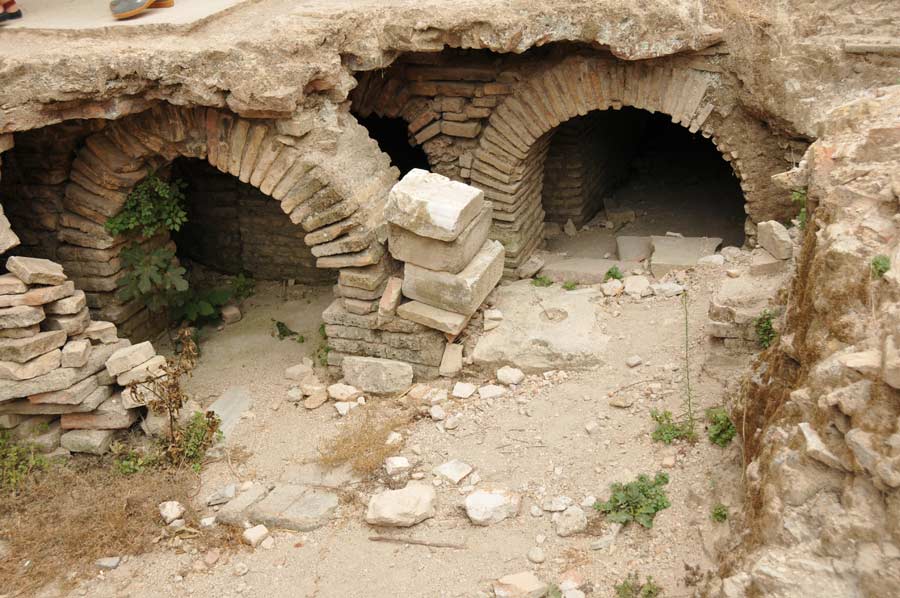
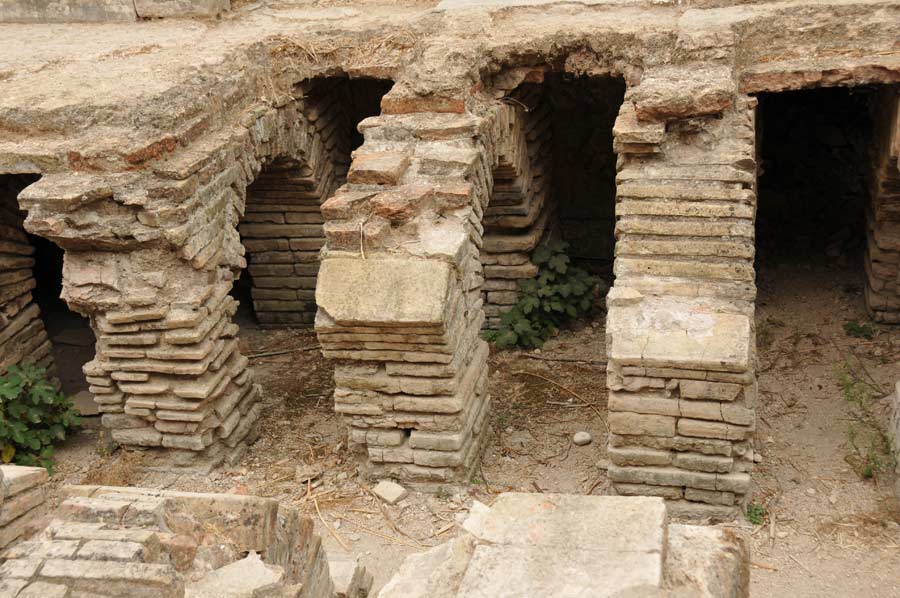
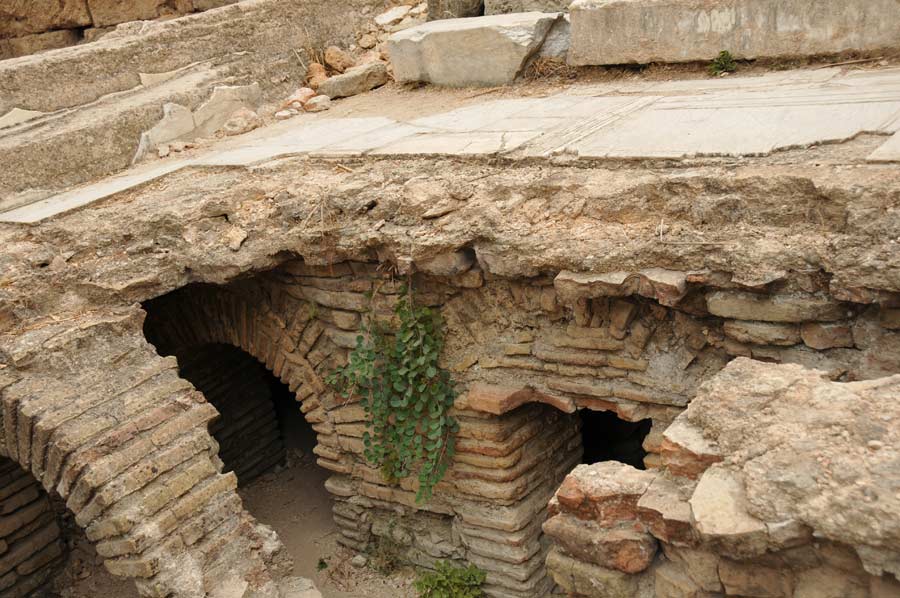
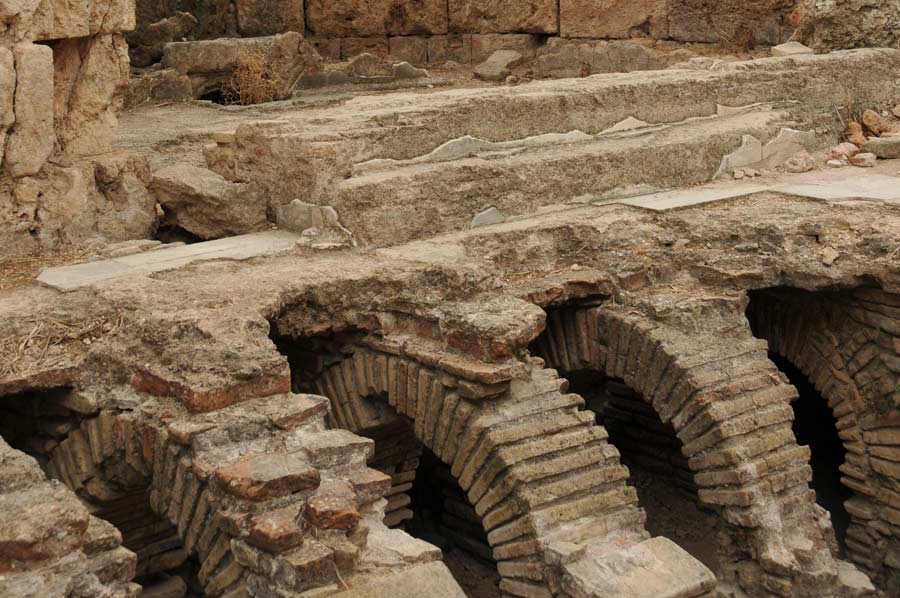
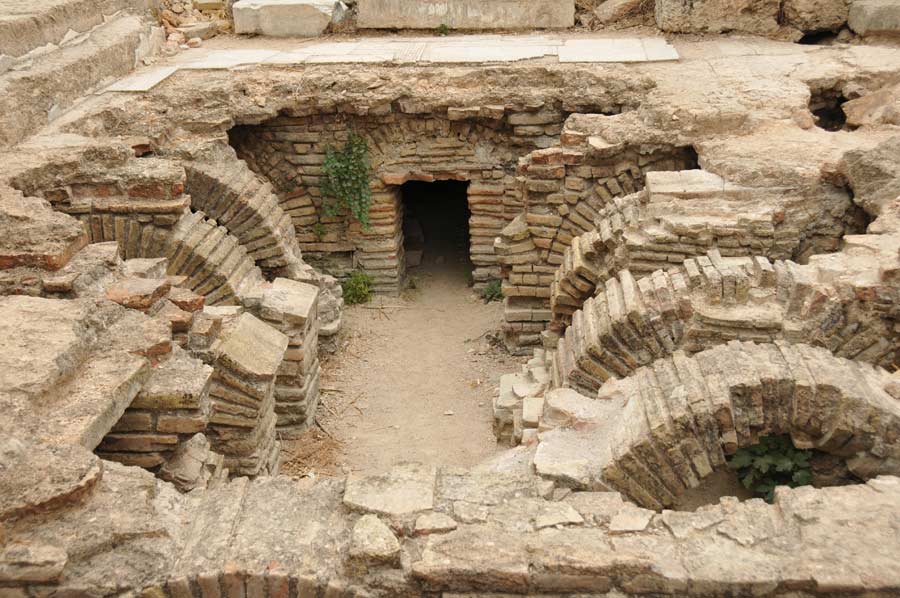
In the picture series the usage of opus caementitium is shown as vaulted ceilings, here shown by the example of under floor heating system in the Roman bath of Perge. On a support system of fired mud bricks larger plates were launched, which then served as the supporting structure of the Roman concrete. Alternatively, you can also find brick arrows as substructure. The smooth surface of the solid opus caementitium then served as substructure for applying the floor, in the illustrations a thin marble layer can be seen on top.
Please read as well:
The ancient town of Hamaxia - Alanya
Syedra City - ancient city on the way to Gazipasa
-
 Opus caementitium in Perge
Opus caementitium in Perge
Opus caementitium in Perge
-
Opus caementitium in Perge
Opus caementitium in Perge
-
Opus caementitium in Perge
Opus caementitium in Perge
-
Opus caementitium in Perge
Opus caementitium in Perge
-
Opus caementitium in Perge
Opus caementitium in Perge
-
Opus caementitium in Perge
Opus caementitium in Perge
-
Opus caementitium in Perge
Opus caementitium in Perge
-
Opus caementitium in Perge
Opus caementitium in Perge
-
Opus caementitium in Perge
Opus caementitium in Perge
https://www.alaturka.info/en/definitions/3229-opus-caementitium-the-roman-concrete#sigProIde1c56307ca