



















Rotunda - The imposing "Basilica" of Thessalonica
- Written by Portal Editor
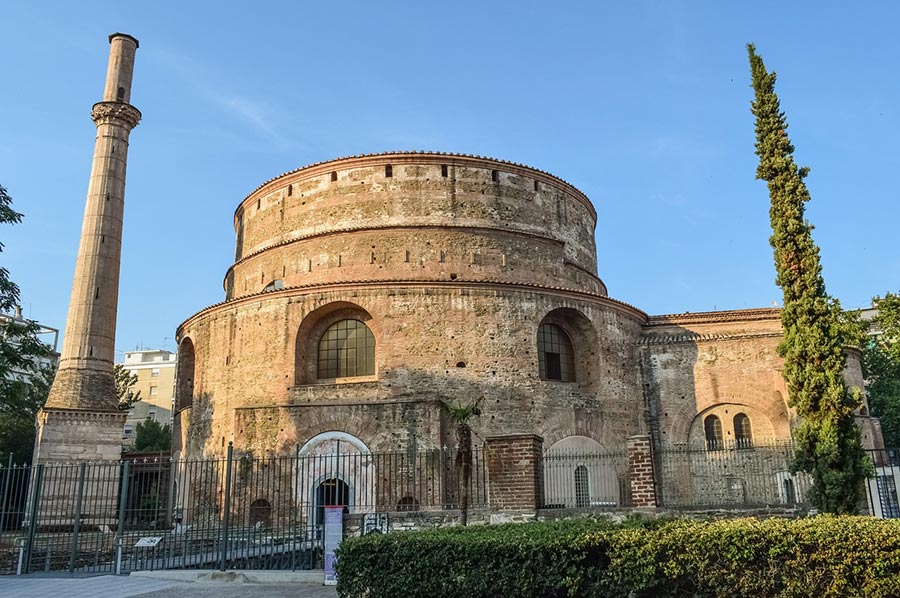
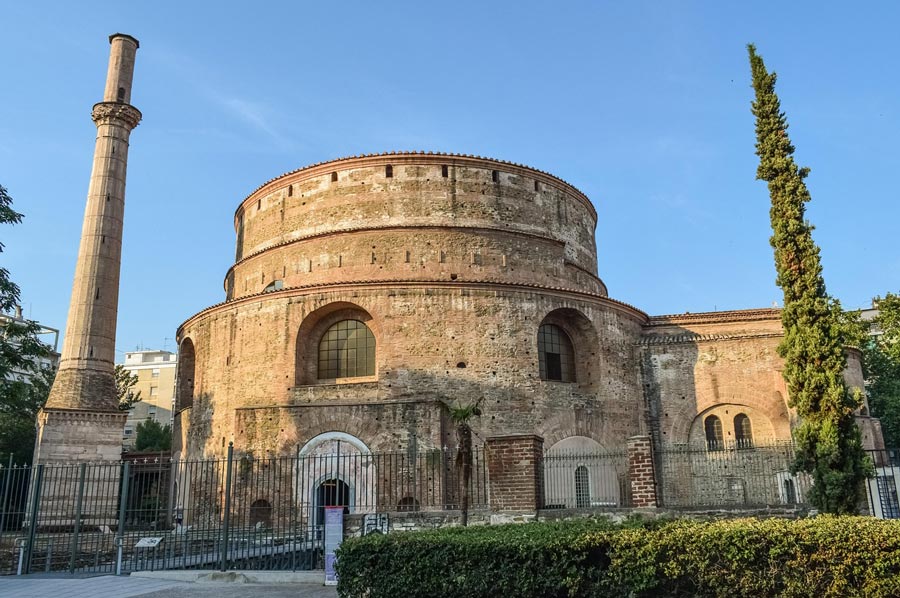
Rotunda - One of the surviving buildings of Roman times in the ancient part of Thessalonica is the Rotunda of Galerius, which is probably the most impressive building in the town. The massive domed Roman brick art, which was established in connection with the Galerius triumphal arch located in the North of modern Egnatia road that leads through the center of the city.
Only in one place the ancient Via Egnatia is opened and exposed with the original layers in about 5 meters below present-day city level. The name "Rotunda" was awarded to the building, however, in the 18th or 19th century by travelers who visited the Roman construction. Today, the Rotunda is a UNESCO World Heritage Site of the "early Christian and Byzantine buildings in Thessalonica".
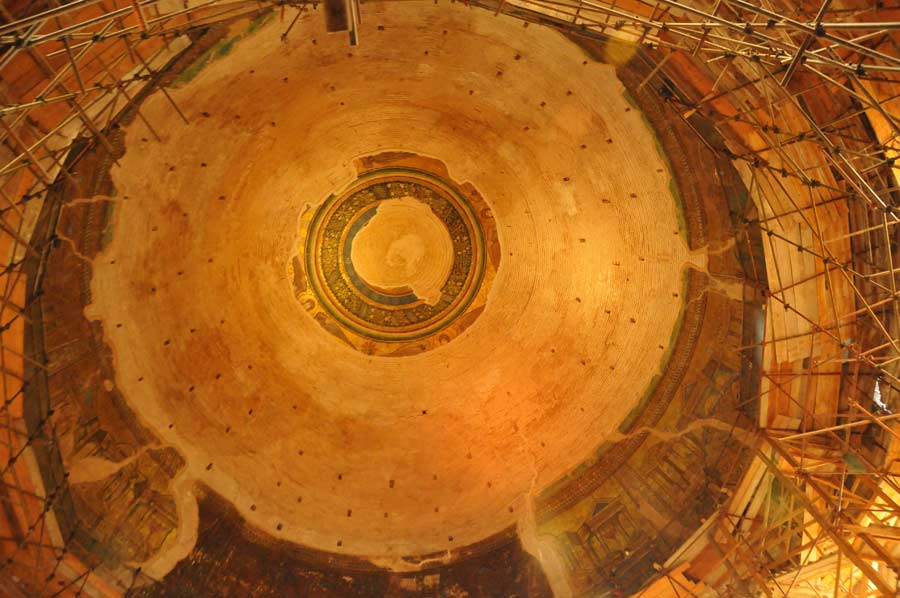
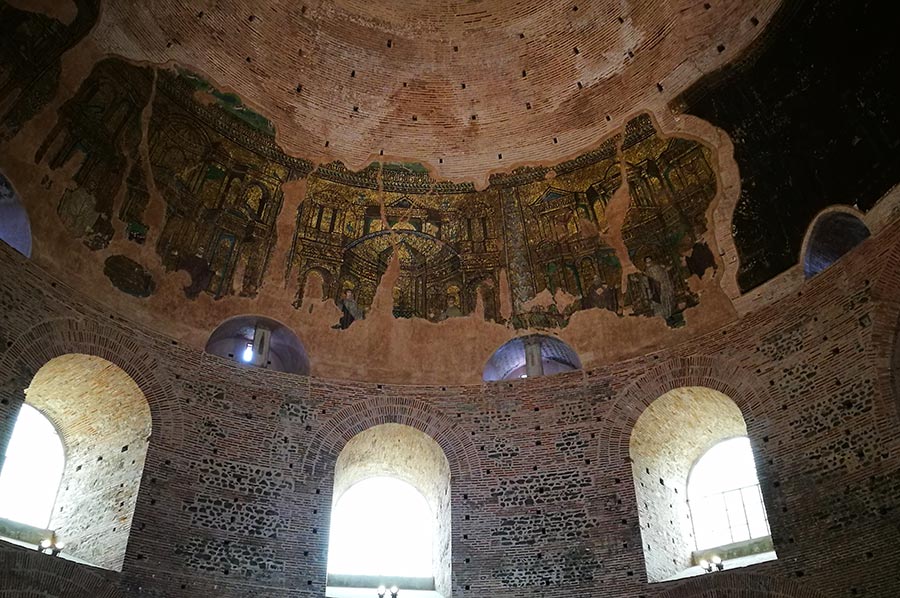 The Rotunda was built as a goddess cult building for the Kabiri or Zeus or possibly as a mausoleum for the Tetrarch Galerius in 306 AD. The Rotunda has a height of 29.80 meters, an oculus interrupted flat dome made of brick with an inner diameter of 24.50 meters.
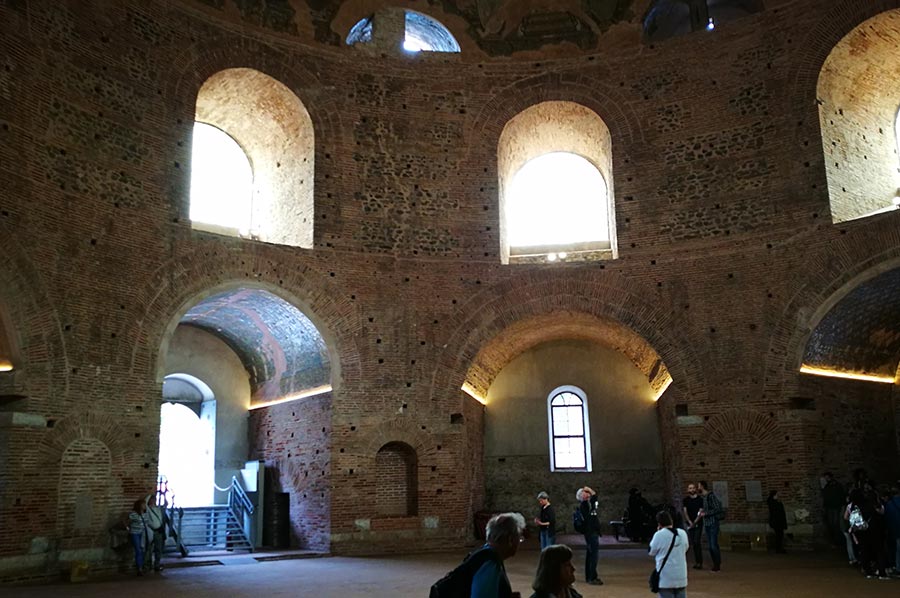
When creating the dome in 306 AD it was the largest brick dome ever. The thickness of the walls is of impressive 6.30 meters broken by six windows, which in itself requires the static's for receiving the roof load, the interior walls were originally veneered with a mock architectural marble.
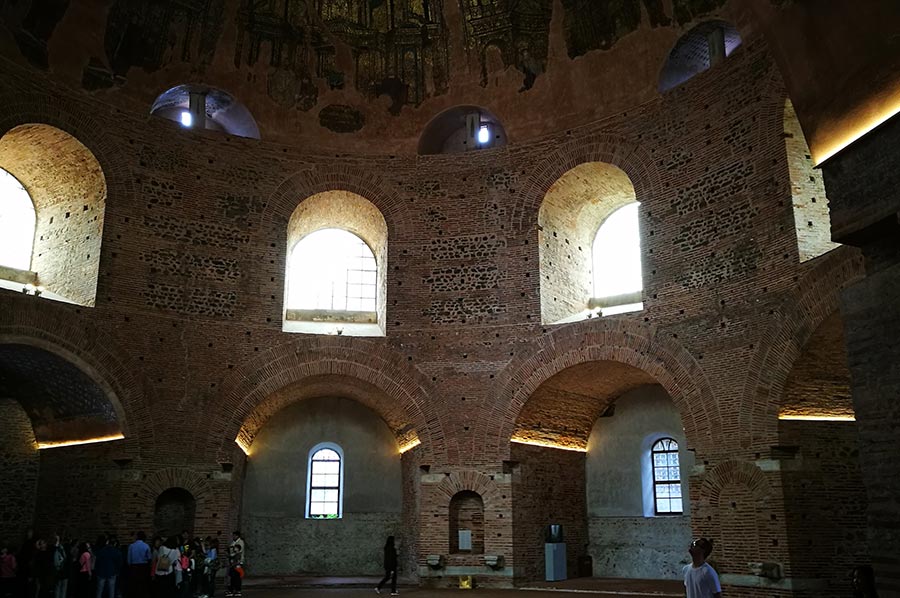 The construction, probably under Emperor Theodosius I or Constantine I, was converted to a Christian church in the 4th century, dedicated to the incorporeal church which temporarily served as a Metropolitan Church and was decorated with mosaics.
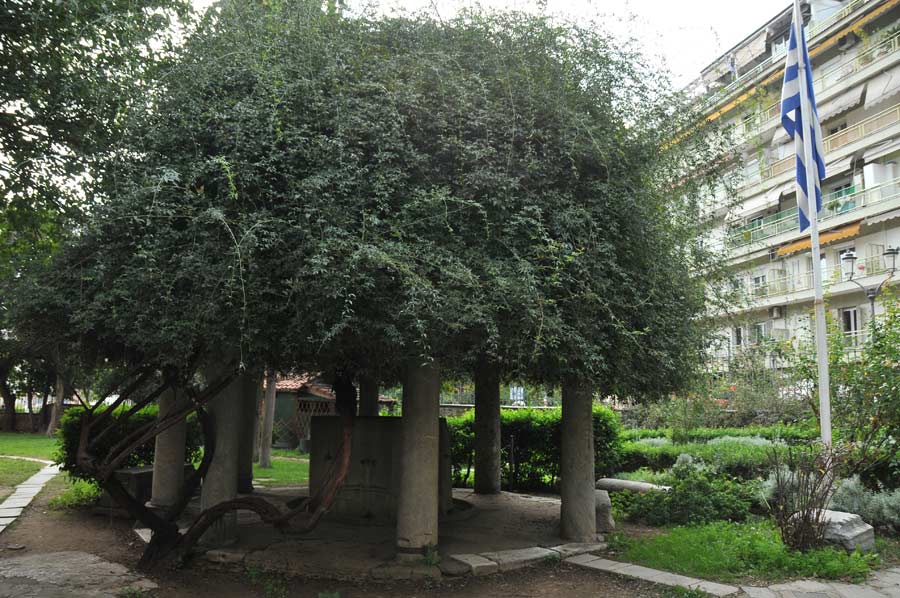
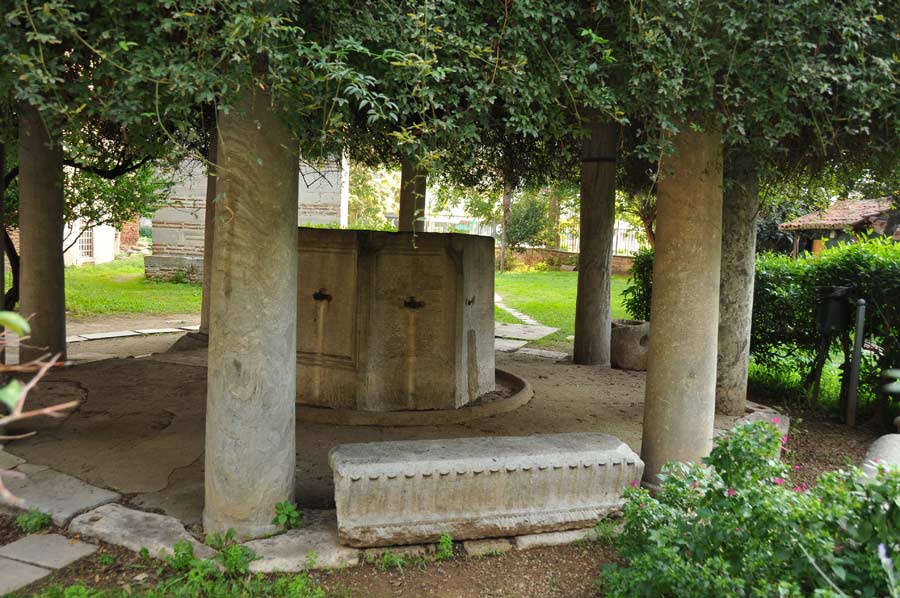
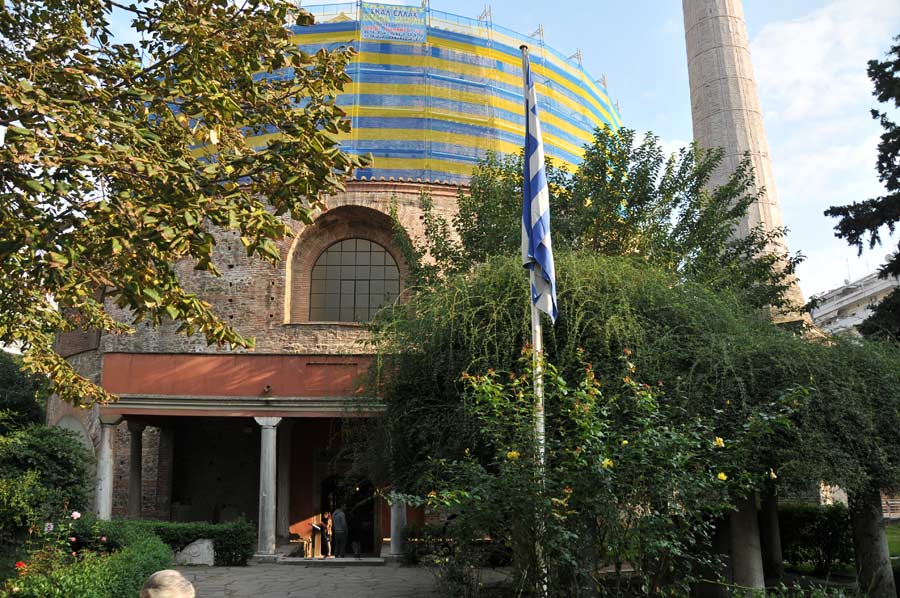
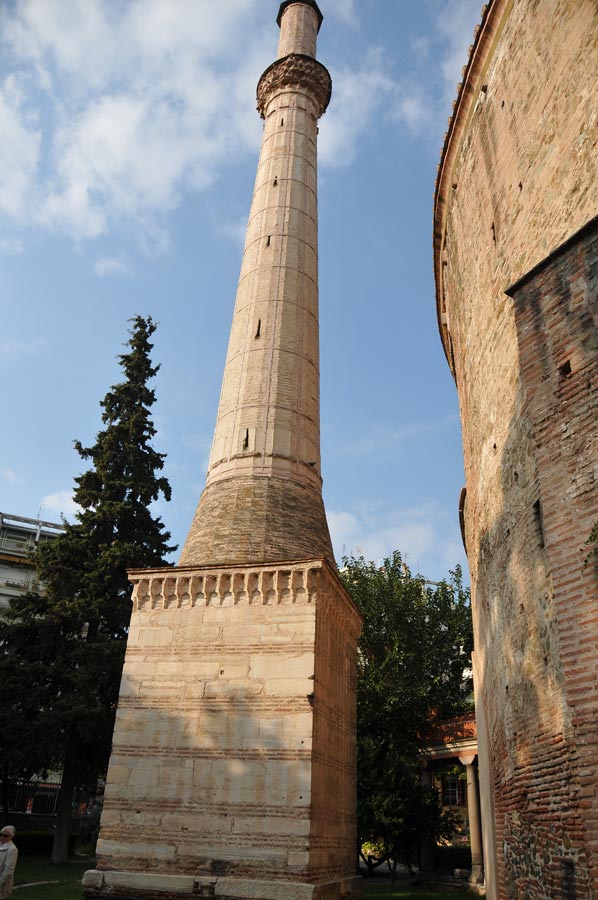
In the period of Ottoman occupation by the Turks the construction served as Eski Metropol (Old Metropolis). In 1590 the Rotunda was converted into a mosque (Hortaç Efendi Camii) and a minaret was added to the building; treasures and icons were taken away to the small Georges Chapel, to the West of the Rotunda.
 As in 1912 Thessalonica came under Greek rule, the Rotunda was changed to church again, but in 1917 to the Macedonian Museum. Just the minaret was preserved as a single one in Thessalonica.
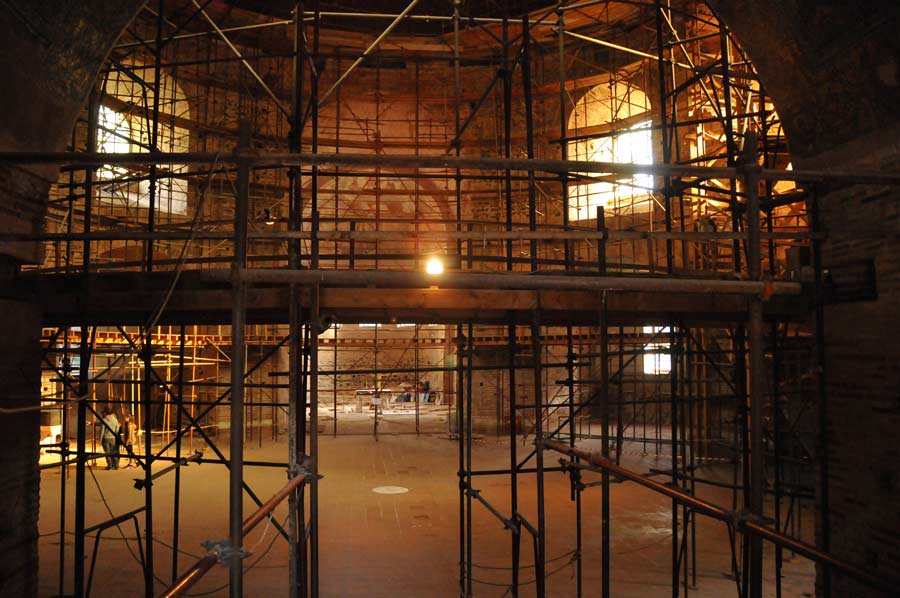
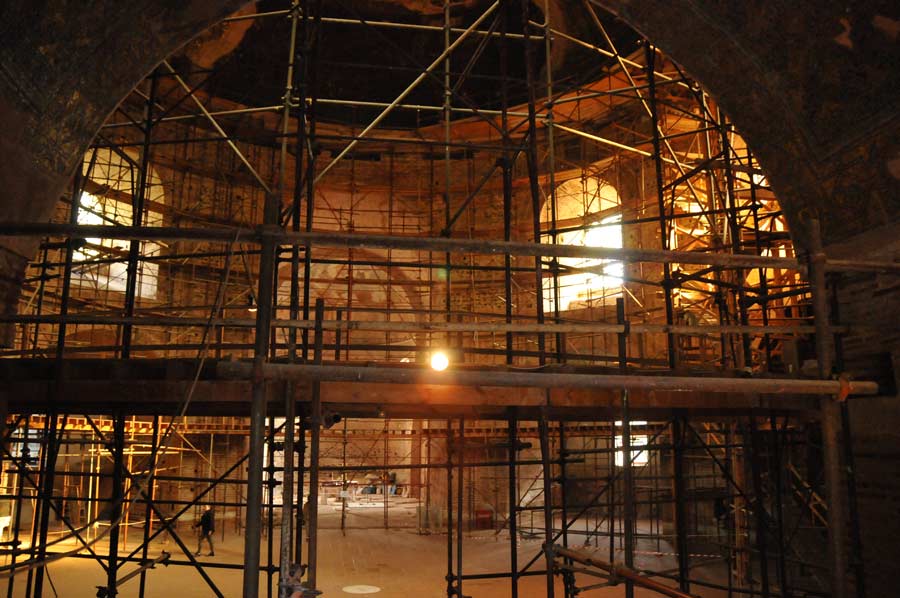
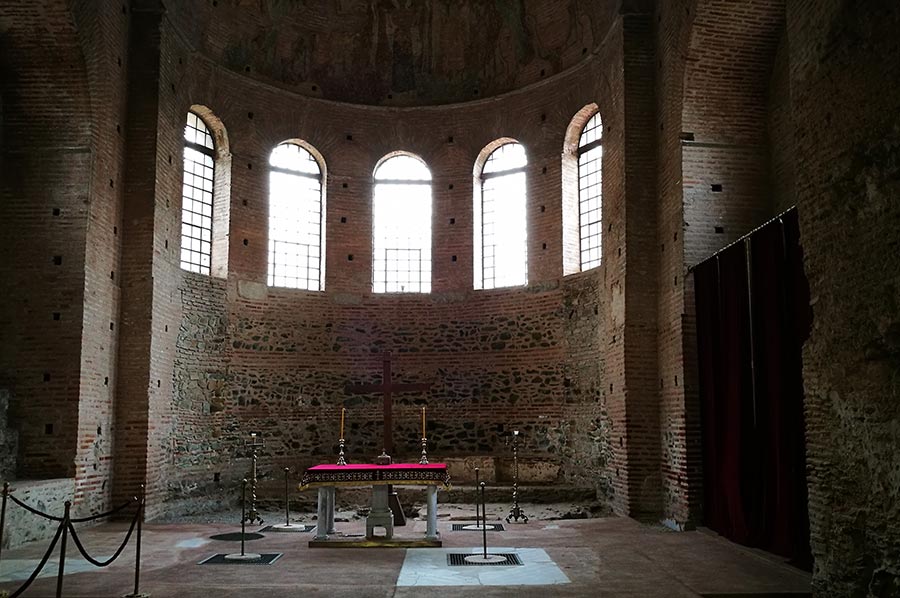
In 1978 the building was damaged by an earthquake and was restored and renovated since then. In 1999, the Rotunda was reopened as museum-monument, although the Greek Orthodox Church still raises claims on the construction. In the eastern apse is an altar again.
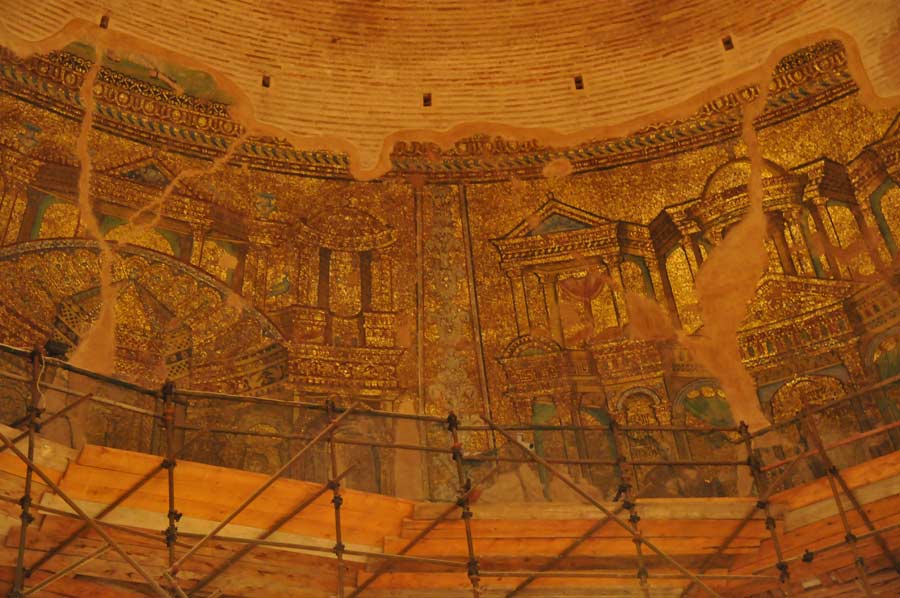
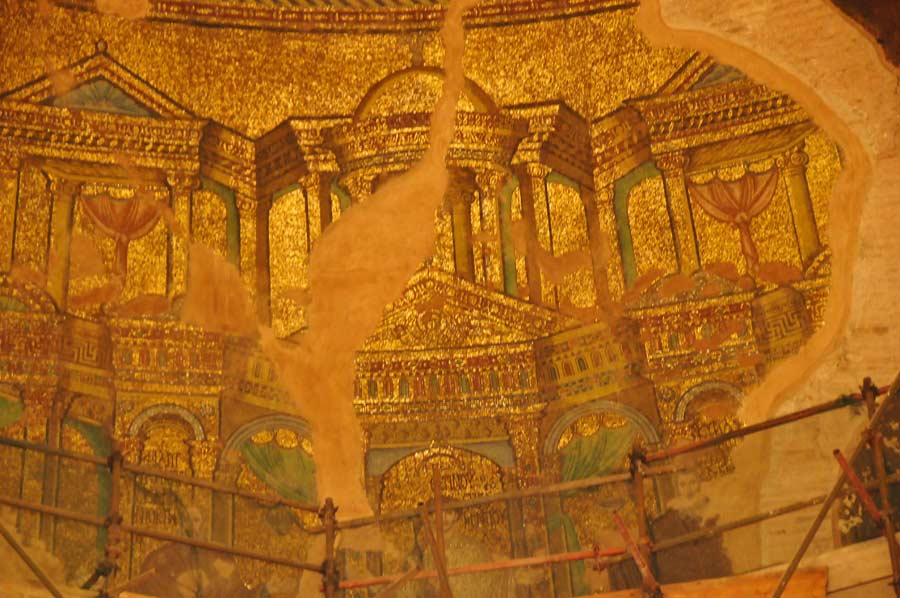
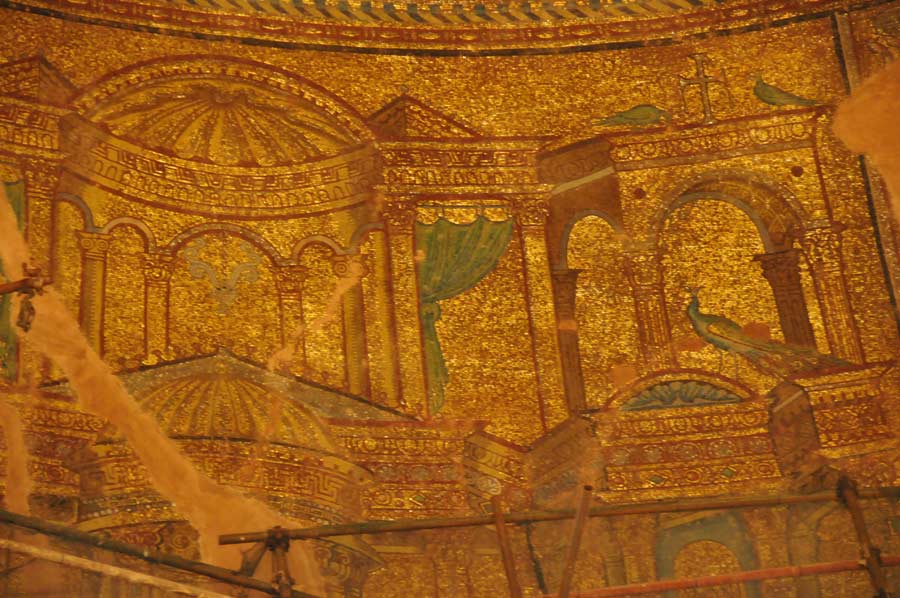
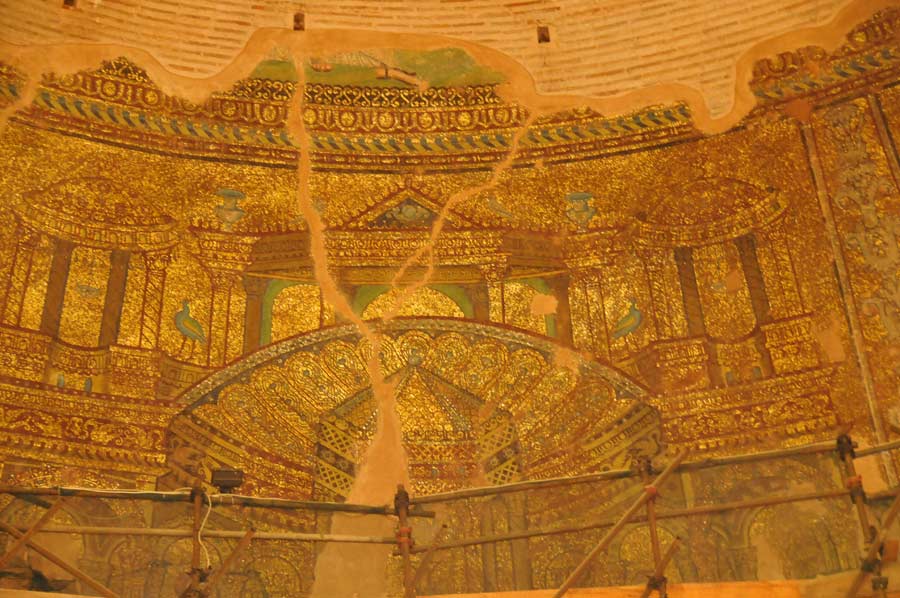
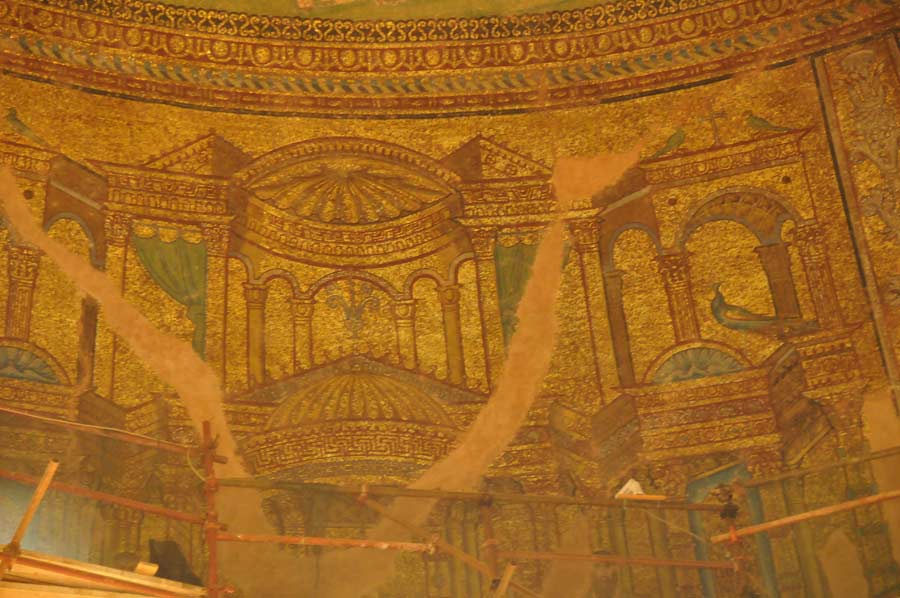
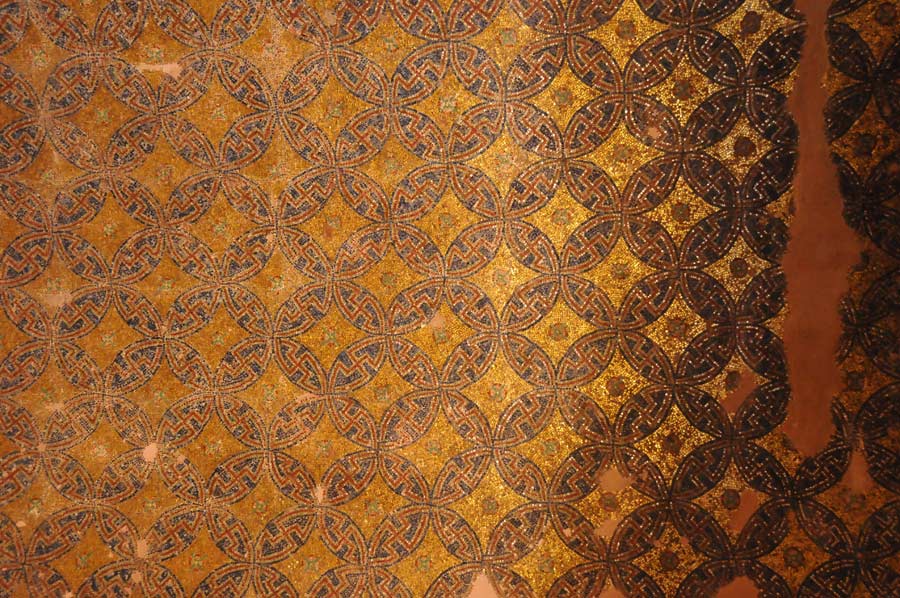
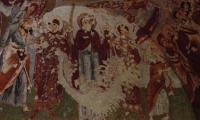
 The mosaics of the Rotunda are considered the oldest wall mosaics of the Christian East. Some of them are purely ornamental (octagons with birds and fish in East African style, intersecting circles in the West African style, carpet-like divided in the southern corner. The dome mosaics on an golden basement are split in three areas: 15 obtained martyr figures in wide robes (including Ananias, Romanos, Aristarchos, Kyrillos, Basiliscus, Leon, Philip, Priscus, Cosmas), with sitting peacock busier simulated architecture with acanthus leaves and ornament strips, fragmentary apostles and angels and triumphant Christ.
Something unfortunate for visitors are the opening times which hardly allow multiple buildings on a day to visit. About this first inquiries should be made, because no later than 15.00 clock most of museums and attractions are closed again.
The Imposing Rotunda of Thessaloniki – A Witness to Antiquity - more details
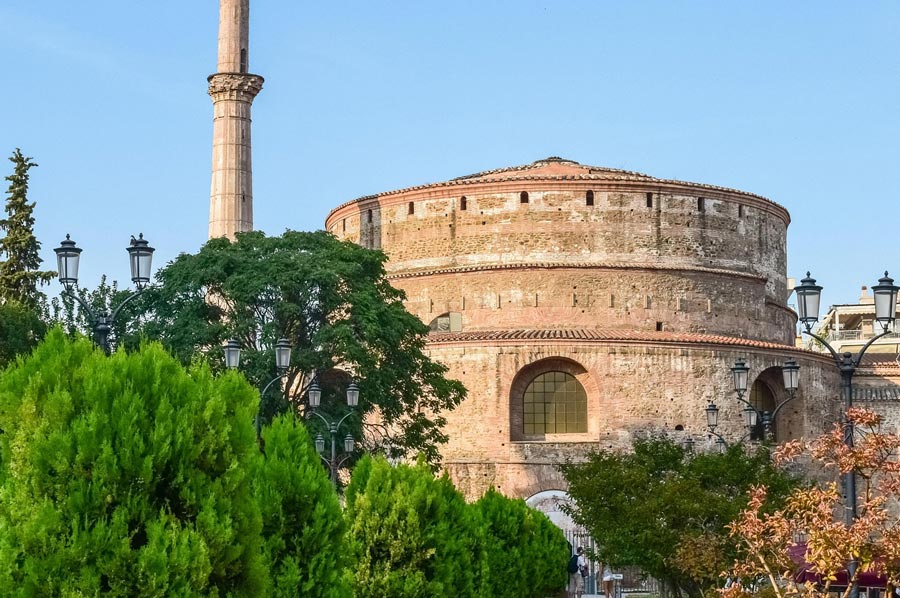 In the heart of Thessaloniki stands a monumental structure that fascinates with its history and architecture: the Rotunda. Originally intended as a mausoleum, it has served as a temple, church, and mosque over the centuries. Today, it is one of Greece's most impressive monuments – a must-see for anyone interested in ancient architecture and Byzantine history.
The Rotunda – Historical Overview
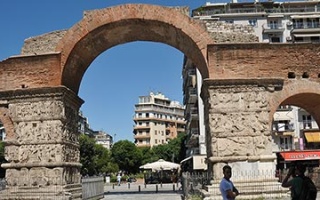
The Rotunda was built around 304 AD under Emperor Galerius and was originally intended to serve as his mausoleum. The circular building, with a diameter of over 24 meters, belongs to the so-called Galerius Group of monumental buildings in Thessaloniki, which also includes the Arch of Galerius (Kamara).
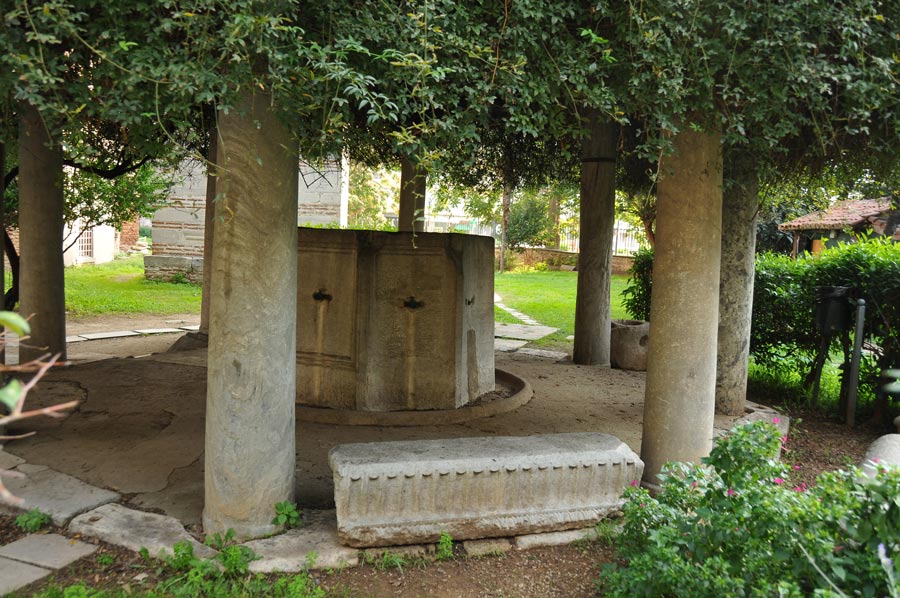 Over the course of its history, the Rotunda has undergone several transformations:
- In the 4th century, it was consecrated as a Christian church.
- During Ottoman rule from the 16th century onwards, it served as a mosque (Mosque of Suleyman Hortaji Effendi).
- Since 1912, it has been a museum and cultural landmark of Thessaloniki.
Architecture and Construction
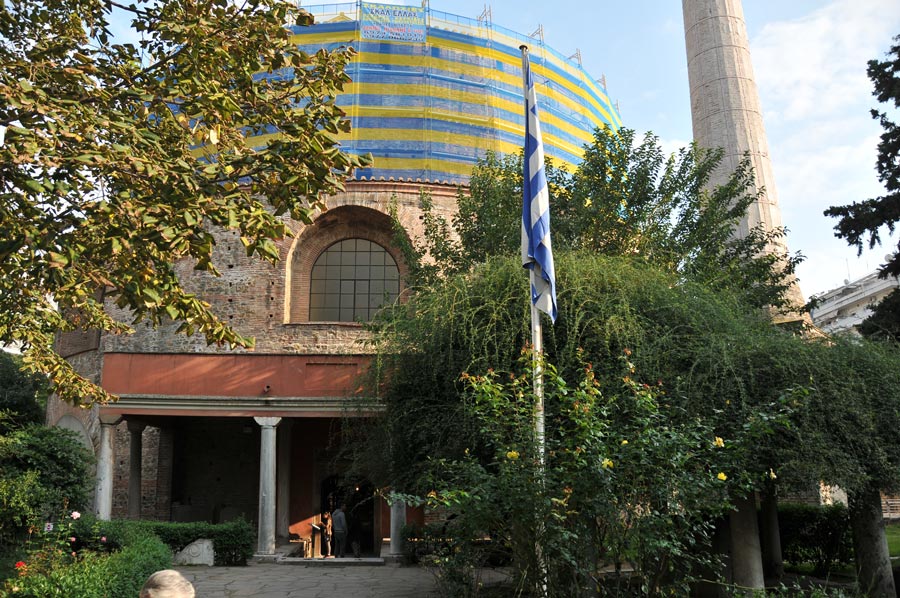 The Rotunda impresses with its massive dome, which is almost 30 meters high and was originally built without external pillars – an architectural masterpiece of late antiquity. Particularly impressive are the 5th-century mosaics depicting golden angels, saints, and geometric patterns.
The walls are up to 6 meters thick and convey a sense of stability and eternity – not surprisingly, the structure has survived numerous earthquakes.
The Rotunda Today – Between Culture and Religion
Today, the Rotunda is a UNESCO World Heritage Site. It is a symbol of Thessaloniki's cultural diversity and is occasionally used for religious ceremonies, concerts, and exhibitions.
Inside, the sacred atmosphere can still be felt. The wall mosaics are considered some of the oldest Christian mosaics in the world and attract art historians from all over the world.
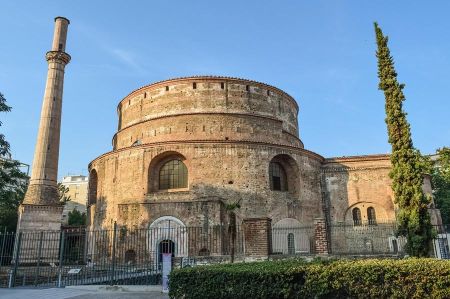 Visiting the Rotunda – Practical Travel Tips
- Location: The Rotunda is centrally located in Thessaloniki, not far from Aristotle University.
- Opening Hours: Usually open daily from 8:00 a.m. to 8:00 p.m. (during high season).
- Admission: Approx. €3–5, discounts for students and seniors.
- Tip: Combine your visit with the nearby Arch of Galerius (Kamara) and the Church of Agios Georgios.
Why the Rotunda is an absolute highlight
The Rotunda is not just a building – it is a window into the past, a symbol of religious tolerance and architectural genius. It has survived emperors, religions, and natural disasters – and today represents Greece's continuous cultural development.
Conclusion
A visit to the Rotunda of Thessaloniki is more than just a day trip – it's a journey through 1,700 years of history. Whether you're an architecture fan, history buff, or curious traveler – this place leaves a lasting impression and is one of the most impressive sights in Northern Greece.
FAQs – Frequently Asked Questions
 1. When was the Rotunda built?
Around 304 AD, originally as a mausoleum for Emperor Galerius.
2. What makes the Rotunda so special?
The combination of ancient domed architecture and early Christian mosaics makes it unique.
3. Is the Rotunda wheelchair accessible?
Access is partially wheelchair accessible – ask at the entrance for detailed information.
4. Can you take photos inside?
Yes, but please do not use a flash. The mosaics are light-sensitive.
5. How much time should you plan for the visit?
About 30 to 60 minutes, depending on your interests.
Please read as well:
The Macedonian Royal Tombs of Vergina
The waterfall of Edessa - short trip into the city
-
 Thessalonica Rotunda
Thessalonica Rotunda
Thessalonica Rotunda
-
Thessalonica Rotunda
Thessalonica Rotunda
-
Thessalonica Rotunda
Thessalonica Rotunda
-
Thessalonica Rotunda
Thessalonica Rotunda
-
Thessalonica Rotunda
Thessalonica Rotunda
-
Thessalonica Rotunda
Thessalonica Rotunda
-
Thessalonica Rotunda
Thessalonica Rotunda
-
Thessalonica Rotunda
Thessalonica Rotunda
-
Thessalonica Rotunda
Thessalonica Rotunda
-
Thessalonica Rotunda
Thessalonica Rotunda
-
Thessalonica Rotunda
Thessalonica Rotunda
-
Thessalonica Rotunda
Thessalonica Rotunda
-
Thessalonica Rotunda
Thessalonica Rotunda
-
Thessalonica Rotunda
Thessalonica Rotunda
-
Thessalonica Rotunda
Thessalonica Rotunda